Category 3 water, handled that way
Sewage backup cleanup for Spokane basements and bathrooms
Sewage is the dirtiest water a house can take. We remove it, throw out what it soaked and clean and dry everything left.
- Answered 24/7
- Category 3 water
- Protective gear
- Porous material removal
Quick answer
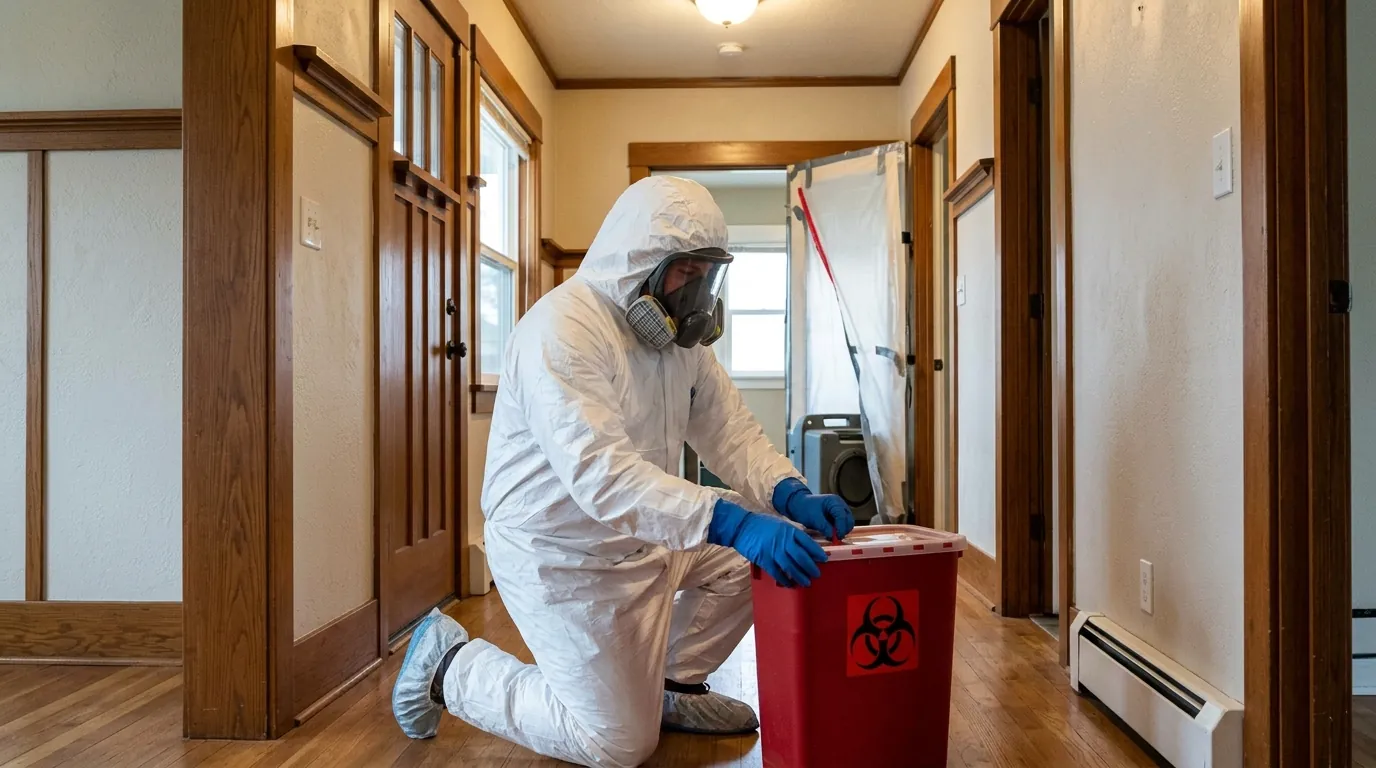
Sewage backup cleanup in Spokane means treating the water as Category 3 black water: crews wear protective gear, porous materials it touched like carpet, pad and lower drywall get removed, and hard surfaces are cleaned and disinfected before drying. Stay out of the affected area and don't run water down drains until the line is clear.
Updated October 2026
Why sewage cleanup works differently from clean water
Clean water from a supply line can often be dried in place. Sewage can't, and a few hours of contact is enough to change that decision. It carries bacteria, viruses and other contaminants, so anything porous it touched is treated as contaminated and removed: carpet and pad, the lower drywall, insulation, and upholstered items that sat in it.
Our crew works in protective suits, gloves, boots and respirators. We extract the water and solids, cut out porous materials, clean and disinfect hard surfaces like concrete, framing and tile, then dry everything. The drain or sewer line has to be cleared by a plumber, which often happens alongside our work. Until then, avoid running water, flushing or doing laundry. Lingering smell afterward is handled with odor removal.
Floor drain backups in basements
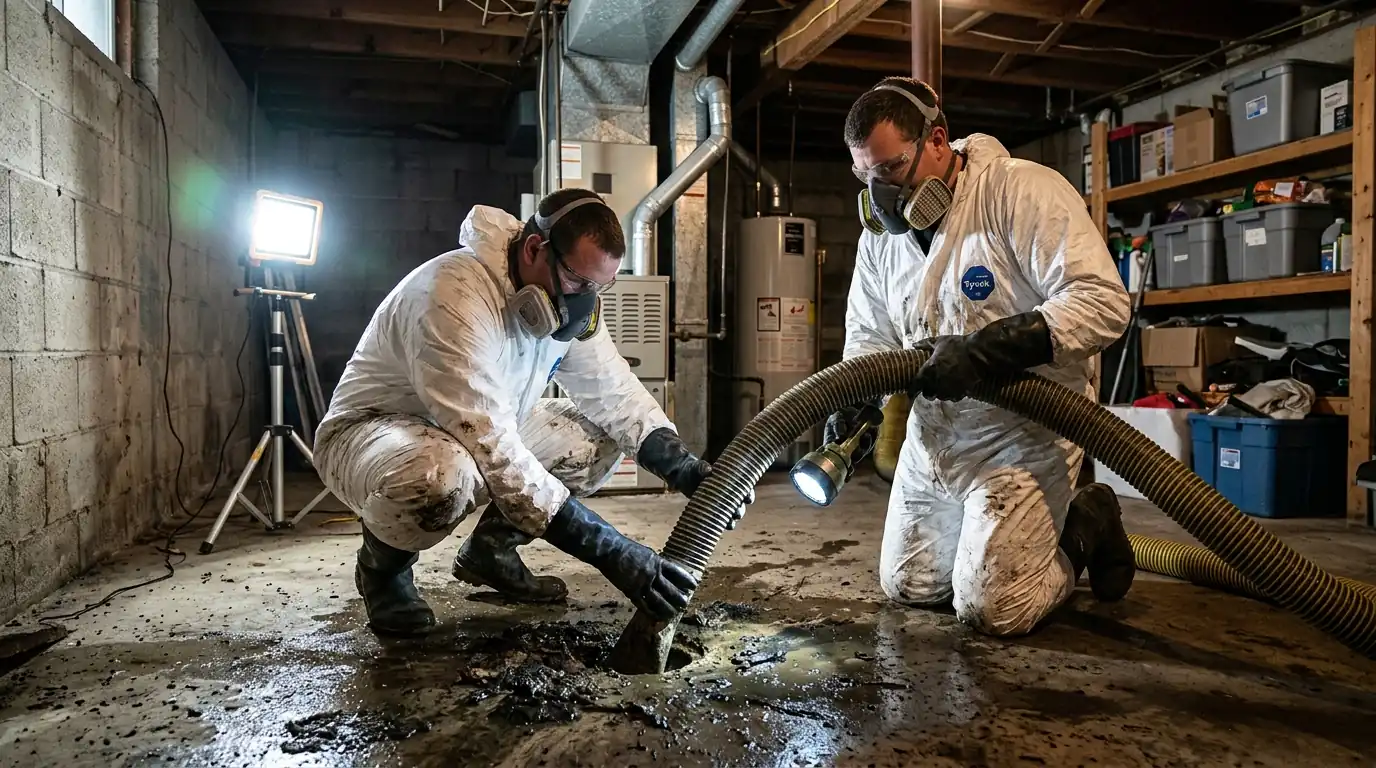
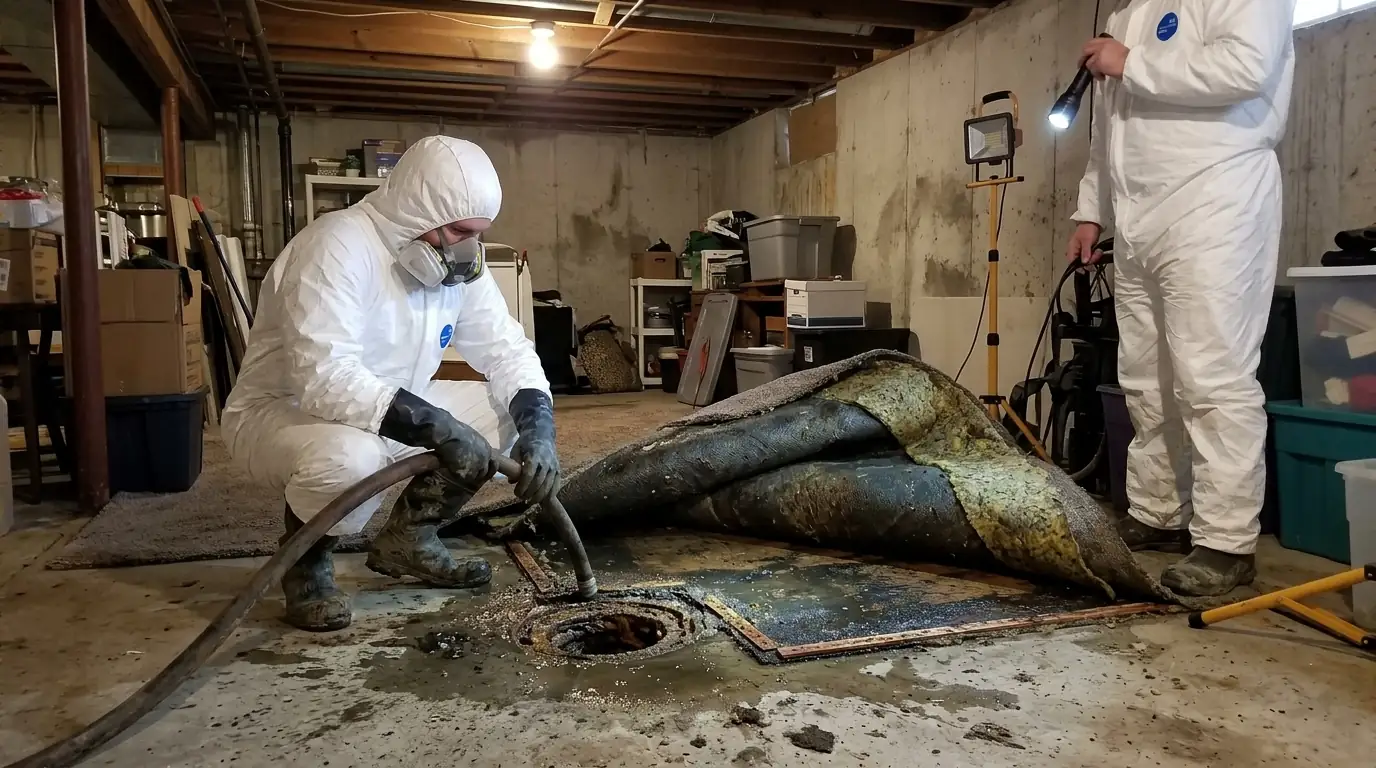
Floor drains sit at the lowest point of the house, so a blockage in the main line pushes sewage up there first, often when someone upstairs runs the washing machine or takes a shower. The water spreads across the slab and soaks into carpet, pad and the bottom of finished walls. We extract, remove carpet and pad, cut drywall above the wet line, clean and disinfect the slab and framing, and dry. A plumber clears or repairs the line; we coordinate so the drain is open before rebuild.
Toilet overflows
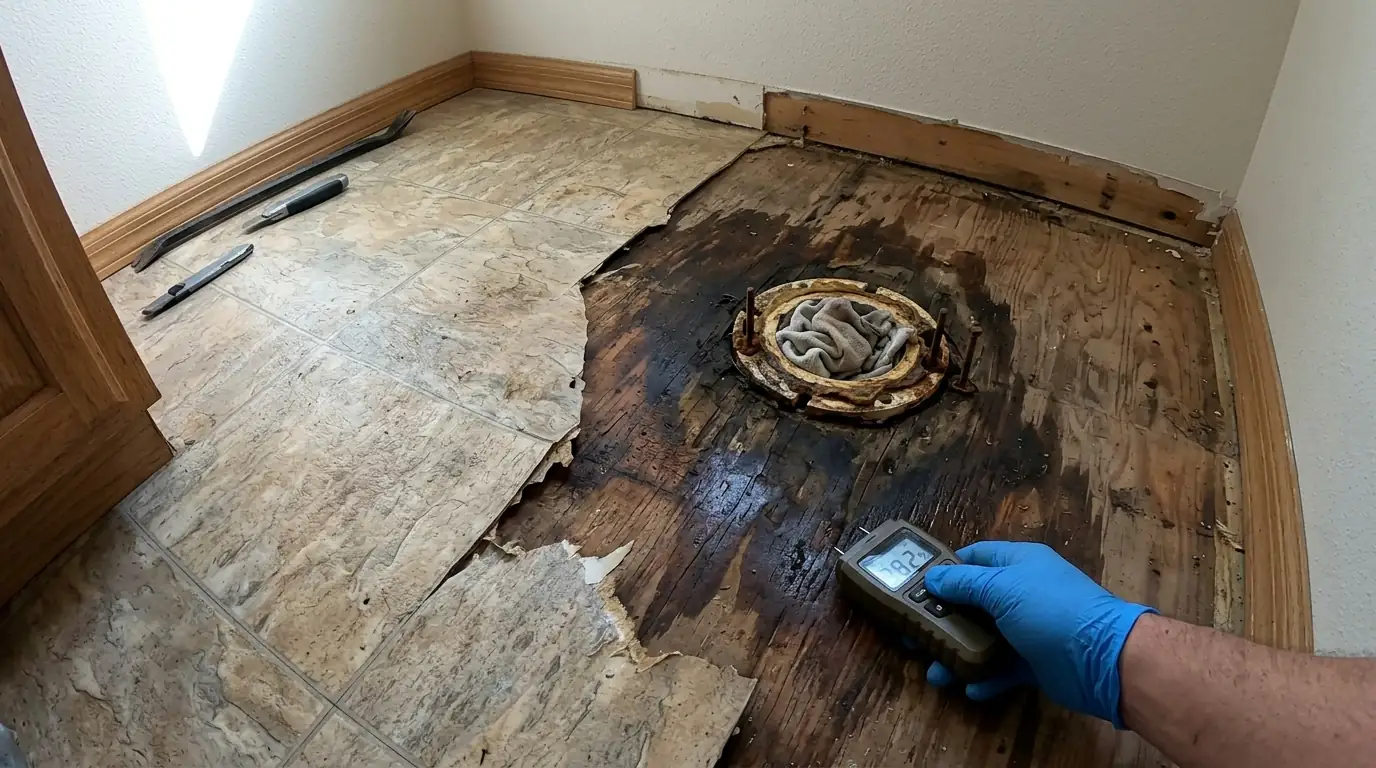
A toilet overflow ranges from clean bowl water to full sewage, depending on what was in the bowl. Any overflow with waste is Category 3. Water spreads under the toilet, around the flange and into the subfloor, and on a second floor it can drip through the ceiling below. We clean and disinfect the bathroom, pull the toilet if water got under it, and check the subfloor and ceiling below with a meter. Wet porous materials touched by waste get removed.
Septic backups
Homes on septic systems can back up when the tank is full, the drain field fails or the line between them clogs. The water that comes up is the same Category 3 sewage and is handled the same way: protective gear, removal of soaked porous materials, disinfection and drying. The difference is the fix. A septic contractor needs to pump the tank and check the system, and usage has to stay minimal until they do. Septic backups often follow wet seasons, when the drain field is saturated.
Looking at this mess right now?
Pick up the phone. A real person answers 24/7 and talks you through the next ten minutes.
How we clean up a sewage backup
- 01
Gear up and assess
Our crew suits up, checks electrical safety and maps how far the water spread.
- 02
Extract water and solids
Pumps and extractors remove the sewage and debris.
- 03
Remove porous materials
Carpet, pad, lower drywall and insulation that touched sewage come out.
- 04
Clean and disinfect
Concrete, framing and hard surfaces get cleaned and disinfected.
- 05
Dry and verify
Dehumidifiers and air movers run until readings show materials are dry.
Local conditions
Basement sewage backups in Spokane Valley homes
Spokane Valley's housing is mostly late-1970s and newer, with a median build year near 1979 for a city that counted about 103,000 people in 2020. Many of those houses have finished basements with floor drains and plumbing from the 1970s and 1980s, which is where a main line blockage first shows up. When sewage comes up through a basement floor drain in Spokane Valley, carpet, pad and the bottom of finished walls are usually what has to come out.
Timeline
How long sewage backup cleanup takes
Extraction, removal of porous materials and disinfection usually take a day or two, depending on size. Drying then runs about three to five days, verified with readings. The plumber's work on the line can happen in parallel. Rebuild of drywall and flooring comes after, once everything tests dry.
Cost
Typical cost range for sewage backup cleanup
LawnStarter's 2026 cost data lists black water restoration nationally at about $7 to $7.50 per square foot, roughly double clean water work. Treat that as a planning range, not our price. Cost depends on the affected area, how much finished material comes out, whether carpet and drywall are involved, how long the sewage sat, and the drying time. Clearing the line is a separate plumber charge.
What to do yourself in a sewage backup, and what not to touch
A few steps are safe for homeowners; cleanup itself is not.
| Task | Doing it yourself | When we do it |
|---|---|---|
| Stop using water | Yes. Don't flush, shower or run laundry until the line is clear. | We remind everyone in the home. |
| Keep people and pets out | Yes. Close doors to the area. | We set up containment if needed. |
| Moving belongings | Only dry items above the water line, with gloves on. | Anything that touched the sewage. |
| Mopping up sewage | Not recommended without protective gear and disinfectant. | Always, for anything more than a few square feet. |
| Saving carpet | Carpet and pad that sewage soaked can't be safely saved. | We remove and dispose of it. |
Sewage Backup Cleanup questions
No. Carpet and pad that sewage soaked are porous and can't be reliably disinfected. They get removed and disposed of. Hard flooring like tile or sealed concrete can usually be cleaned and disinfected.
Usually, if the affected area is closed off and you avoid it. Keep children and pets away, and don't use the water until the line is cleared. Larger backups may make staying elsewhere more comfortable.
No. Call both. Extraction and removal can start right away, and the plumber can clear the line at the same time. Waiting only lets sewage soak deeper into drywall, framing and the slab.
Yes. After removal, concrete, framing and other hard surfaces are cleaned and disinfected before drying starts. We use products suited to sewage contamination and apply them according to the label.
Typically after drying is complete, which takes about three to five days, and rebuild finishes. The area shouldn't be used for storage or living until it's been cleaned, disinfected and confirmed dry.
Related restoration work
Basement Flooding Cleanup
Water Damage
See this serviceBiohazard & Trauma Cleanup
Sewage, Biohazard & Odor
See this serviceOdor Removal & Deodorization
Sewage, Biohazard & Odor
See this serviceCarpet & Pad Water Damage
Water Damage
See this serviceSee all 37 restoration services
Related advice: Sewage in the basement: what to do and what not to touch and Questions to ask a restoration company before work starts
Answering 24/7
Sewage coming up through a drain or toilet?
Call any hour. Keep everyone out of the area and stop using water until we arrive.
1876 N Teanaway Dr, Post Falls, ID 83854