Restoration advice
A burst pipe in a Spokane winter: your first hour, step by step
Quick answer
Shut off the main water valve first, then cut power to any room where water reaches outlets, cords or the panel. Open a faucet at the lowest point to drain the lines, photograph everything before you move it, and lift furniture and rugs off wet floors. Then get a plumber on the pipe and a drying crew on the house.
Close the main shutoff before anything else
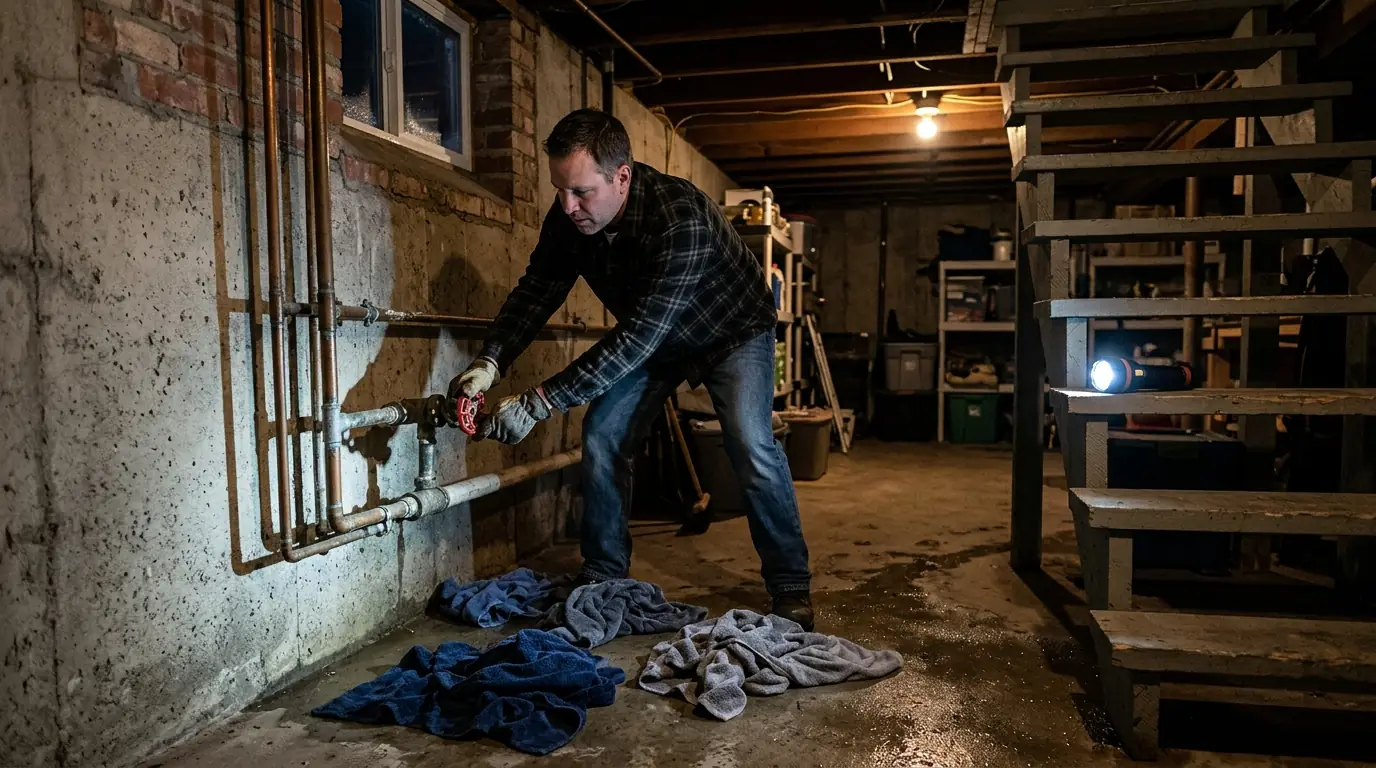
Every minute the valve stays open, the split keeps pushing water at full house pressure into walls, ceilings and floors. Find the main shutoff and turn it clockwise until it stops. In most Spokane-area homes it sits where the supply line enters the house, usually on the side facing the street.
Older houses deserve a gentle hand. Spokane has more than 26,000 homes built in 1939 or earlier, and many still have gate valves with round handles that seize after decades of sitting open. If it will not budge, do not force it with a cheater bar; a snapped stem makes things worse. Your fallback is the curb valve in the meter box near the street, which usually needs a meter key and belongs to the water utility.
- Basement wall on the street side, often near the water meter
- Crawl space, within reach of the access hatch
- Garage wall shared with the house, or near the water heater
- A fixture stop valve under the sink or toilet, if the split is on that short line
- The curb meter box at the property line (utility key required)
Power, the water heater and the ceiling overhead
Water and electricity together are the real danger in the first hour. If water is reaching outlets, power strips, a furnace or the panel, shut off the breakers for that area, but only if you can reach the panel while standing on a dry floor. If the panel itself is wet or you would have to wade to it, stay out and ask the electric utility to cut service at the meter.
With the main closed, the water heater keeps firing on a tank that is no longer refilling. Switch an electric unit off at its breaker, or set a gas unit to pilot or vacation. Then look up. A ceiling that bulges or sags is holding water. Keep people out from under it and set a bucket below; if the drywall is soft and low, a small hole at the lowest point drains it in a controlled way instead of letting it come down all at once.
Why Spokane pipes split on the second day of a cold snap
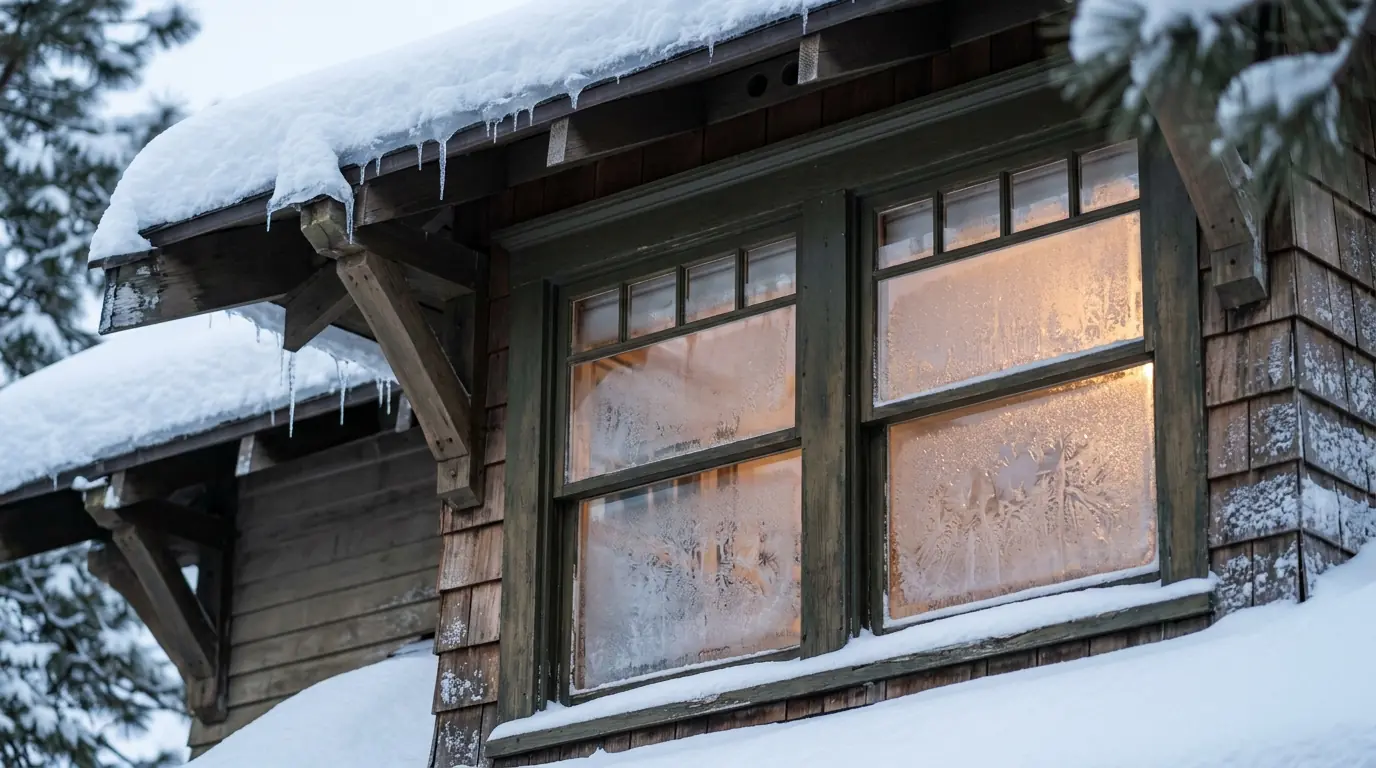
Spokane sees roughly 138 nights a year below freezing, and January averages a low near 21 F with highs that barely clear 33 F. A long run of those days lets cold work into pipes in exterior walls, crawl spaces, garages and the lines that feed outdoor spigots. Water expands as it freezes, pressure builds between the ice plug and the closed faucet, and the pipe splits somewhere along that stretch, often not where the ice is.
Here is the part that surprises people: the split stays quiet while the line is frozen. It starts spraying when the house warms, the sun hits a wall or the afternoon thaws things out. That is why a burst so often shows up hours after the cold night that caused it, and why a second leak can appear on the same run a day later. Our burst and frozen pipe water damage work starts with finding every wet cavity along that line, not only the obvious one.
Dealing with this right now? Call any hour. We answer, tell you what to do first and send a crew.
Call (509) 730-2039Photos and video before you move anything
A short video walk-through now saves arguments later. Your insurer will want to see the source, the spread and what got wet, and once furniture is moved and rugs are pulled the original picture is gone. Shoot wide first, then close.
- The split pipe or failed fitting, with something in the frame for scale
- The water line on walls, cabinets and furniture legs
- Every room the water reached, filmed from the doorway
- Ceiling stains and bulges, plus the floor directly below them
- Serial number plates on damaged appliances
What to move, lift and leave alone in the first hour
Once the water is off and the photos are taken, protect what can still be saved. Work from the most valuable and most absorbent items outward.
A few things are better left alone. Skip the household vacuum, which is not built for water and puts you near a cord in a wet room. Keep space heaters out of wet rooms. Do not peel up wall-to-wall carpet that is still stretched on tack strip; done wrong, it tears or loses its stretch. Leave the drywall for the drying crew, who will meter it before deciding what needs to come out.
- Lift wood furniture legs onto foil squares, plastic lids or wood blocks so they stop wicking water
- Pull area rugs off wet carpet or hardwood, since rug dyes can bleed into both
- Move books, paper files, photos and electronics to a dry room
- Open sink base and vanity doors so the cabinet boxes can breathe
- Hang wet drapes up off the floor
Who to call first: the plumber, the drying crew or the insurer
You likely need all three, and speed matters more than order. A plumber fixes the pipe. A drying crew gets the water out of the structure, because a supply line leak starts as Category 1 clean water but does not stay that way: water that sits, soaks through dust and insulation or picks up contaminants can be treated as Category 2 within a day or two. Your insurer opens the claim and may ask what you did to limit the damage, so note the time you shut the water off.
Drying a cold-weather house has its own wrinkle. Wet framing and drywall in a home that dropped toward freezing need heat as well as airflow and dehumidification, and moisture readings decide when the job is done, not a calendar. We answer 24/7, holidays included, so a call in the first hour reaches someone who can start a structural drying plan right away.
Reader questions
Yes. Keep the furnace running unless water has reached it or its wiring. A heated house dries faster and protects the rest of the plumbing from freezing again. With the main shut off the remaining pipes are mostly drained, but lines in exterior walls can still hold enough water to split a second time if the house goes cold.
Once a plumber has fixed the split, open the main slowly and check the repaired section and every fixture on that run for drips. If the pipe was in an exterior wall or crawl space, ask the plumber to look for other weak spots along it. Frozen runs often have more than one damaged fitting.
Listen for hissing with every faucet closed, watch the water meter for movement, and look for wet drywall, bubbling paint or a damp smell. A meter that moves with everything off points to a leak. Thermal imaging and moisture meters can trace water inside walls without opening them, which is how a burst pipe's spread gets mapped.
Usually. Water under the house soaks insulation, pools on the vapor barrier and raises humidity in the joists above, and none of that dries well on its own in cold weather. Wet insulation typically comes out, standing water gets pumped, and dehumidifiers run until the framing reads dry. Leaving it invites mold and soft subfloors.
Lines in exterior walls, unheated garages and crawl spaces, outdoor spigot supply pipes, and anything near a foundation vent left open in winter. Kitchen sinks on outside walls are a common spot. Opening cabinet doors during a cold snap and letting a faucet drip on those runs lowers the risk.