Restoration advice
Ice dams and ceiling leaks: what is happening above your ceiling
Quick answer
An ice dam forms when heat escaping into the attic melts snow on the upper roof and the meltwater refreezes at the colder eaves. Water pools behind that ridge of ice and works under the shingles, showing up as ceiling stains, wet insulation and drips along exterior walls. Catch the water inside, rake snow from the ground, and leave the ice to a roofer.
How a warm attic and a cold eave build an ice dam
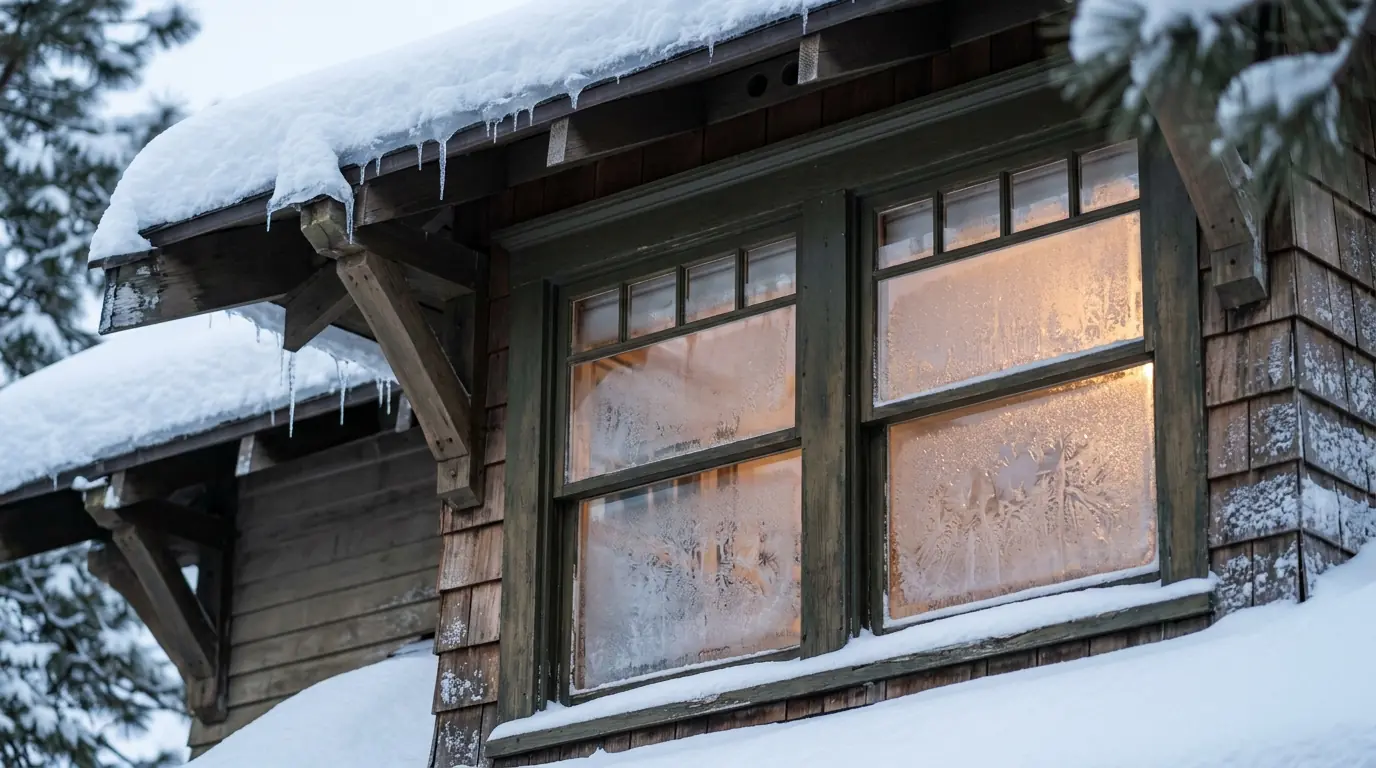
An ice dam starts with heat. Warm air leaks from the living space into the attic through light fixtures, bath fans, the attic hatch and gaps around plumbing stacks. That warms the roof deck, melts the bottom of the snowpack, and the meltwater runs down the roof until it reaches the eave, which hangs past the heated walls and stays as cold as the outdoor air. There it refreezes.
Each melt and freeze adds to the ridge. Meltwater backs up behind it, and shingles are built to shed water running downhill, not water sitting in a pond. It works under the shingle tabs, through nail holes and into the deck. Spokane supplies plenty of raw material: about 49 inches of snow in an average year, most of it in December and January, and about 138 days a year with lows below freezing.
Signs of an ice dam leak inside the house
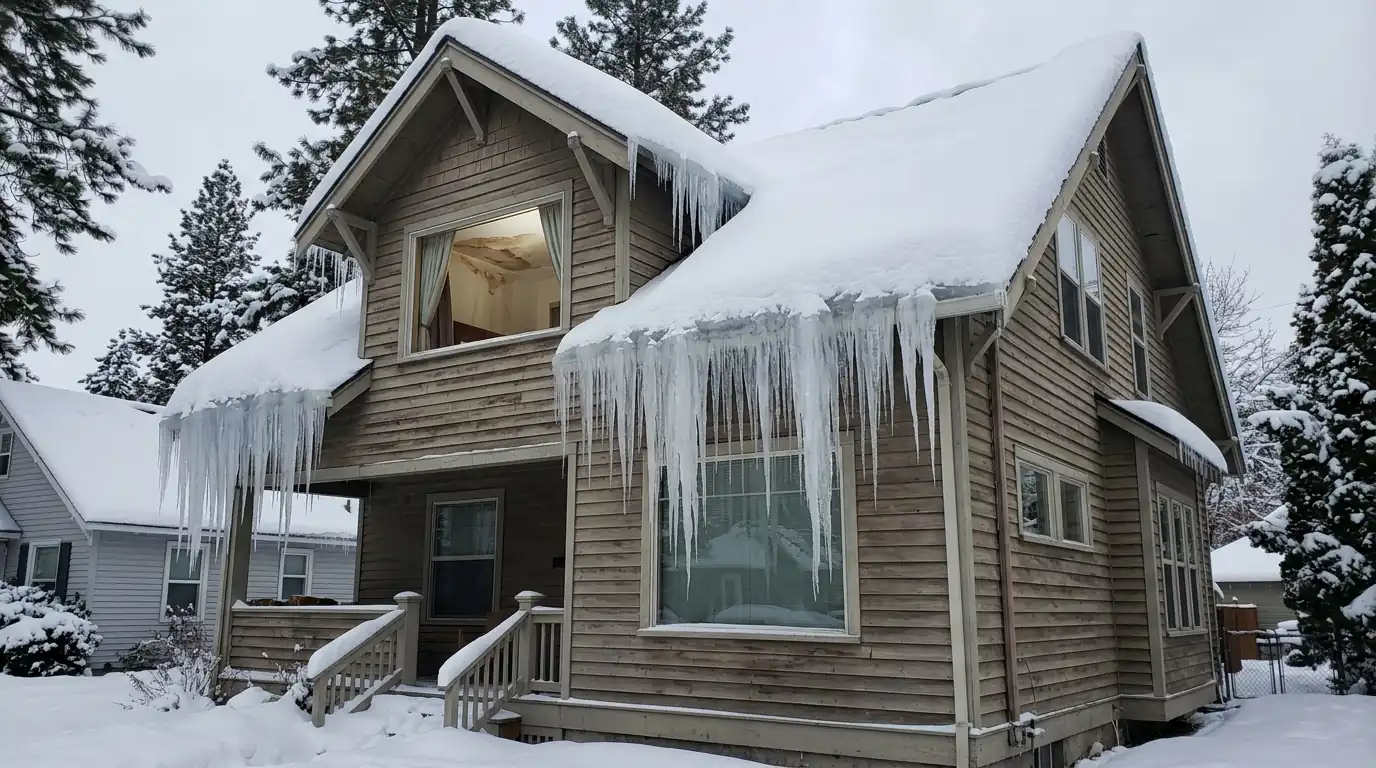
Ice dam leaks tend to appear near exterior walls and on the top floor, often on a sunny day after a cold night. Watch for:
- Brown rings or damp patches on the ceiling along an outside wall
- Peeling paint or bubbled drywall at the top of exterior walls
- Water running down the inside of window frames or dripping from the top trim
- Heavy icicles along the eaves at the same time as damp spots indoors
- Wet or matted insulation, and frost on roofing nail tips, when you look into the attic
What to do the day you see water
Inside, contain it. Set buckets and towels under drips, move furniture and electronics away, and photograph both the stains and the ice at the eaves. If a ceiling sags with water, keep people out from under it; a small hole at the lowest point drains it in a controlled way. Turn off ceiling fixtures in the wet area at the breaker.
Outside, stay on the ground. A roof rake on an extension pole can pull the lowest few feet of snow off the roof so less meltwater feeds the dam. Some roofers lay a calcium chloride ice melt tube across the dam to open a drain channel. Rock salt is a poor substitute that harms shingles, gutters and plants.
Reading this with water or smoke in the house? Stop and call. We will walk you through it.
Call (509) 730-2039What not to do on an icy roof
The ice itself is the roofer's job. Most use low-pressure steam to cut channels without damaging the shingles. Until they arrive, avoid the moves that turn a leak into a roof repair:
- Do not chop at the ice with a hatchet, shovel or ice pick; it tears shingles and punches holes in the deck
- Do not climb onto a snowy or icy roof, or lean a ladder against an iced gutter
- Do not use a torch, heat gun or open flame at the roof edge
- Do not pressure wash the ice, which forces water further under the shingles
- Do not knock down heavy icicles while standing under them
Who fixes what: the roofer, the attic and the drying crew
An ice dam leak is usually three problems at once. The roofer removes the dam and repairs any shingles, flashing or decking it damaged. Someone has to fix the heat loss that caused it, which means air sealing and insulation in the attic, and checking that bath fans vent outdoors rather than into the attic. And the water that already came in needs drying.
That last part is ours. Wet ceiling drywall, soaked insulation and damp wall plates rarely dry by themselves in winter, and wet roof sheathing in a cold attic is where mold gets a foothold. We meter the ceiling and walls, remove what cannot be saved and dry the rest; roof leak and ice dam water damage and ceiling water damage repair explain how that runs. If the sheathing already shows growth, attic mold removal comes next.
Keeping next winter's dam from forming
The lasting fix is a cold roof. Seal the air leaks from the house into the attic first, then add insulation, and make sure soffit and ridge vents move outside air under the deck. Air sealing is the step most often skipped, and it does more than extra insulation laid over leaky gaps.
Heat cables along the eaves can keep a drainage path open, but they treat the symptom, draw power all winter and can fail without anyone noticing. Use them as a backup on one stubborn eave, not as the plan.
Reader questions
Many policies treat sudden water entry from an ice dam differently from wear and tear, but coverage depends on your policy and the adjuster's decision. Photograph the ice at the eaves and the stains inside before anything is removed, keep receipts for emergency work, and ask for moisture readings that show what got wet.
Yes, if the leak repeats or the attic stays damp. Water that soaks roof sheathing and insulation in a cold attic dries slowly, and repeated wetting over a winter gives mold time to start. Dark staining on the underside of the sheathing near the eaves is the usual first sign, and it is worth checking every spring.
Low-slope roofs, roofs with valleys and dormers, and older houses with thin attic insulation or poor ventilation tend to have more trouble. Story-and-a-half homes with finished rooms under the roof are a common case, because heated space sits right against the roof deck with little room for insulation.
Stains that stop growing and drywall that reads dry on a moisture meter over several days are the signs. A stain that looks dry can still hide wet insulation above it. Check the attic with a flashlight after a thaw, and have the ceiling metered before painting over a stain, or it will likely bleed through.
Clearing the lower edge from the ground with a roof rake helps during a heavy snow stretch, because less snow near the eave means less meltwater feeding the dam. Leave the upper roof alone and never climb up. Raking is a short-term measure; attic air sealing and insulation are what stop dams from forming.
Services that go with this guide
Roof Leak & Ice Dam Water Damage
Storm & Emergency
See this serviceCeiling Water Damage Repair
Water Damage
See this serviceAttic Mold Removal
Mold
See this service