Your belongings, out of harm's way
Contents pack-out and cleaning after Spokane fires and floods
We photograph and inventory your belongings room by room, pack them out and clean what can be restored while the house is repaired.
- Answered 24/7
- Room-by-room inventory
- Soft and hard goods
- Storage during repairs
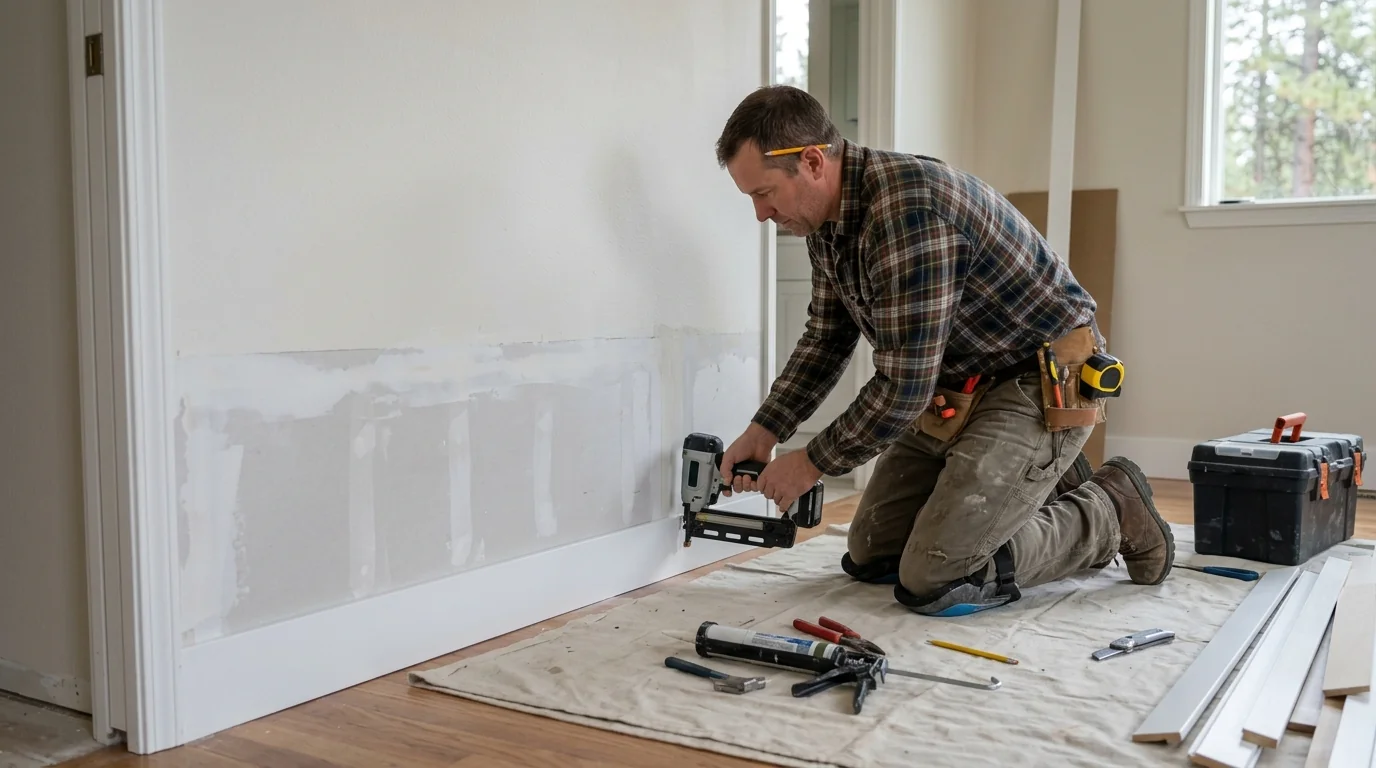
Quick answer
Contents pack-out in Spokane means moving belongings out of a damaged house so they can be cleaned and the structure can be dried or rebuilt. Every item is photographed and listed by room before it leaves, which also supports the contents part of an insurance claim. Textiles, furniture and electronics each get a different cleaning method.
Updated October 2026
Why belongings leave the house during a big restoration
It's hard to dry a floor under a full bookcase, and impossible to clean soot from a ceiling over a bed. Contents left in a damaged house also keep absorbing smoke odor and humidity, and they get in the way of every trade that follows.
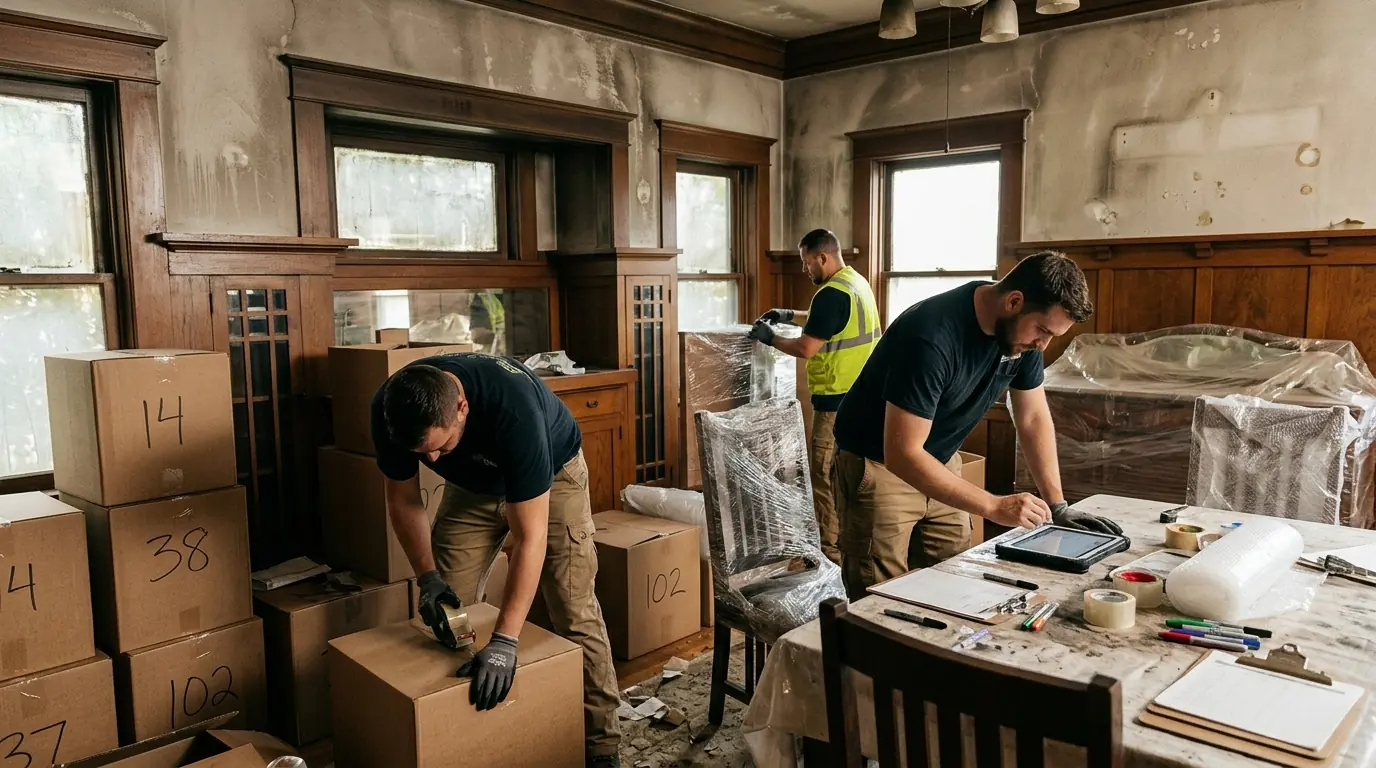
A pack-out moves them in an orderly way. Each room is photographed, every box is numbered and labeled with its room, and items are listed as they're packed. Things you need right away (medications, documents, work laptops, school clothes) are set aside first. At the cleaning stage we sort into salvageable and non-salvageable, and the non-salvageable list with photos goes to your adjuster before anything is thrown away. When the house is ready, boxes return to the rooms they came from.
Clean or replace: how each belonging gets decided
Not everything is worth cleaning; these factors usually decide it.
| Usually clean | Usually replace | |
|---|---|---|
| Clothing and linens | Smoke odor, light soot, clean water | Soaked with sewage or floodwater, charred |
| Hard furniture | Smoke residue on sealed finishes | Swollen particleboard, deep char |
| Upholstered furniture | Light smoke on removable covers | Category 3 water, odor deep in the foam |
| Electronics | Light smoke exposure, tested before use | Water inside the case, heavy corrosive soot |
| Photos and documents | Frozen or dried soon after a water loss | Charred or long-saturated items |
| Mattresses and pillows | Rarely | Wet, smoke-saturated or contaminated |
Cost
What affects the cost of a contents pack-out
Volume and handling drive it: how many rooms, how full they are, and how much packing material and labor it takes. Cleaning cost depends on the method each item needs, with textiles, ultrasonic cleaning and furniture work priced differently. Storage runs as long as repairs take, so a long rebuild adds storage time. Many policies address contents cleaning and storage under contents coverage, but policies differ and the adjuster decides.
Soft goods and textiles
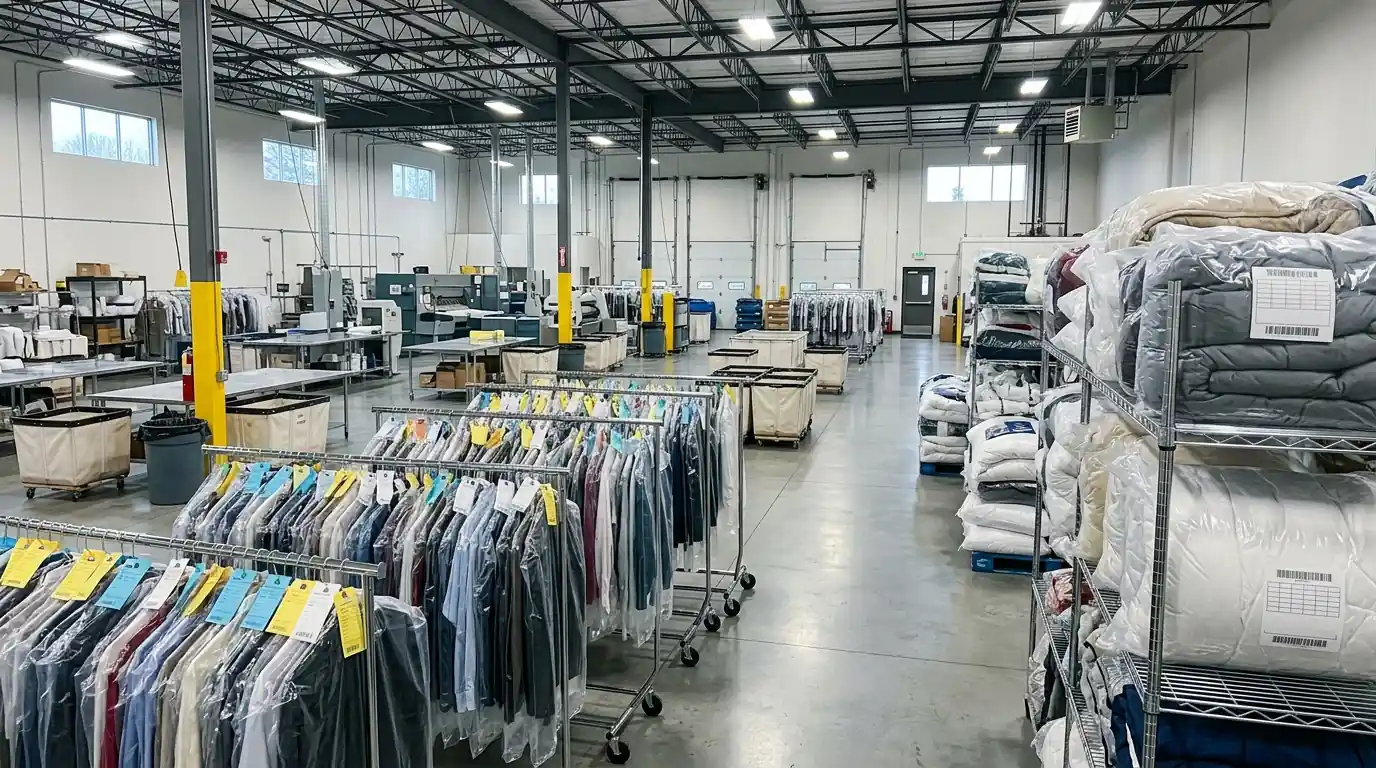
Clothing, bedding, curtains and stuffed toys absorb smoke odor and soot quickly, and after a water loss they can sour or mildew within days. Most smoke-affected textiles respond well to specialty laundering or dry cleaning with odor treatment. Items soaked with Category 3 water, such as sewage or floodwater, are usually not salvageable apart from some washable fabrics, and we flag those for the claim instead of cleaning them. Wet textiles get priority so they don't sit. Leather, wool and silk go to cleaning methods suited to each fabric.
Hard goods and furniture
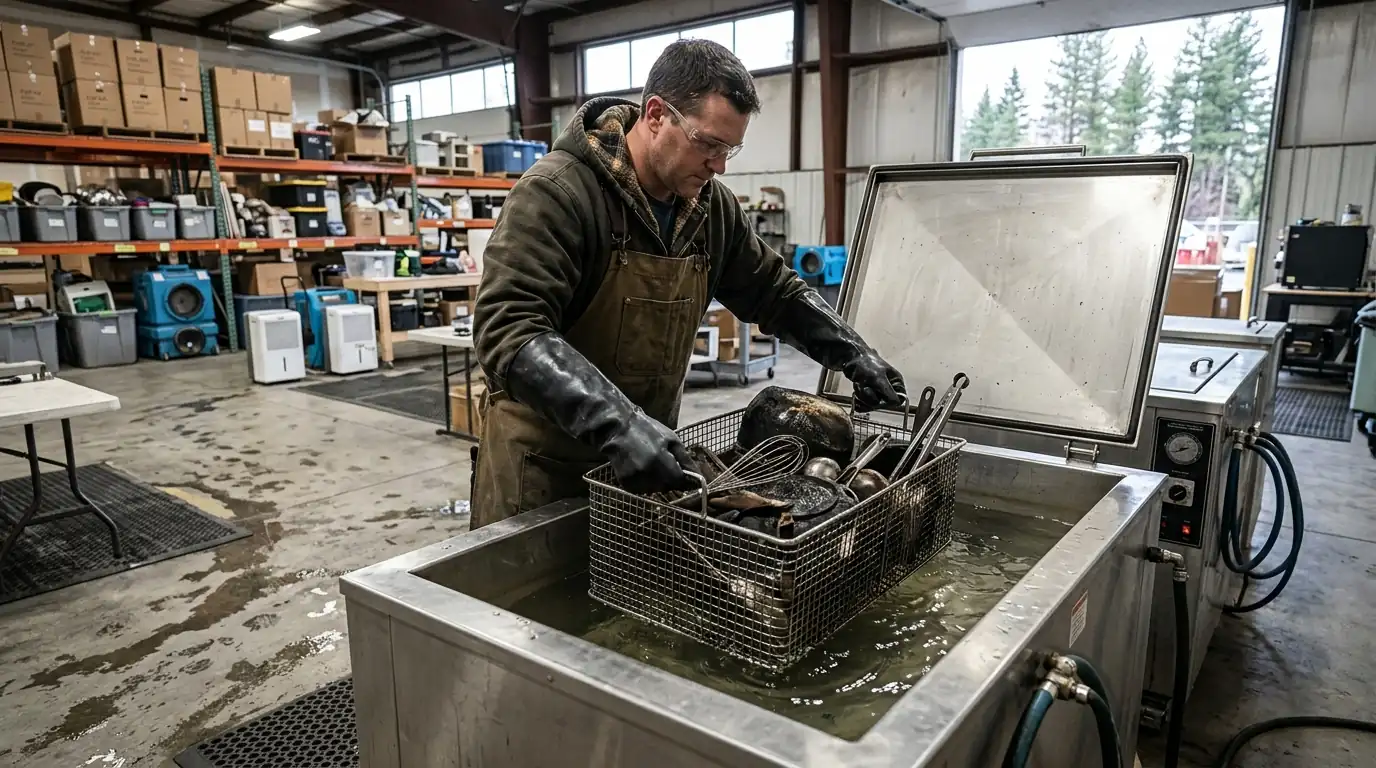
Dishes, decor, tools and hard furniture are cleaned by method: hand cleaning for delicate pieces, ultrasonic tanks for small items with crevices where soot hides, and wood furniture cleaned and treated according to its finish. Upholstered furniture is evaluated piece by piece because foam holds odor deep inside. Electronics exposed to smoke or water should be checked before use, since corrosive soot can damage circuits. Each item's outcome, cleaned or not salvageable, goes on the inventory. Items are wrapped after cleaning so they don't pick up odor again in storage.
Room-by-room inventory
The inventory does two jobs: it tracks where everything is, and it supports the contents part of your claim. We photograph each room before touching anything, then list items as they're packed with box numbers and room labels. Damaged items that can't be restored are photographed separately with brand and model where visible. You get a copy, and so can your adjuster. At move-back time, the same box numbers tell us which room each box belongs in, so you aren't unpacking a mystery.
Is it still wet, still smoking or still spreading?
Call now. The first few minutes on the phone are about stopping the damage, and a crew gets moving while we talk.
What a contents pack-out includes
The service runs from the first photo to the last box unpacked.
- Room-by-room photos before packing starts.
- Numbered, labeled boxes and a written inventory you can share with your adjuster.
- Priority set-aside of medications, documents, IDs and daily essentials.
- Cleaning of textiles, hard goods and furniture by the method each needs.
- A non-salvageable list with photos, kept before anything is discarded.
- Storage during drying and repairs.
- Delivery back to the rooms items came from.
How a contents pack-out works from first photo to move-back
- 01
Photograph each room
Every room is documented before anything is touched.
- 02
Pull out essentials
Medications, documents and daily needs go to you first.
- 03
Pack and label
Numbered boxes, room labels and an inventory line for each item.
- 04
Clean by material
Textiles, hard goods, furniture and electronics each get the right method.
- 05
Store and return
Items stay stored during repairs and come back to the right rooms.
Local conditions
Contents cleaning after the Oregon Road Fire near Elk
The Oregon Road Fire burned 10,817 acres near Elk, north of Spokane, in August 2023, destroying 126 primary homes and 258 outbuildings. Houses that survived nearby still filled with smoke, and on rural properties like these, shops and outbuildings often hold tools, equipment and stored family items alongside what's in the house. Pack-outs after a fire like that take more planning: outbuilding contents get their own inventory, textiles need odor treatment and ash comes off hard goods before anything goes into storage.
Contents Pack-Out & Cleaning questions
Not always. If smoke stayed in one or two rooms, we may clean contents on site. A pack-out makes sense when soot spread through the house, rooms need repairs, or belongings would be in the way.
Yes. We set aside anything you need first: medications, documents, laptops and clothes. Tell us what's important and we'll leave it out or pack it in a box marked for quick return.
We photograph and list them with brand and model where possible, and hold them until your adjuster has what they need. Nothing is discarded without your OK, and you can keep anything you want back.
Often. Wet photos and papers can be frozen to stop damage until they're dried. Smoke-stained photos are harder. We set these aside early since they're usually what families care about most.
Many policies include contents cleaning and storage, but policies differ and your adjuster decides. Our room-by-room inventory and photos give the adjuster clear documentation to review.
Related restoration work
Fire Damage Restoration
Fire & Smoke
See this serviceSmoke & Soot Cleanup
Fire & Smoke
See this serviceInsurance Claim Documentation
Rebuild, Contents & Commercial
See this serviceReconstruction After Water & Fire Damage
Rebuild, Contents & Commercial
See this serviceSee all 37 restoration services
Related advice: Documenting a water damage claim the right way and Questions to ask a restoration company before work starts
Answering 24/7
Need belongings packed out of a damaged Spokane home?
Call any hour. We'll start with photos and get your essentials to you first.
1876 N Teanaway Dr, Post Falls, ID 83854