Removing the source, not covering it
Odor removal and deodorization in Spokane, from smoke to pet urine
Odors live in materials: carpet pad, drywall, subfloor and ductwork. We find and remove the source before any machine runs.
- Answered 24/7
- Hydroxyl generators
- Ozone treatment
- Thermal fogging
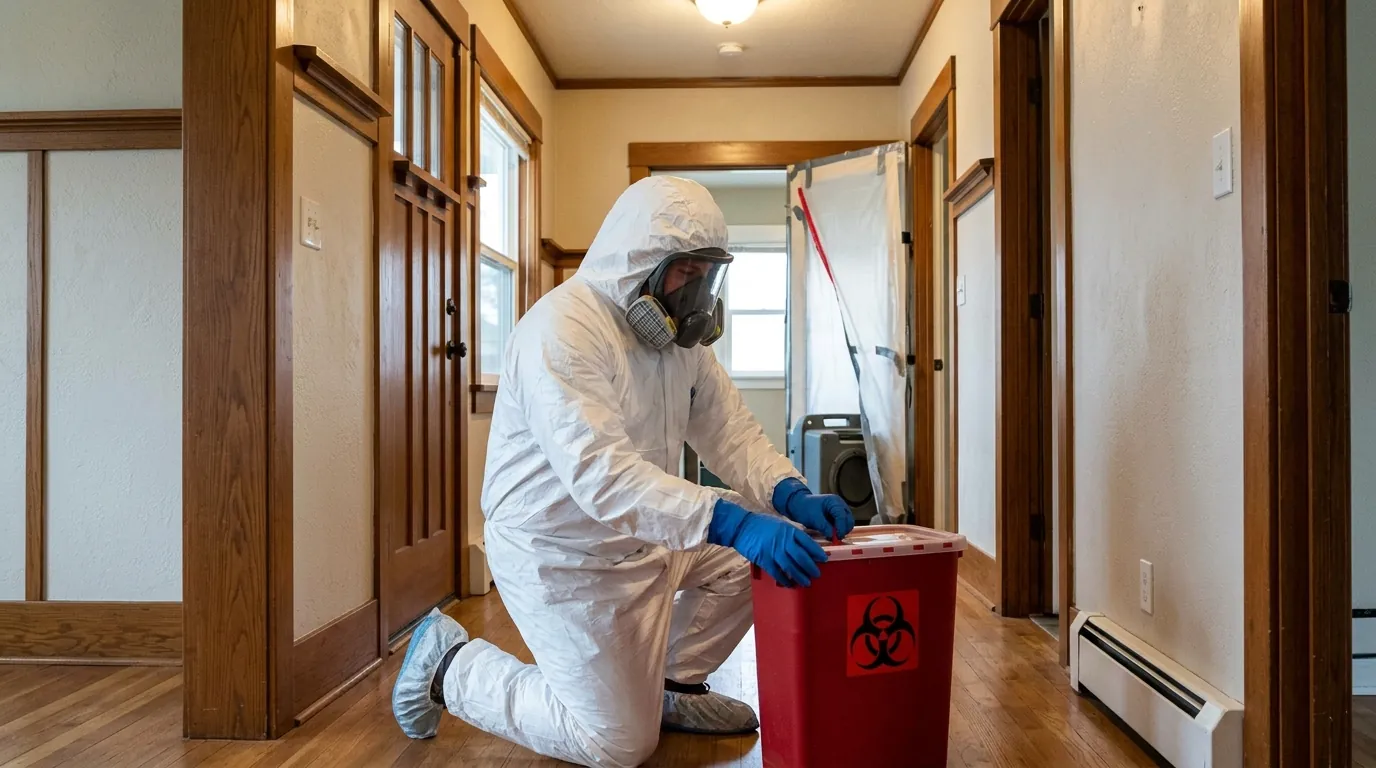
Quick answer
Odor removal in Spokane works only after the source material is cleaned, sealed or removed, because deodorizing equipment can't reach smell locked inside pad, drywall or framing. We find where the odor lives, deal with that material, then use hydroxyl generators, ozone or thermal fogging to treat what remains in the air and on surfaces.
Updated October 2026
Why odor removal starts with the material holding the smell
An odor is molecules coming off something. As long as that something stays in the house, the smell comes back, usually on the first warm day or when the furnace kicks on. Sprays and plug-ins just add a second smell on top of the first.
Our work starts with a hunt. We find where the smell is strongest, check carpet pad, subfloor, drywall, cabinets and ducts, and decide what can be cleaned and what has to go. Surfaces that stay are cleaned, then sealed with an odor-blocking primer when residue is in the material. Only then do we treat the air and remaining surfaces with equipment. After a fire, this usually follows smoke and soot cleanup.
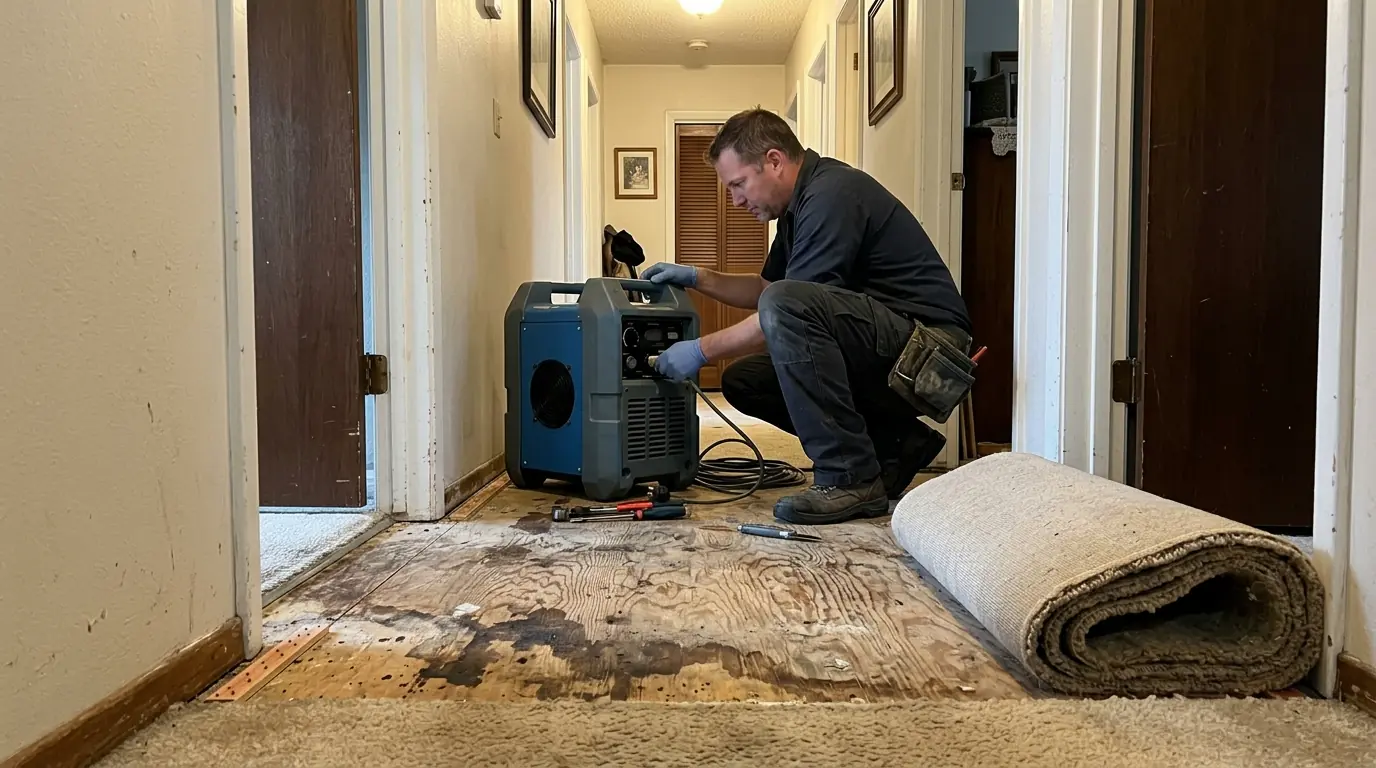
Ozone, hydroxyl or thermal fogging for odor removal
Each method has a place, and each comes with tradeoffs in safety and time.
| Ozone | Hydroxyl | Thermal fogging | |
|---|---|---|---|
| How it works | Ozone gas oxidizes odor molecules in the air and on surfaces | UV light creates hydroxyl radicals that break down odors in the air | A heated deodorizer fog follows smoke paths into gaps and porous material |
| Who can stay home | Nobody: people, pets and plants must be out until it airs out | People and pets can usually remain | Home must be empty until the fog settles and the space is aired |
| Speed | Fast, often a day or two | Slower, several days | Hours for the treatment itself |
| Drawbacks | Long exposure can degrade rubber, some plastics and fabrics | Works slowly on heavy odor | Leaves a fragrance that can hide a source that wasn't removed |
| Good for | Heavy smoke odor in an empty house | Occupied homes and delicate contents | Smoke odor in wall cavities and contents |
Cost
What decides the cost of odor removal
Source and spread matter most. One room of pet urine with a pad replacement is a small job; smoke odor through a whole house with attic insulation and ductwork involved is a large one. Material removal and sealing usually cost more than the equipment time. Ozone needs an empty home, so where people and pets will stay affects which method we use.
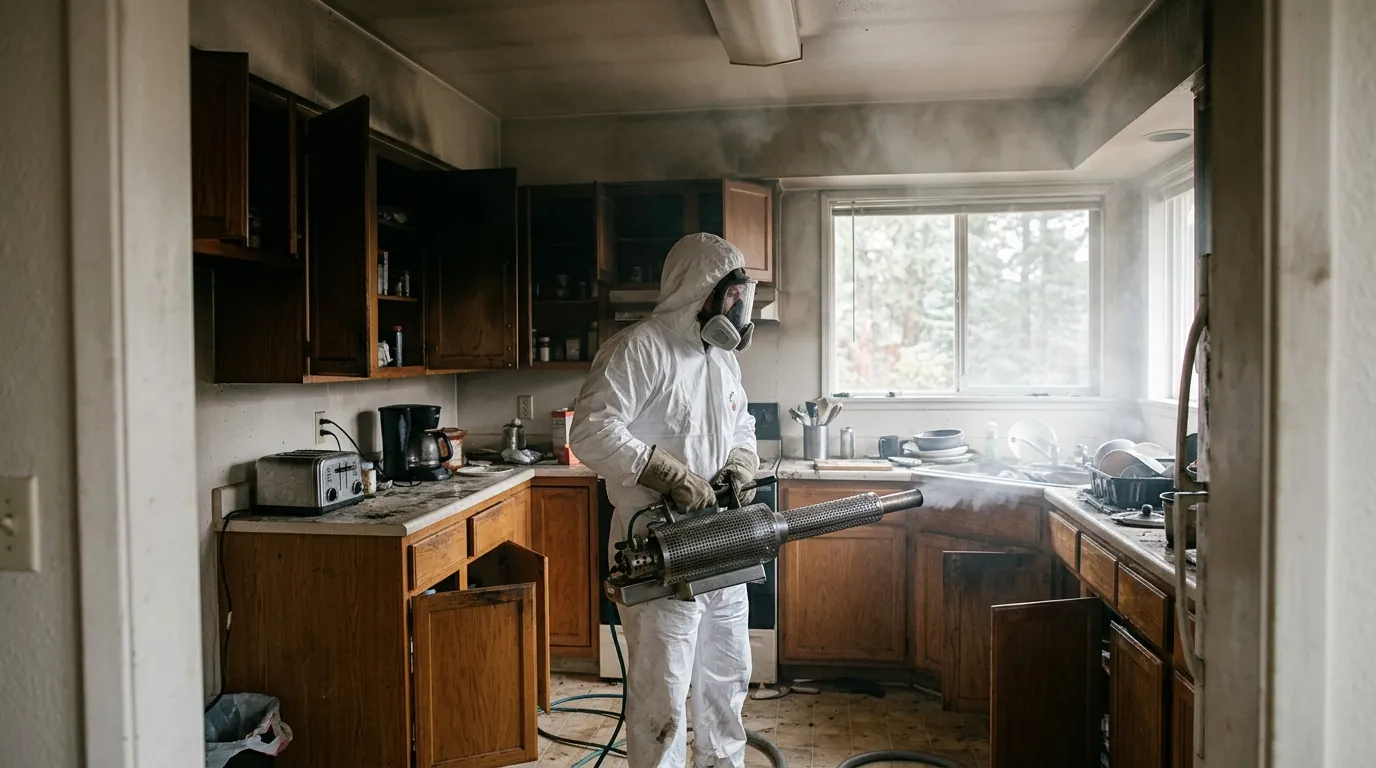
Smoke odor after a fire
Smoke particles are small enough to work into drywall paper, insulation, cabinet interiors and ductwork, and they carry the smell with them. After visible soot is cleaned, we still find odor in closed cabinets, behind outlet covers and in the attic. We clean those spaces, replace insulation that sat in smoke, seal framing and drywall with a shellac-based or odor-blocking primer, and then treat the air. Thermal fogging helps here because the deodorizer follows the same paths the smoke took.
Pet urine odor
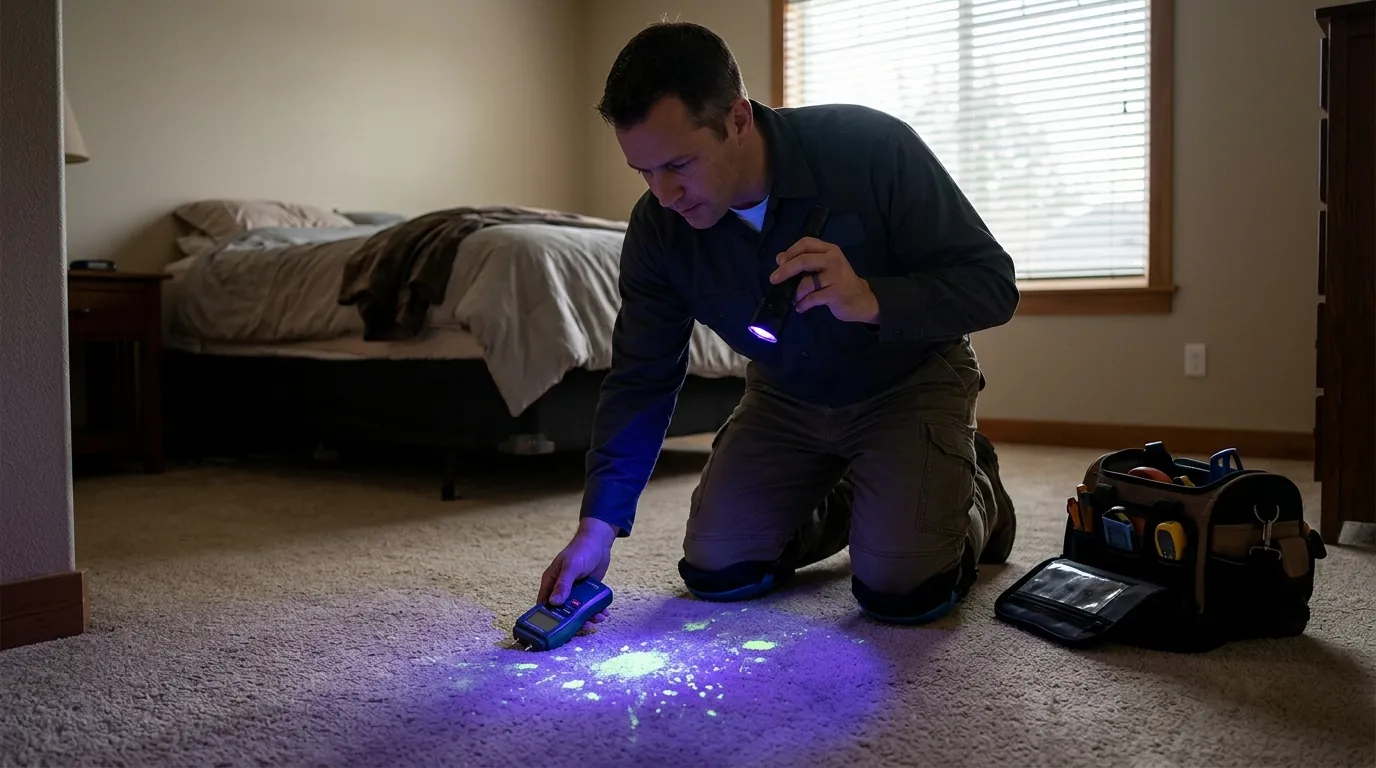
Urine soaks through carpet into the pad and often into the plywood or OSB below, where it dries into salts that smell again every time humidity rises. Shampooing the carpet surface rarely reaches it. We use a UV light and a moisture meter to map the spots, pull up affected pad, treat the subfloor with an enzyme cleaner and seal it before new pad goes down. Baseboards and the bottom edge of drywall get checked too, since repeated marking wicks upward.
Cigarette and cannabis smoke odor
Years of indoor smoking leave a sticky, yellow tar film on walls, ceilings, windows and inside ducts. That film holds the smell and slowly releases it, so fresh paint over an unwashed wall often lets the odor bleed back through. We wash every surface with a degreasing cleaner, replace the furnace filter and check the ducts, then prime with an odor-blocking sealer before paint. Hydroxyl or ozone treatment finishes the air. Landlords between tenants and new buyers call about this most often.
Need someone there tonight?
We answer around the clock. Tell us what happened and we will say what to do before the crew arrives.
How we take an odor out of a house
- 01
Find the source
We trace where the odor is strongest and which materials hold it.
- 02
Remove or clean
Saturated pad, insulation or drywall comes out; surfaces that stay get cleaned.
- 03
Seal what remains
An odor-blocking primer locks residue into framing, subfloor or walls.
- 04
Treat the air
Hydroxyl, ozone or thermal fogging, chosen for the odor and the household.
- 05
Recheck with heat on
We check again with the furnace running, when hidden odors usually show.
Local conditions
Smoke odor in Spokane County homes after the 2023 fires
Smoke from 2023 still shapes this work: the Gray and Oregon Road fires, near Medical Lake and Elk, destroyed 366 Spokane County homes over 22,000-plus acres. Many more houses outside the burn areas never saw flame but filled with smoke through open windows, attic vents and furnace intakes. In those homes, odor work becomes the whole job: cleaning ash from the attic and ducts, replacing filters and insulation, and treating the air until the smell stops returning on warm afternoons.
Odor removal steps you can try before calling
A few home steps work on light odors; heavy or returning smells usually need material removal.
| Task | Doing it yourself | When we do it |
|---|---|---|
| Baking soda and airing out | Helps a little with light, recent odors in fabric and air. | When the smell comes back after airing. |
| Enzyme cleaner on pet spots | Works on fresh spots if it reaches the pad, which it usually doesn't. | When urine has reached pad or subfloor. |
| Washing walls after smoking | Doable for one room with a degreaser, but residue in ceilings and ducts remains. | Whole-house residue and sealing. |
| Renting an ozone machine | Risky: it's easy to overexpose rubber, plants and pets, and it can't fix a source. | When ozone fits, we run it and air out the house. |
| Changing furnace filters | Always worth doing, and cheap. | When ducts hold smoke or ash. |
Odor Removal & Deodorization questions
One room of pet odor can be finished in one or two days. Whole-house smoke odor after a fire often takes a week or more, because cleaning and sealing come before air treatment and we recheck with the heat on.
Not while it runs. Ozone at treatment levels irritates lungs, so people, pets and plants leave the house and stay out until it airs out. When someone can't leave, we use hydroxyl generators instead.
Usually the source stayed in place: urine salts in the subfloor, smoke in attic insulation or tar film under paint. Masking the smell or treating only the air fades for a while, then returns with warmth or humidity.
Yes, though it's more work than most buyers expect. Every wall and ceiling gets washed, the ducts and filter get attention, and surfaces are sealed before painting. Paint alone usually lets the odor bleed through.
Not always the carpet, but often the pad. Urine passes through carpet into the pad and subfloor, and pad can't be cleaned well. Sometimes carpet can be lifted, cleaned and relaid over new pad and a sealed subfloor.
Related restoration work
Smoke & Soot Cleanup
Fire & Smoke
See this serviceWildfire Smoke & Ash Cleanup
Fire & Smoke
See this serviceDuct Cleaning After Smoke & Water Damage
Rebuild, Contents & Commercial
See this serviceBiohazard & Trauma Cleanup
Sewage, Biohazard & Odor
See this serviceSee all 37 restoration services
Related advice: Sewage in the basement: what to do and what not to touch and Questions to ask a restoration company before work starts
Answering 24/7
Smell in your Spokane home that keeps coming back?
Call any hour. We'll find what's holding it and tell you how much has to come out.
1876 N Teanaway Dr, Post Falls, ID 83854