Mobile and manufactured home water damage in Spokane, WA
Manufactured home water damage cleanup in Spokane
In a manufactured home, the water you see is often a small share of what is trapped in the belly wrap underneath.
- Answered 24/7
- Belly wrap and insulation
- Particleboard subfloors
Quick answer
Manufactured home water damage in Spokane often collects in the belly wrap, the fabric layer under the floor that holds insulation and plumbing, where it can pool for weeks. Cleanup means opening the wrap, draining trapped water, removing wet insulation, drying the floor joists and subfloor, then patching the wrap. Particleboard subfloors that swelled usually need replacement.
Updated October 2026
How water behaves in a manufactured home floor
Manufactured homes are built differently from site-built houses. The floor sits on a steel chassis, and beneath it a fabric or plastic belly wrap holds insulation, water lines and ducts. When a line leaks, water drops into the belly and pools there, hidden from view, until it sags the wrap, swells the subfloor or shows up as a soft spot. Ducts in the belly can also carry musty air from that wet insulation straight into the rooms.
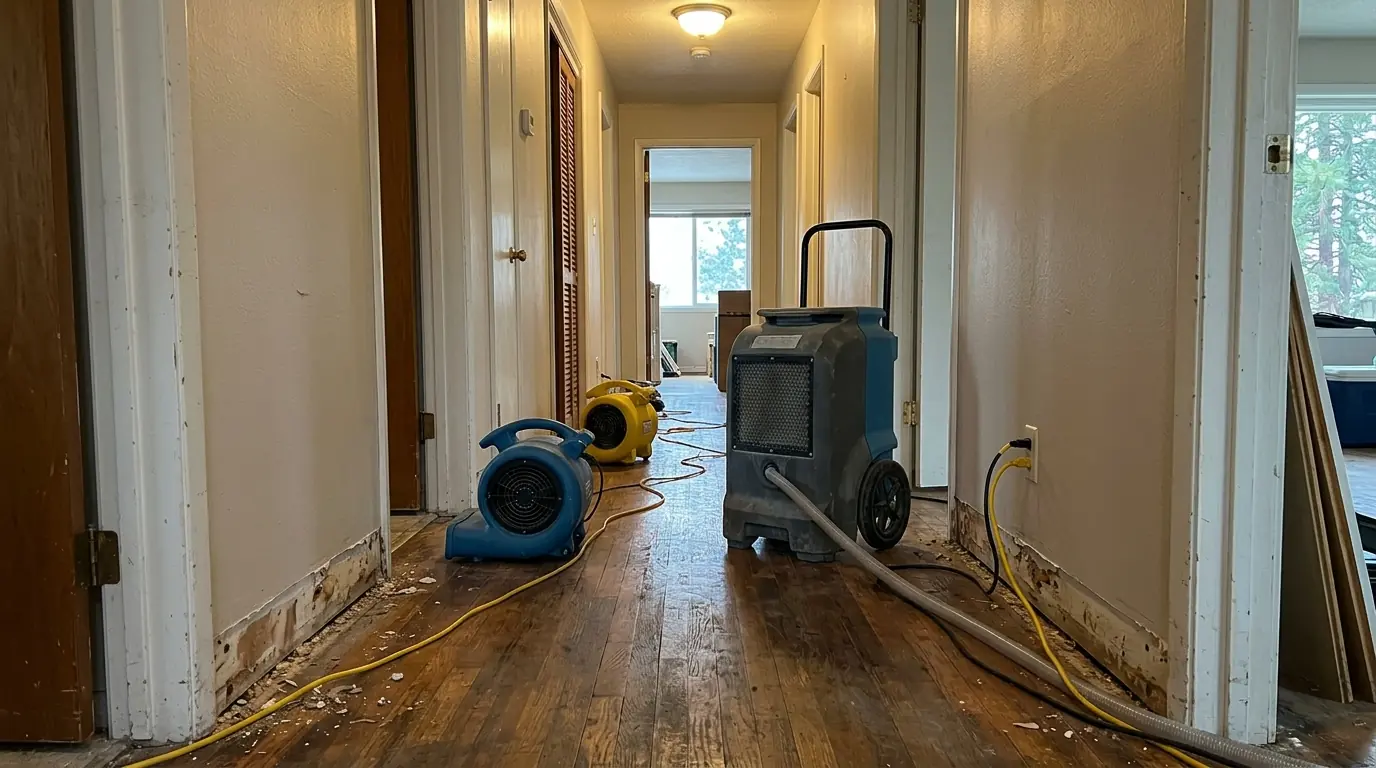
Many older units have particleboard subfloors, which swell and crumble when wet instead of drying back. We open the belly, drain it, pull wet insulation and dry the floor from below. Water that reached carpet and pad inside gets handled in the same visit.
Signs of water damage in a manufactured home
Manufactured homes show water damage in their own ways.
Sagging belly wrap
A bulge under the home often holds trapped water.
Soft spots in the floor
Particleboard that took on water loses strength.
Musty smell from vents
Ducts in the belly carry odor from damp insulation.
Higher water bill in winter
A frozen and split line under the home can leak unseen.
Stains around the water heater closet
Water heater leaks are common in manufactured homes.
Belly wrap leaks
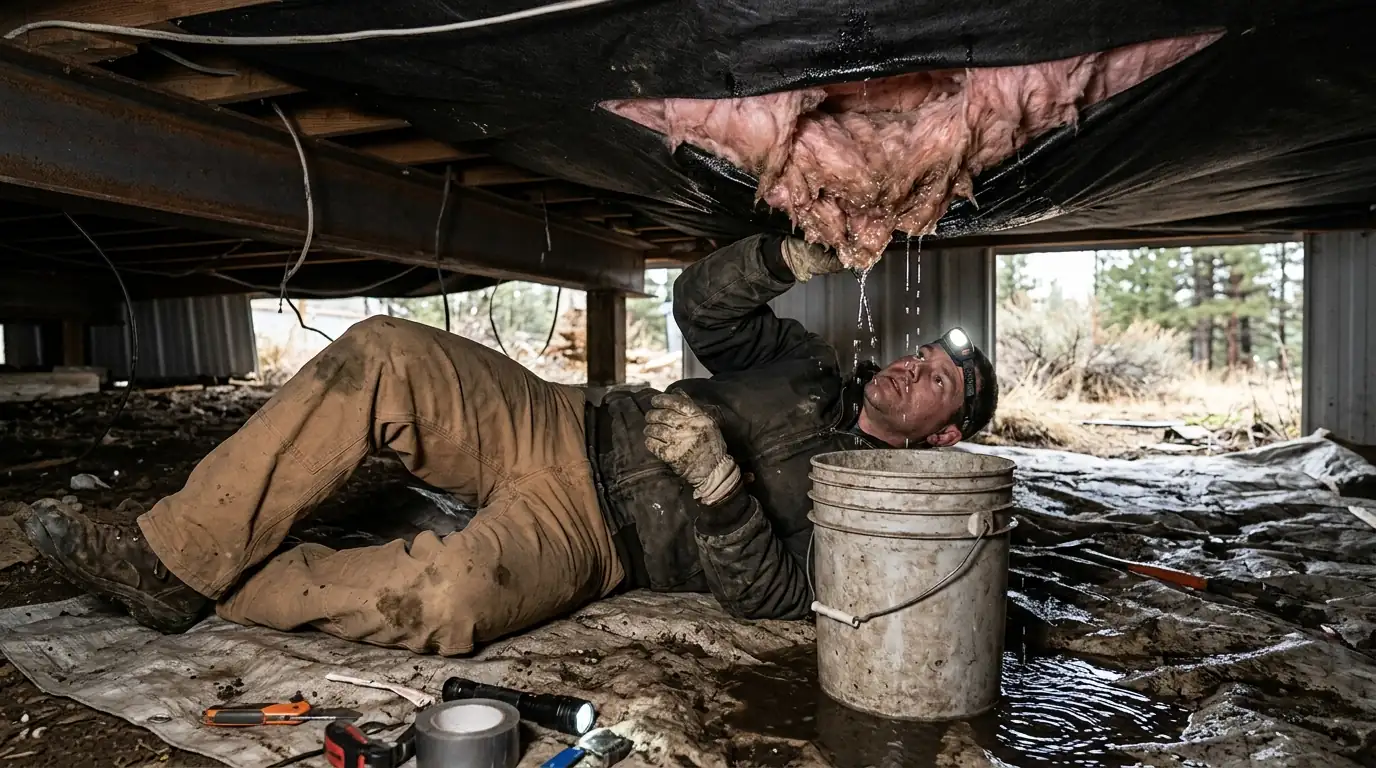
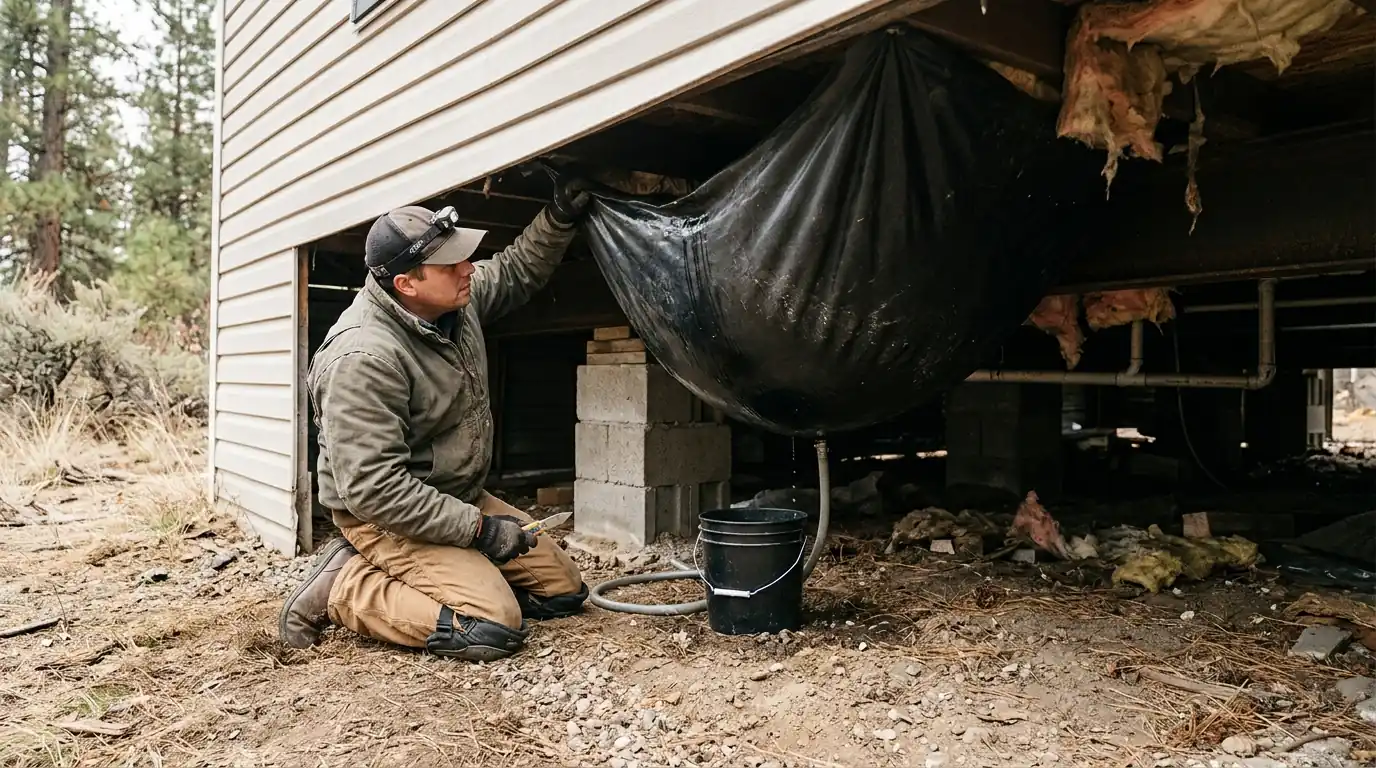
A sagging belly wrap is a sign of water or insulation weight. Water from a supply leak, a drain line or condensation pools in the lowest spot of the wrap, sometimes holding many gallons. We cut a controlled opening at the low point, drain it into a container, pull the wet insulation and dry the cavity with air movers and dehumidifiers. Once readings confirm the floor is dry, we patch the opening with belly wrap material and tape so it keeps out rodents and cold air again.
Under-home supply lines
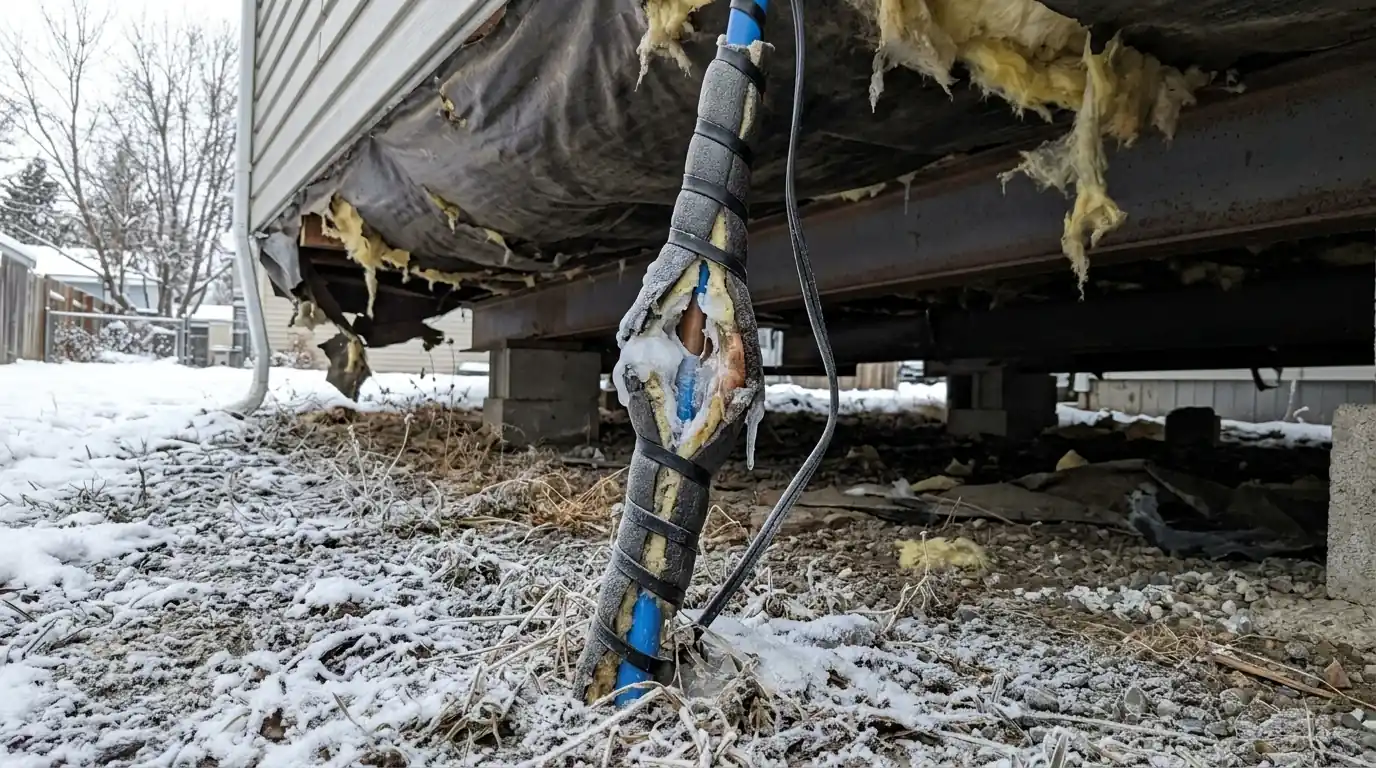
Supply lines in a manufactured home run inside the belly or just below it, close to the outside air. Heat tape keeps them from freezing, and when it fails or the skirting has gaps, lines freeze and split. The water goes straight into the belly. After the plumber repairs the line, we drain and dry the belly and check the heat tape and skirting with you so the same section does not freeze again. PEX lines survive freezing better than older polybutylene, but fittings still crack.
Soft floors
A soft or spongy spot in a manufactured home floor, especially near a bathroom, kitchen or water heater closet, usually means the particleboard subfloor has absorbed water and lost its strength. Unlike plywood, swollen particleboard does not recover when dried. We cut out the damaged section, dry the joists, treat the area with an antimicrobial and replace it with plywood or OSB. If the floor has been soft for a long time, the joists under it may need reinforcing as well, which we check once the section is open.
Looking at this mess right now?
Pick up the phone. A real person answers 24/7 and talks you through the next ten minutes.
Our steps for a manufactured home water loss
- 01
Shut off and find
We close the water and locate the leak inside or under the home.
- 02
Open and drain the belly
A controlled cut at the low point lets trapped water out.
- 03
Remove wet insulation
Soaked insulation is pulled and bagged.
- 04
Dry and treat
Air movers and dehumidifiers dry the joists and subfloor, with an antimicrobial on exposed wood.
- 05
Patch and close
The belly wrap is patched, and swollen subfloor is replaced.
Local conditions
Spokane winters and manufactured home plumbing
Spokane's average January low is about 20.8 degrees, with highs barely above freezing at about 33.2. Water lines in a manufactured home sit closer to that cold than lines in a site-built house, protected mainly by heat tape, belly insulation and skirting. A gap in the skirting or a heat tape that quit during a cold stretch is enough to freeze a line. That is why our manufactured home calls cluster in midwinter and on the first warm days after a hard freeze.
Cost
What drives manufactured home water damage cost
Costs on a manufactured home water job depend mostly on how much of the belly holds water, how much insulation comes out, and how many square feet of particleboard subfloor have to be replaced. Access under the home matters too, since low clearance slows every task. Skirting and heat tape repairs are separate items. We photograph and log the readings so the scope is clear.
What manufactured home water cleanup includes
Here is the scope on a typical manufactured home job.
- Inspection under the home with photos and moisture readings.
- Controlled drainage of water trapped in the belly wrap.
- Removal of wet insulation from the belly.
- Drying of joists and subfloor from below and above.
- Antimicrobial treatment of exposed wood.
- Replacement of swollen particleboard with plywood or OSB.
- Belly wrap patching to close the home back up.
Manufactured Home Water Damage questions
Plywood and OSB subfloors often dry well. Particleboard usually does not; it swells and crumbles. We check the subfloor type from below, dry what can recover and replace what cannot with plywood or OSB.
Most often a supply or drain line leaking into the belly wrap, a frozen line that split, or condensation from ductwork. Outside water entering through gaps in the skirting can also collect underneath.
Usually not entirely. We open it where needed to drain and dry, then patch it with matching material and tape. Badly torn or brittle wrap, or wrap that rodents have chewed through, may need larger sections replaced.
Check that heat tape is plugged in and working each fall, keep the skirting intact and its vents closed in deep cold, and keep the heat on when you travel. Insulating exposed lines also helps.
Keep weight off it, especially heavy furniture and appliances. Swollen particleboard can give way under a foot. Lay a sheet of plywood across the spot to spread the load until the section is replaced.
Related restoration work
Burst & Frozen Pipe Water Damage
Water Damage
See this serviceCrawl Space Water Damage
Water Damage
See this serviceCarpet & Pad Water Damage
Water Damage
See this serviceStructural Drying & Dehumidification
Water Damage
See this serviceSee all 37 restoration services
Related advice: Burst pipe in a Spokane winter: the first hour and What water damage restoration costs in Spokane
Answering 24/7
Water trapped under your manufactured home?
Call any hour. We will drain the belly, dry the floor and close it back up.
1876 N Teanaway Dr, Post Falls, ID 83854