Roof Leak & Ice Dam Water Damage
Ice dams and heavy snow load push water through roof decks into attics and ceilings during long freeze and thaw cycles.
See this serviceCheney, Washington
Winter does most of the damage we see in Cheney, and it does it from the roof down and from the pipes out.
Quick answer
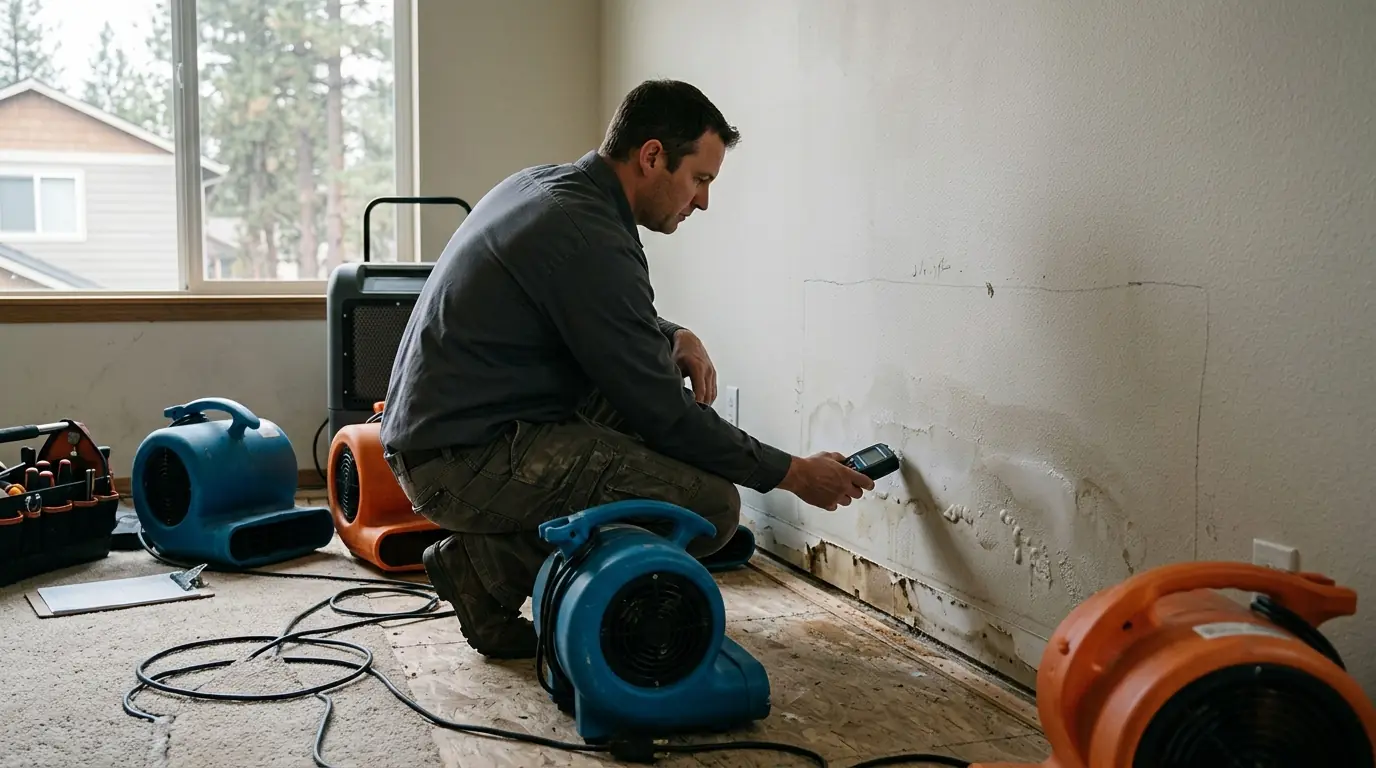
Most Cheney calls we take come in winter: ice dams pushing meltwater into ceilings, frozen pipes splitting in walls and crawl spaces, and attic mold that follows a wet season. We dry and repair the damage, clean or remove mold, and document it for your claim. Crews come from our Post Falls office; the phone is answered 24/7.
An ice dam forms when heat from the house melts snow on the upper roof and the water refreezes at the cold eaves. The next melt backs up behind that ridge of ice and runs under the shingles. In Cheney that usually shows up as a brown ring on a bedroom ceiling, wet insulation, or water running down the inside of an exterior wall.
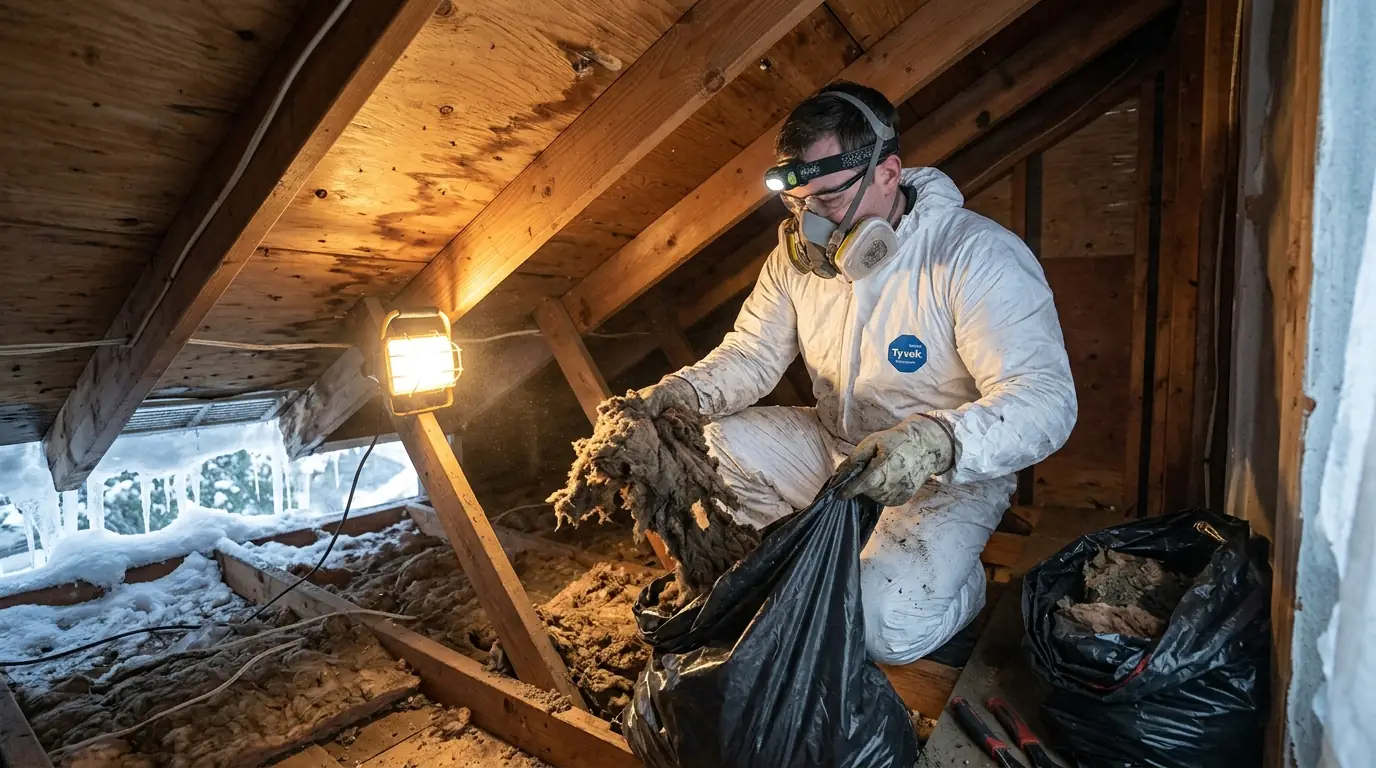
We start in the attic. Wet insulation loses most of its value and often has to come out. Roof sheathing gets moisture readings, ceilings get thermal imaging, and sagging drywall is opened before it falls. Frozen pipes are the other winter call: a line in an exterior wall or crawl space splits in a cold snap and leaks when it thaws. Read about ice dam water damage for the roof side of it.
Local conditions
Cheney counted 13,271 residents at the 2020 census, and its houses share the region's winter. Spokane averages about 49 inches of snow a year, most of it in December and January, and the low drops below freezing on roughly 138 days. Snow that sits on a roof that long, cycling through melt and freeze, is what builds ice dams. Those same cold nights are when pipes in unheated spaces, garages and crawl spaces freeze. That is why our Cheney work clusters between December and March, and why attics get checked on nearly every winter call.
The jobs Cheney homeowners call us for, mostly between December and March.
Ice dams and heavy snow load push water through roof decks into attics and ceilings during long freeze and thaw cycles.
See this serviceSupply lines in exterior walls, crawl spaces and garages freeze during cold snaps and leak once they thaw.
See this serviceDrywall ceilings that soak up water sag and can fall, and the insulation above them usually needs to come out.
See this serviceRepeated leaks and poor attic ventilation leave roof sheathing damp enough for mold to grow after a snowy winter.
See this serviceWind and heavy wet snow bring down branches and damage roofs, opening the house up to the next storm.
See this serviceGetting to you
Call at any hour and we pick up. If a pipe split, close the main valve and open a low faucet. If water is coming through a ceiling, put a bucket under it, and if the drywall bulges, poke a small hole at the low point so the water drains into the bucket instead of bringing the ceiling down. Keep out of rooms with sagging ceilings. Our crew drives from Post Falls through Spokane to Cheney, and winter roads set the pace, so we give you an honest estimate when you call.
We answer every hour of the day and tell you on the call what to do first.
Look for a thick ridge of ice along the eaves and icicles hanging from the gutters, especially above warm rooms. Inside, watch for stains near outside walls, damp insulation, or water at the tops of windows. Leaks often appear on a warm afternoon after cold nights.
Not always. If we dry the sheathing and remove wet insulation quickly, mold often never starts. If the attic has had repeated leaks or poor ventilation, we may find growth on the sheathing, which we clean or treat before helping you deal with the moisture source.
Open the faucet it feeds, then warm the pipe slowly with a hair dryer or a space heater kept away from anything flammable. Never use an open flame. If you see a bulge or a crack, shut off the main before it thaws.
If the drywall held its shape and dries back to normal readings, we keep it. If it sagged, came apart, or held water for days, it comes out. Plaster ceilings in older homes are handled differently, and we explain which applies before cutting anything.
Answering 24/7
Call any hour. We answer, tell you how to protect the ceiling, and send a crew from Post Falls.
1876 N Teanaway Dr, Post Falls, ID 83854
Our office
1876 N Teanaway Dr, Post Falls, ID 83854