When the roof lets water in
Roof leak and ice dam water damage cleanup in Spokane homes
We handle the inside of the house: the wet attic, ceilings and walls. A roofer fixes the roof itself, and we work around their schedule.
- Answered 24/7
- Interior drying
- Emergency tarping
- Attic and ceiling
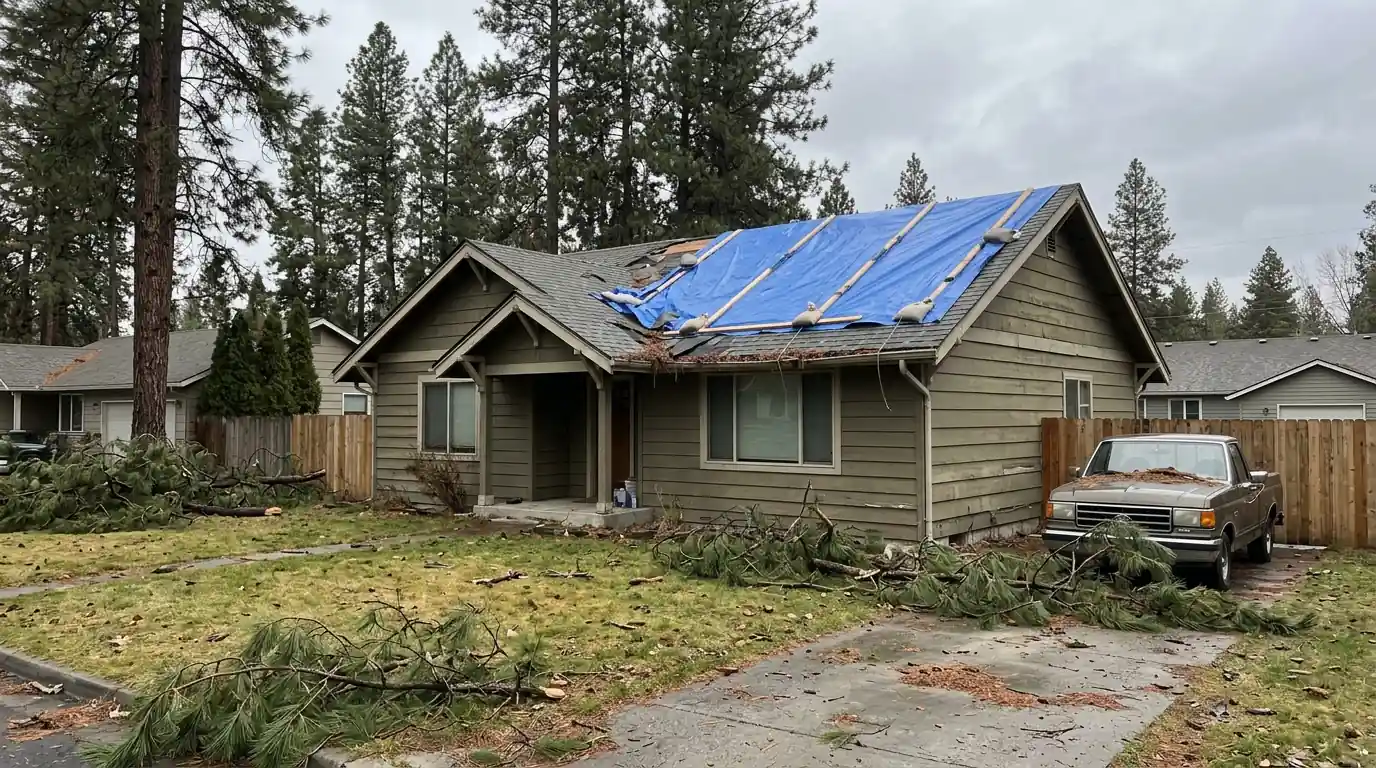
Quick answer
Roof leak and ice dam water damage in Spokane mostly shows up during thaws, when melting snow backs up behind ice at the eaves and runs under shingles into the attic and walls. We tarp if needed, remove wet insulation and drywall, and dry the structure. A roofer repairs the roof, and we document the interior for the claim.
Updated October 2026
How water from the roof ends up inside your walls
Roof water rarely drips straight down. It lands on attic insulation, runs along the underside of the sheathing and down rafters to the top plate, then into the exterior wall cavity. By the time a ceiling stain appears, the insulation above it may have been soaking for days.
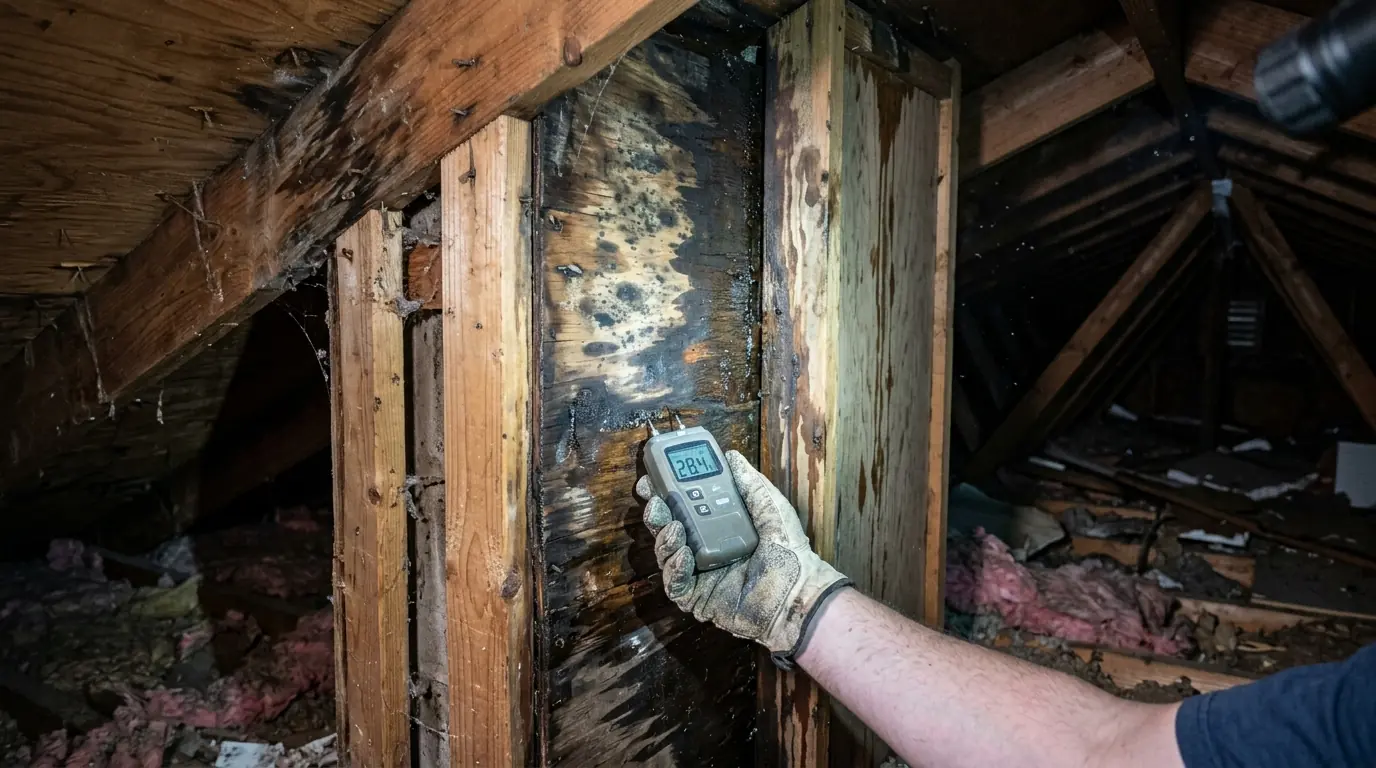
Our side of the job starts in the attic. We pull back or remove wet insulation, check sheathing and rafters with meters, and follow the water down through ceilings and walls. Wet drywall is cut out where it can't dry in place, cavities are opened at the bottom so air can move, and dehumidifiers run until readings match dry material. If the roof is still open, we tarp it first. Ceiling repair after drying is covered on our ceiling water damage page.
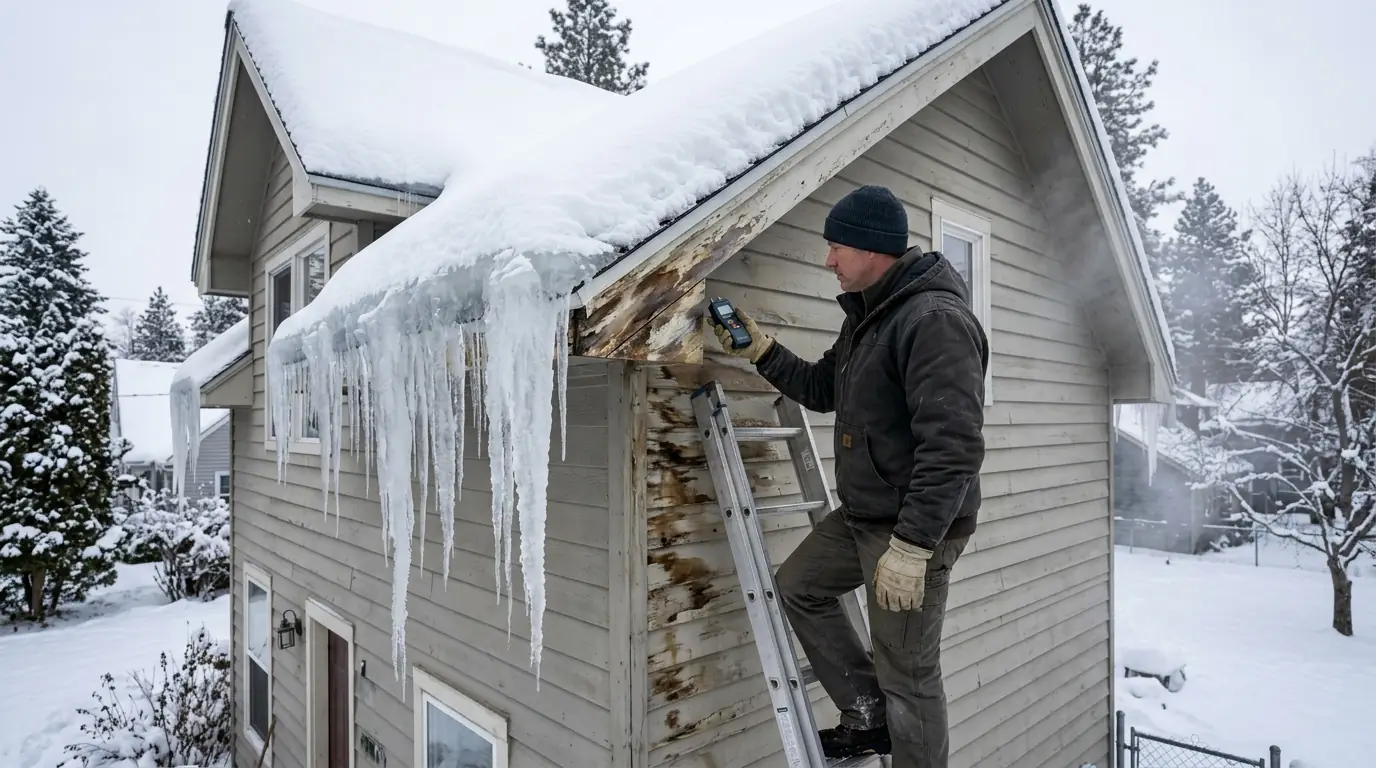
Signs an ice dam or roof leak is wetting your ceiling
Check for these during and right after a thaw.
A thick ice ridge at the eaves
Water is likely pooling behind it on the roof.
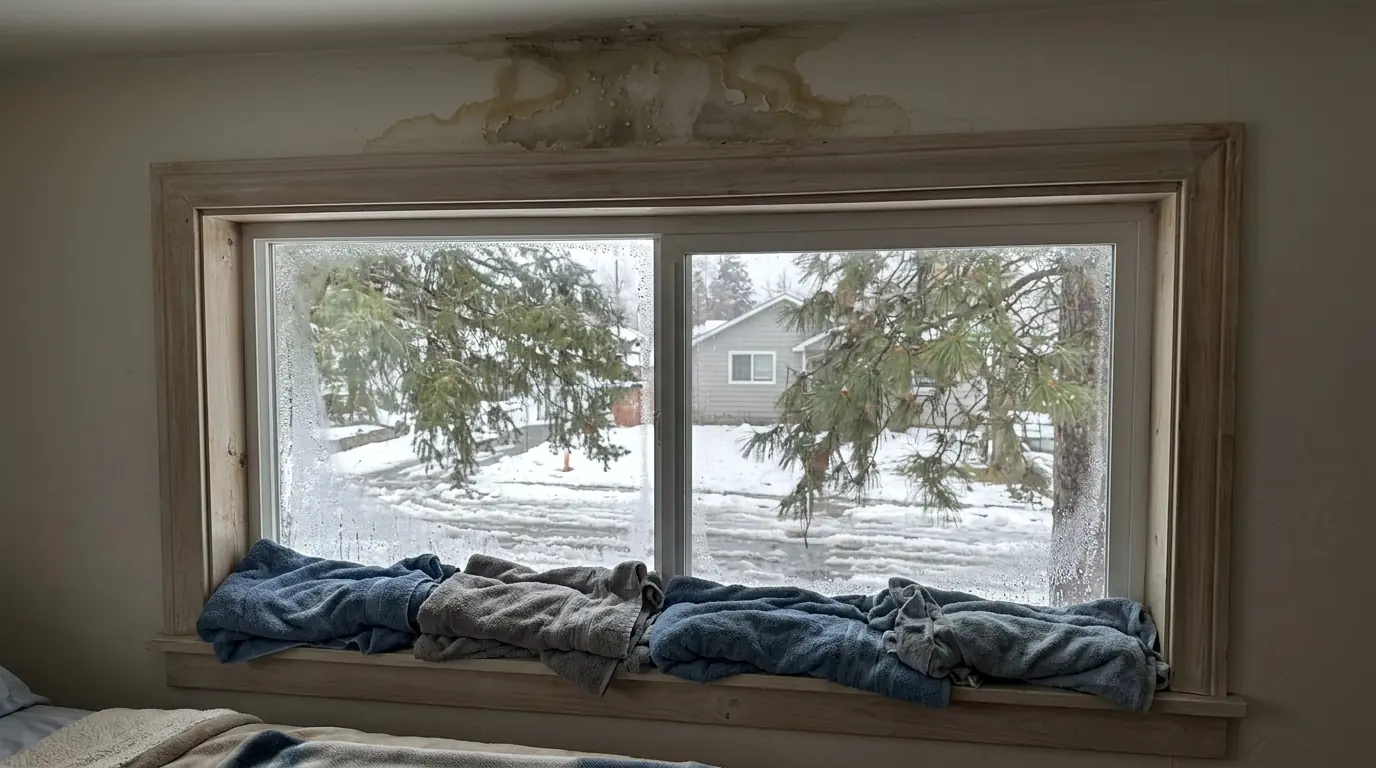
A stain at the top of an exterior wall
Ice dam water runs down the inside of the wall first.
Peeling paint at a window head
Water is reaching the window framing from above.
Drips from a soffit or light fixture
Water has reached the ceiling plane; turn that fixture off at the breaker.
Wet, flattened insulation
Visible from the attic hatch near the eaves or around a chimney.
Ice dam backups
An ice dam is meltwater that refroze at the eave after attic heat warmed the roof deck above it. The melt runs down to the colder eave, freezes and builds a ridge, and water pools behind it and works under the shingles. The leak usually shows on the exterior wall side of a room, at the top of a window or as drips from a soffit. We dry the wall and ceiling, replace soaked insulation and note where the attic is losing heat. Removing the ice and fixing the roof belong to a roofer.
Heavy snow loads
Deep, wet snow can overload a roof enough to crack rafters or push the structure out of shape, and a sagging ceiling or doors that suddenly stick below the roof line are warning signs. If you see those, keep people out of the room and have a roofer or engineer look before anyone works underneath. Snow loads also hold water against the roof for weeks during a slow melt, so flashing at chimneys, skylights and valleys is where interior wetness most often starts.
Wind-driven rain
In a strong storm, rain moves sideways and even upward, under lifted shingles and through ridge vents, gable vents and gaps around flashing that never leak in normal rain. The damage is usually concentrated in one part of the attic and along one wall. We map the moisture, dry the area and photograph the entry point for the roofer, since a vent or flashing detail often needs a different fix than missing shingles. Insulation under a ridge vent that leaked is checked along its whole length, not just at the stain.
Not sure how bad it is?
Describe it on the phone. We will tell you honestly whether it needs a crew tonight or can wait for morning.
How we dry out a roof leak from the attic down
- 01
Stop more water
Buckets and plastic inside, and a tarp over the leak area when the roof is safe.
- 02
Inspect the attic
We check insulation, sheathing and rafters with meters and photograph the entry point.
- 03
Remove what can't dry
Soaked insulation and ceiling or wall drywall come out where needed.
- 04
Dry the structure
Dehumidifiers and air movers run with daily readings until materials are dry.
- 05
Hand off to the roofer
Photos and notes show the roofer exactly where water got in.
Local conditions
Why Spokane winters are hard on roofs and ceilings
With close to four feet of snow in a typical Spokane winter and nights below freezing on about 138 days, the roof edge rarely gets a chance to clear. That combination drives ice dams: snow sits on roofs for weeks, attic heat warms the upper layer during the day and the eaves refreeze overnight. Ceiling leaks tend to show up during the first mild stretch after a cold spell, when the ice behind the gutters starts to let go.
Cost
What drives the cost of roof leak water damage cleanup
How long the leak ran matters more than how big the stain is. A small drip caught early may need only a section of insulation and a ceiling patch. Weeks of slow ice dam seepage can mean wet framing, attic insulation across several bays and a full exterior wall opened up. Tight attic access, snow on the roof when a tarp is needed and mold growth from long-standing leaks all add work. The roof repair is a separate cost from the roofer.
What you can do about an ice dam leak, and what to leave
A few steps are safe for homeowners; climbing an icy roof isn't one of them.
| Task | Doing it yourself | When we do it |
|---|---|---|
| Catching drips inside | Put out buckets and towels, and move furniture and rugs. | We take over with extraction and drying. |
| Raking snow from the eaves | A roof rake from the ground is fine if you stay clear of power lines. | We don't remove roof ice; a roofer does. |
| Chipping ice off the roof | Don't. It damages shingles, and people fall. | A roofer with steam equipment handles it. |
| Poking a hole in a bulging ceiling | A small hole over a bucket can release trapped water, but only if the ceiling isn't sagging badly. | Sagging ceilings or wet areas near fixtures. |
| Drying the attic with a fan | Helps a little but rarely dries soaked insulation. | Wet insulation removal and attic drying. |
Roof Leak & Ice Dam Water Damage questions
No. We handle the interior: tarping, drying and removing wet materials. A roofer repairs shingles, flashing and underlayment. We share our photos with them so the repair targets where water actually got in.
Water often runs along rafters to the top of the exterior wall and drains inside the cavity. That's why ice dam leaks commonly appear at window heads or along baseboards on exterior walls.
Yes, if insulation and sheathing stay wet. Growth can start within days once the attic warms. Drying quickly and replacing soaked insulation are the main defenses, and we check sheathing for early growth.
Many policies cover sudden interior water damage from ice dams, but some exclude the roof repair or long-term leaks. Policies differ and your adjuster decides. We provide photos and moisture logs for the review.
Removing icicles from the ground is fine if you stay out from under them, but it won't stop the leak. The water is pooling behind the ice ridge on the roof, above where the icicles hang.
Related restoration work
Ceiling Water Damage Repair
Water Damage
See this serviceAttic Mold Removal
Mold
See this serviceStorm Damage Restoration
Storm & Emergency
See this serviceEmergency Board-Up & Roof Tarping
Storm & Emergency
See this serviceSee all 37 restoration services
Related advice: Ice dams and ceiling leaks: what is happening up there and Documenting a water damage claim the right way
Answering 24/7
Ceiling dripping during a Spokane thaw?
Call any hour. We'll protect the room and start drying what got wet.
1876 N Teanaway Dr, Post Falls, ID 83854