Flood Damage Restoration
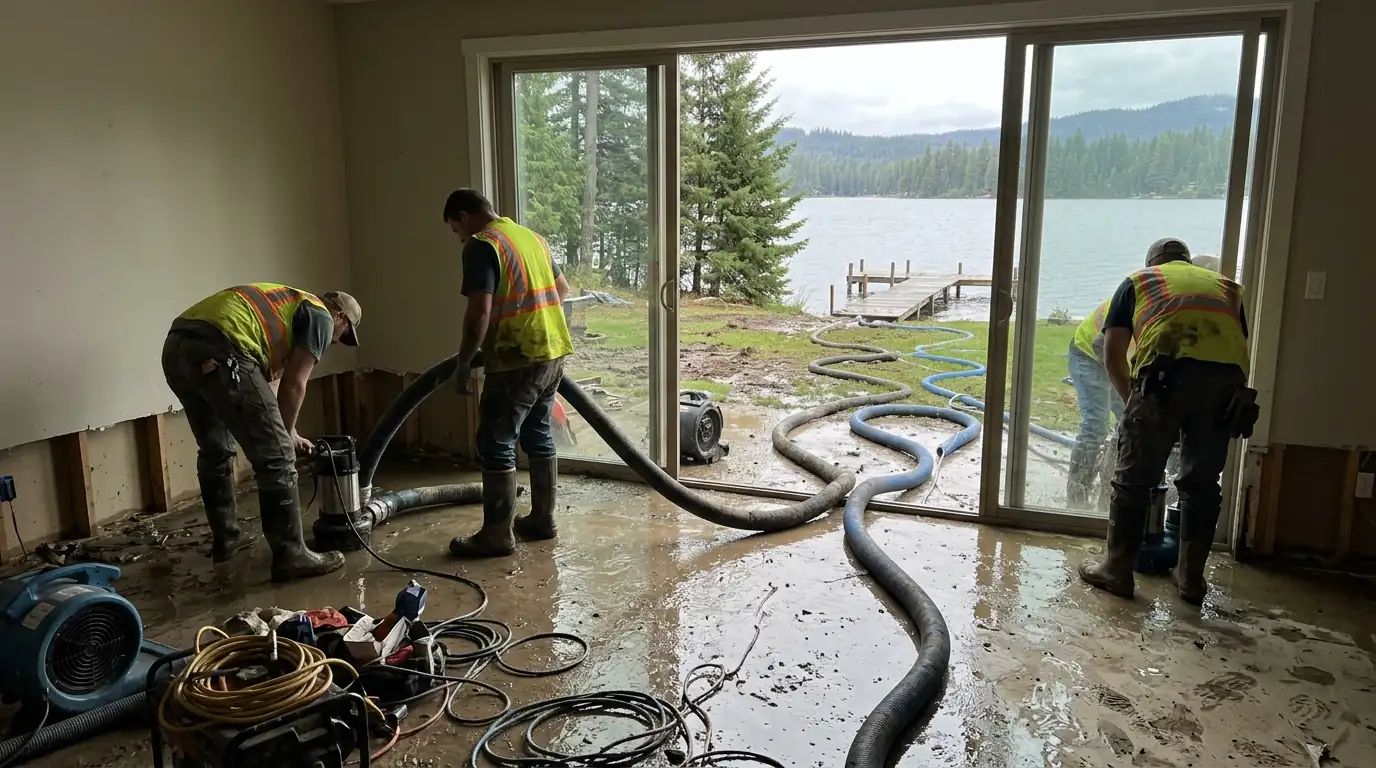
When the lake or river rises, overland water reaches lower floors and crawl spaces and carries silt and contaminants that need cleaning, not just drying.
See this serviceKootenai County, Idaho
Our office sits in Kootenai County, so this is home ground. We handle flooding, leaks, storm damage and mold from the lake towns to the prairie.
Quick answer
We handle water, flood, storm, fire and mold damage across Kootenai County, Idaho, and our office is in Post Falls, inside the county. That keeps most Idaho-side calls closer to home than our Spokane jobs. We answer the phone 24/7, explain what to do while you wait, then send a crew to dry, clean and document the damage.
Kootenai County calls split two ways. Near the water, people call about high lake or river levels, wet crawl spaces and lower floors that took on water. In the newer neighborhoods the trouble is usually inside: a water heater in a garage that let go, a washing machine hose, an ice maker line behind a fridge that dripped for weeks.
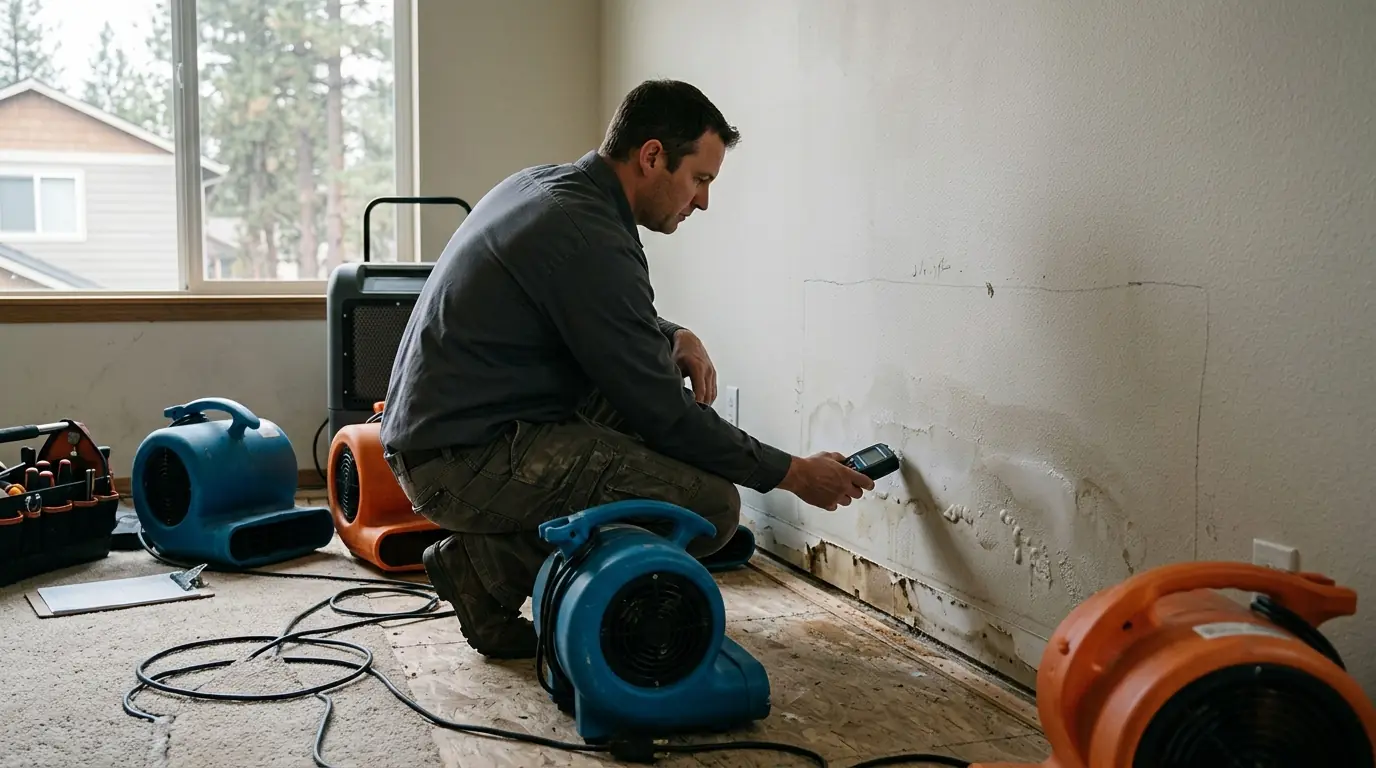
Winter adds roof leaks. Heavy snow and ice dams push meltwater under shingles and into ceilings, and the damage shows up as a stain or a sag. Our first step is the same either way: find where the water went with meters and a thermal camera, pull out what cannot be saved, and dry the rest in place. When the water came from outside, we treat it as Category 3 and clean accordingly.
Local conditions
Kootenai County counted 171,362 people in 2020, and it forms one combined metro area with Spokane. Plenty of households here work, shop and own property on both sides of the state line, which is why we cover both. Growth has been steep in the county's cities: Coeur d'Alene grew 23.8 percent over the decade and Rathdrum grew 34.9 percent. Water is the other constant. Post Falls Dam releases Coeur d'Alene Lake into the Spokane River, and Avista warns that lake and river levels can change sharply with the weather, so lakefront and riverfront homes need a plan for high water.
Here is what fills the schedule on the Idaho side.
When the lake or river rises, overland water reaches lower floors and crawl spaces and carries silt and contaminants that need cleaning, not just drying.
See this serviceSnow load and ice dams send meltwater through roof decks into attics, insulation and ceilings, usually during the coldest stretch of winter.
See this serviceNewer homes put water heaters and laundry close to finished rooms, so one failed tank or hose can soak flooring and walls quickly.
See this serviceWind storms drop trees on roofs and break windows, and the rain that follows often does more damage than the impact itself.
See this serviceLakefront and crawl space homes stay damp, and a musty smell after a wet season is worth checking before you buy, sell or rebuild.
See this serviceGetting to you
Our phone is answered every hour of the day. Tell us whether water is still coming in and whether any of it came from outside, because floodwater changes the safety steps. Turn off the main valve if a pipe broke, keep people and pets off wet carpet that may be contaminated, and do not run a household vacuum on standing water. A crew leaves our Post Falls office and heads to you on I-90 or the local highways, and we give you an honest arrival estimate when you call.
We answer every hour of the day and tell you on the call what to do first.
Yes. High water from the lake or river is treated as Category 3, because it carries silt, fuel and bacteria. We extract the water, remove soaked materials that cannot be cleaned, wash and disinfect what stays, and dry the structure while logging moisture readings for your records.
Yes. Our office is in Post Falls, Idaho, so Kootenai County calls are on our home side of the state line. We also work across Spokane County, Washington, from the same office, which is why we answer for both states around the clock.
Put buckets under drips, move furniture and electronics, and if a ceiling is sagging, keep people out from under it. Do not climb onto an icy roof. We find how far the water traveled in the attic and ceiling, dry it, and tarp openings if needed.
Yes. We start with a visual and moisture inspection, and when it helps, we take air or surface samples for a lab. If the crawl space only needs drying and better moisture control, we tell you that rather than recommending removal you do not need.
Answering 24/7
Call any hour. We answer around the clock and can usually tell you on the first call what to do next.
1876 N Teanaway Dr, Post Falls, ID 83854
Our office
1876 N Teanaway Dr, Post Falls, ID 83854