Keeping the building open where it can be
Commercial water damage restoration for Spokane businesses and rentals
In a commercial building, drying is only half the job. The other half is keeping tenants, staff and customers working while it happens.
- Answered 24/7
- Sprinkler discharge
- Offices and retail
- Multi-unit buildings
Quick answer
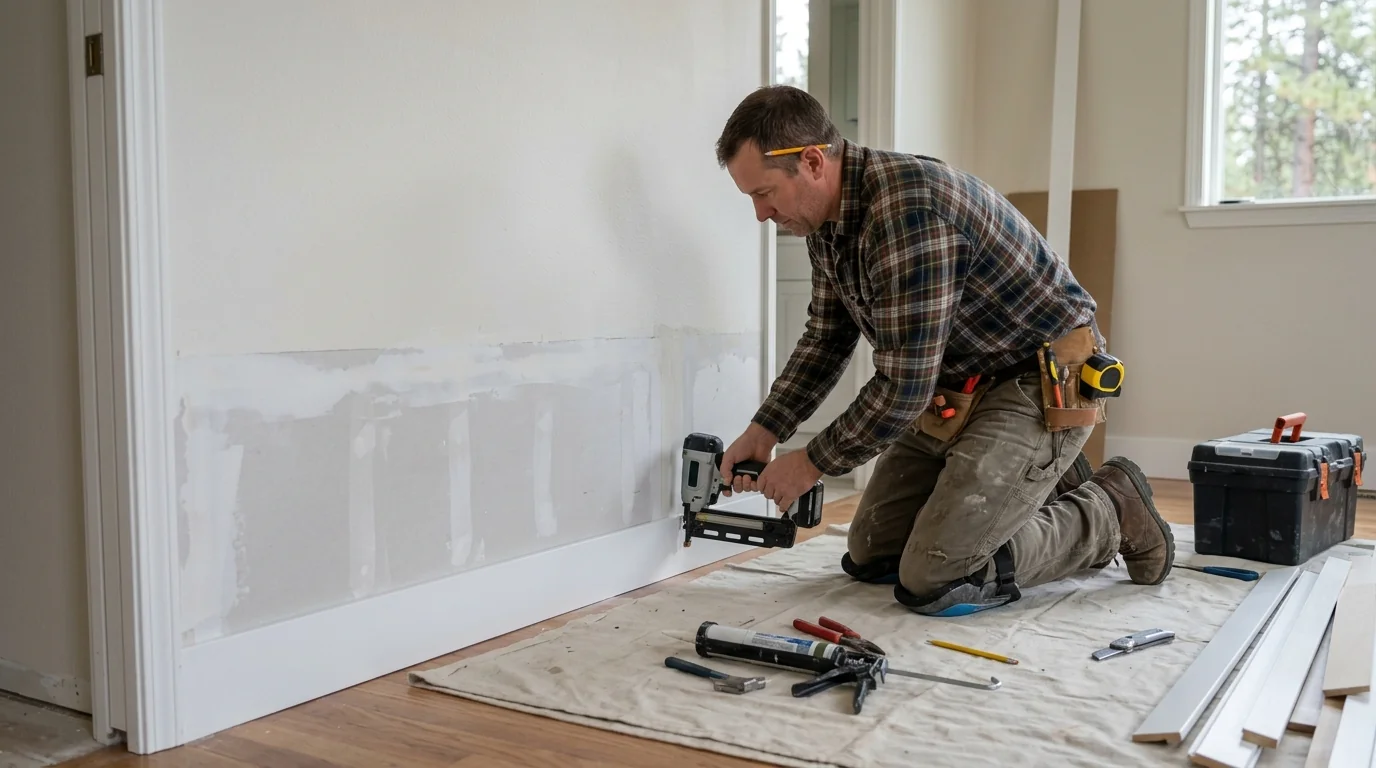
Commercial water damage restoration in Spokane is planned around the building's operation as much as the water: which areas must stay open, which tenants are affected and who signs off. We extract, contain wet zones, run drying equipment with daily logs, and document each unit or suite separately for owners, managers and adjusters.
Updated October 2026
What changes when water damage hits a commercial building
Water in a commercial building spreads through shared walls, ceilings and floors, and it affects more than one party: the owner, the property manager, tenants and sometimes a corporate office. Each has questions, and each may carry a separate insurance policy.
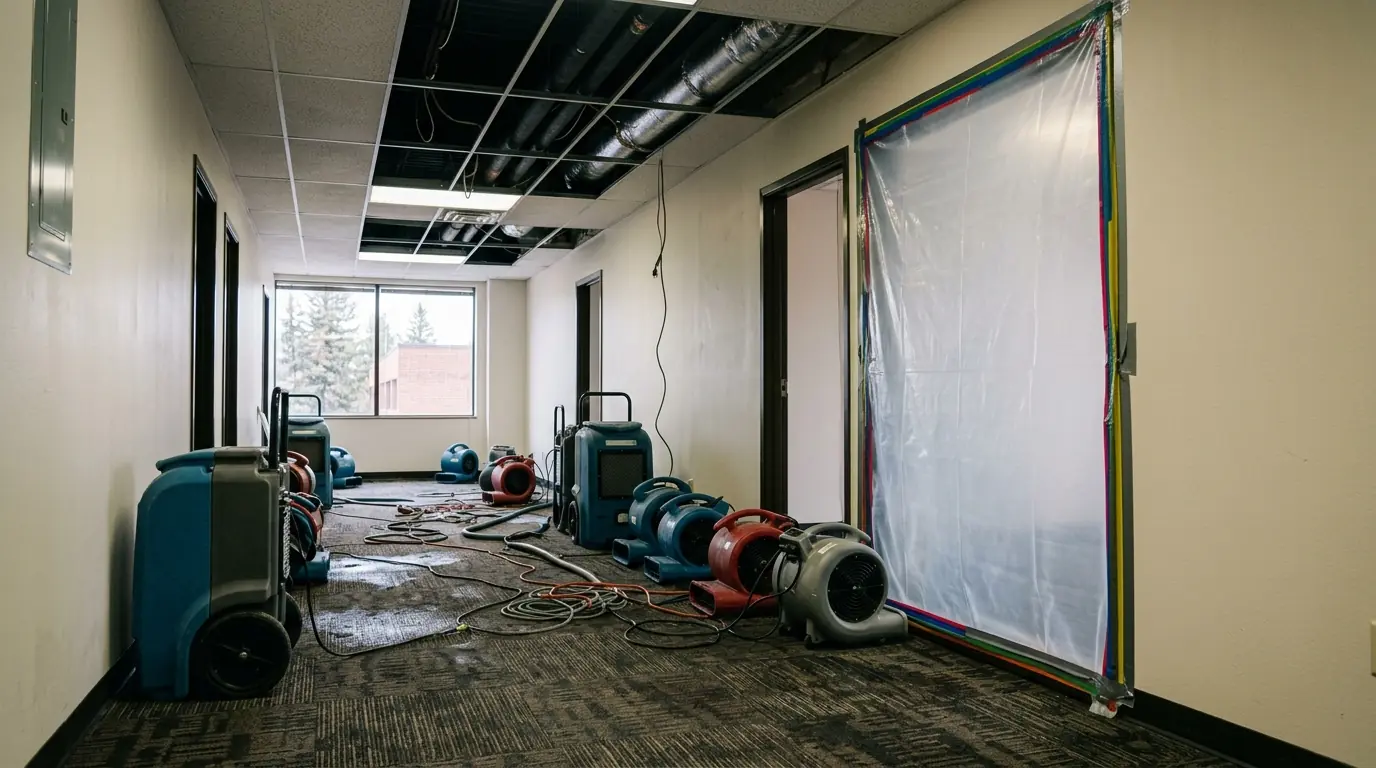
We start by finding the source and the full wet area across every floor and unit, not just the space that called. Wet zones are contained with plastic so dry areas can stay open, and equipment is placed to keep exits and walkways clear. Acoustic ceiling tile that got wet is usually replaced, while carpet tile and drywall partitions each dry differently. Readings and photos are kept per suite or unit so each tenant and policy has its own record. Large losses use the same methods as structural drying on a bigger scale.
Fire sprinkler discharge
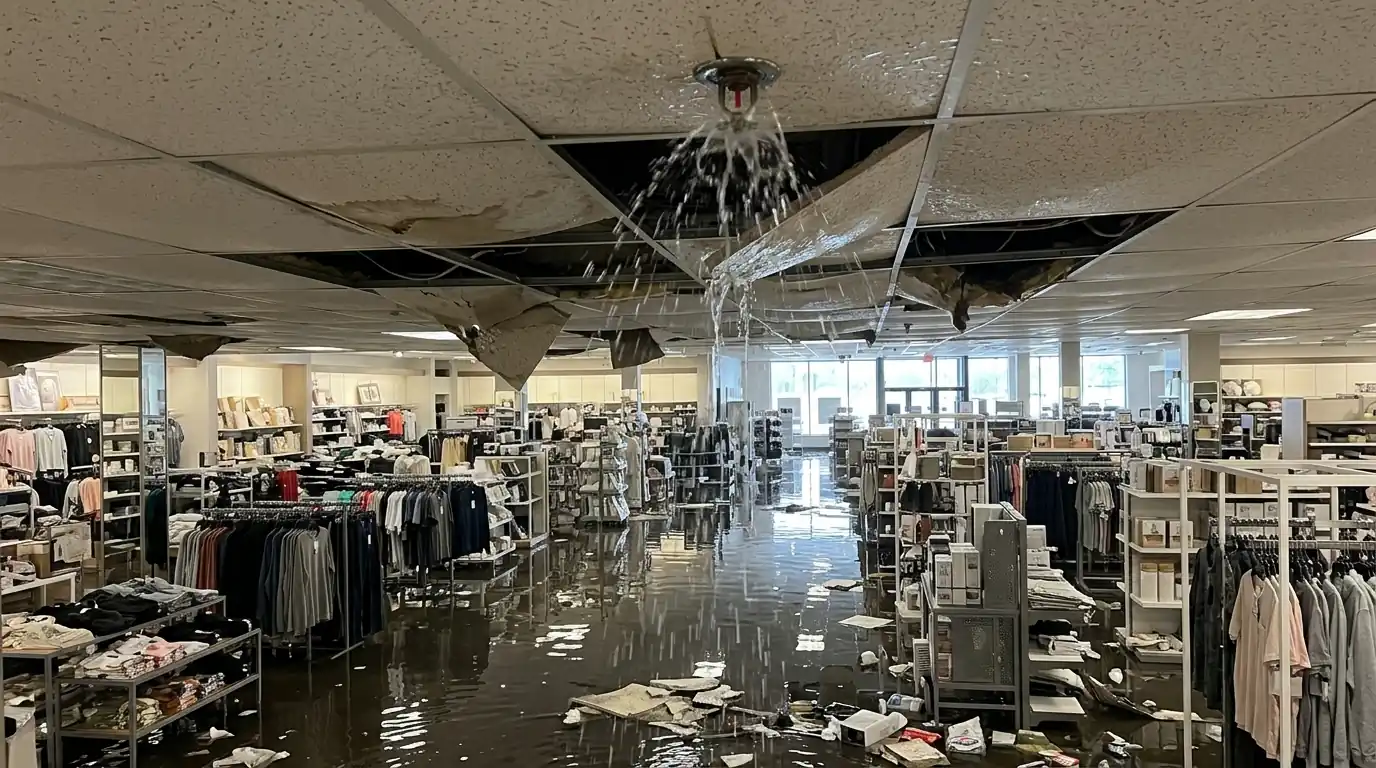
A sprinkler head that breaks, freezes or activates releases a lot of water fast, and water that sat in the pipes for years often comes out dark and smelly. It's usually treated as Category 2 water. Once the fire protection contractor shuts down the zone, we extract from floors, remove soaked ceiling tile and insulation, and dry walls and flooring below. The alarm company or fire officials may need to be involved before the system goes back into service. Fire watch rules while the zone is down are set by those officials.
Offices and retail
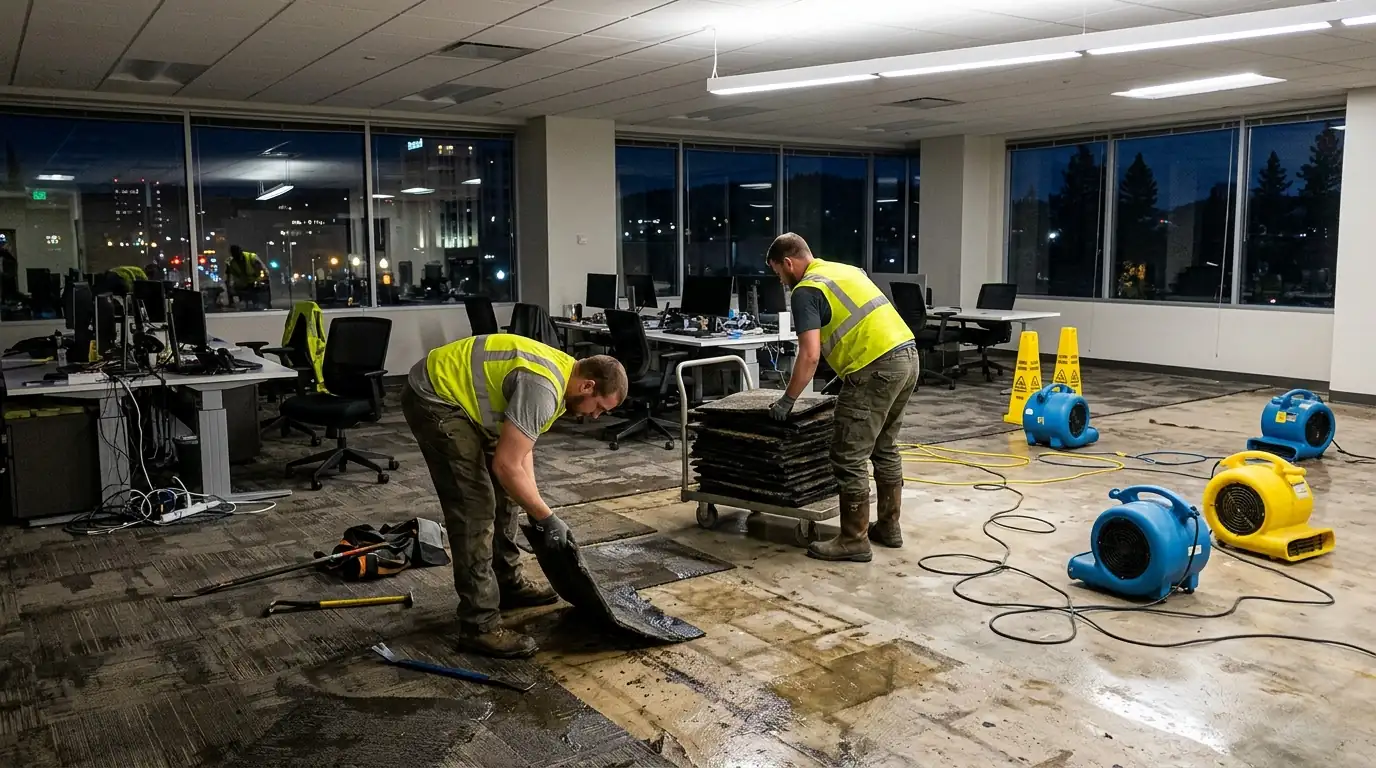
Offices and stores lose money every day they're closed, so we plan around business hours. Drying can run overnight, containment can keep a sales floor or a block of offices open, and noisy equipment can be scheduled. Carpet tile can often be lifted, dried and reset; glued-down carpet over concrete is harder. Inventory and furniture are moved or protected, and server rooms get early checks. One point of contact keeps managers from chasing updates, and readings are shared daily so the reopening date isn't a guess.
Apartments and multi-unit buildings
In multi-unit buildings, one leak usually means several units: the source apartment, the ones below and sometimes the units beside it through a shared wall. We check every unit that could be affected, with the manager's help getting access and notifying tenants. Each unit gets its own photos, readings and scope, which helps when owner and tenant policies are both involved. Where tenants must move out during repairs, their belongings are packed and labeled by unit. Common hallways and laundry rooms get checked too.
The longer it sits, the more comes out.
Call any hour and we will help you limit the damage before the trucks even leave.
How a commercial water job is run from first call to dry
- 01
Find the source and the spread
We check every floor and unit that could be wet, not only the one that called.
- 02
Contain and protect
Plastic barriers, protected walkways and moved inventory keep dry areas working.
- 03
Extract and remove
Water comes out; wet ceiling tile, insulation and pad are removed.
- 04
Dry with daily logs
Equipment runs on a schedule that fits operating hours, with readings per suite.
- 05
Report by unit
Photos, readings and scope for each unit, owner and tenant.
Local conditions
Multi-unit water losses across Spokane County
Spokane County counted more than half a million residents at the 2020 census, and half of the county's homes were built before about 1978. Multi-unit buildings serving that population are often wood-framed, with shared ceiling and wall cavities between apartments. In those buildings a single burst line or sprinkler head can wet three or four units before anyone sees water, so we check above, below and beside the source unit before planning the drying.
Timeline
How long commercial water damage drying takes
Most clean water losses dry in three to five days once equipment is placed, much like a house. Commercial jobs can run longer when concrete slabs are involved, since thick concrete gives up moisture slowly, or when access to occupied units has to be scheduled. Sprinkler discharge across several floors can take a week or more. We update the manager daily with readings so tenants can plan around the work.
Cost
What affects the cost of commercial water damage restoration
Square footage and the number of affected units or suites set the scale. Water category matters: clean supply water dries in place more often, while sprinkler water or sewage means more removal. After-hours work to keep a business open, high ceilings that need lifts, and moving inventory or furniture add labor. Building owners and tenants may have separate policies covering different parts of the loss, and each adjuster decides what their policy covers.
What commercial water damage restoration includes
These pieces are common to most commercial water jobs.
- Moisture mapping across every affected floor, unit or suite.
- Containment so unaffected areas can stay open.
- Extraction from carpet, carpet tile and hard floors.
- Removal of wet ceiling tile, insulation and drywall where needed.
- Drying scheduled around business hours and tenant access.
- Separate photos, logs and scopes for each unit or tenant.
- One point of contact for the owner or manager.
Commercial Water Damage Restoration questions
Often, at least partly. Containment separates wet zones, equipment can run overnight and walkways stay clear. Whether a space can stay open depends on the water category, the area affected and any safety concerns.
Usually the owner or property manager, plus tenants for their own spaces when the manager agrees. We keep one point of contact and share records per unit with each party's adjuster as directed.
Usually not. Water sitting in sprinkler pipes picks up rust, sediment and bacteria, so it's typically handled as Category 2. Ceiling tile and insulation it soaks are generally replaced.
We work with the manager on notice and access, check units above, below and beside the source, and keep separate records per unit. Tenant belongings are protected or packed and labeled by unit.
We can rebuild drywall, ceilings, paint and flooring after drying, or hand our records to the building's contractor. Tenant improvements may need coordination with both the tenant and the landlord.
Related restoration work
Structural Drying & Dehumidification
Water Damage
See this serviceWater Extraction & Removal
Water Damage
See this serviceInsurance Claim Documentation
Rebuild, Contents & Commercial
See this serviceCommercial Fire & Smoke Restoration
Rebuild, Contents & Commercial
See this serviceSee all 37 restoration services
Related advice: Documenting a water damage claim the right way and Questions to ask a restoration company before work starts
Answering 24/7
Water damage in your Spokane building?
Call any hour. We'll find the full wet area and plan around your tenants and hours.
1876 N Teanaway Dr, Post Falls, ID 83854