Roof Leak & Ice Dam Water Damage
Drifting snow and ice dams on exposed roofs push meltwater into attics, insulation and ceilings over the winter.
See this serviceFive Mile Prairie, Spokane
Up on the prairie, homes and roofs are out in the open, with little to break the wind or the drifting snow.
Quick answer
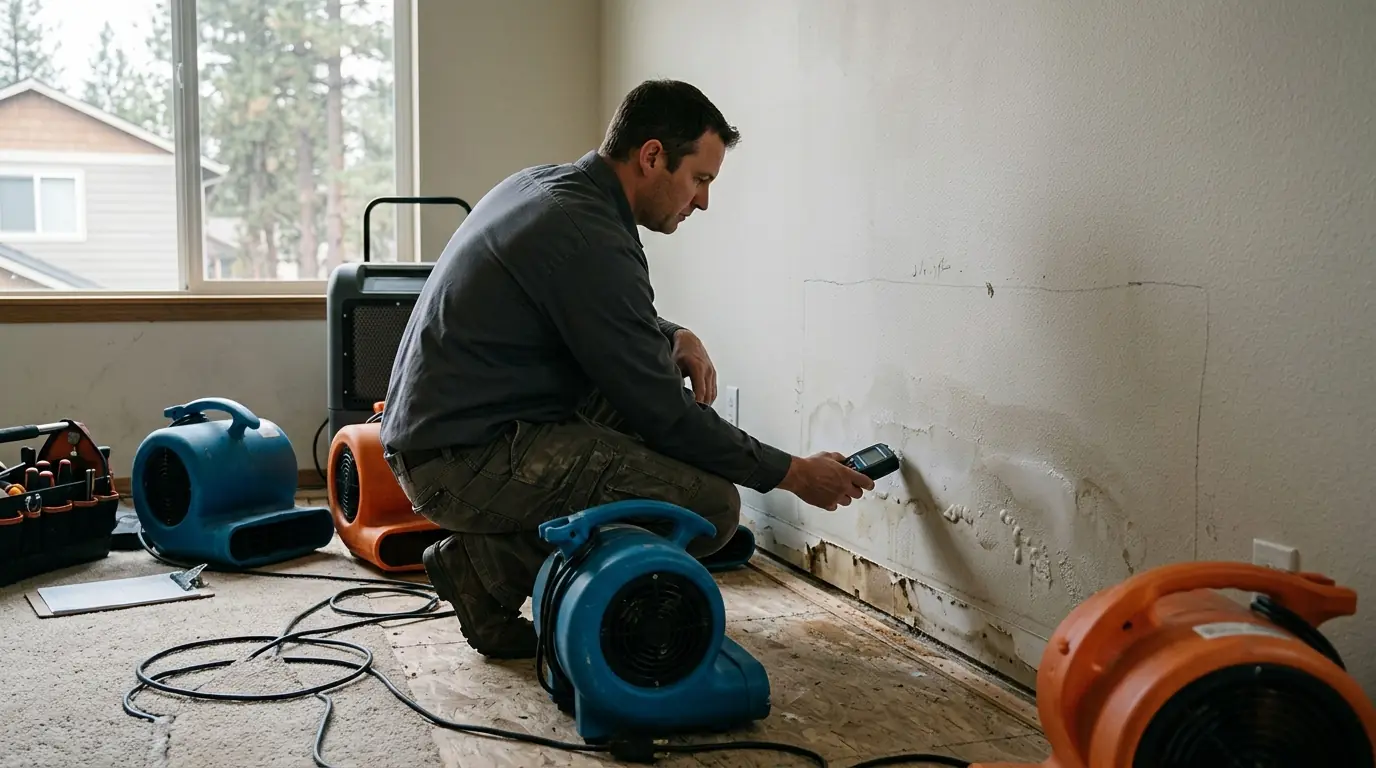
On Five Mile Prairie we tarp storm-damaged roofs, board up broken windows, dry attics and ceilings after ice dam leaks, remove attic mold and handle water heater leaks in newer homes. Exposed ridge-top roofs take more wind and drifting snow. We answer 24/7 and send crews from our office in Post Falls.
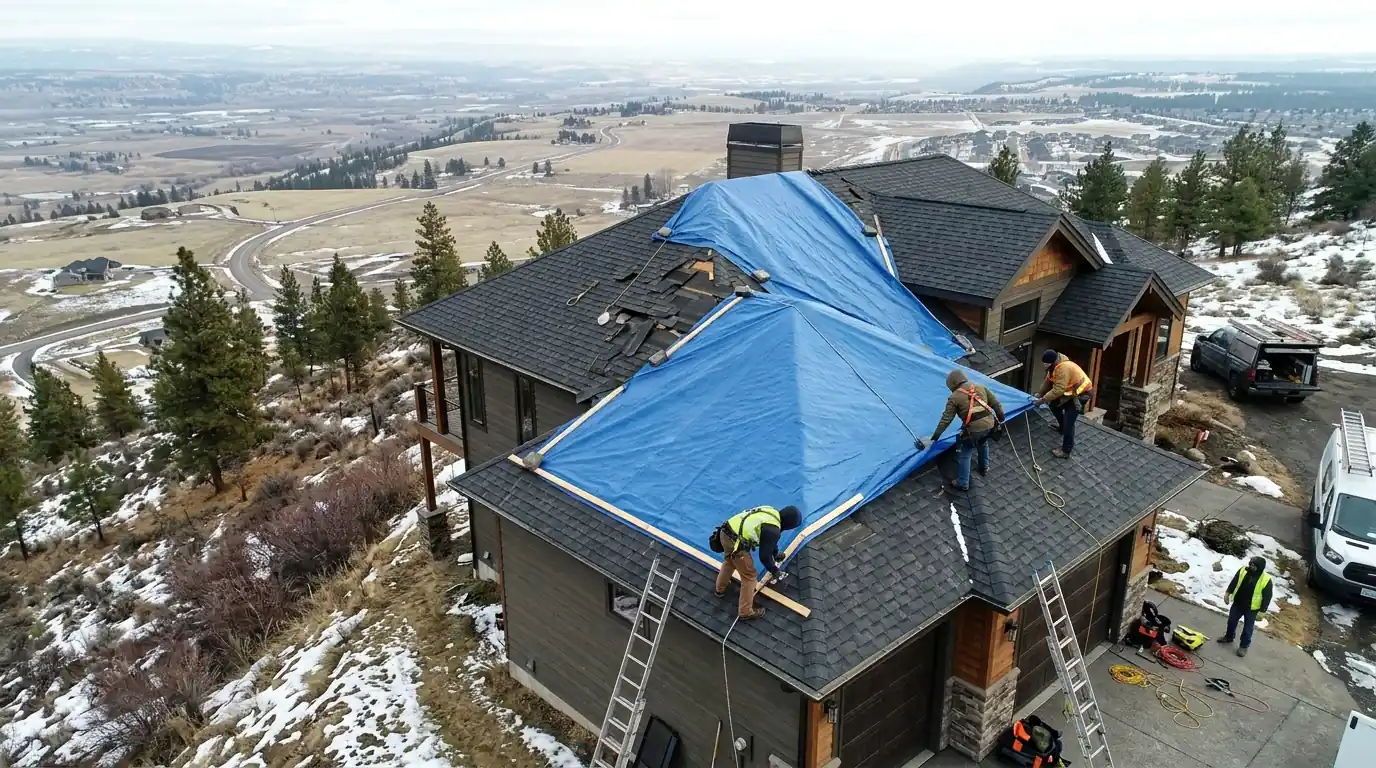
A roof on a slope or ridge takes wind straight on. Gusts lift shingles at the edges and ridge caps, and the next rain runs under them. In winter, wind drifts snow onto the sheltered side of the roof and into valleys, where it melts unevenly and builds ice dams. Either way, the water ends up in attic insulation and then in a ceiling.
We start by covering the opening with a tarp so the damage stops growing, then go into the attic. Wet insulation is pulled, sheathing is read for moisture, and ceilings are checked with a thermal camera. If an attic has been staying damp for a while, the sheathing may already have mold, and attic mold removal becomes part of the job.
Local conditions
Most of Five Mile Prairie inside Spokane was annexed in 1966. Its south-facing slopes rise about 400 feet, and many of the homes on top were built in 2000 or later. Newer construction is tight and well insulated, which helps, but exposed ridge-top roofs still take the wind directly. Snow is the other factor. Spokane averages about 49 inches a year, mostly in December and January, and the low dips below freezing on about 138 days. That is a long season of freeze and thaw on a roof.
These five services cover most of our work up on the prairie.
Drifting snow and ice dams on exposed roofs push meltwater into attics, insulation and ceilings over the winter.
See this serviceWind-lifted shingles and broken windows get tarped or boarded so the next storm does not finish the job.
See this serviceWind, hail and falling limbs damage roofs and siding, and interior drying follows the temporary repair.
See this serviceRepeated small roof leaks and condensation in tight newer attics leave sheathing damp long enough to grow mold.
See this serviceWater heaters and laundry in newer homes sit near finished rooms, so a failure soaks flooring and drywall quickly.
See this serviceGetting to you
We answer around the clock. If wind has opened the roof, stay out of rooms under the opening, move what you can, and catch drips with buckets. Do not go up on a wet or icy roof. During regional storms we prioritize by safety and active water, and we tell you where you stand. We drive from Post Falls on I-90 through Spokane and up to the prairie, and give you a realistic arrival estimate on the call.
Tell us what happened and where. You get first steps on the phone and an honest arrival window.
Exposed roofs on slopes and ridges take gusts directly, and wind lifts shingles at edges, rakes and ridge caps where the seal is weakest. Once lifted, rain gets underneath. We tarp the damage and dry the inside; a roofer handles the permanent repair.
Yes. Even well-insulated homes get ice dams where warm air leaks into the attic around lights, bath fans or attic hatches, or where wind drifts snow into valleys. We dry the leak and point out likely heat-loss spots.
Yes, when it is safe. On icy or windy nights we may protect the inside first and tarp at first light. We photograph the roof before covering it, so the adjuster can see the original damage.
That depends on your policy and the cause, and only your insurer decides. Mold from a sudden leak is often treated differently from long-term condensation. We document the cause, the extent and our readings, and can walk the attic with your adjuster.
Answering 24/7
Call any hour. We get the opening covered and the attic dried.
1876 N Teanaway Dr, Post Falls, ID 83854
Our office
1876 N Teanaway Dr, Post Falls, ID 83854