Standing water and wet insulation under Spokane homes
Crawl space water damage cleanup in Spokane
Crawl spaces flood quietly. By the time the house smells damp, the insulation and joists have usually been wet for a while.
- Answered 24/7
- Pumping and insulation removal
- Vapor barrier replacement
Quick answer
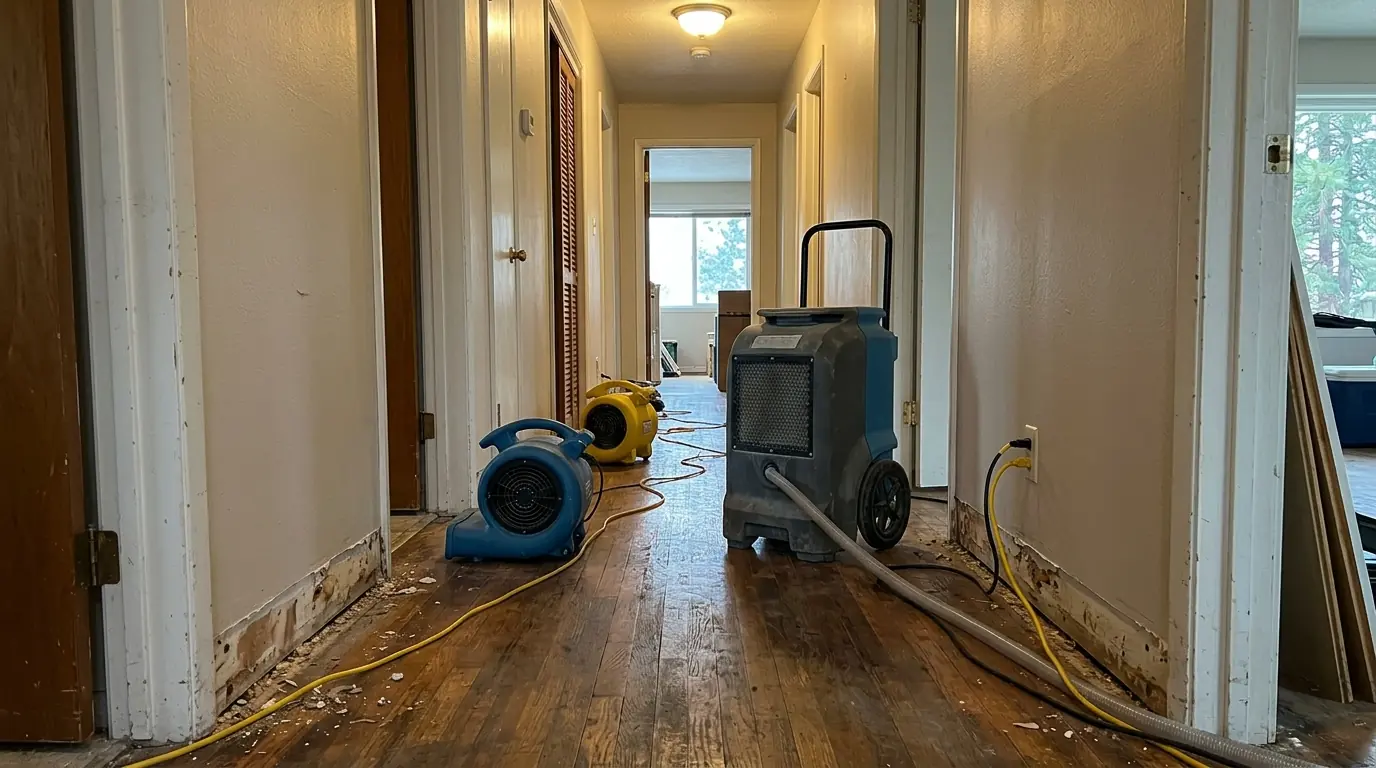
Crawl space water damage cleanup in Spokane means pumping out standing water, removing soaked insulation that will not dry in place, and drying the joists and subfloor with dehumidifiers. A torn or missing vapor barrier lets ground moisture keep rising, so it is replaced. In winter the space is cold, which slows drying and calls for heat or desiccant equipment.
Updated October 2026
Why water under the house becomes a problem upstairs
A crawl space connects to the house above through gaps around pipes, ducts and wiring. Air rises from it into the living space, so moisture down there raises humidity in the rooms above and carries musty odor with it. Wet fiberglass between the joists sags, falls and holds water against the subfloor. Many Spokane crawl spaces also carry supply lines that freeze in a cold snap, which is how a lot of these jobs start.
Cleanup starts by stopping the source: a broken line, a downspout dumping beside the foundation, or groundwater after a thaw. Then we pump, pull wet insulation, replace the vapor barrier and dry the wood. If mold is already growing on the joists, that becomes crawl space mold removal.
Signs of water in the crawl space
You rarely see crawl space water directly; these clues come first.
A musty smell in the house
Odor from a damp crawl space rises through floor gaps and registers.
Soft or bouncy floors
Subfloor or joists that stayed wet start to weaken.
Higher humidity upstairs
Condensation on windows can trace back to moisture underneath.
Insulation on the ground
Batts that fell from the joists often got wet first.
A water bill that jumped
A leak under the house can run unnoticed for weeks.
Standing water under the house
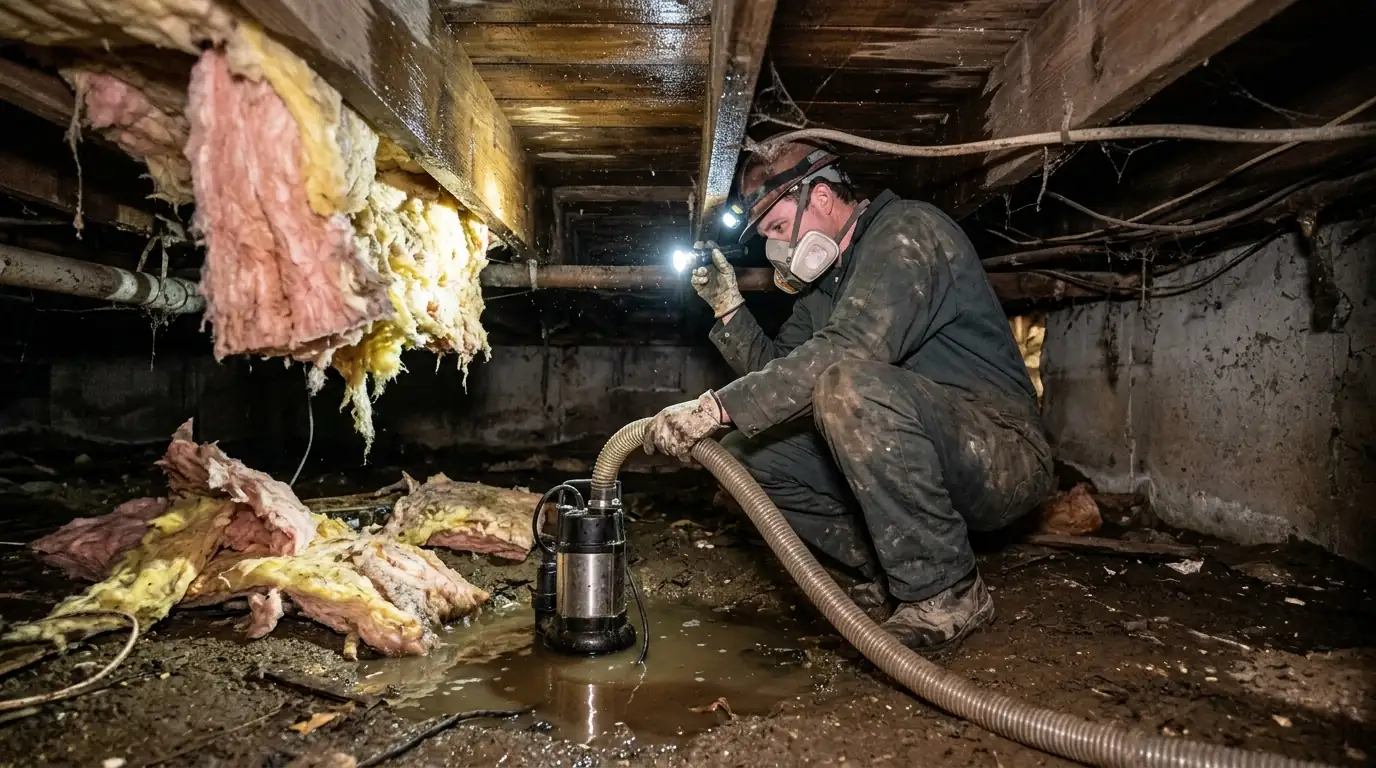
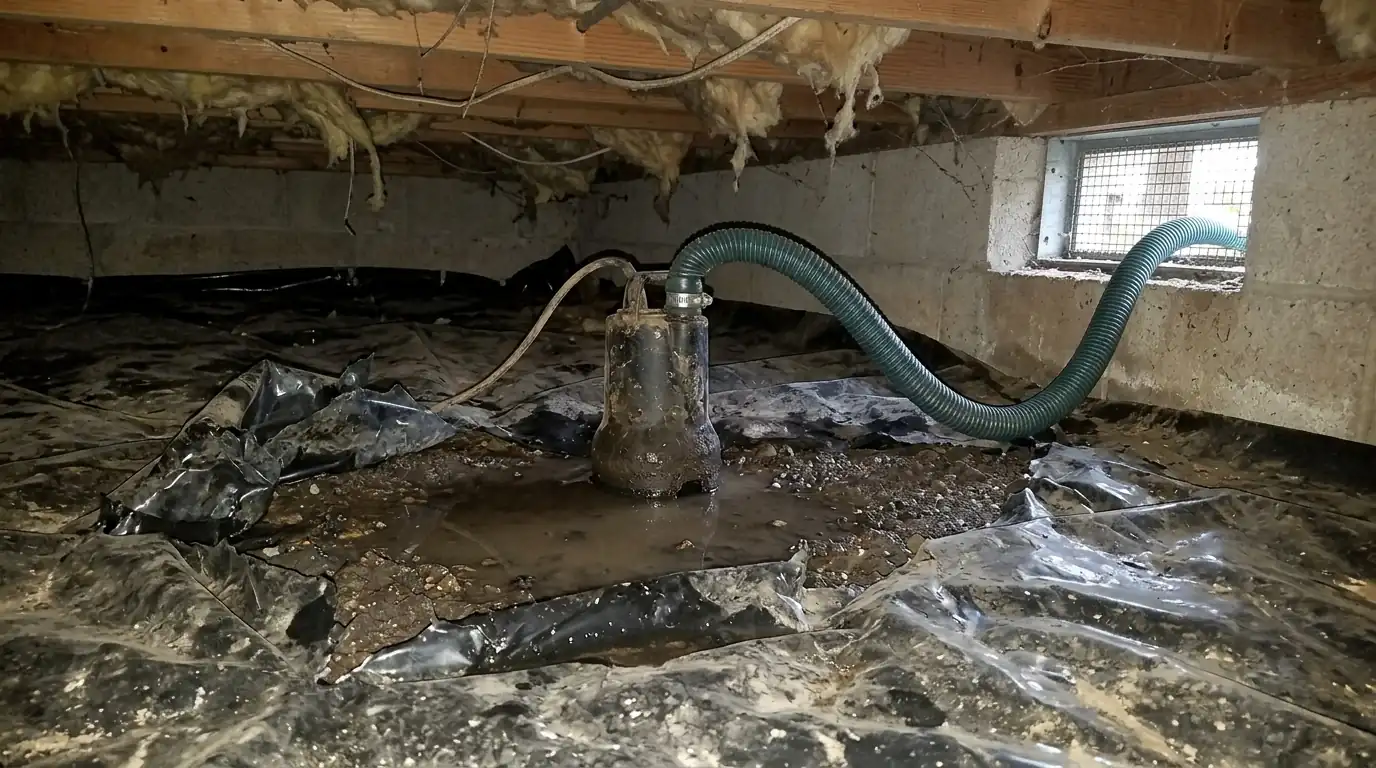
Standing water in a crawl space comes from inside or outside. Inside sources are broken supply lines, a leaking drain under a bathroom or a water heater set below the floor. Outside sources are surface water running toward the foundation, a high water table in spring, or a vent well that fills with snowmelt. We pump the water to daylight or a drain, then probe the soil. A soaked dirt floor keeps releasing moisture, so we may need to dry it for days before covering it again.
Wet insulation between the joists
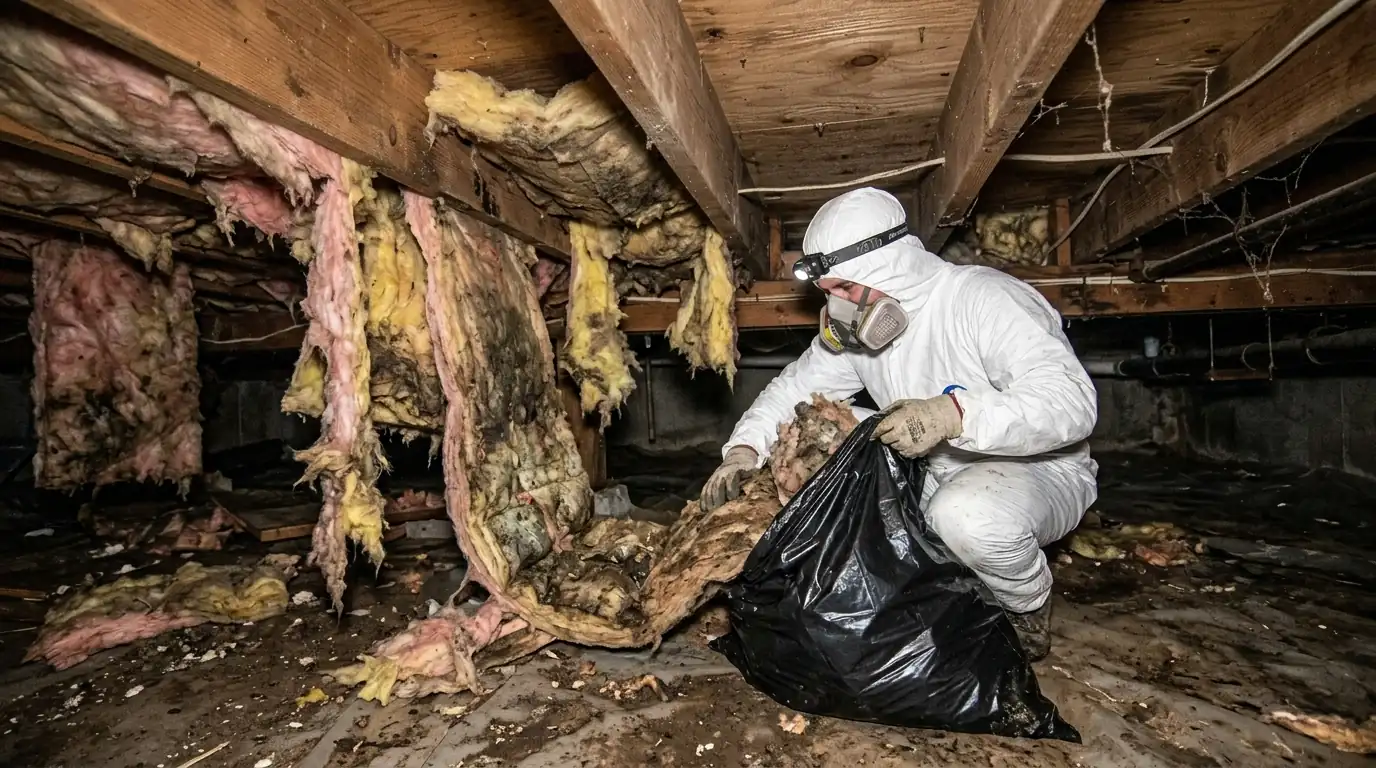
Fiberglass batts between floor joists are meant to stay dry. Once wet, they lose insulating value, sag away from the subfloor and hold water against the wood. Faced batts with a paper or foil backing trap moisture even more. In almost every case, wet crawl space insulation comes out rather than drying in place. We bag it, dry the joists and subfloor, treat the wood with an antimicrobial, and hold off on new insulation until readings confirm the framing is dry.
Torn or missing vapor barrier
The plastic sheet over a dirt crawl space floor keeps ground moisture from evaporating into the space. Torn by workers, pulled back by animals or never fully installed, it lets that moisture rise into the wood above. After a water event, a barrier with water pooled on top of it also needs to come out, since standing water on plastic does not drain. We replace it with heavier sheeting, overlapped at the seams and run up the foundation walls, so the space stays drier after we leave.
Is it still wet, still smoking or still spreading?
Call now. The first few minutes on the phone are about stopping the damage, and a crew gets moving while we talk.
How we clean up a flooded crawl space
- 01
Find the source
We confirm whether water came from a pipe, a drain or the outside.
- 02
Pump out
Standing water is pumped through an access vent or to a drain.
- 03
Remove wet materials
Soaked insulation and the damaged vapor barrier come out and are bagged.
- 04
Dry and treat
Dehumidifiers and air movers dry the joists, with an antimicrobial on the wood.
- 05
Close it up
New vapor barrier goes down once readings are dry, and insulation can be replaced.
Local conditions
Drying a crawl space through a Spokane January
When the average January low in Spokane sits near 20.8 degrees and the high is about 33.2, a vented crawl space runs close to outdoor temperature. Standard refrigerant dehumidifiers struggle in that cold air. On winter crawl space jobs we close the vents temporarily, add a heat source or switch to a desiccant dehumidifier, and keep the furnace running upstairs. Those same cold temperatures are what froze the line in the first place, so we also point out any exposed pipes that need insulation.
Cost
What drives crawl space water damage cost
Crawl space jobs are priced more by access and removal than by floor area. A tight space with low clearance takes longer for every task. The amount of insulation that comes out, whether the vapor barrier is replaced, how long dehumidifiers have to run in a cold space, and whether mold treatment is needed all move the total. We document the readings and photos so you can see exactly what was wet and what was removed.
What crawl space water cleanup includes
Here is what a full crawl space water job covers.
- Inspection with photos and moisture readings of joists, subfloor and soil.
- Pumping of standing water from the space.
- Removal and bagging of wet insulation.
- Removal of damaged or water-holding vapor barrier.
- Antimicrobial treatment of exposed wood.
- Dehumidification sized for a cold, enclosed space.
- New vapor barrier once readings confirm the space is dry.
Crawl Space Water Damage questions
During winter drying we close them so cold air does not stall the dehumidifiers. Long term, the right setup depends on the house: some crawl spaces stay vented with a good vapor barrier, others do better sealed and conditioned.
Standing water under the house keeps humidity high upstairs, feeds mold on the joists and can weaken the wood over time. Even an inch or so should be pumped out and the source fixed before it becomes a structural problem.
Almost always. Wet fiberglass loses its insulating value, sags and holds water against the joists. Removing it lets the wood dry, and new insulation goes in afterward, once readings confirm the framing is back to normal.
Extend downspouts, grade soil away from the foundation, keep the vapor barrier intact and insulate exposed pipes. Some homes also benefit from a sump pit and pump in the crawl space.
Watch for live wiring, sewage and pests. If you smell sewage or see wiring in the water, stay out and call us. We go in with protective gear, lights and a respirator, and we cut power to the area first.
Related restoration work
Crawl Space Mold Removal
Mold
See this serviceBurst & Frozen Pipe Water Damage
Water Damage
See this serviceManufactured Home Water Damage
Water Damage
See this serviceAntimicrobial & Mold Prevention Treatment
Mold
See this serviceSee all 37 restoration services
Related advice: Burst pipe in a Spokane winter: the first hour and What water damage restoration costs in Spokane
Answering 24/7
Water under the house?
Call any hour. We will pump it out, pull the wet insulation and dry the framing.
1876 N Teanaway Dr, Post Falls, ID 83854