Drying the structure, not just the surface, in Spokane, WA
Structural drying and dehumidification for Spokane homes
Surfaces dry in a day. Framing, subfloors and the inside of walls take longer, and that is where hidden damage starts.
- Answered 24/7
- Wall cavities and subfloors
- Daily moisture logs
Quick answer
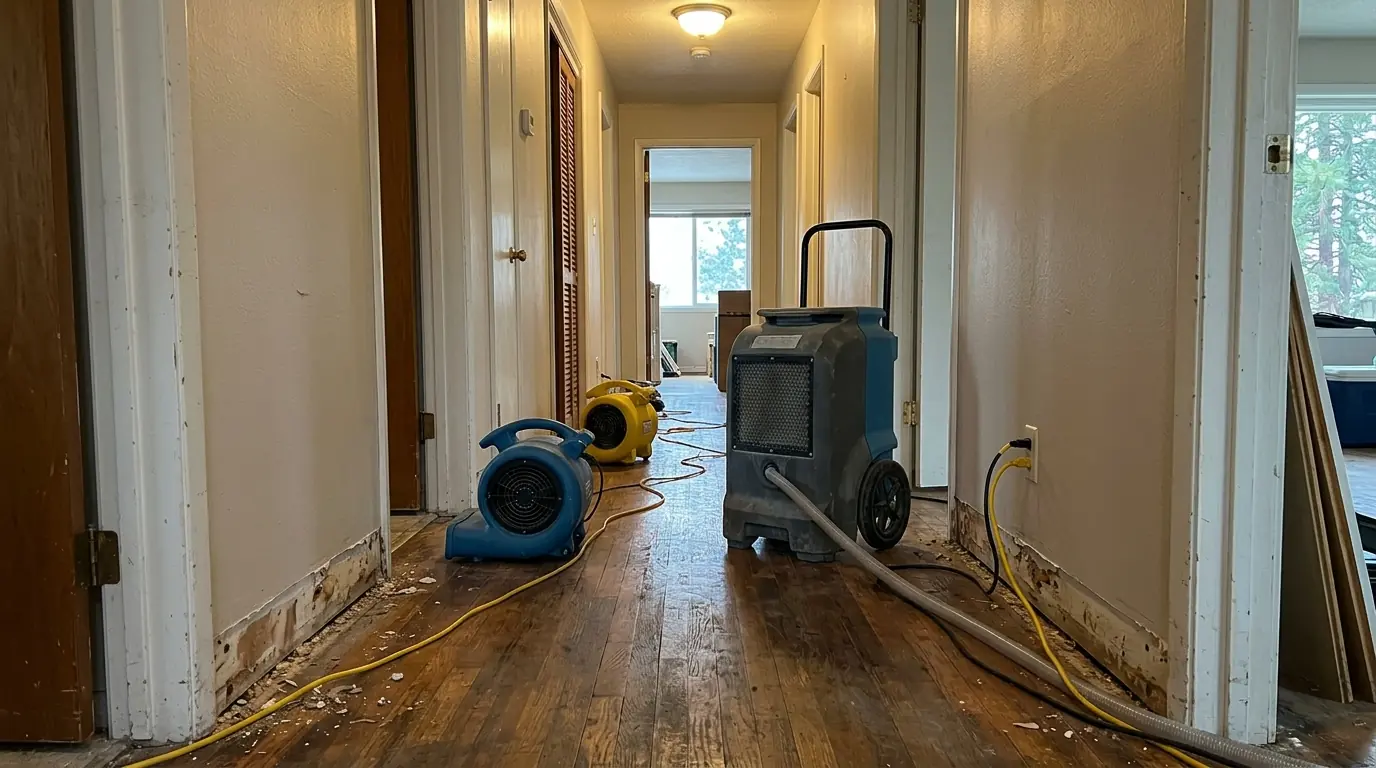
Structural drying in Spokane homes removes water from framing, subfloors and wall cavities, and it is finished only when meter readings match an unaffected reference area. Technicians balance air movers, which pull moisture off surfaces, with dehumidifiers that take it out of the air, and adjust both daily. In winter, keeping the house warm speeds evaporation.
Updated October 2026
How structural drying pulls water out of wood and drywall
Drying has three parts: air moving across a wet surface, warmth to help water evaporate, and dry air to receive it. Air movers push fast air over drywall, framing and subfloor so water leaves the surface. Dehumidifiers pull that water out of the room so the air does not turn humid and stall. Heat speeds both. Leave one out and drying slows or stops.
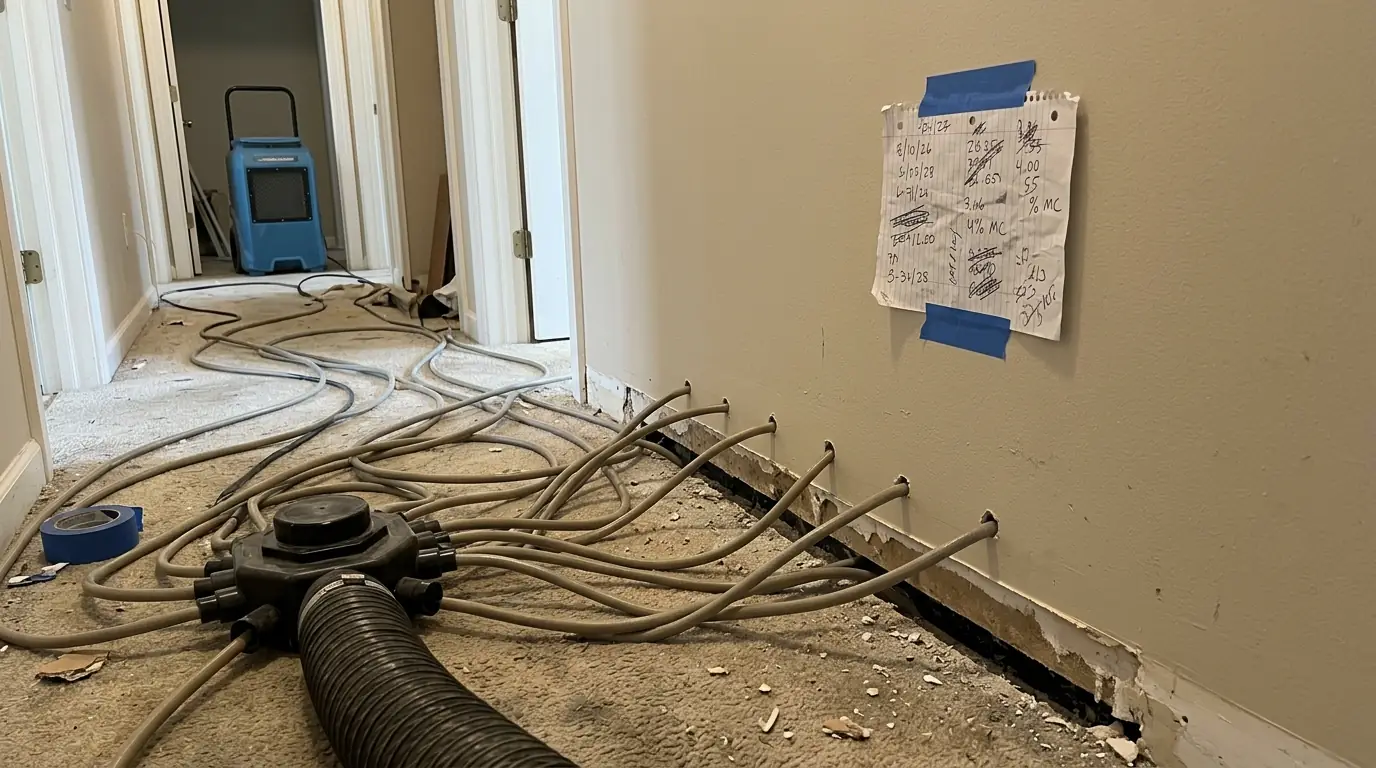
We set the goal before the equipment goes on. A reading from an unaffected wall or floor of the same material is the target, and every wet area is logged against it each visit. Framing, plaster and dense hardwood each have their own normal, so one number does not fit the whole house. When readings match, the equipment comes out and the area is ready for repairs.
Drying inside wall cavities
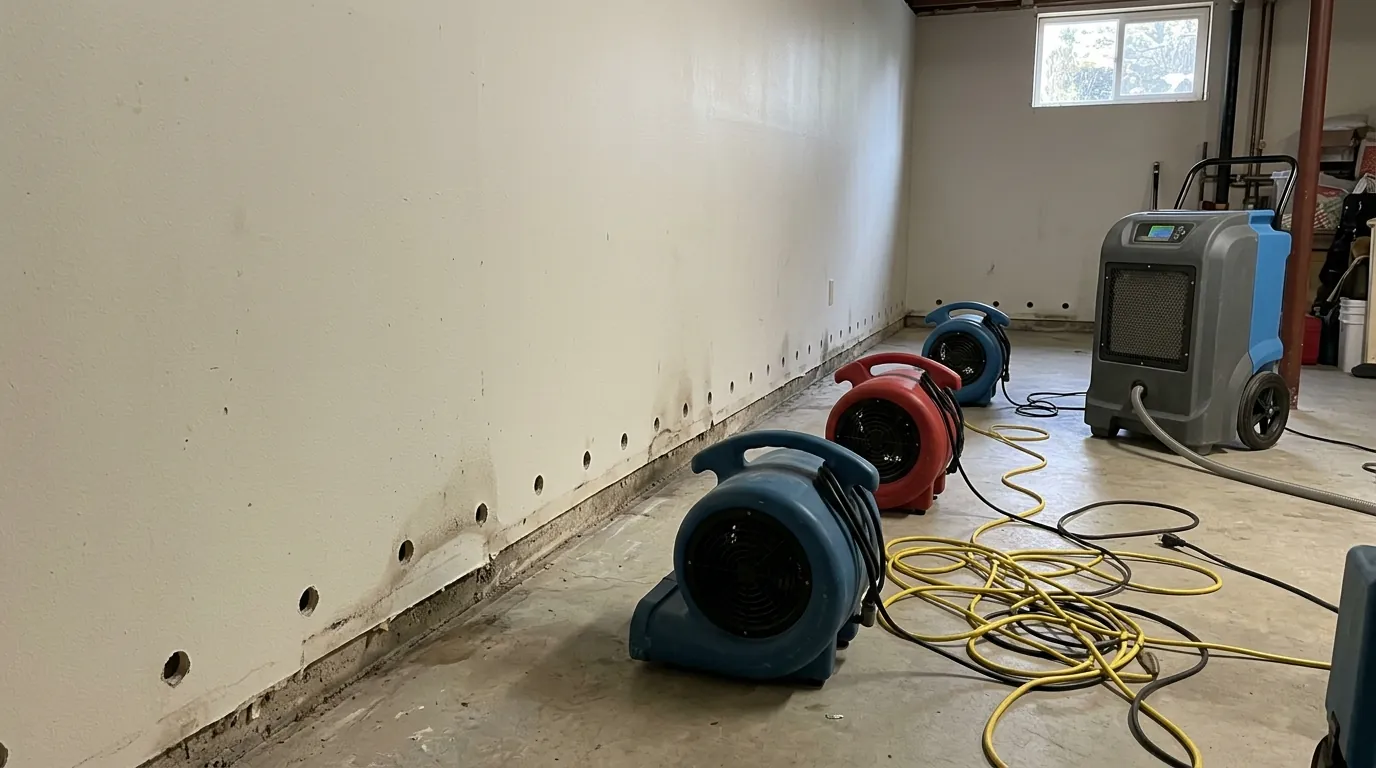
Water running down inside a wall collects on the bottom plate and soaks the lower drywall and insulation. If the insulation is fiberglass and the water was clean, we can often dry the cavity in place: pull the baseboard, drill small holes behind where it sat, and push air in through a manifold. The holes hide under the trim afterward. If insulation is soaked, a plastic vapor barrier is trapping moisture, or the water was contaminated, a flood cut is faster and safer than drying through it.
Drying subfloors, joists and framing
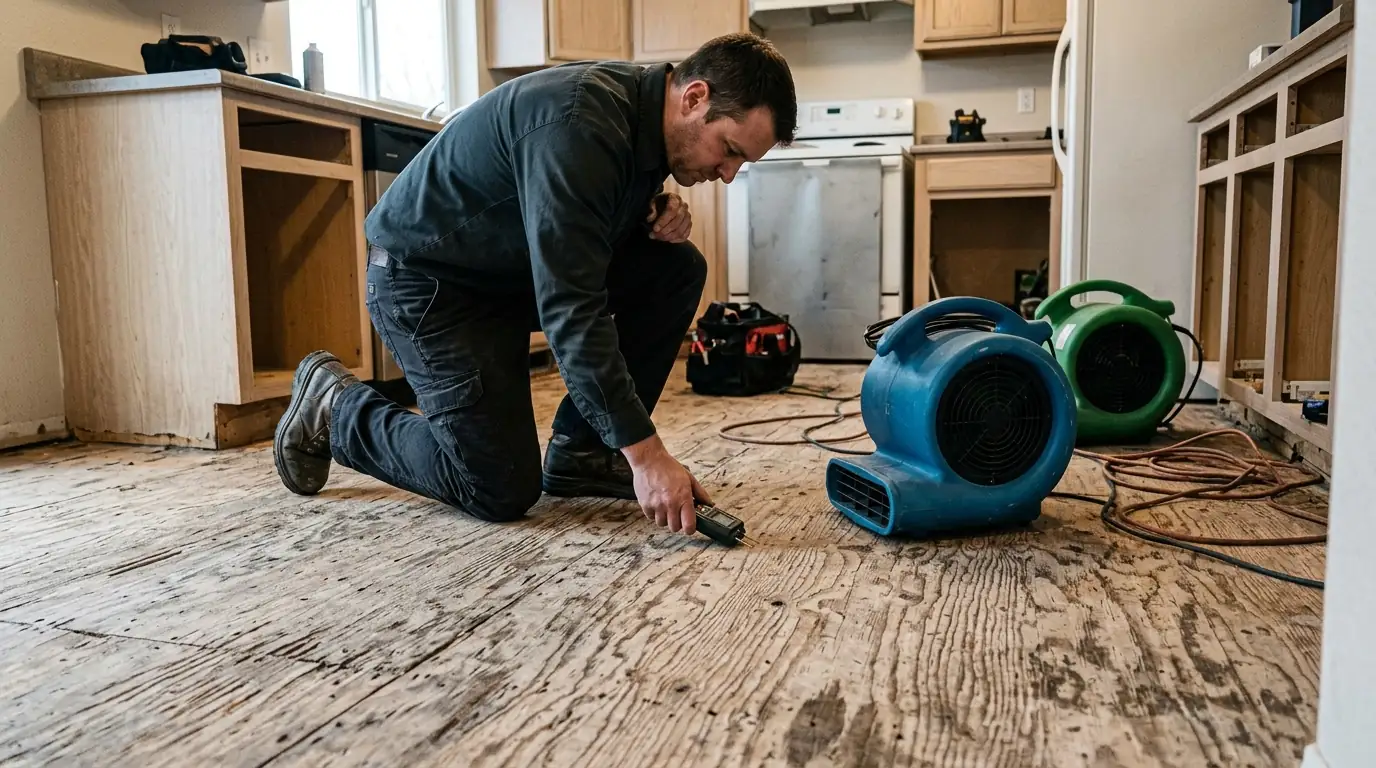
Plywood and OSB subfloors hold water between their layers, and OSB swells at the edges when it stays wet. Once flooring is lifted, we aim air movers across the subfloor and, where a basement or crawl space gives access, dry the joists from below too. Wood framing has a normal moisture content well below what a soaked board reads, and we track each wet member until it gets back there. Subfloor that has already swollen and delaminated gets replaced, because drying will not flatten it.
Drying a house in the middle of a Spokane winter
Cold air slows evaporation from wet materials, so in winter we keep the house warm, close it up and let the dehumidifiers work. Opening windows on a freezing day feels like airing the place out, but it chills the wet materials and stretches the job. Refrigerant dehumidifiers lose efficiency in cold rooms, so unheated basements and garages may get a desiccant unit or added heat. If the furnace is down because of the water, temporary heat comes first, or both the pipes and the drying framing suffer.
Water, smoke or mold in front of you right now?
Call us any hour. We will walk you through what to shut off and what to move while the crew heads your way.
Setting up and finishing a drying job
- 01
Take reference readings
We meter dry material of the same type to set the goal for each wet area.
- 02
Map the wet area
Meters and a thermal camera trace how far water spread.
- 03
Remove what traps water
Baseboard, wet pad or soaked insulation comes out where it blocks drying.
- 04
Place equipment
Air movers go along wet surfaces, with dehumidifiers sized to the room.
- 05
Log and adjust daily
We record readings, move units to the wettest spots and pull them as areas hit goal.
Local conditions
Why Spokane's January cold changes the drying setup
Spokane's average January low sits near 20.8 degrees, and the average high only reaches about 33.2. On a winter water loss the outdoor air is cold while the house is wet and needs to stay warm. We set up closed drying: doors and windows shut, heat on, dehumidifiers discharging to a drain or sink. An unheated basement or attached garage at those temperatures barely dries with standard equipment, so we bring heat or desiccant units into those spaces.
Timeline
How long structural drying takes and what slows it
Most water losses need several days, and readings set the finish line, not a calendar. Drywall and framing caught early come down quickly. Hardwood, plaster, concrete and layered materials like subfloor under tile set the pace. Water that sat for days, cold rooms and equipment switched off at night all stretch the timeline.
Cost
Structural drying cost: what drives the number
LawnStarter's 2026 cost data puts water damage restoration at about $3.15 to $7.40 per square foot nationally, and drying is a large share of that. Those are planning figures, not our price. Drying cost tracks how many air movers and dehumidifiers run, for how many days, and how many monitoring visits it takes. Opening a wall can cost more in repairs but less in drying days; drying in place does the reverse.
Opening walls or drying them in place
Both approaches work; the water and the wall decide which fits.
| Drying in place | Flood cut and open wall | |
|---|---|---|
| Good fit for | Clean water caught early, no plastic vapor barrier | Gray or black water, soaked insulation, vapor barrier |
| Damage to finishes | Small holes behind the baseboard | Drywall cut a couple of feet up |
| Drying time | The cavity can take longer | Usually faster, cavity open to air |
| Repair afterward | Patch holes and reinstall trim | New drywall, tape, texture and paint |
Structural Drying & Dehumidification questions
In a Spokane winter open windows let in cold air that slows evaporation from wet materials, and on humid days they bring moisture in. Closed drying with dehumidifiers is more predictable and easier to measure.
Please do not. Air movers and dehumidifiers only work while they run, and switching them off lets humidity climb back into the materials. If noise near a bedroom is a real problem, tell us and we will rearrange the setup.
When readings in each wet area match the reference reading from dry material of the same kind. Every reading goes on a drying log, which can also go to your adjuster if you have a claim.
Drying to goal quickly is the main way mold is prevented after a water loss, and exposed framing also gets an antimicrobial. If mold was already growing before we arrived, that area needs remediation, not just drying.
Somewhat. Air movers and dehumidifiers draw steady power for several days, depending on how many units run and for how long. That is one reason we pull equipment as soon as an area reads dry.
Related restoration work
Water Extraction & Removal
Water Damage
See this serviceEmergency Water Damage Restoration
Water Damage
See this serviceMoisture Mapping & Hidden Leak Detection
Water Damage
See this serviceAntimicrobial & Mold Prevention Treatment
Mold
See this serviceSee all 37 restoration services
Related advice: Burst pipe in a Spokane winter: the first hour and What water damage restoration costs in Spokane
Answering 24/7
Walls or floors still wet underneath?
Call any hour. We will meter the house and set drying where the readings say it is needed.
1876 N Teanaway Dr, Post Falls, ID 83854