Below grade, where moisture collects
Basement mold removal for Spokane homes, behind walls and under carpet
Finished basements hide mold behind drywall, paneling and carpet. We open what's needed and tell you whether that white crust is mold or minerals.
- Answered 24/7
- Finished walls
- Carpet and pad
- Efflorescence checks
Quick answer
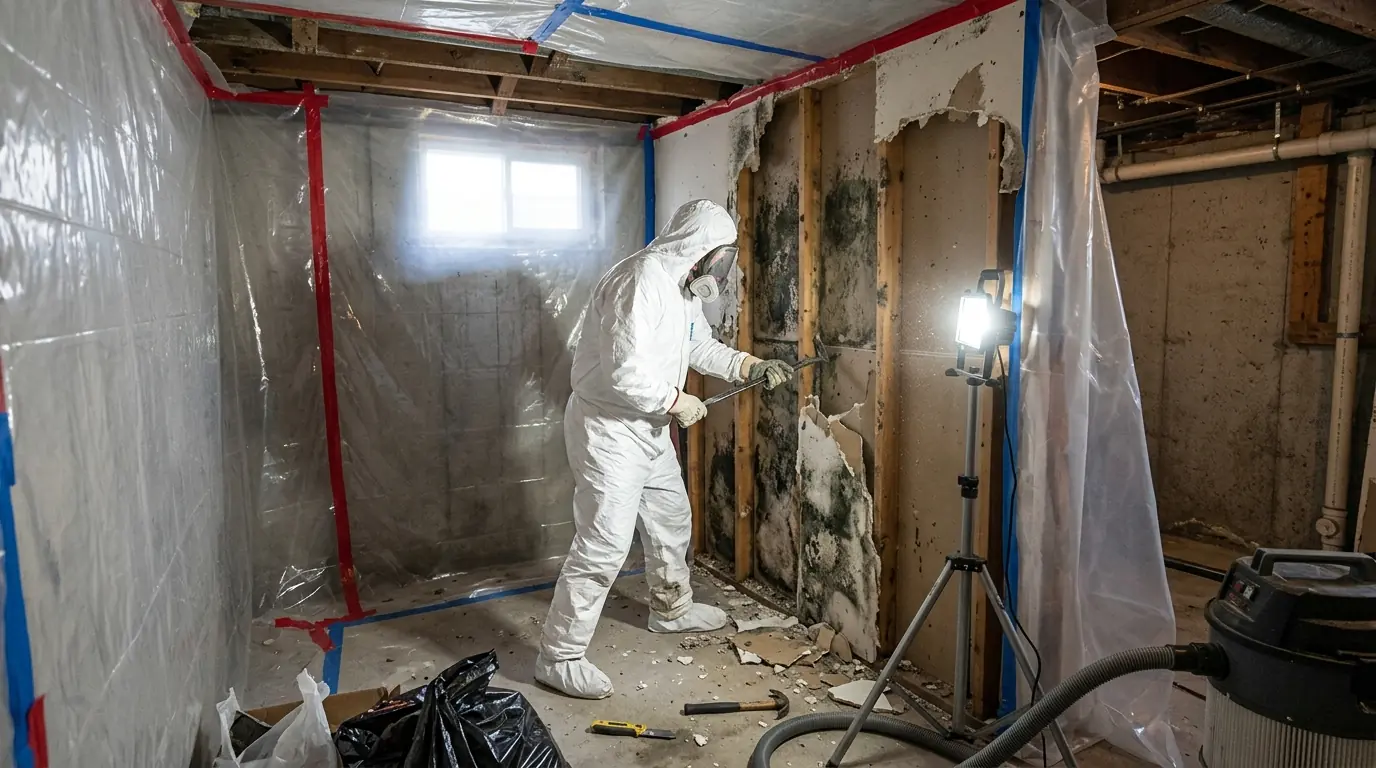
Basement mold removal in Spokane usually starts behind finished walls and under carpet, where moisture from foundation seepage or plumbing leaks collects unseen. We remove affected drywall, insulation and pad under containment, clean the framing and concrete, and find the water source. White crust on bare concrete is often mineral efflorescence, not mold.
Updated October 2026
Why basements are where mold hides
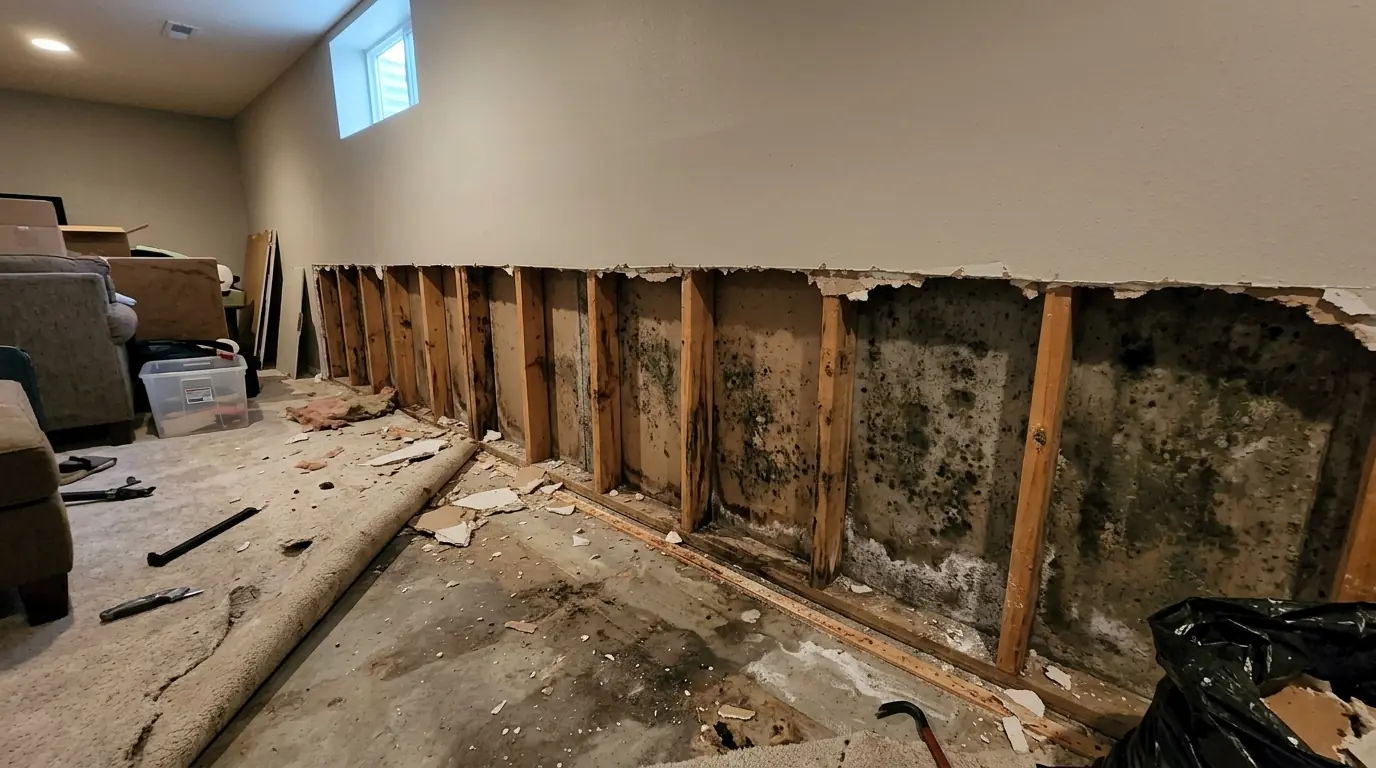
Basements sit in damp soil, stay cooler than the rest of the house and often have finished walls built tight against concrete. Moisture moves through the foundation, condenses on the cool surface and soaks into anything touching it: the back of drywall, fiberglass insulation, wood framing on the slab, and the pad under carpet.
By the time you notice a smell or see spots on the face of the drywall, the back side has usually been growing a while. Removal means opening the lower walls to clean material, pulling wet insulation and pad, cleaning the framing and concrete, and drying everything. The part that matters most is the source, whether that's a seeping wall, a window well or a plumbing leak.
Cost
What drives the cost of basement mold removal
This Old House's 2026 cost guide puts typical mold remediation nationally at about $1,200 to $3,750, or roughly $10 to $25 per square foot. Use that as a planning range, not our price. Basement jobs swing with how much wall area is opened, whether carpet and pad come out, the size of containment, and whether the moisture source needs a separate fix like drainage or a plumbing repair. Rebuild is extra.
Mold behind finished walls
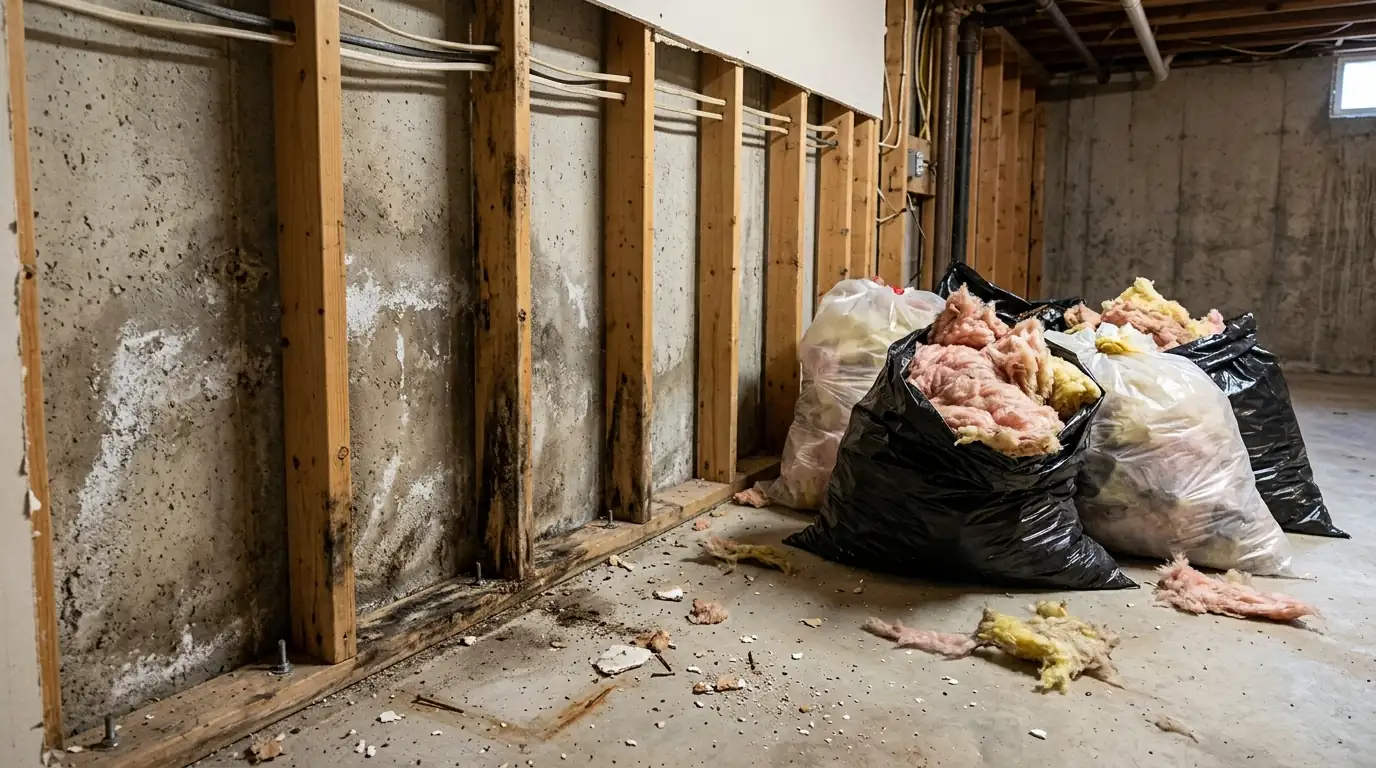
Basement framing is often built against the foundation with fiberglass between the studs and drywall over the top. If the concrete stays damp, the insulation and paper backing collect moisture. We cut the drywall at a level above the growth, often two to four feet, and work up if needed. Wet batts get bagged. Bottom plates resting on concrete are checked for rot; treated plates usually clean up. The concrete gets scrubbed and dried. Rebuild may use rigid foam against the wall instead of fiberglass, which handles basement moisture better.
Mold under carpet and pad
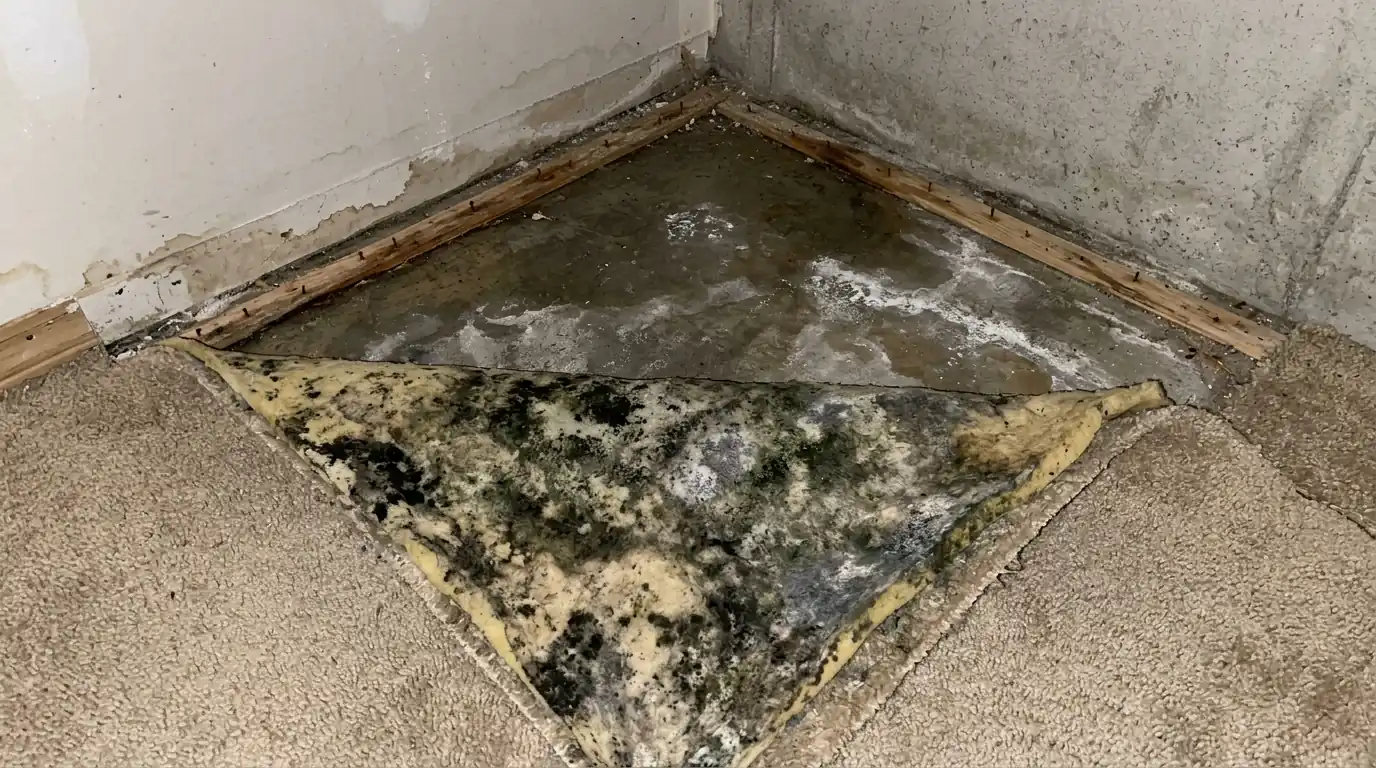
Carpet on a basement slab sits on the coolest, dampest surface in the house. Pad soaks up any water from seepage, a water heater leak or a washing machine overflow, then stays wet underneath while the carpet top feels dry. Mold grows in the pad and on the carpet backing. Pad with growth always goes. Carpet can sometimes be saved if the backing is clean and the water was clean, but after repeated wetting or sewage, it's discarded. The slab gets cleaned and checked with a meter.
Efflorescence or mold on basement walls
A white, crusty or powdery deposit on bare concrete or block is very often efflorescence: mineral salts left behind as water moves through the masonry and evaporates. It's not mold, and it doesn't grow on organic material. A simple test: efflorescence dissolves or fizzes with a little vinegar and crumbles to powder, while mold smears and sits on a surface like wood or paper. Efflorescence still matters, though. It shows water is moving through the wall, and that same moisture can grow mold on anything nearby.
Water, smoke or mold in front of you right now?
Call us any hour. We will walk you through what to shut off and what to move while the crew heads your way.
How we remove mold from a basement
- 01
Map the moisture
Meters on walls and slab show where water is getting in and how far it went.
- 02
Contain the area
Plastic sheeting and negative air keep the rest of the house clean.
- 03
Open and remove
Drywall, insulation and pad with growth are cut out and bagged.
- 04
Clean and dry
Framing and concrete get cleaned, then dried with dehumidifiers.
- 05
Address the source
We point to the seepage, window well or plumbing issue that has to be fixed.
Local conditions
Finished basements in Spokane Valley's 1970s homes
Half the homes in Spokane Valley went up around 1979 or later, across a city of roughly 103,000 people; only about 4.8% of homes there date from 1939 or earlier. That means a lot of 1970s and 1980s houses, many with basements finished years after construction. Fiberglass against concrete, carpet on slabs and an aging water heater in the corner are a common combination. In Spokane Valley basements we open the bottom of exterior walls before scoping the job.
Signs of mold in a finished basement
Basement mold usually announces itself before you see it.
Musty smell when you open the door
The most common first sign, often strongest near exterior walls.
Spots along the bottom of drywall
Dark spotting or staining at the base of walls points to growth behind.
Damp or cool carpet
Carpet that feels clammy or smells when you press on it.
Warped baseboards or paneling
Swelling or peeling at the bottom of the wall shows repeated moisture.
White crust on bare walls
Efflorescence isn't mold, but it shows water moving through the foundation.
Basement mold jobs you can handle and what to leave
Some basement mold is a weekend task; most of what's behind the walls is not.
| Task | Doing it yourself | When we do it |
|---|---|---|
| Scrubbing efflorescence | Brush it off dry; it may return until the moisture stops. | When it's paired with wet framing or mold nearby. |
| Small spots on bare concrete | Clean with detergent and dry thoroughly. | When spots return or cover a large area. |
| Running a dehumidifier | A good habit in most basements. | When humidity stays high even with one running. |
| Pulling up moldy carpet | Possible for small rooms; bag it before carrying it through the house. | When pad covers a large area or the water was contaminated. |
| Opening finished walls | Easy to spread spores without containment. | Whenever growth is behind drywall. |
Basement Mold Removal questions
Rarely. We cut out the lower section of affected walls, often two to four feet, and the carpet and pad if needed. Unaffected walls and ceilings stay. The scope follows the moisture map.
Often it's efflorescence, mineral salt left by water moving through concrete. It's not mold, but it shows moisture coming through the wall. If the growth is on drywall, paper or wood instead, it may well be mold.
Sometimes, if the water was clean and the backing shows no growth. Pad with mold always goes, since it can't be cleaned. After sewage or repeated wetting, carpet should be discarded too.
Only if the moisture source is fixed too. Grading, short downspouts, window wells, failed drainage or a plumbing leak are common causes. We tell you which one we see and who usually fixes it.
Rigid foam insulation against the concrete, treated bottom plates and a small gap between drywall and slab all help. Mold-resistant drywall is an option for the lower section of the wall.
Related restoration work
Basement Flooding Cleanup
Water Damage
See this serviceMold Remediation
Mold
See this serviceMold Inspection & Testing
Mold
See this serviceAntimicrobial & Mold Prevention Treatment
Mold
See this serviceSee all 37 restoration services
Related advice: How fast mold grows after a leak and Spring snowmelt and basement seepage
Answering 24/7
Musty basement and not sure what's behind the walls?
Call any hour. We'll find the moisture and show you what has to come out.
1876 N Teanaway Dr, Post Falls, ID 83854