Not all soot comes off the same way
Smoke and soot cleanup for Spokane homes, matched to the residue
We test the residue before we clean, because the wrong method can smear soot into the paint and turn a cleanable wall into a repaint.
- Answered 24/7
- Dry soot sponging
- Protein residue
- Odor sealing
Quick answer
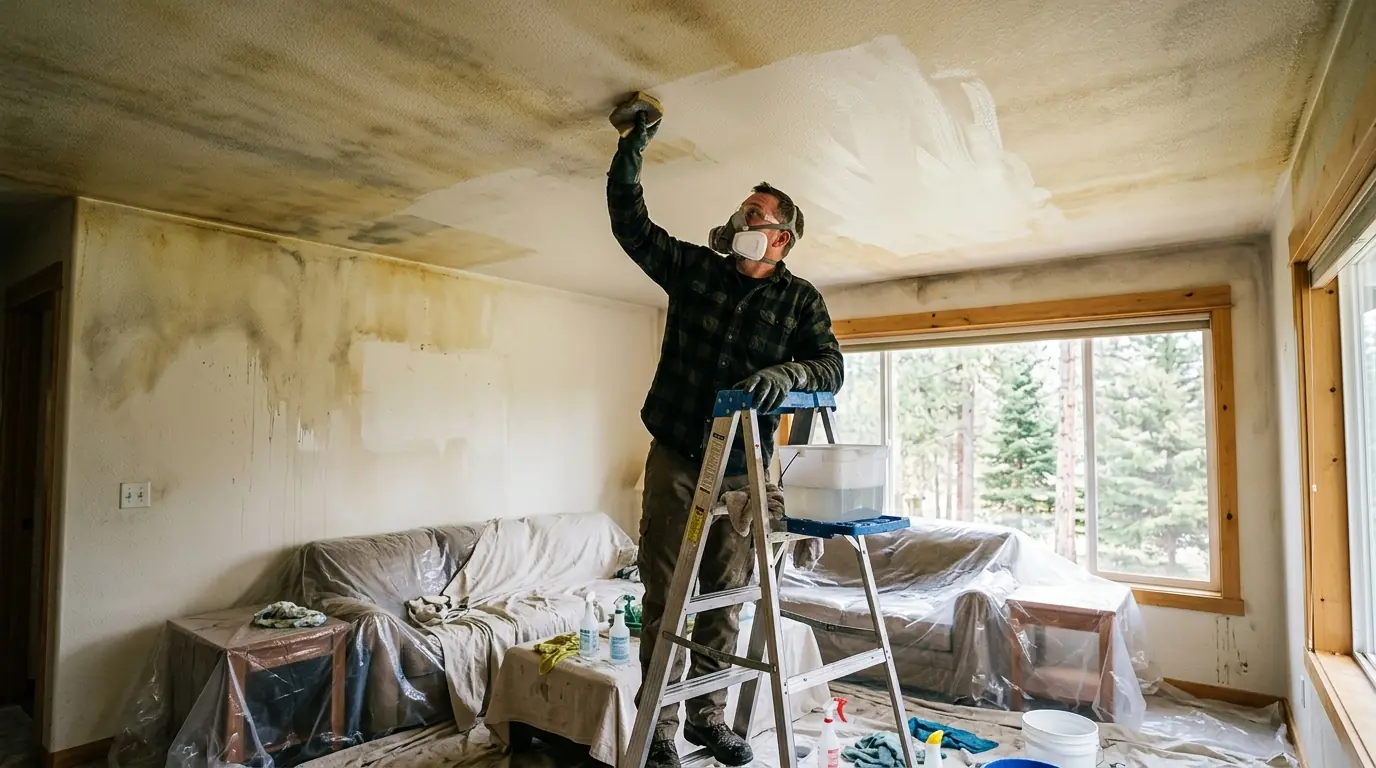
Smoke and soot cleanup in Spokane depends on what burned: dry soot from paper and wood vacuums and sponges off, while oily soot from plastics and protein film from burnt food need degreasing chemistry. We test a hidden spot first, clean from the ceiling down, then seal stained surfaces so odor does not bleed through new paint.
Updated October 2026
Why soot type decides how a wall gets cleaned
Soot is unburned carbon plus whatever else was in the fire. A hot fire in wood and paper leaves dry powder. A smoldering fire in plastics, foam and synthetic carpet leaves an oily smear. A pan left on the stove leaves a nearly invisible film with a smell far stronger than it looks.
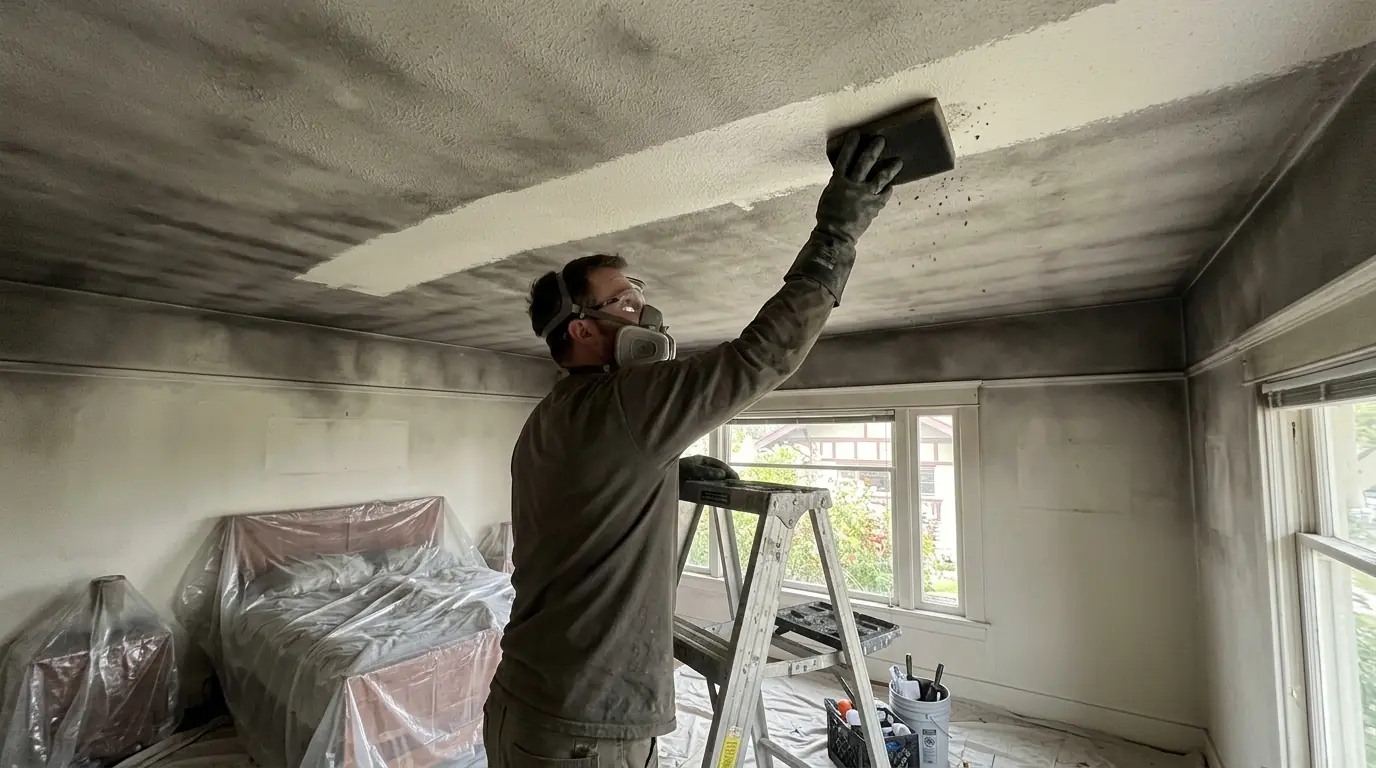
Every job starts with a dry chemical sponge on a hidden spot. If it lifts clean, the residue is dry. If it smears, it's oily. Protein residue often shows only as a yellow tint and a tacky feel. That test prevents the most common mistake, which is wiping soot with water and setting it into the paint. Then we work top down, ceilings first, so falling residue never lands on a finished surface, and finish with odor removal for what cleaning can't reach.
Dry soot versus oily or protein residue
How the two main residue families differ on the job.
| Dry soot | Oily or protein residue | |
|---|---|---|
| What burned | Wood, paper, natural fibers in a hot fire | Plastics, foam, synthetics, or food on the stove |
| Look | Black, powdery, loose | Brown or yellow smears, sticky film |
| Sponge test | Lifts off clean | Smears and spreads |
| Method | HEPA vacuum and dry sponge first | Degreaser or enzyme cleaner, then rinse |
| Odor | Moderate campfire smell | Strong and lingering, especially protein |
Cost
What smoke and soot cleanup costs nationally
LawnStarter's 2026 cost figures list smoke damage restoration at roughly $200 to $1,135 as a typical national range, which fits cleaning a room or a small area of residue. That's a planning number, not our price; whole-house soot cleaning after a structure fire is usually priced inside a full fire scope. Your cost depends on residue type (oily and protein take longer), ceiling height, number of rooms, and whether surfaces need sealing and paint afterward.
Dry soot from wood and paper fires
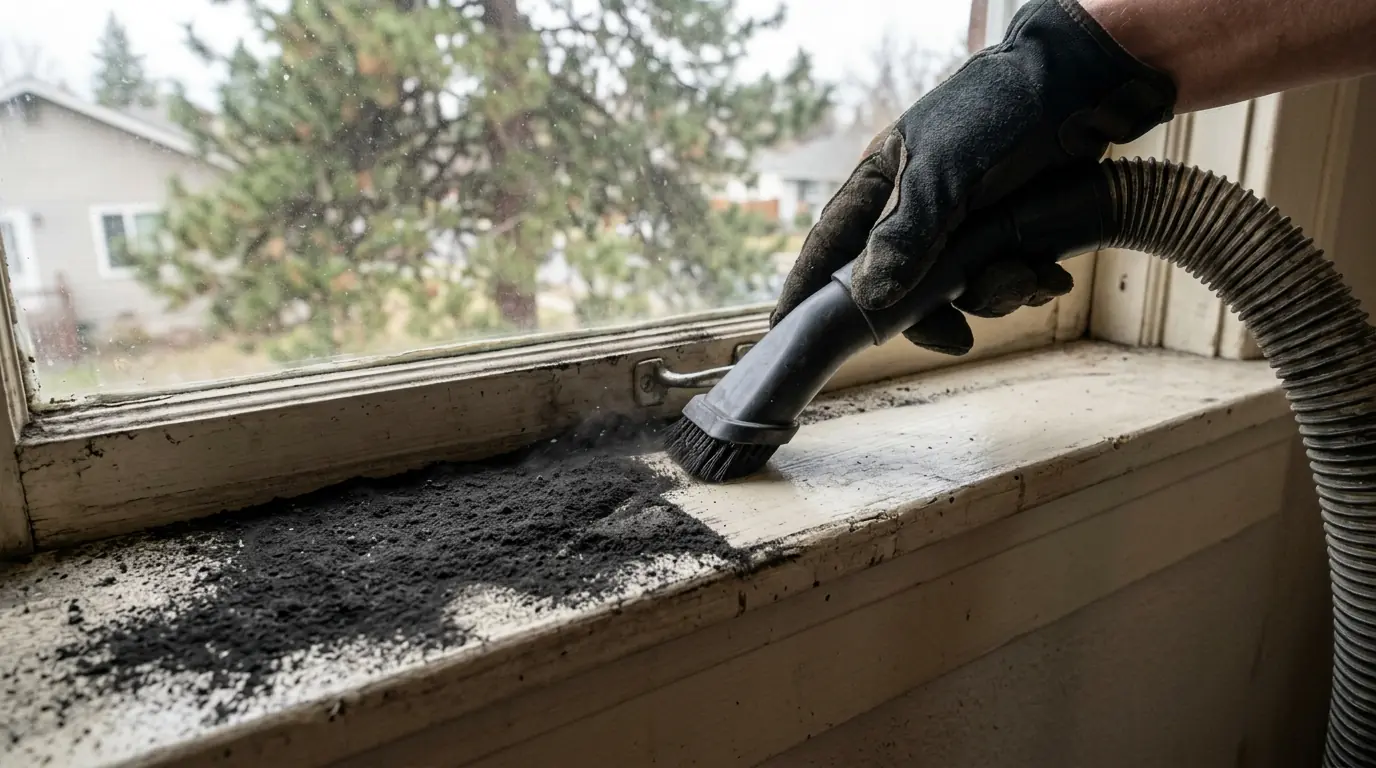
Dry soot is fine black powder sitting loosely on surfaces. It's the easiest to clean and the easiest to ruin, because a damp cloth turns it into a gray streak that soaks into flat paint. So it comes off dry first: HEPA vacuuming on ceilings, walls and fabric, then dry chemical sponges that pull residue into the rubber instead of pushing it around. Wet cleaning follows only on surfaces that can take it. Flat ceilings that still shadow after sponging are usually sealed and repainted.
Oily soot and protein residue
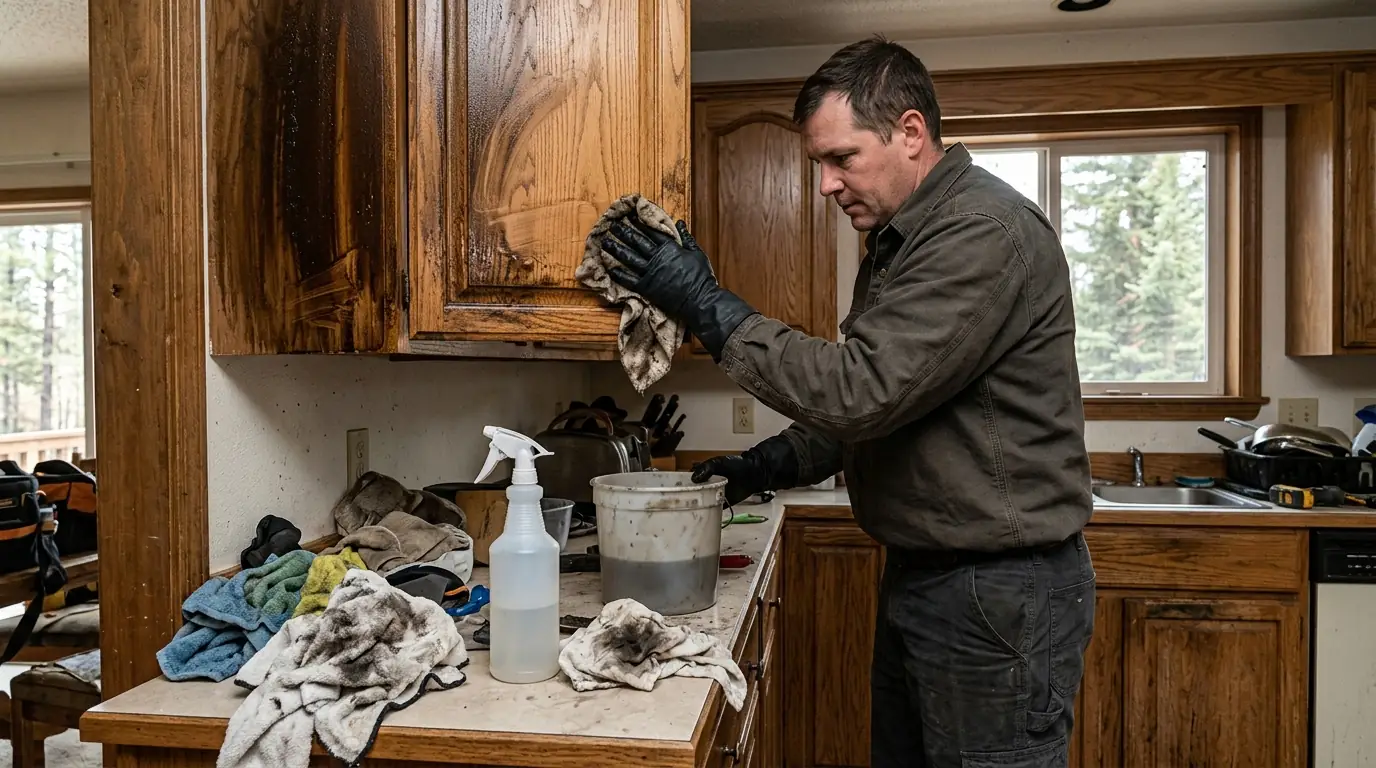
Oily soot comes from plastics, foam furniture, vinyl and carpet. It's sticky, smears under a dry sponge and clings to cabinets and glass, so it needs an alkaline degreaser worked in small sections and rinsed clean. Protein residue from burnt meat or beans is a yellow-brown film that can be almost invisible on light walls but carries a sharp odor. It bonds to paint and cabinet finishes and needs enzyme cleaners and patience. Left for weeks, both can discolor plastics and etch metal.
Soot webs and ghosting on walls
Soot webs look like cobwebs hanging in ceiling corners. They're chains of carbon particles that stuck together in the air, and a broom smears them into long black lines, so we HEPA vacuum them before touching anything else. Ghosting is the dark outline of studs, joists or nails showing through drywall, formed where warm sooty air met colder framing. Cleaning lightens it, but most ghosting needs stain-blocking primer and paint to disappear. The same pattern shows up around outlets and along baseboards where air leaks.
Water, smoke or mold in front of you right now?
Call us any hour. We will walk you through what to shut off and what to move while the crew heads your way.
How we clean smoke and soot from a room
- 01
Test the residue
A dry sponge test on a hidden spot tells us dry, oily or protein.
- 02
Protect and filter
Floors get covered, HVAC is shut off and air scrubbers catch loose particles.
- 03
Dry removal first
HEPA vacuuming and dry sponging take off loose soot without smearing it.
- 04
Wet clean by residue
Degreasers or enzyme cleaners go on where needed, worked top down.
- 05
Seal and deodorize
Ghosted areas get stain-blocking primer, and odor treatment handles the air.
Local conditions
Mixed residue after the Oregon Road Fire by Elk
The Oregon Road Fire by Elk, north of Spokane, burned 10,817 acres in August 2023 and destroyed 126 primary homes and 258 outbuildings. Rural fires like that burn sheds, vehicles and stored plastics along with timber, so a home downwind can end up with dry and oily residue on the same wall. In houses exposed to that kind of smoke we test residue in several rooms, because one sponge test in the living room doesn't tell you what the garage or attic picked up.
Which soot cleaning you can handle yourself
Light residue is often manageable; here's where we'd draw the line.
| Task | Doing it yourself | When we do it |
|---|---|---|
| Candle soot mark | Usually fine with a dry soot sponge. Skip water until loose soot is off. | When it covers a whole ceiling or keeps returning. |
| Smoky clothes | Many come clean in one or two washes. Don't machine dry until the smell is gone. | Delicates or anything still smelly after two washes. |
| Soot on window glass | Vacuum loose soot, then use a degreasing glass cleaner. | When glass is etched or vinyl frames are stained. |
| Soot webs | Risky. A broom smears them into permanent lines. | Always; we vacuum them before cleaning walls. |
| Smoke odor | Airing out helps; sprays only cover it. | When odor persists after a week of ventilation. |
Smoke & Soot Cleanup questions
Often. Dry soot on an eggshell or satin finish usually cleans well. Flat paint, heavy oily residue and ghosting often need cleaning plus stain-blocking primer and paint. We test first so you don't repaint walls that could have been cleaned.
Water or household cleaner on dry soot makes a gray paste that soaks into paint. Stop, let it dry, and restart with a HEPA vacuum and dry sponge. Some walls recover; others need sealing and paint.
Hard furniture usually cleans well on site or in pack-out. Upholstery depends on fabric and residue. Some cleans fully, some holds odor and costs more to restore than replace, and we tell you which item by item.
Air treatment helps after residue is cleaned, not instead of cleaning. If odor stays in framing, insulation or ducts, we bring in deodorizing equipment. Ozone requires an empty house, no people, pets or plants.
For one candle mark, probably not. Once soot covers a room, spread through ducts or came from burnt plastics or food, professional cleaning usually saves paint and contents that DIY methods would damage.
Related restoration work
Fire Damage Restoration
Fire & Smoke
See this serviceOdor Removal & Deodorization
Sewage, Biohazard & Odor
See this serviceDuct Cleaning After Smoke & Water Damage
Rebuild, Contents & Commercial
See this serviceKitchen Fire Cleanup
Fire & Smoke
See this serviceSee all 37 restoration services
Related advice: The first 48 hours after a house fire and Cleaning up after wildfire smoke and ash
Answering 24/7
Soot on the walls and a smell that won't quit?
Call any hour. We'll test the residue and tell you what can be cleaned and what needs paint.
1876 N Teanaway Dr, Post Falls, ID 83854