Quiet, careful help after a hard day
Biohazard and trauma scene cleanup for Spokane families and property owners
Once the scene is released to you, we take over the cleanup quietly and without rushing you, and we explain each step before it happens.
- Answered 24/7
- Blood and fluid cleanup
- Sharps removal
- Odor treatment
Quick answer
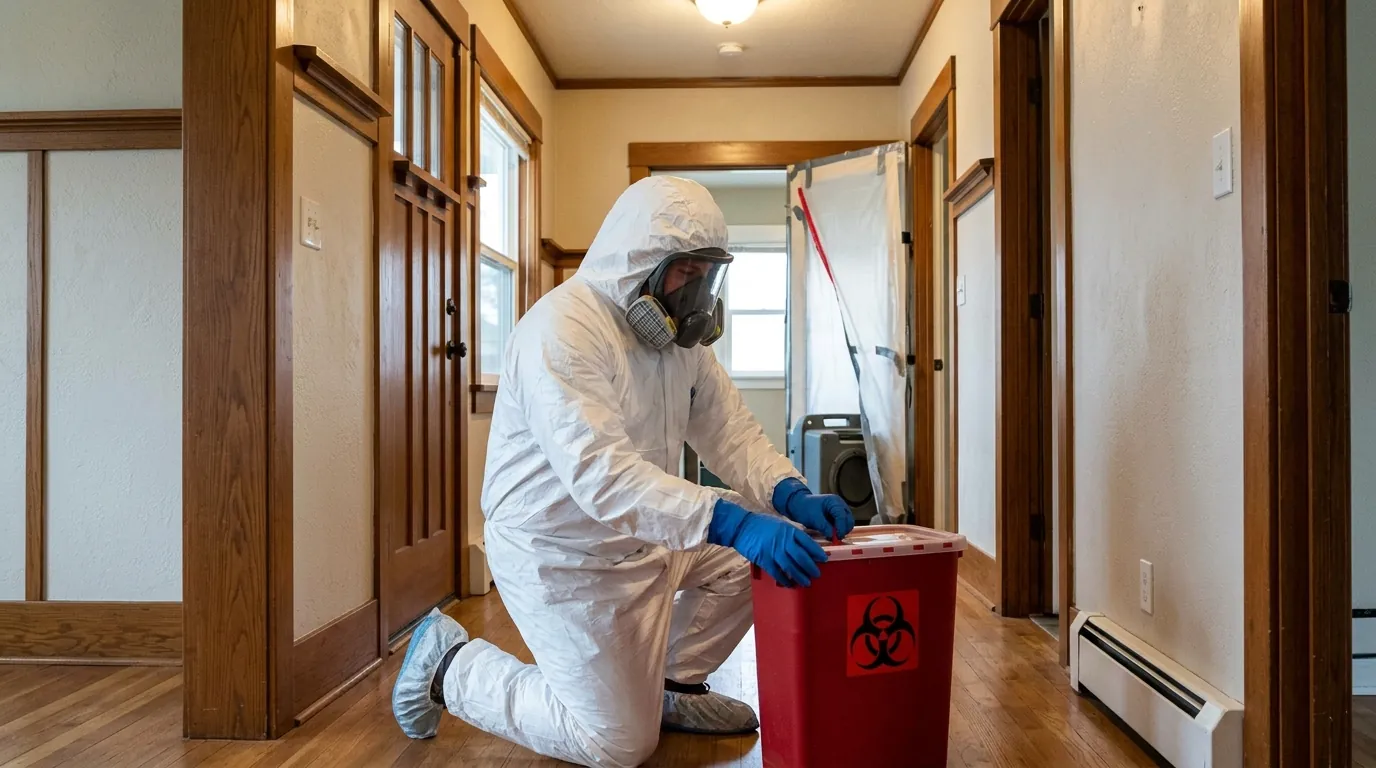
Biohazard and trauma cleanup in Spokane begins after the scene is released, and it means removing every porous material that fluids reached, not just wiping the surface. We clean and disinfect hard surfaces, bag waste for medical waste disposal and treat lingering odor. Families can call any hour, and nothing has to be decided on that first call.
Updated October 2026
What trauma cleanup involves once the scene is released
Fluids travel further than they look. Blood soaks through carpet into the pad and subfloor, runs into gaps between floorboards and wicks into drywall at the baseboard. A surface can look clean while the material under it still holds contamination and, a few days later, odor.
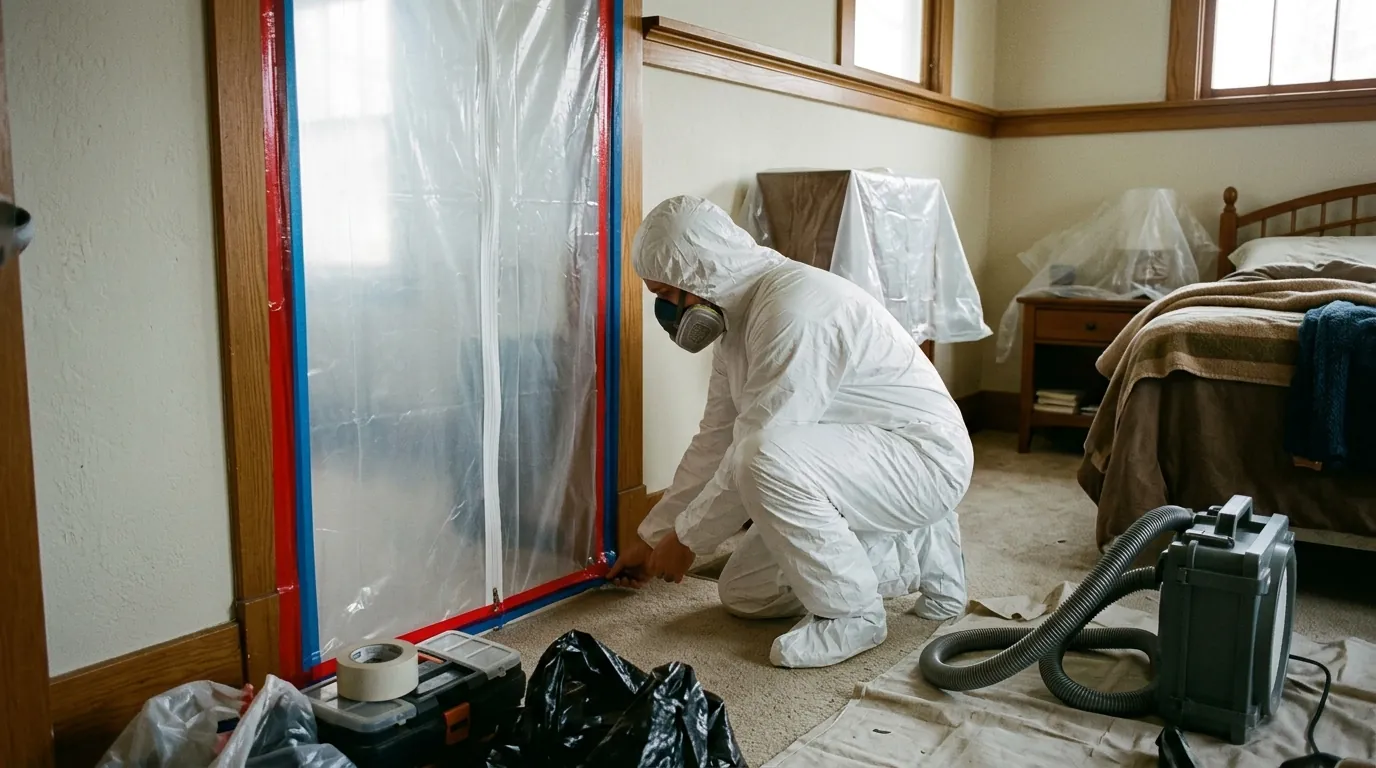
So the work is mostly careful removal. We set up a contained work zone, wear protective gear, and cut out affected carpet, pad, drywall or subflooring until we reach clean material. Hard surfaces are cleaned first and then disinfected with a product left wet for its full contact time. Waste is bagged and handled as medical waste. If a smell remains once the material is gone, odor removal finishes the job.
Blood and bodily fluid cleanup
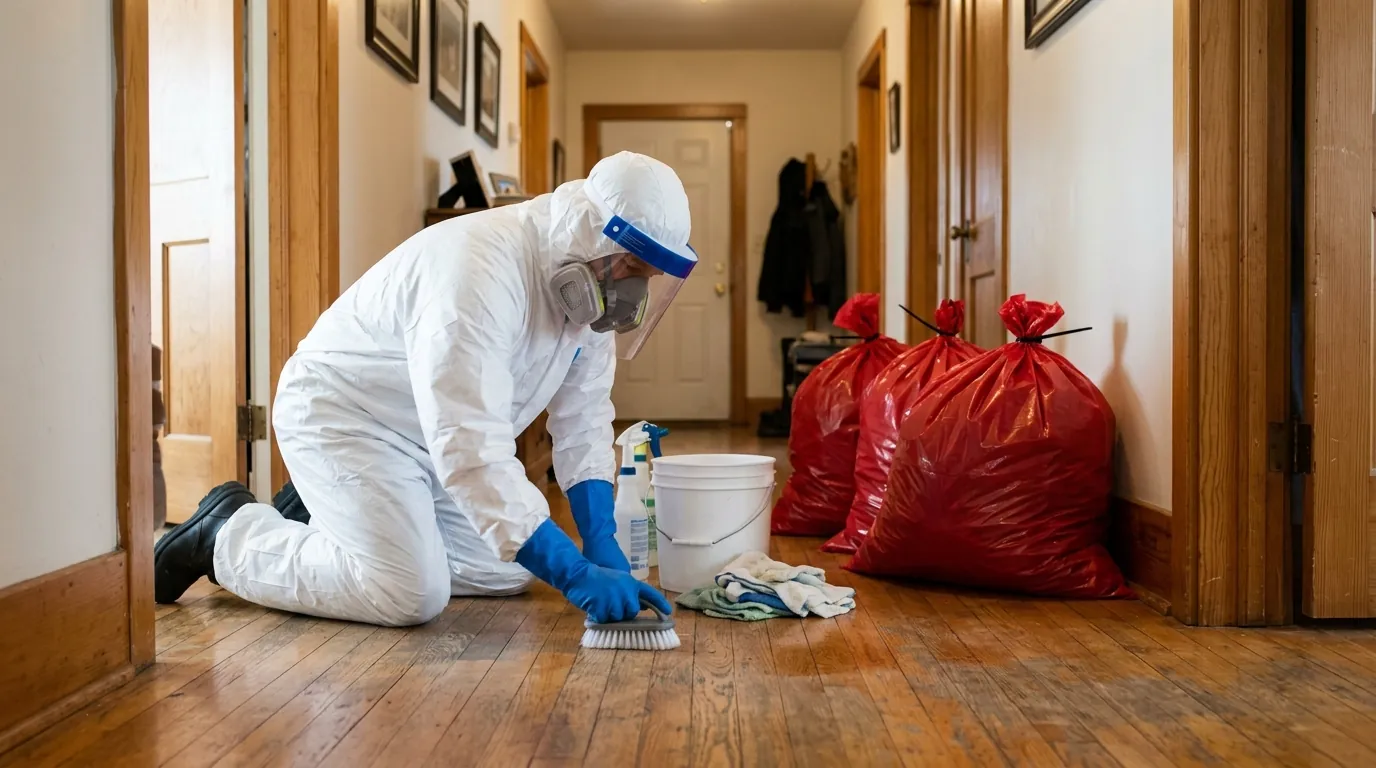
Injuries, medical events and accidents at home can leave blood and other fluids on floors, furniture and walls. Bloodborne pathogens such as hepatitis B can survive on surfaces for days, which is why household cleaners and a mop are the wrong tools. We check how far the fluid spread beyond what's visible, remove porous items that absorbed it, clean hard surfaces with a detergent step, then disinfect. Mattresses and upholstered furniture usually can't be made safe and are disposed of only with your permission.
Unattended death cleanup
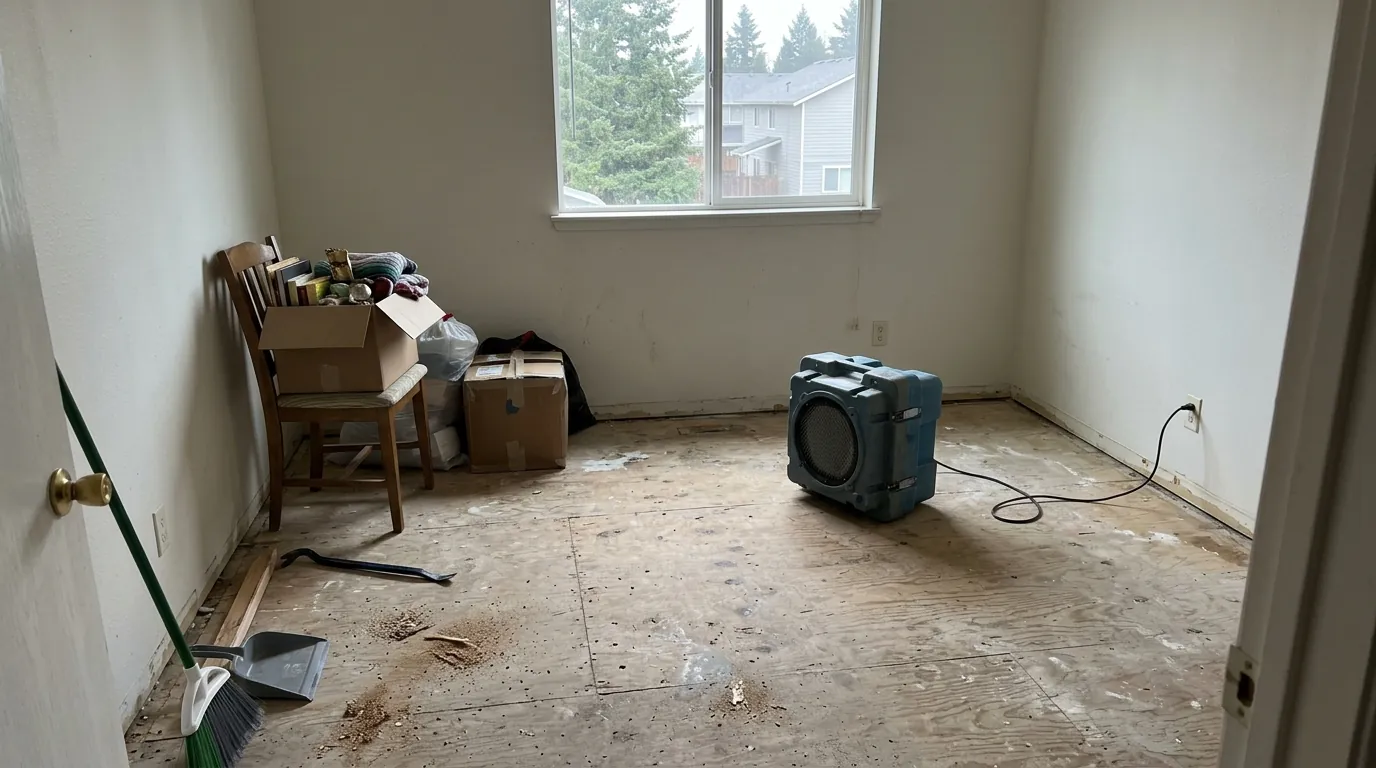
When a person passes and isn't found for some time, natural decomposition releases fluids and an odor that reaches well past the room. Fluids often move through the flooring into the subfloor and sometimes the ceiling below. We remove affected materials down to sound structure, seal surfaces that test clean but still hold odor, and run HEPA air filtration. Personal items are set aside for the family to review rather than thrown out, and we can photograph anything you'd like a record of before it moves.
Needles and sharps removal
Discarded needles turn up in rentals after a tenant leaves, in vehicles, in yards and in vacant buildings. A single stick can transmit disease, so we never reach blindly into bags, couch cushions or drawers. Technicians wear puncture-resistant gloves, use tongs and place every sharp in a rigid sharps container for proper disposal. We then search the surrounding area room by room, including vents, mattresses and closet shelves, clean any contamination we find and leave notes the owner or property manager can keep.
Not sure how bad it is?
Describe it on the phone. We will tell you honestly whether it needs a crew tonight or can wait for morning.
How a trauma cleanup unfolds, step by step
- 01
Talk it through
We listen, confirm the scene has been released and answer questions without pressing for decisions.
- 02
Assess with care
We look at how far fluids reached and explain what has to come out.
- 03
Contain and remove
Plastic containment, protective gear and careful removal of affected porous materials.
- 04
Clean, then disinfect
Hard surfaces are cleaned first so the disinfectant can work for its full contact time.
- 05
Return the room
Odor treatment, a final check and the space handed back ready for repair or use.
Local conditions
Trauma cleanup calls from across Spokane, at any hour
These calls rarely come at a convenient time. A family may learn about a death late at night or on a holiday weekend, and a landlord may find a problem only when a unit is finally opened. Because we answer around the clock, someone in Spokane can talk through what happened, what has been released and what can wait until morning. We can come look, explain the scope in plain terms and start once you're ready, the same day or later in the week.
Cost
What shapes the cost of a trauma scene cleanup
Trauma cleanup is priced by the size of the affected area, how far fluids traveled into flooring and walls, how much material has to be removed and disposed of as medical waste, and how long odor control runs. A small blood cleanup on tile is a short job. An unattended death found after several days often means subfloor removal and more than one visit. Some homeowner policies cover this work and some don't; your adjuster decides, and we document the scope either way.
Trauma cleanup tasks families ask about doing themselves
Wanting to handle it yourself is natural; here is where that's reasonable and where it isn't.
| Task | Doing it yourself | When we do it |
|---|---|---|
| Small blood spots on sealed hard floors | Possible with gloves, a cleaner, then an EPA-registered disinfectant left wet for its listed time. | When it soaked into grout, wood or carpet. |
| Carpet, mattresses and upholstery | Not advised. Fluid goes deeper than the surface, and home cleaning rarely reaches it. | Almost always; these items are removed. |
| Needles and sharps | Don't pick them up by hand or reach into bags or cushions. | Any time sharps are found. |
| Sorting personal belongings | Often meaningful for the family once affected areas are cleaned. | We set items aside and clean what can be cleaned. |
| Lingering odor | Air fresheners and candles mask it for a few hours at most. | When odor remains after cleanup. |
What a trauma scene cleanup includes
Every situation is different, but these steps are part of nearly all of them.
- Protective gear and a contained work area so contamination doesn't spread to other rooms.
- Removal of carpet, pad, drywall and subflooring that absorbed fluids.
- Cleaning and disinfection of hard surfaces, fixtures and remaining framing.
- Bagging and disposal of contaminated waste as medical waste.
- Personal belongings set aside for the family to review.
- HEPA air filtration and odor treatment after removal.
- Photos and notes for your records or an insurance claim.
Biohazard & Trauma Cleanup questions
Once the scene is released to the family or owner, we can begin. You can call any hour to talk it through, and we can start that day or wait until you're ready. Nothing is moved before you've had a chance to decide.
No, and many families prefer not to be. We confirm what you want kept, walk through the plan, and can work with a key or a contact on site. We'll phone with updates and before removing anything uncertain.
Items that weren't reached are set aside for you. Hard items that were affected can often be cleaned and disinfected. Porous items such as mattresses and upholstered chairs usually can't be made safe, and we ask before disposing of anything.
Some policies do and some don't. Policies differ and your adjuster makes the decision. We document the affected area with photos and notes, and we can talk with the adjuster if you'd like us to.
Yes. Property managers reach us for unattended deaths, blood cleanup and sharps found after a tenant leaves. The owner gets a written record of what was removed and cleaned before the unit is repaired and rented again.
Related restoration work
Odor Removal & Deodorization
Sewage, Biohazard & Odor
See this serviceHoarding Cleanup
Sewage, Biohazard & Odor
See this serviceSewage Backup Cleanup
Sewage, Biohazard & Odor
See this serviceContents Pack-Out & Cleaning
Rebuild, Contents & Commercial
See this serviceSee all 37 restoration services
Related advice: Sewage in the basement: what to do and what not to touch and Questions to ask a restoration company before work starts
Answering 24/7
Need trauma cleanup in Spokane handled quietly?
Call any hour. We'll listen first and explain each step before anything happens.
1876 N Teanaway Dr, Post Falls, ID 83854