When the weather gets inside
Storm damage restoration in Spokane after wind, hail and winter outages
Storms open the house to weather. We close the openings first, then deal with the water, debris and freeze damage that came in.
- Answered 24/7
- Tarping and board-up
- Water extraction
- Freeze damage
Quick answer
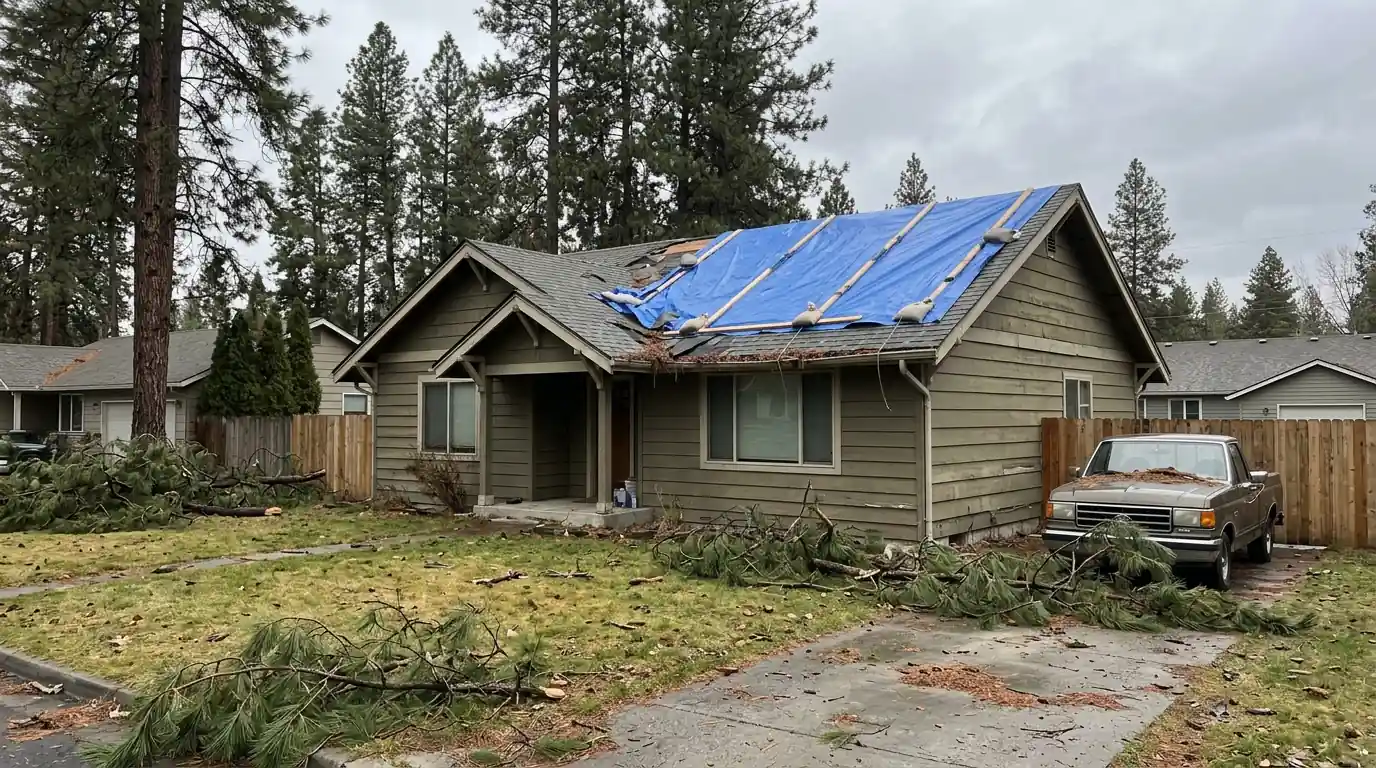
Storm damage restoration in Spokane starts with closing roof and window openings, because rain or snow keeps entering until they're covered. Then we extract water, dry the structure and photograph everything for the claim. A fallen tree resting on the house needs a tree service to lift it off safely, and we start inside as soon as the load is gone.
Updated October 2026
What a windstorm or hailstorm does to the inside of a house
Storm damage starts outside but becomes an interior problem fast. A torn section of roof or a broken window lets in rain, snow and wind-blown debris, and attic insulation soaks up water like a sponge before any ceiling shows a stain.
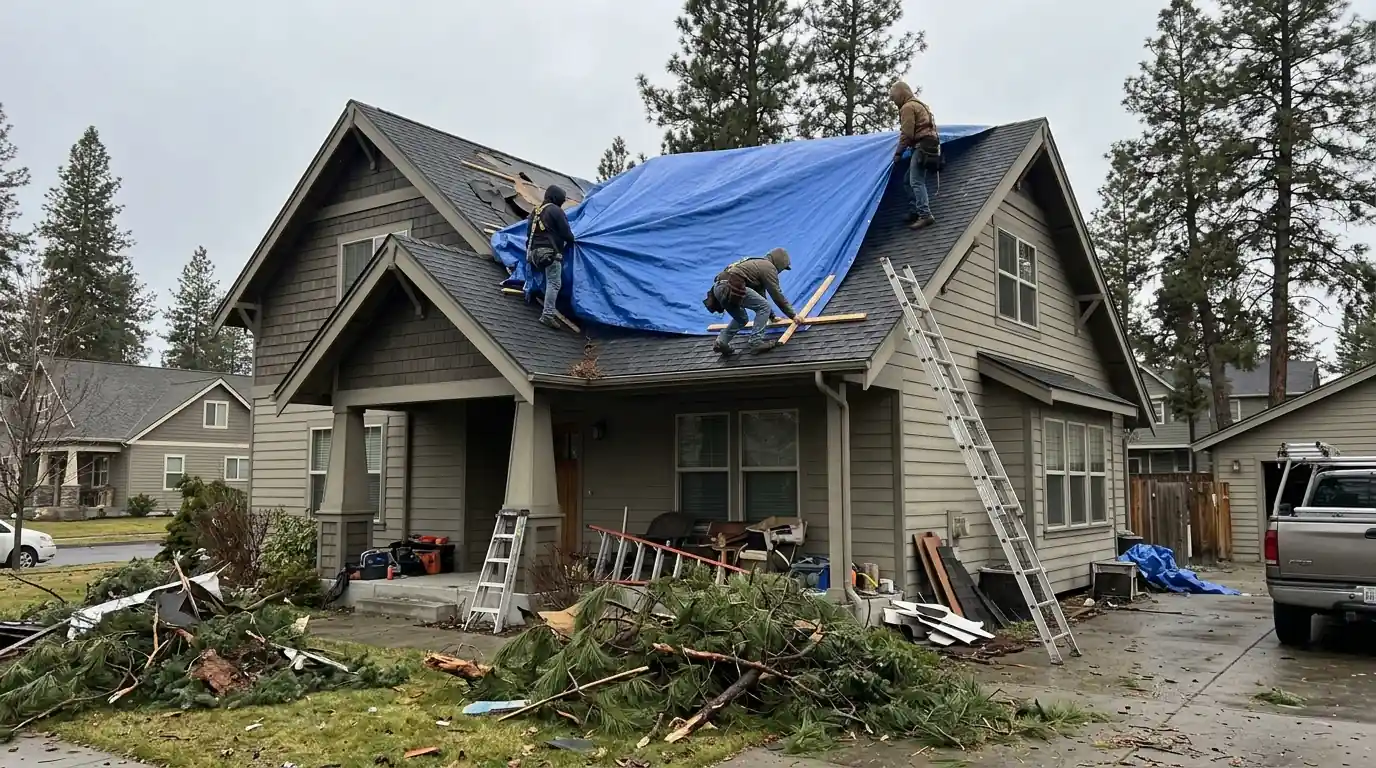
We work in a fixed order. Openings get covered with tarps or plywood so the weather stops getting in. Standing water comes out, wet insulation and drywall are cut out where needed, and drying equipment goes in with logged readings. Everything gets photographed before and after, because storm claims often involve several trades and the adjuster needs to see what the wind did versus what came after. Openings are covered as described on our board-up and tarping page.
Signs a storm got water into your house
Some storm damage is obvious right away; these signs tend to show up later.
A new ceiling stain after windy rain
Lifted shingles or flashing let water into the attic, and the stain appears days later.
Wet or matted attic insulation
Look from the hatch with a flashlight after any big storm, especially near valleys and chimneys.
Drafts or rattling around a window
A cracked frame or seal lets rain run into the wall below the sill.
Musty smell in an upstairs room
Moisture in a wall or ceiling often smells before it stains.
Water under a sink after an outage
Pipes that froze while the heat was off leak once it comes back.
Wind damage and fallen trees
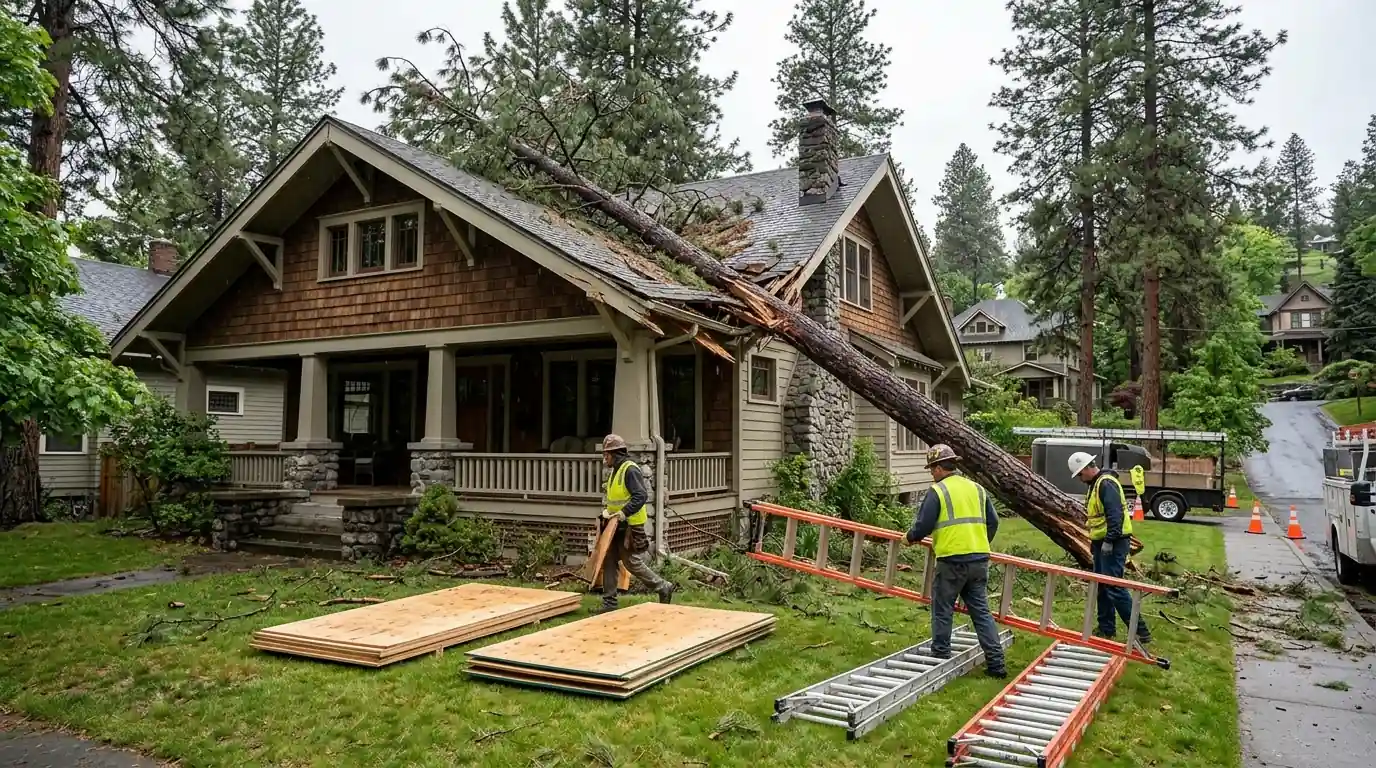
High wind peels shingles, lifts flashing and drops limbs, and a whole tree can punch through the roof deck into a bedroom. Once a tree service has lifted the trunk off, we tarp the opening, remove broken drywall, insulation and glass from inside, and start drying the rooms below. We also check the attic for cracked rafters and wet sheathing that can't be seen from the street, and photograph every opening for the adjuster before it's covered. Gutters, fences and siding damage go on the same photo log.
Hail damage
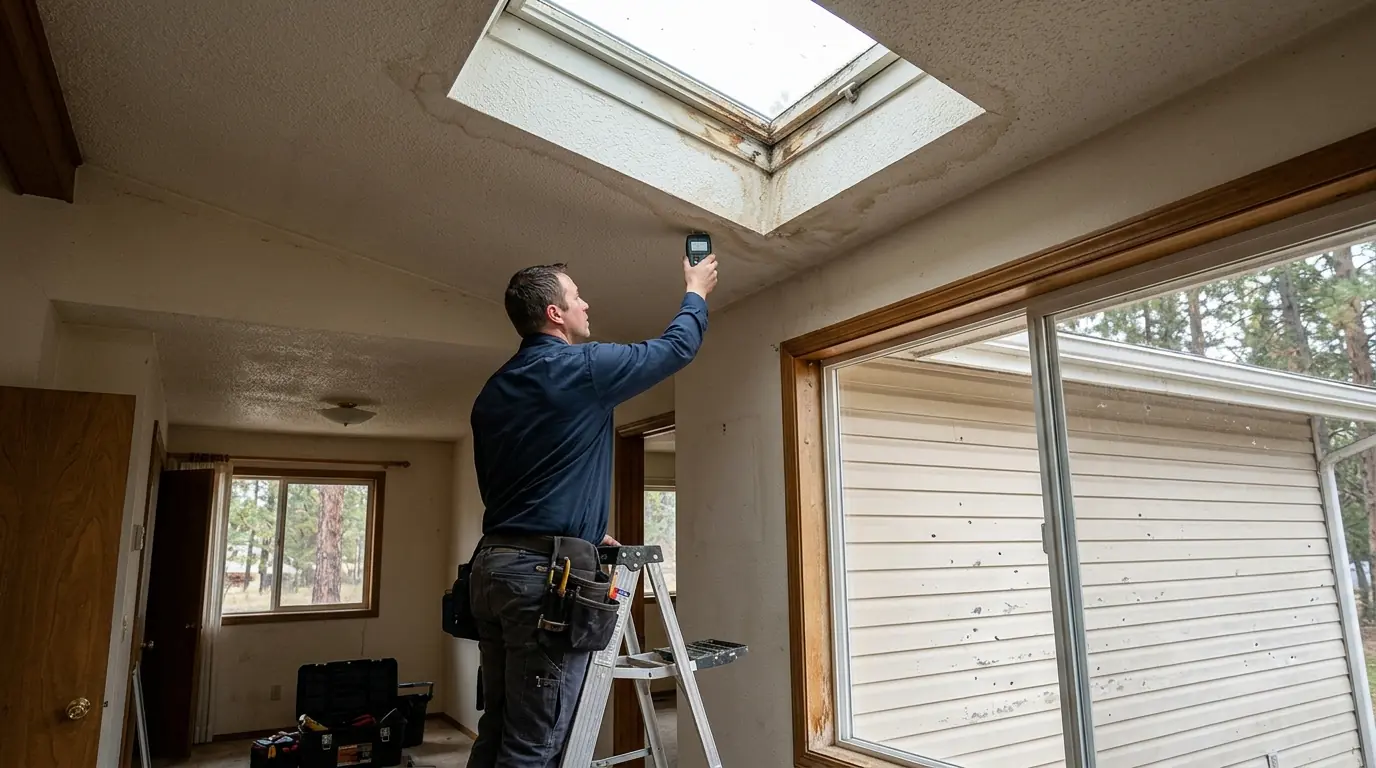
Hail rarely causes a flood, but it breaks skylights and windows, cracks vinyl siding and bruises shingles so they leak in the next rain. The interior damage shows up later as a ceiling stain or a damp wall behind a cracked siding panel. We board or cover broken glazing, check the attic and the walls behind damaged siding with a moisture meter, and dry anything that took on water. Roof and siding repairs go to the appropriate contractor, and we document the interior side.
Freeze-ups after power outages
A long winter outage can freeze pipes in a house that was fine with the furnace running. Lines in exterior walls, crawl spaces and garages go first, and the leak usually shows only when power and heat come back and the ice thaws. If your power was out for a day or more in freezing weather, know where the main shutoff is and check under sinks and in the basement as soon as heat returns. We extract the water and dry the structure; see burst pipe water damage for more.
Need someone there tonight?
We answer around the clock. Tell us what happened and we will say what to do before the crew arrives.
How we work a storm-damaged house from the outside in
- 01
Check safety first
We look for downed lines, unstable trees and sagging ceilings before anyone goes in.
- 02
Close the openings
Roof tarps and window board-up stop more water and wind from entering.
- 03
Photograph the damage
Every opening and wet area is documented before cleanup changes it.
- 04
Remove water and debris
Extraction, broken material removal and cut-outs of wet insulation and drywall.
- 05
Dry and verify
Dehumidifiers and air movers run until readings match dry reference material.
Local conditions
What the 2015 windstorm showed about Spokane's tree canopy
On November 17, 2015, gusts reached 71 mph across Spokane. About 238,000 customers lost power, and in the hardest-hit part of the city most stayed dark for five days. Comstock Park alone lost 30 trees, fallen trunks blocked roads all over town, and a falling tree took a life on the South Hill. Neighborhoods with tall, mature trees near the house take the worst of storms like that, and long late-fall outages bring a second risk: pipes freezing in homes without heat.
Cost
What drives the cost of storm damage restoration
The size of the opening and how long weather got in decide most of it. A tarp over a small roof puncture caught the same night is a modest job. A tree through the roof with rain overnight can mean attic insulation, ceiling drywall, flooring and several days of drying. Ice, snow and access on steep roofs add time. Storm claims often split the work: roof and tree removal go to other trades, while our scope covers temporary protection, water removal, drying and interior repair.
What our storm damage restoration scope covers
Storm jobs mix emergency and repair work; this is the restoration side of it.
- Emergency roof tarping and window or door board-up.
- Interior debris removal, including glass, broken drywall and branches.
- Water extraction and removal of wet insulation, pad and drywall.
- Structural drying with daily moisture readings.
- Photo documentation of each opening and affected room for your claim.
- Timing coordinated with the tree service and the roofer.
- Interior drywall, paint and flooring repairs after drying.
Storm Damage Restoration questions
If a tree is resting on the house, the tree service goes first so the load comes off safely. Call us at the same time; we can be ready to tarp and start drying as soon as the trunk is lifted.
Wind and hail damage is commonly covered, but policies differ and your adjuster decides. We photograph openings and wet areas before cleanup and keep moisture logs, and we can walk the house with the adjuster.
Usually, yes. Most policies expect you to prevent further damage, so tarping, board-up and water removal shouldn't wait. We photograph everything first so the adjuster can see the condition before work began.
Open the hatch with a flashlight and look for wet or compressed insulation, daylight through the roof deck and dark stains on rafters. Don't step between the joists; a wet ceiling can give way under your weight.
Shut off the water at the main, then call. We find where the line split, extract water, open wet walls and dry the framing. A plumber repairs the pipe itself, and we can share what we found with them.
Related restoration work
Emergency Board-Up & Roof Tarping
Storm & Emergency
See this serviceRoof Leak & Ice Dam Water Damage
Storm & Emergency
See this serviceBurst & Frozen Pipe Water Damage
Water Damage
See this serviceStructural Drying & Dehumidification
Water Damage
See this serviceSee all 37 restoration services
Related advice: Ice dams and ceiling leaks: what is happening up there and Documenting a water damage claim the right way
Answering 24/7
Storm opened up your Spokane home?
Call any hour. We'll cover the openings and start getting the water out.
1876 N Teanaway Dr, Post Falls, ID 83854