Getting the building back in use
Commercial fire and smoke restoration for Spokane restaurants, shops and apartments
Commercial fires spread smoke through shared walls, ceilings and HVAC systems, so the cleanup covers far more than the room that burned.
- Answered 24/7
- Board-up and security
- Soot and odor
- Multi-tenant buildings
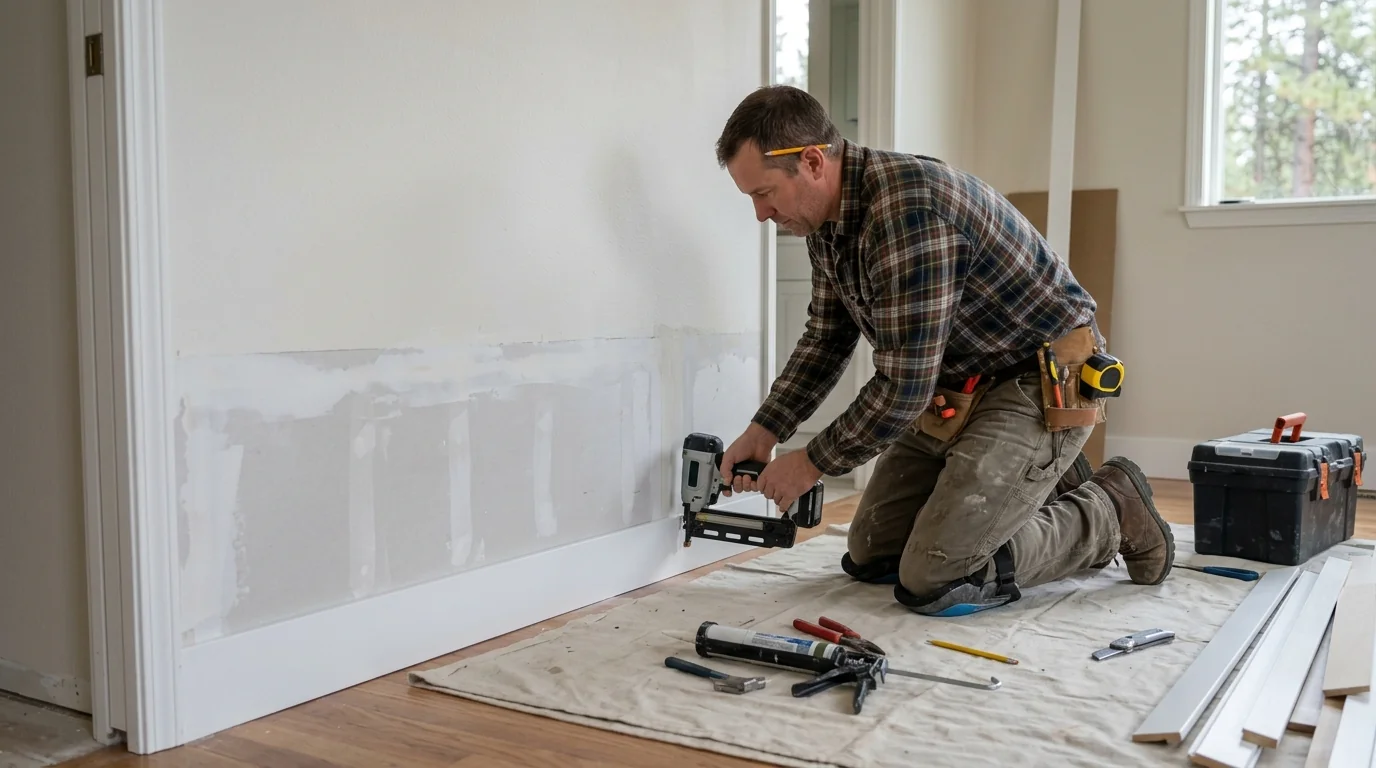
Quick answer
Commercial fire and smoke restoration in Spokane starts with securing the building and finding how far smoke traveled through shared ceilings, walls and HVAC systems. We clean soot by residue type, remove what can't be cleaned, treat odor at the source and document each tenant space separately. Inspections may be needed before reopening.
Updated October 2026
Why smoke travels further in a commercial building
Commercial buildings are designed for air to move: rooftop units, shared plenums above drop ceilings, long open floors and corridors. When a fire starts, smoke follows those paths. A small fire in one suite can leave soot above every ceiling tile on the floor and odor in units that never saw flame.
So the first visit is mostly mapping. We secure openings, check above ceilings and inside the HVAC system, and sort each area by residue type and severity. Dry soot from paper and wood, oily soot from plastics and greasy protein residue from kitchens each need a different cleaning method. We clean top down, replace ceiling tile and insulation that held smoke, and treat odor with methods suited to occupied or empty space. Sprinkler and hose water is handled as commercial water damage at the same time.
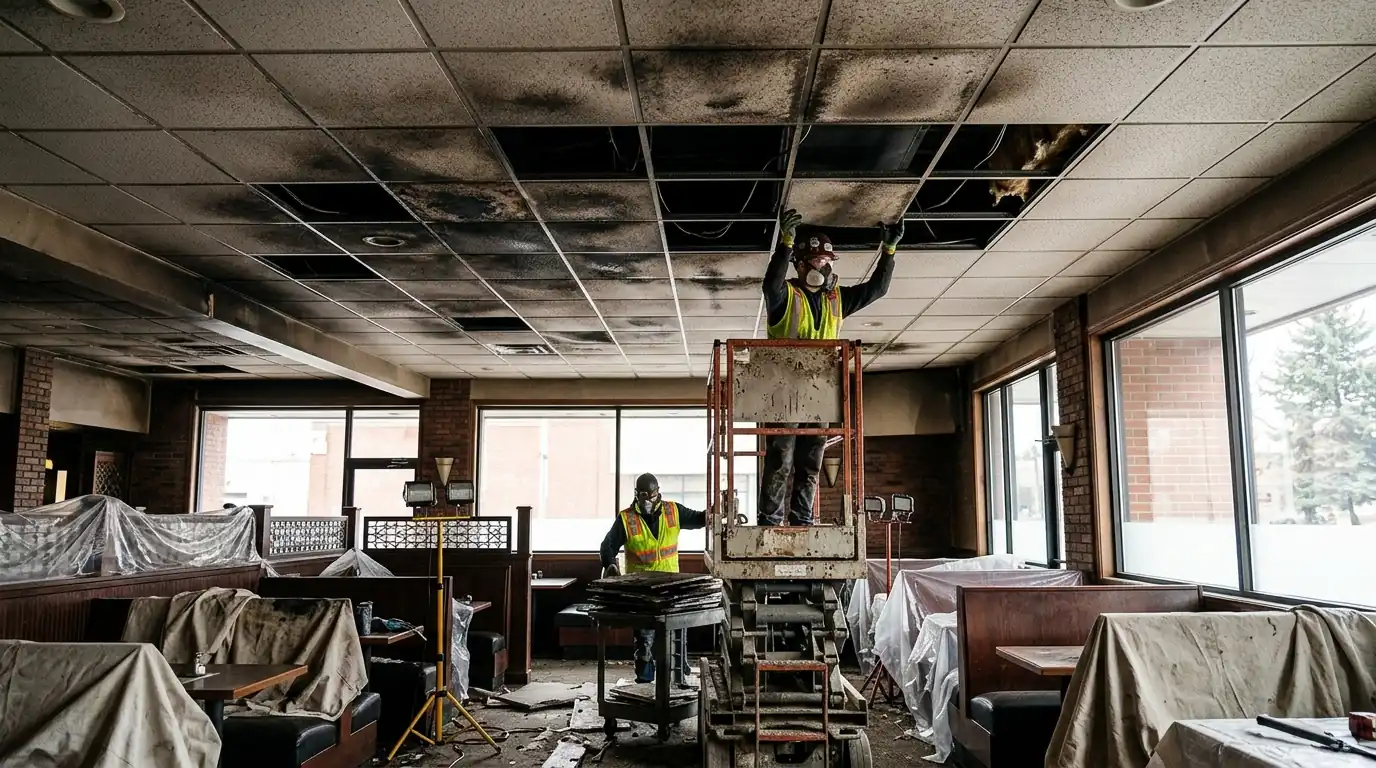
Restaurant fire cleanup
Restaurant fires usually start on the cooking line, and the residue is heavy protein and grease: sticky, yellow-brown and strong smelling. It coats walls, ceilings, stainless equipment and the hood. We clean surfaces with degreasers suited to food-contact areas, remove porous materials that won't come clean and treat the odor. The hood and exhaust duct are typically cleaned by a hood-cleaning contractor, and the health department usually inspects before the kitchen reopens. We give you our cleaning records for that visit.
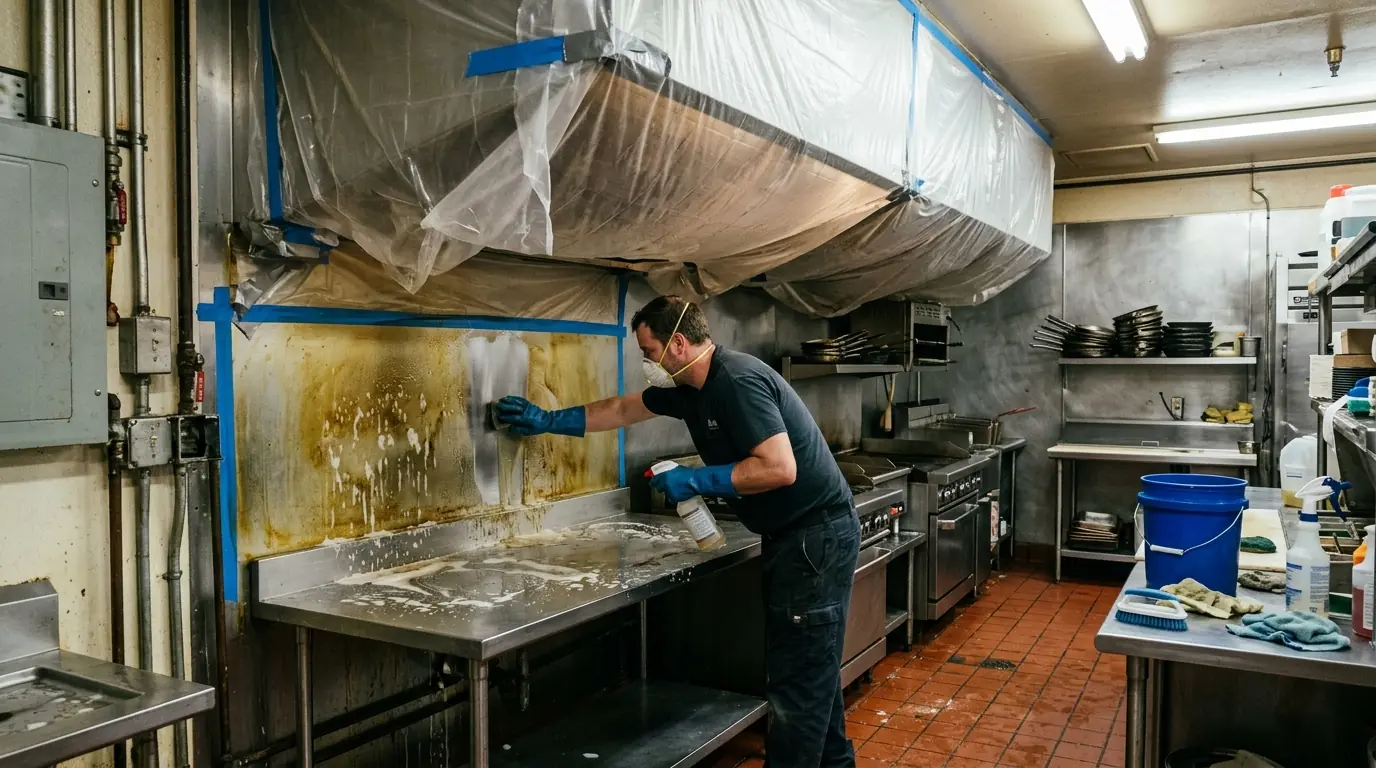
Warehouses and shops
Warehouses and shops burn hotter when they store plastics, solvents, tires or packaging, and the soot is often oily and heavy. High ceilings, open trusses and racking spread residue across the whole building. We use lifts to clean the structure top down, sort stored inventory into cleanable and not cleanable, and photograph everything for the business owner's claim. Forklifts and machinery may need cleaning before use, because acidic soot corrodes metal quickly. Electrical panels and controls get a check by an electrician before power goes back on.
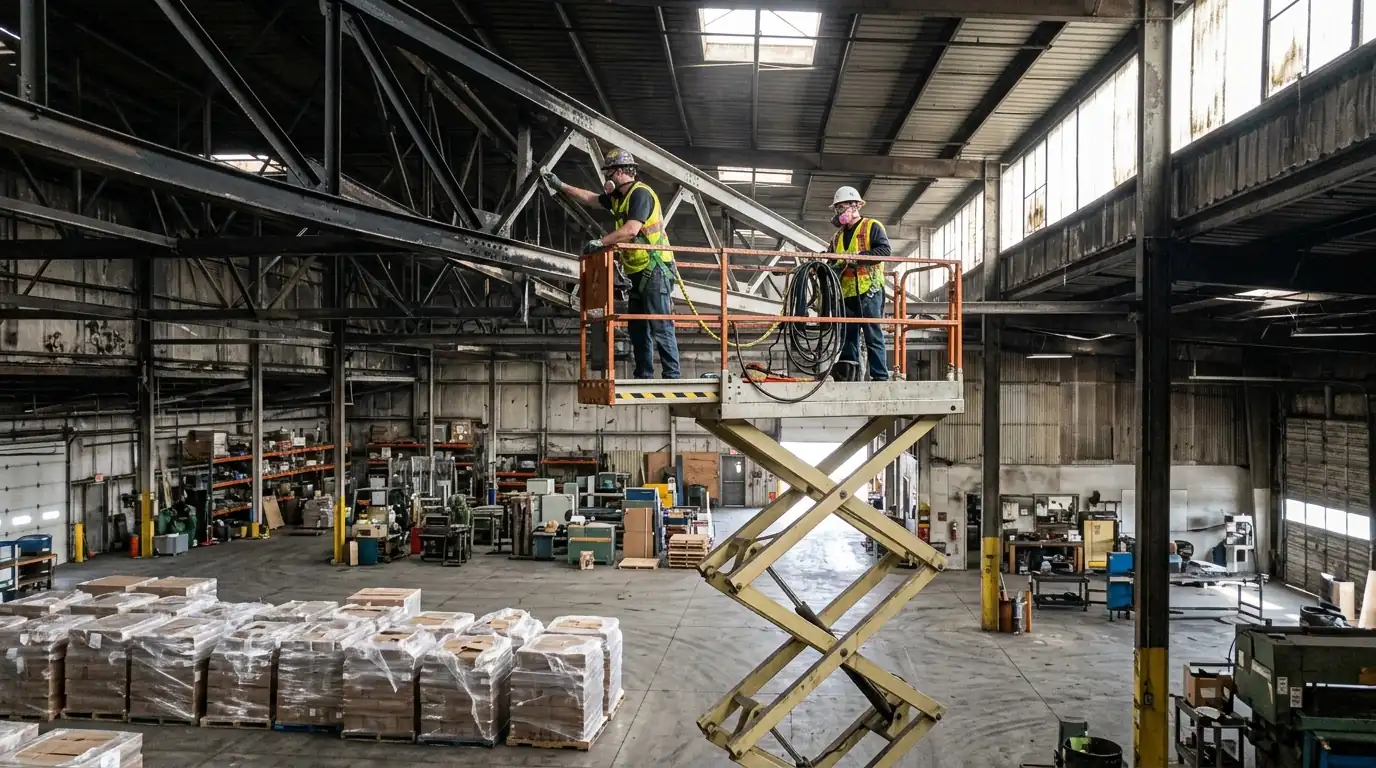
Apartment buildings
In an apartment fire, one unit burns but smoke reaches hallways, stairwells and units on either side and above. Tenants are displaced and want to know when they can go home. We board the fire unit, clean common areas first so they can reopen, then work unit by unit with the manager on access and notice. Each unit gets its own photos, cleaning record and contents notes, since owner and tenant policies usually cover different things. Smoke-damaged hallway carpet and doors are usually replaced as part of the common-area work.
Need someone there tonight?
We answer around the clock. Tell us what happened and we will say what to do before the crew arrives.
How a commercial fire cleanup moves toward reopening
- 01
Secure the building
Board-up and protection from weather and unwanted entry.
- 02
Map smoke travel
We check above ceilings, in shared systems and in every neighboring space.
- 03
Remove and clean
Ceiling tile and insulation that held smoke come out; surfaces are cleaned top down.
- 04
Treat the odor
Sealing, HEPA air scrubbing and deodorizing matched to occupied or empty space.
- 05
Document for reopening
Records per tenant space and cleaning notes for inspections.
Local conditions
Wildfire smoke in Spokane County businesses after 2023
Businesses felt the 2023 fire season too; between Medical Lake and Elk, 366 homes were lost and more than 22,000 acres burned in Spokane County. Businesses near fires like these face a different problem from homes: smoke drawn in through rooftop units and makeup air systems, leaving ash on stock, odor in fabrics and residue above drop ceilings. Commercial cleanup after a wildfire usually means cleaning the HVAC system and replacing filters before reoccupying, or the system keeps pushing odor into clean rooms.
Cost
What shapes the cost of commercial fire and smoke restoration
Square footage, ceiling height and how far smoke reached through shared systems set the scale. Residue type matters: dry soot cleans faster than oily soot or kitchen grease. Lifts for high ceilings, after-hours work, inventory sorting and HVAC cleaning add labor. Buildings with several tenants often involve several policies, and each adjuster decides what their policy covers.
What commercial fire and smoke restoration includes
Every building is different, but most jobs include these steps.
- Emergency board-up and securing of the building.
- Smoke travel mapping through ceilings, walls and HVAC.
- Soot cleaning matched to dry, oily or protein residue.
- Removal of ceiling tile, insulation and materials that can't be cleaned.
- Extraction and drying of firefighting and sprinkler water.
- Odor treatment and HEPA air scrubbing.
- Separate photo and cleaning records for each tenant space.
Restaurant fire cleanup versus warehouse fire cleanup
The residue and the reopening steps differ, so the job plan does too.
| Restaurant | Warehouse or shop | |
|---|---|---|
| Typical residue | Protein and grease, sticky and strong smelling | Oily soot from plastics, tires and solvents |
| Hardest area | Hood, line equipment and walls near cooking | High ceilings, trusses and racking |
| Contents decisions | Food and porous kitchen items are usually discarded | Stock sorted into cleanable and not cleanable |
| Equipment | Food-contact surfaces cleaned with suitable products | Forklifts and machines cleaned before corrosion sets in |
| Before reopening | Health department inspection is typical | Building or fire official sign-off may apply |
Commercial Fire & Smoke Restoration questions
It depends on the size of the fire, the hood and duct cleaning and the health department inspection. A small line fire can mean days; a larger one, weeks. We give you cleaning records for the inspection.
Tenants in unaffected units often can, once common areas are cleaned and air quality is acceptable. Units with heavy smoke usually need to be empty during cleaning and odor treatment.
We clean ductwork, registers and plenums and replace filters. Rooftop units are checked by an HVAC contractor, and restaurant hood systems by a hood-cleaning company, so the whole air path is covered.
Stock is sorted and photographed. Sealed, nonporous items can often be cleaned; food, porous goods and anything with odor in the packaging is usually written off. The adjuster decides what's covered.
Yes. Ash and odor drawn in through rooftop units and doors are cleaned the same way, with extra attention to the HVAC system and to stock that absorbs smoke.
Related restoration work
Commercial Water Damage Restoration
Rebuild, Contents & Commercial
See this serviceSmoke & Soot Cleanup
Fire & Smoke
See this serviceEmergency Board-Up & Roof Tarping
Storm & Emergency
See this serviceDuct Cleaning After Smoke & Water Damage
Rebuild, Contents & Commercial
See this serviceSee all 37 restoration services
Related advice: Documenting a water damage claim the right way and Questions to ask a restoration company before work starts
Answering 24/7
Fire or smoke damage in your Spokane business?
Call any hour. We'll secure the building and map how far the smoke went.
1876 N Teanaway Dr, Post Falls, ID 83854