Restoration advice
Questions to ask any restoration company before work starts
Quick answer
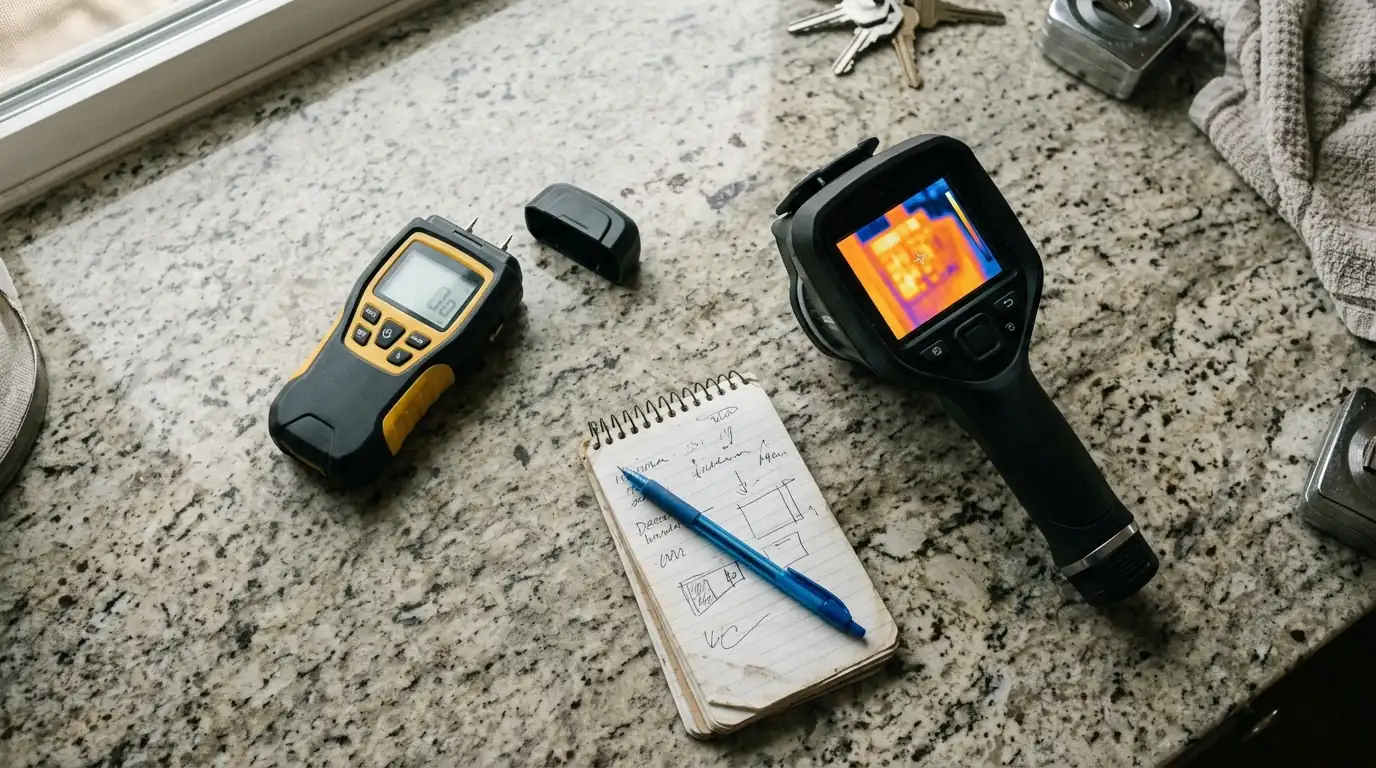
Ask who will do the work, what proof of liability coverage and state registration or license they carry, and whether you get a written scope before demolition. Then ask how drying will be measured and whether you get the moisture logs, how pricing works, and who handles the rebuild. Clear, specific answers matter more than a fast sales pitch.
Questions for the first phone call
Emergency calls happen under stress, so a few questions up front set expectations for the rest of the job.
A good answer to the second question is specific: shut the water off, cut power if it is safe, photograph everything. Vague answers on the phone often turn into vague answers on site.
- Who will come out, and will they inspect before giving a price?
- What should I do before you arrive?
- Do you handle this type of damage, such as sewage or fire, or only clean water?
- Will someone explain what you find and what you plan to do before work starts?
Insurance and credentials you can verify yourself
Ask for a certificate of liability insurance and proof of workers' compensation coverage, and have the company's insurance agent send the certificate to you directly rather than accepting a photocopy. If a worker is hurt or your house is damaged during the job, those policies are what respond.
Ask whether the company holds the contractor registration or license your state requires for the work it will do, especially any rebuild, and look it up yourself on the state's website. Ask what training the technicians on your job have in water, fire or mold restoration and which industry standards they follow. Then ask the follow-up: how will that show up on my job?
The work authorization and the written scope
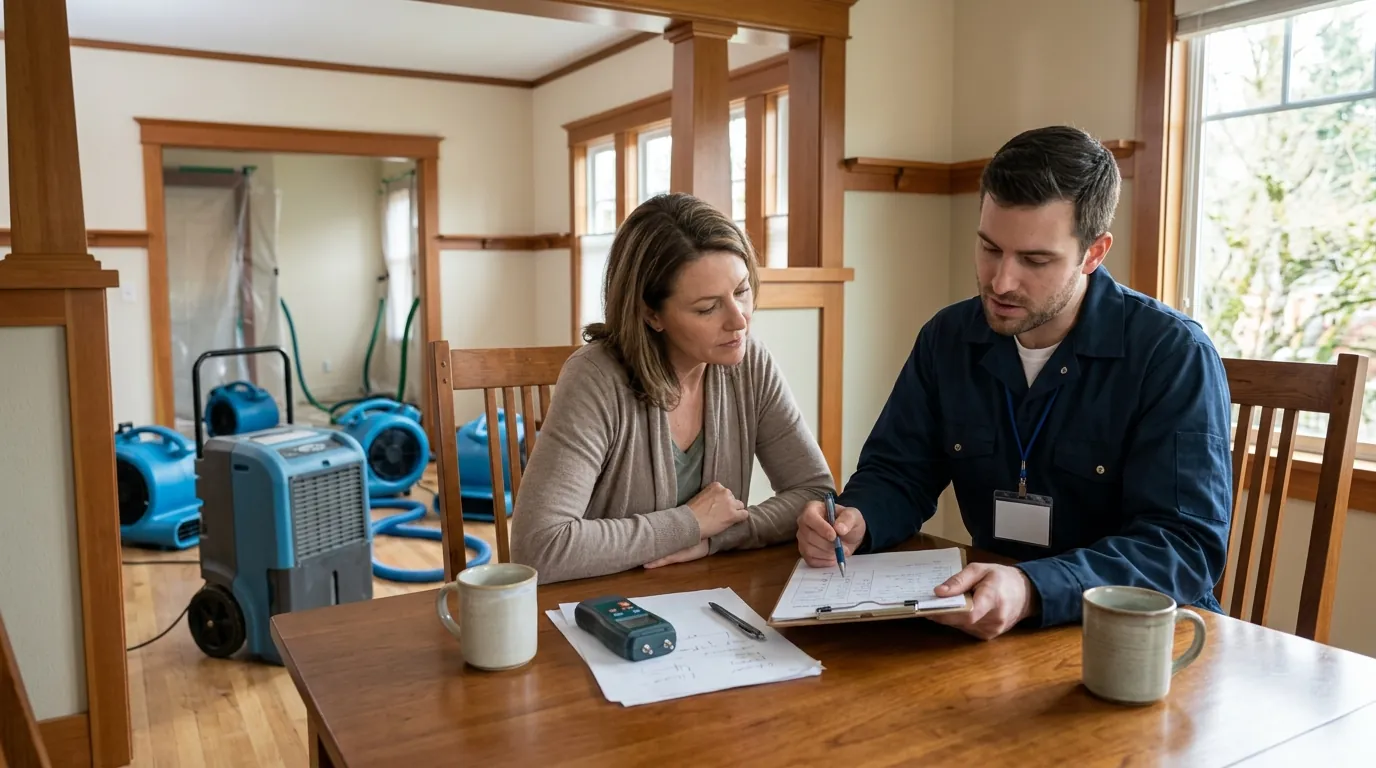
Before demolition starts you will likely be asked to sign a work authorization. Read it. Look for what you are agreeing to pay for, whether payment depends on insurance, what happens if you cancel, and whether it assigns your insurance benefits to the company. Assignment of benefits terms let the contractor deal with your insurer directly; some homeowners are comfortable with that and some are not, and you can ask for time to read it.
Ask for a written scope listing rooms, materials to be removed, equipment and expected drying days, and ask how changes will be handled and whether you will see them in writing first.
Need a second opinion before you tear anything out? Call and describe it. We will tell you what we would do.
Call (509) 730-2039How will drying be measured and proven?
This question separates careful companies from the rest. Ask:
Good answers mention comparing wet materials with dry ones elsewhere in the house, daily logs and adjusting equipment as things dry. Structural drying shows what a drying plan normally includes, and claim documentation covers the photo and moisture record an adjuster will want.
- Will you map moisture on the first visit and mark the reading points?
- How often will you take readings, and can I have copies?
- What reading tells you a wall or floor is dry?
- How many air movers and dehumidifiers will run, and why that number?
- What happens if a reading stays high?
Pricing questions that avoid surprises
A low first number that leaves out demolition or disposal is not cheaper; it moves the cost into change orders. Compare estimates line by line.
- Do you price from the same estimating software many insurers use, or from your own rate sheet?
- What is billed per day, such as equipment and monitoring visits?
- Are demolition, disposal and antimicrobial treatment included or extra?
- What do you need up front, if anything?
- If insurance pays less than the estimate, what am I responsible for?
Who handles the rebuild, and when?
Mitigation, meaning extraction, drying and removal, is often a separate phase from reconstruction. Ask whether the same company does both, or whether you will need a separate contractor for drywall, flooring and cabinets. Ask how long the gap between drying and rebuild usually runs, who pulls any permits and how existing materials will be matched.
A house can sit with open walls for a long time when nobody owns the next step. Repair and reconstruction explains what that phase involves so you know what to ask for.
Red flags worth walking away from
Put these same questions to every company you consider, and treat any of the following as a reason to slow down:
- Pressure to sign immediately, before you have read anything
- Promises that insurance will pay for everything
- No written scope, or a scope that only says water damage and a total
- Demolition before photos and moisture readings are taken
- No certificate of coverage, or excuses about sending it later
- Cash-only payment, or a large deposit demanded on an emergency job
Reader questions
Ask the company to have its insurance agent send a certificate of liability insurance and proof of workers' compensation directly to you. Check that the policy dates are current and the company name is the same one on your contract. You can call the agent listed on the certificate to confirm the policy is active.
That is your choice. Many homeowners prefer to stay the main contact and simply pass the contractor's photos, scope and moisture logs to the adjuster. If a contract includes an assignment of benefits, read it carefully, because it can change who controls the claim payment. You can ask for time before signing.
Policies generally let you choose your own contractor, though insurers may suggest companies they work with often. Whichever you choose, the adjuster still decides coverage and the work still has to be documented. Read your policy, and ask your insurer to explain in writing if they tell you otherwise.
The rooms affected, the water category and class, materials to be removed with measurements, cleaning and antimicrobial steps, equipment counts, expected drying days and how progress will be measured. It should also say how changes are handled. A scope that only says water mitigation with a total gives you nothing to compare or question.
Only if it covers the same scope as the others. Low estimates often leave out demolition, disposal, monitoring visits or antimicrobial treatment, which come back later as change orders. Compare line items, equipment counts and drying days. If one estimate is far lower, ask what it leaves out and get the answer in writing.
Services that go with this guide
Insurance Claim Documentation
Rebuild, Contents & Commercial
See this serviceReconstruction After Water & Fire Damage
Rebuild, Contents & Commercial
See this serviceStructural Drying & Dehumidification
Water Damage
See this service