Restoration advice
Cleaning up wildfire smoke and ash when the house did not burn
Quick answer
If the fire never touched your house, you can usually handle light ash yourself. Wear a fitted N95 and gloves, mist ash before you sweep, wipe with damp cloths, use a HEPA vacuum and swap the furnace filter. Never push ash around with a leaf blower or an ordinary shop vac. Get help when odor lingers or ash reached the attic or ducts.
What the 2023 fires left in homes that never burned
In August 2023 about 240 homes were lost to the Gray Fire near Medical Lake, while the Oregon Road Fire near Elk burned more than 10,800 acres and took 126 primary homes and 258 outbuildings. Between them, the two fires burned over 22,000 acres and destroyed 366 homes in Spokane County. Those figures count houses that were lost. They do not count the much larger ring of homes that stood but filled with smoke and ash.
Those homes are what this guide is about. If your house had no flame contact, most cleanup is within reach for a careful homeowner. The work is about method: removing fine ash without spreading it, and recognizing when a lingering smell means smoke got somewhere you cannot reach.
Gear up before you touch the ash
Wildfire ash is fine, gritty and alkaline, so it can sting skin and eyes when wet, and it carries whatever burned, including treated wood, plastics and vehicles. Protect yourself first, and keep children and pets out of rooms while you clean.
- A fitted N95 or P100 respirator; cloth and paper dust masks do not filter fine ash
- Nitrile or rubber gloves, long sleeves and long pants
- Goggles if you are working overhead or outside in wind
- Clothes you can wash separately, or take off before going back inside
Outside first: mist it, do not blow it
Start with decks, patios, window sills and entry areas so you stop tracking ash indoors. Lightly mist ash to keep it from going airborne, then sweep gently or scoop it into heavy bags. Rinse the remaining film with a garden hose at low pressure, steering the water toward landscaping rather than the storm drain.
Two common tools make things worse. A leaf blower lofts the finest particles straight back into the air and through your vents. An ordinary shop vac without a HEPA filter does the same from its exhaust port, which is why every ash job we run uses HEPA filtration.
Already past the point of doing it yourself? We answer 24/7 and can have a crew on the way.
Call (509) 730-2039Inside: top down, damp, one pass at a time
Indoors, ash and soot settle on horizontal surfaces and cling to fabric. Work top to bottom so you clean each surface once.
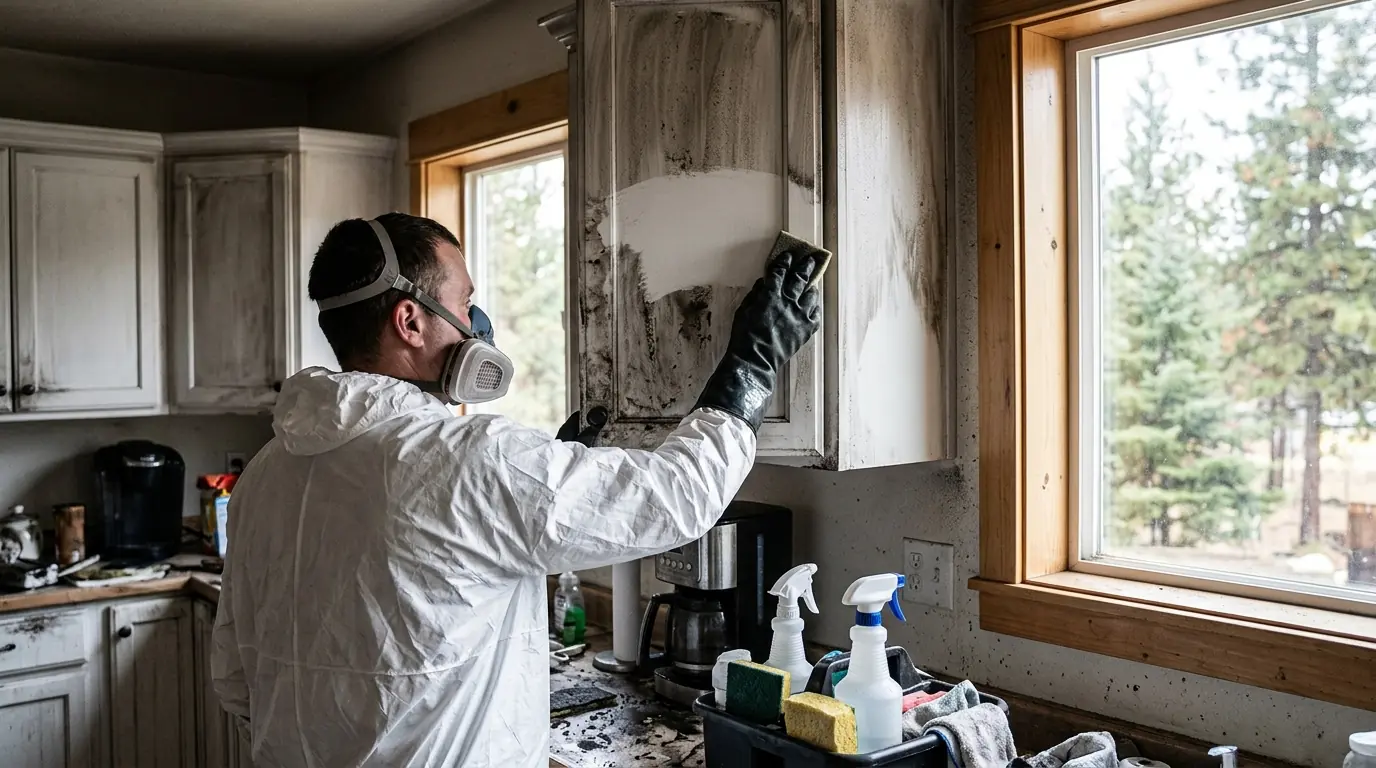
If residue smears into a dark film or keeps coming off on the cloth, you are probably dealing with oily smoke residue rather than loose ash, and more scrubbing tends to grind it in. That is the point to stop and bring in wildfire smoke and ash cleanup with professional cleaning agents.
- HEPA vacuum upholstery, carpet, drapes and floors before any wiping
- Wipe hard surfaces with a damp cloth and mild detergent, changing the water often
- Use a dry chemical soot sponge on flat painted walls, since a wet rag can smear residue into the paint
- Launder washable fabrics in their own loads, and expect some to need more than one cycle
- Wash children's toys, pet bowls and anything that goes in a mouth
- Throw out uncovered food that sat in a smoky room
The furnace filter and the ductwork
Your heating and cooling system pulled smoky air through the house every time it ran. Replace the furnace filter as soon as the outdoor air clears, and again a few weeks later if you saw heavy ash. Pull a supply register and look inside with a flashlight. A gray coating on the bottom of the duct means ash got into the system.
During future smoke events, run the system on recirculate if it has that setting, and close windows and fresh air intakes. Ash in the ducts does not leave with a filter change; the blower redistributes it every time it runs. Duct cleaning after smoke damage uses negative air pressure and agitation tools to pull it out rather than push it around.
Signs the smoke got further than a damp cloth can reach
Call for help when cleaning the surfaces does not fix the problem. These are the usual signals:
If you are filing a claim, photograph ash on surfaces and the dirty furnace filter before you clean, and keep the filter. Some homeowner policies respond to smoke damage from a nearby fire even without flame contact, but your adjuster decides, so document first.
- Smoke odor that returns on warm afternoons or when the furnace kicks on
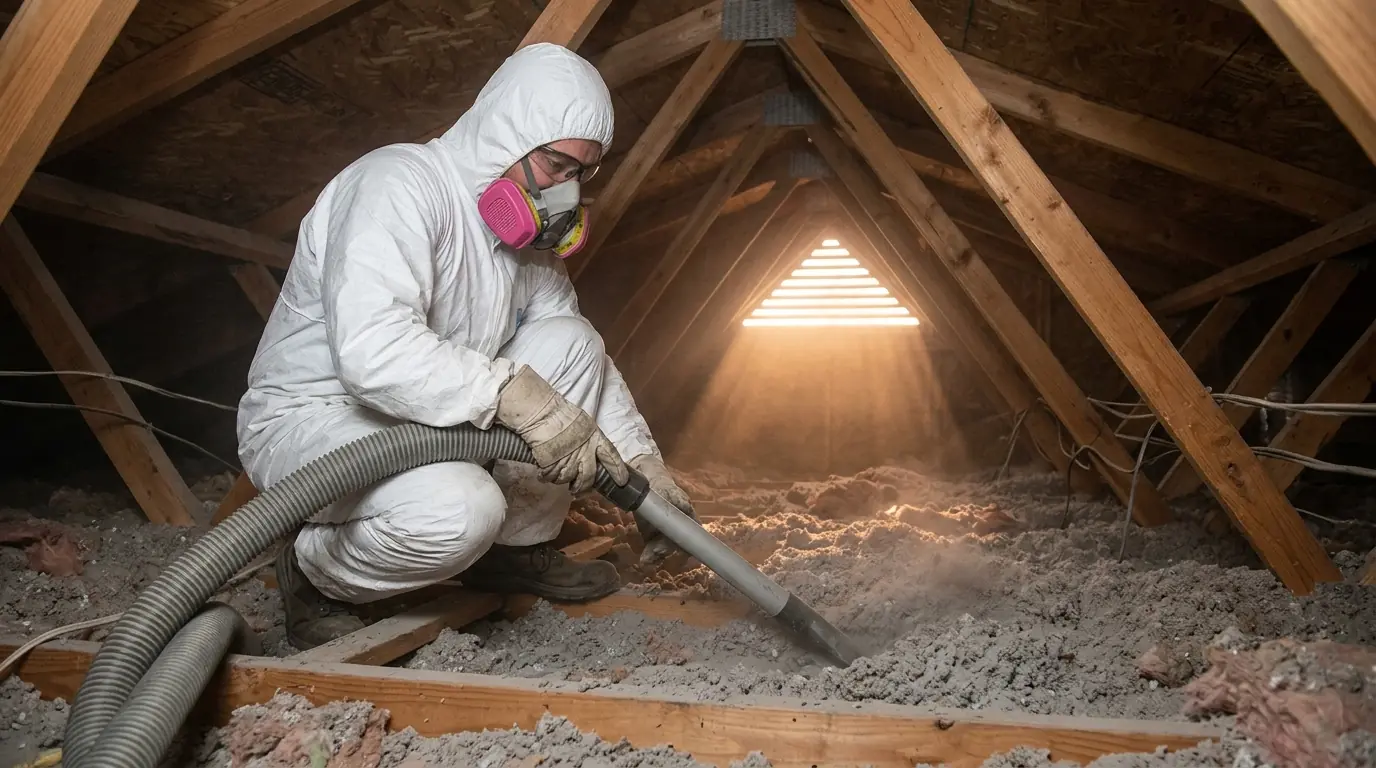
- Ash or soot on attic insulation, drawn in through soffit and ridge vents
- A yellow or gray film on light walls and ceilings after cleaning
- Fabrics, mattresses or carpet that still smell after laundering or vacuuming
- Gray residue inside ducts or on the furnace blower
- Ash in a crawl space or behind exterior wall vents
Reader questions
Only if it has a true HEPA filter and a sealed body. Many household vacuums pass fine particles straight through the exhaust and back into the room, which spreads ash rather than collecting it. If yours is not HEPA rated, mist and wipe hard surfaces instead and leave carpets and upholstery for a HEPA unit.
Light odor from smoke that came in through open windows often fades over a few days of airing out, filter changes and cleaning. Odor that hangs on longer usually means residue is sitting in porous materials, attic insulation or ductwork. At that point airing out rarely finishes the job, and the source has to be cleaned or removed.
Gently, and from the ground. Rinse siding and windows with a garden hose at low pressure, top down. Skip pressure washers on painted siding, since they can drive ash into seams. Do not climb onto a roof covered in ash; it is slippery. Gutters full of ash can be scooped out later from a ladder.
Not always. A thin dusting on top can sometimes be HEPA vacuumed. Insulation that is visibly gray, smells of smoke or was soaked by firefighting water usually comes out, since loose fill traps fine particles deep in the layer. A look with a flashlight and a sniff test usually tell you which case you have.
Yes. The fires destroyed 366 homes in Spokane County, but smoke and ash did not stop at the burn perimeters around Medical Lake and Elk. Homes outside them dealt with ash in attics, residue on surfaces and odor in fabrics, even with no flame contact at all.
Services that go with this guide
Wildfire Smoke & Ash Cleanup
Fire & Smoke
See this serviceDuct Cleaning After Smoke & Water Damage
Rebuild, Contents & Commercial
See this serviceOdor Removal & Deodorization
Sewage, Biohazard & Odor
See this service