Under the floor, out of sight
Crawl space mold removal in Spokane, from joists to vapor barrier
Crawl space mold lives on the joists and subfloor you never see. We clean the wood and deal with the ground moisture feeding it.
- Answered 24/7
- Joist and subfloor cleaning
- Vapor barrier
- Dirt floor crawl spaces
Quick answer
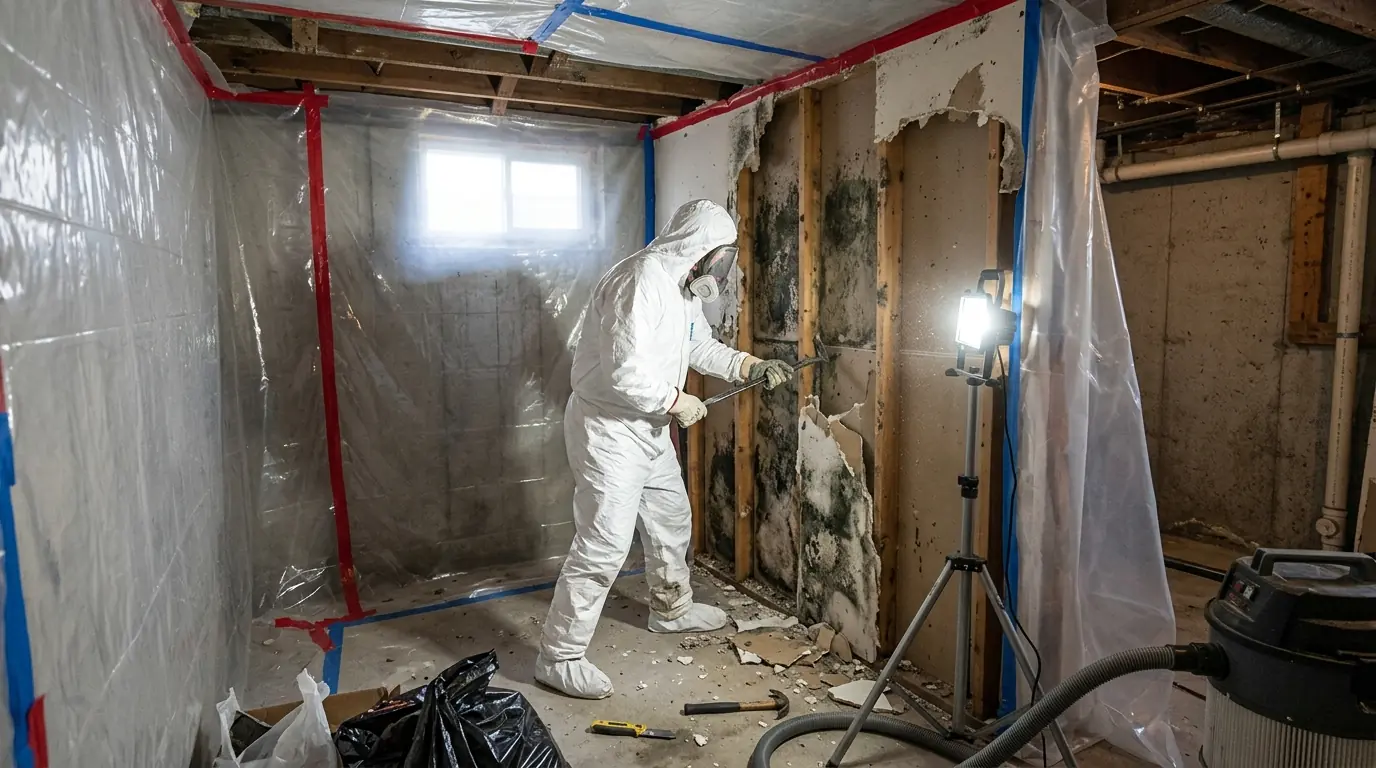
Crawl space mold removal in Spokane usually means cleaning growth off floor joists and the underside of the subfloor, then controlling the ground moisture that caused it. Bare dirt, torn vapor barrier and plumbing leaks keep crawl spaces damp. We HEPA vacuum and clean the wood, remove wet insulation and seal the ground so mold doesn't return.
Updated October 2026
Why crawl spaces grow mold even without a leak
Soil gives off moisture all the time. In a crawl space with bare dirt or a torn plastic sheet, that moisture rises into a dark, still space and settles on the coolest wood it finds. Add a slow drip from a supply line, a summer of humid air through open vents, or snowmelt seeping in at the foundation, and joists stay damp long enough for mold.
Because air from the crawl space rises into the house, a musty smell in the living space is often the first sign. Removal means getting under there, cleaning the framing and subfloor, drying any crawl space water damage, pulling out wet or fallen insulation, and fixing the ground moisture. Skipping that last part is why some crawl spaces get treated twice.
Cost
What crawl space mold removal costs nationally
This Old House's 2026 cost guide lists crawl space mold remediation at about $500 to $2,000 nationally. That's a planning range, not our price. Access and height matter most: a tight crawl space takes longer. Other factors include how much framing is affected, whether insulation comes out, and whether a vapor barrier or full encapsulation is part of the job, which can add significantly but is often what makes the cleaning last.
Mold on floor joists and subfloor
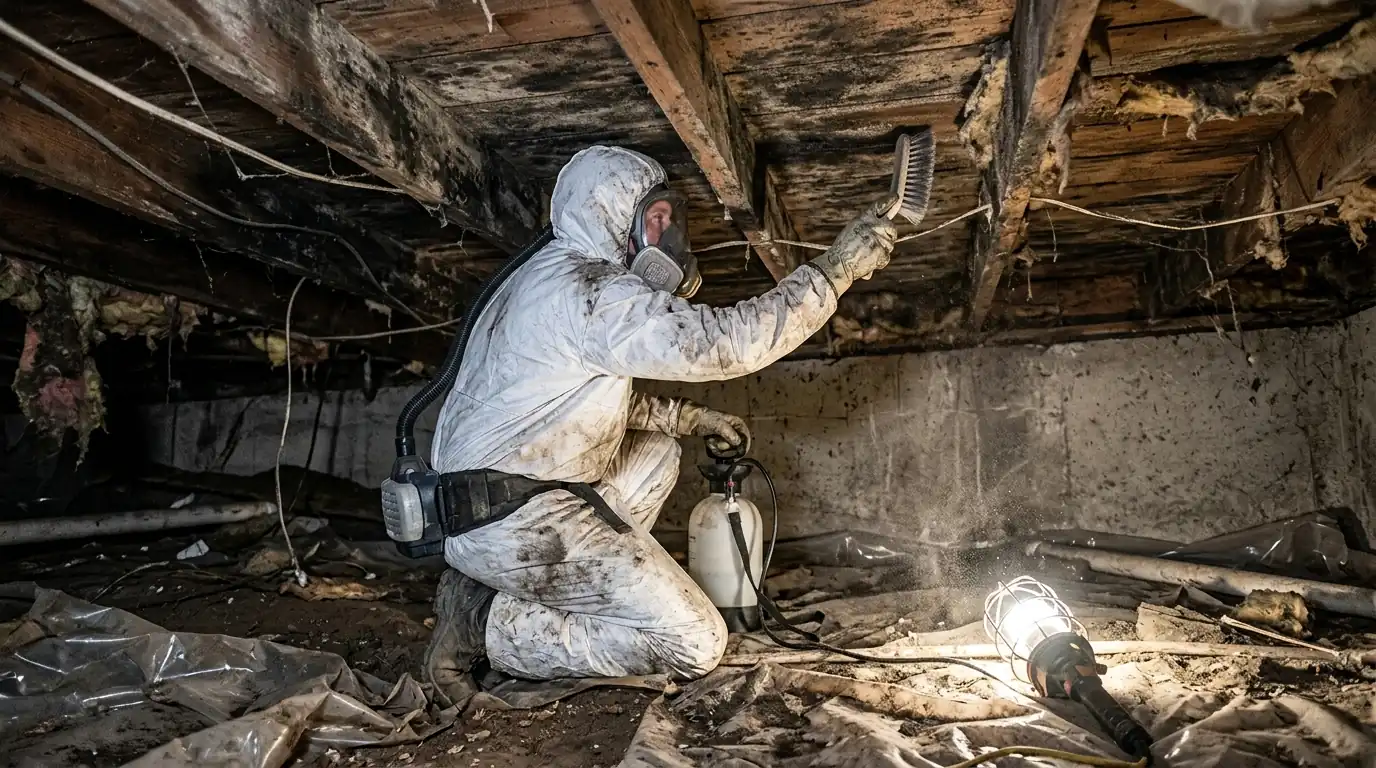
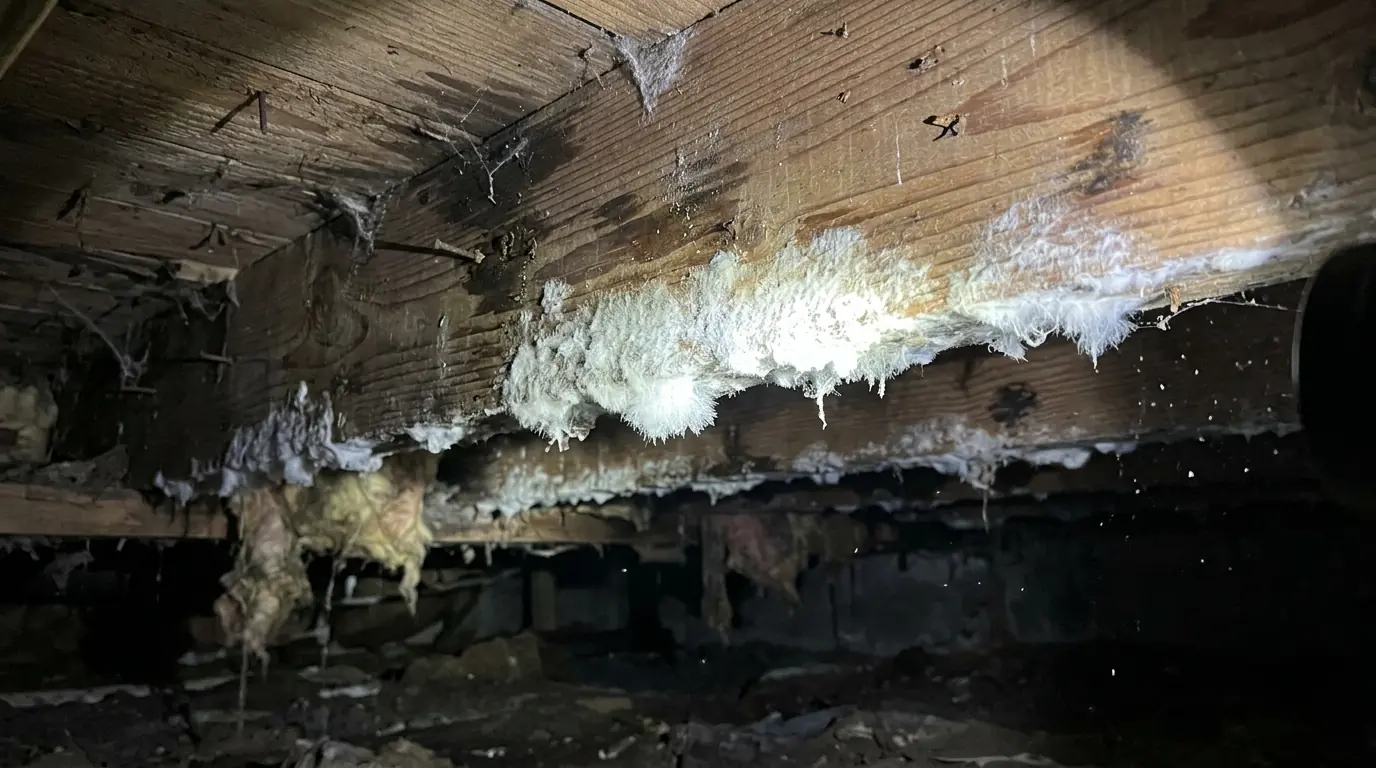
Joist mold often appears as white, fuzzy patches or dark spotting along the lower edges and the underside of the subfloor. Most of it is surface growth on sound wood. We probe for softness first, since rot means a carpenter needs to sister or replace a member. Sound wood gets HEPA vacuumed, then cleaned by scrubbing, sanding or a soda or dry-ice blast where access allows. Fiberglass batts that hold moisture or have fallen get bagged and removed. We confirm the wood is dry with a meter before any treatment or new insulation.
Dirt floor crawl spaces
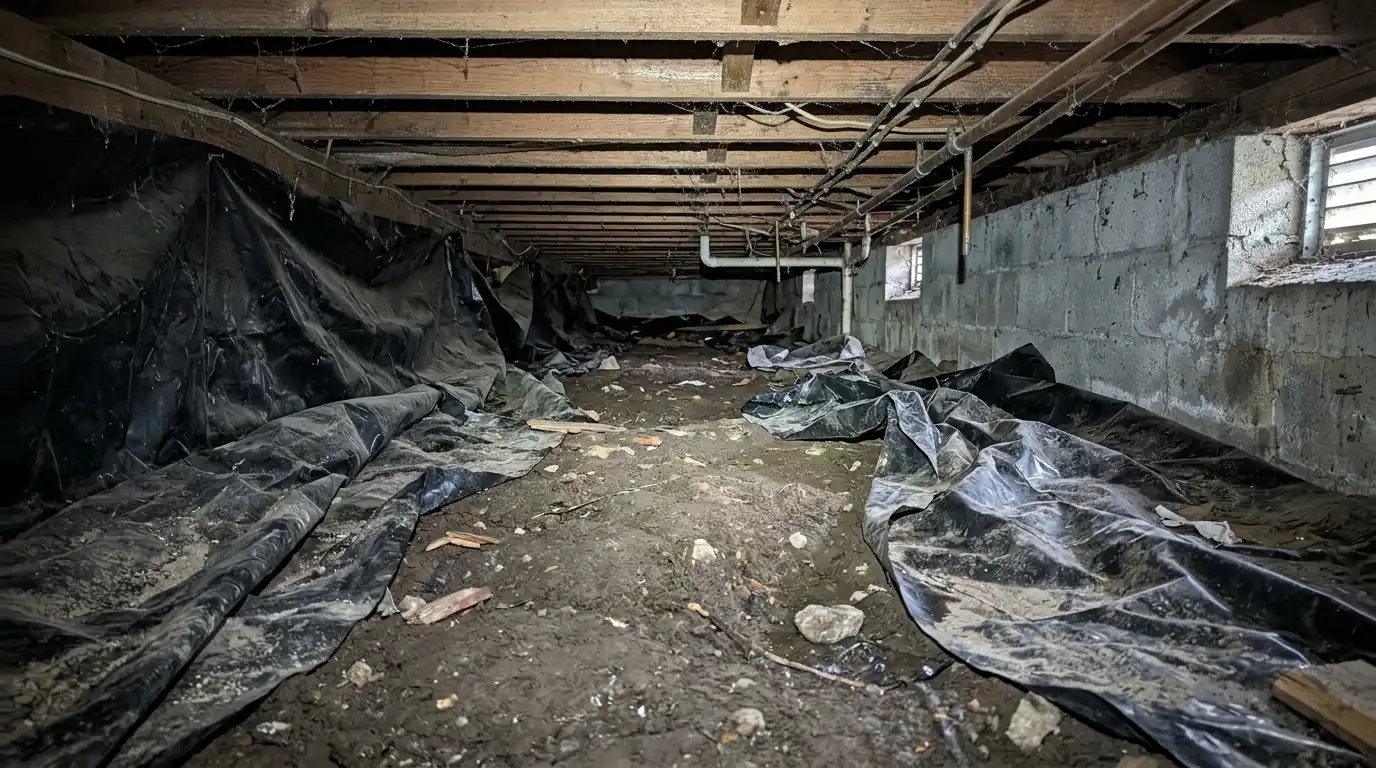
A bare dirt floor is a constant source of moisture. Even soil that looks dry releases water vapor that condenses on the framing above. Older homes often have no ground cover at all, or a thin sheet that's been torn and pushed aside by years of plumbers and cable installers. We clear debris, rake the ground smooth where we can, and remove any old contaminated plastic before cleaning the framing. Without a ground cover, cleaning alone has a short shelf life. That's why we pair mold removal with a vapor barrier in nearly every dirt crawl space.
Sealing up afterward
Once the wood is clean and dry, the crawl space needs to stay that way. The core step is a heavy polyethylene vapor barrier over the ground, overlapped and taped at seams and run up the foundation walls. Depending on the space, that may be enough. Damp crawl spaces may also need foundation vents closed and a dehumidifier or conditioned air added, a step called encapsulation. Plumbing leaks get fixed, downspouts get extended away from the foundation, and any standing water is addressed first. We'll explain which level fits your crawl space and why.
Not sure how bad it is?
Describe it on the phone. We will tell you honestly whether it needs a crew tonight or can wait for morning.
What crawl space mold removal includes
Most of our crawl space jobs include these pieces.
- Inspection of framing, subfloor, insulation, soil and plumbing with moisture readings.
- Removal of debris, old plastic and wet or fallen insulation.
- HEPA vacuuming and cleaning of joists, beams and the underside of the subfloor.
- Drying with dehumidifiers when wood reads above normal.
- Sealing of access points so crawl space air doesn't enter the house during work.
- A new vapor barrier over the ground, with sealed seams.
- Photos before and after for your records.
How we remove mold from a crawl space
- 01
Inspect and measure
We check joists, subfloor, insulation and soil, and look for plumbing leaks.
- 02
Clear and contain
Debris and wet insulation come out; access points to the house get sealed off.
- 03
Clean the framing
HEPA vacuuming and scrubbing, sanding or blasting remove growth from the wood.
- 04
Dry and verify
Meters confirm the wood is dry before anything new goes in.
- 05
Seal the ground
A vapor barrier goes down, and we recommend any vent, drainage or dehumidifier changes.
Local conditions
Crawl spaces under Spokane homes through the seasons
Spokane crawl spaces deal with two different moisture seasons. In late winter and spring, snowmelt soaks the soil around foundations and some of it finds its way under the house. In summer, vents left open let warm air into a cool crawl space, where its moisture can condense on joists. Older homes often sit on dirt floors with little or no ground cover. We look at grading, downspouts and the vapor barrier along with the mold itself.
Signs your crawl space may have mold
You rarely see crawl space mold first; you smell or feel it.
Musty smell in the house
An earthy odor that's strongest near floor registers or in lower rooms.
Cold, damp or soft floors
Floors that feel clammy, or that soften in spots, can mean damp joists.
Sagging or fallen insulation
Batts hanging down or lying on the dirt usually got wet.
Condensation on pipes or ducts
Sweating ducts and pipes show the air down there is humid.
Visible fuzz or spotting on wood
White, gray or black growth along the joists or subfloor.
Crawl Space Mold Removal questions
Often, yes, though it takes longer. Very tight spaces may limit which cleaning methods we use, and in rare cases we reach a section through the floor above. We'll tell you what's practical after the inspection.
In almost every dirt crawl space, yes. Without one, soil moisture keeps rising and mold tends to return. In damper spaces, encapsulation with a dehumidifier may be the better choice.
Usually, once the growth is cleaned, wet insulation removed and the ground sealed. Some odor can linger in carpet or fabric upstairs, and fades over a few weeks with ventilation.
It depends on the space. Open vents can let humid summer air in; closed vents need another way to control humidity, such as a dehumidifier. We'll recommend what fits your crawl space and explain why.
If growth is limited, the wood is sound and the moisture source is simple to fix, light cleaning may be enough. Widespread growth, wet insulation or soft wood calls for full removal and a vapor barrier.
Related restoration work
Crawl Space Water Damage
Water Damage
See this serviceAntimicrobial & Mold Prevention Treatment
Mold
See this serviceMold Remediation
Mold
See this serviceMold Inspection & Testing
Mold
See this serviceSee all 37 restoration services
Related advice: How fast mold grows after a leak and Spring snowmelt and basement seepage
Answering 24/7
Musty smell coming up through the floor?
Call any hour. We'll get under the house and show you what's down there.
1876 N Teanaway Dr, Post Falls, ID 83854