Restoration advice
How fast mold grows after a leak, and how to stay ahead of it
Quick answer
Mold can begin growing within 24 to 48 hours on materials that stay damp, a commonly cited range rather than a stopwatch. Warm rooms, still air, paper-faced drywall and dust push it faster; extraction, airflow and dehumidification slow it. The goal is getting materials back to normal dryness before growth starts, which is why the first two days after a leak matter most.
Why 24 to 48 hours is a range, not a stopwatch
Mold spores are already present in every house, waiting for three things: moisture, something organic to feed on and a temperature people find comfortable. Add water to drywall paper, wood or carpet backing, and growth can begin within 24 to 48 hours. That window is the range commonly cited in public health guidance and restoration standards, and it is a sensible planning number.
It is not a promise in either direction. Some leaks sit behind a vanity for a week with nothing visible, and some wet basements show fuzz by day three. What decides the pace is how wet the material stays and for how long. Treat the first two days as the window when drying is still cheap and mold is still optional.
What speeds mold up after a leak
The last item on this list is the most common reason mold surprises people. A slow leak under a dishwasher or inside a wall cavity can stay wet for weeks while the room looks fine.
- Warm rooms, which describes most heated homes in winter
- Still air in closets, wall cavities and under cabinets
- Paper-faced drywall, cardboard boxes and carpet pad, which hold water and feed growth
- Dust and organic debris on surfaces
- Gray or black water, which brings extra nutrients with it
- Hidden water that nobody is drying because nobody knows it is there
What slows mold down
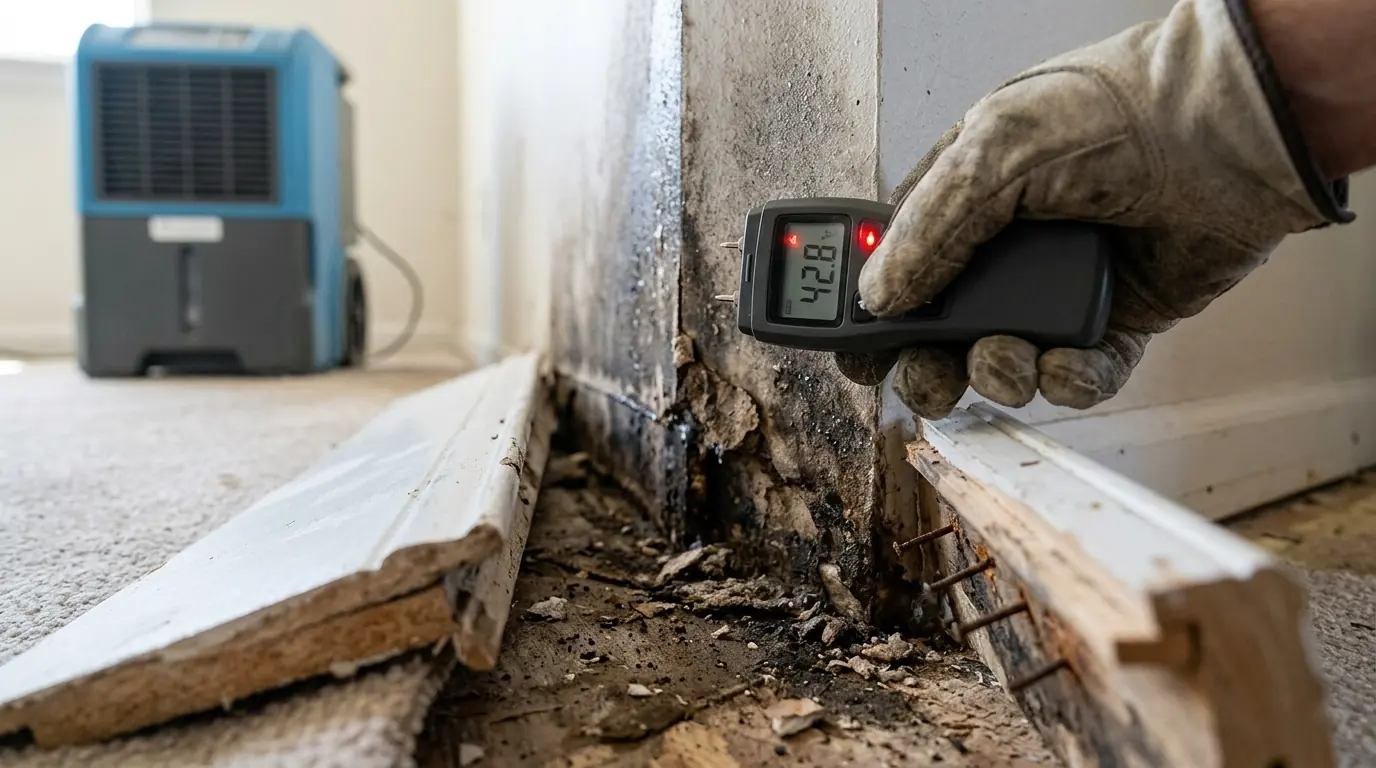
Anything that removes water quickly works against mold. Extraction gets standing water out of carpet and pad. Air movement across wet surfaces speeds evaporation. Dehumidifiers pull that moisture out of the air so it does not just settle somewhere else. Opening hidden spaces, by pulling baseboards, removing cabinet toe kicks or drilling small holes behind them, lets air reach the wet parts.
Spokane winters cut both ways. Outdoor air is often cold and dry, but a closed, heated basement after a leak can hold a lot of humidity, and snowmelt seepage arrives in spring just as basements warm up. Cracking a window rarely does the job alone. That is where structural drying with dehumidifiers sized to the space earns its keep.
Dealing with this right now? Call any hour. We answer, tell you what to do first and send a crew.
Call (509) 730-2039What dry actually means after a leak
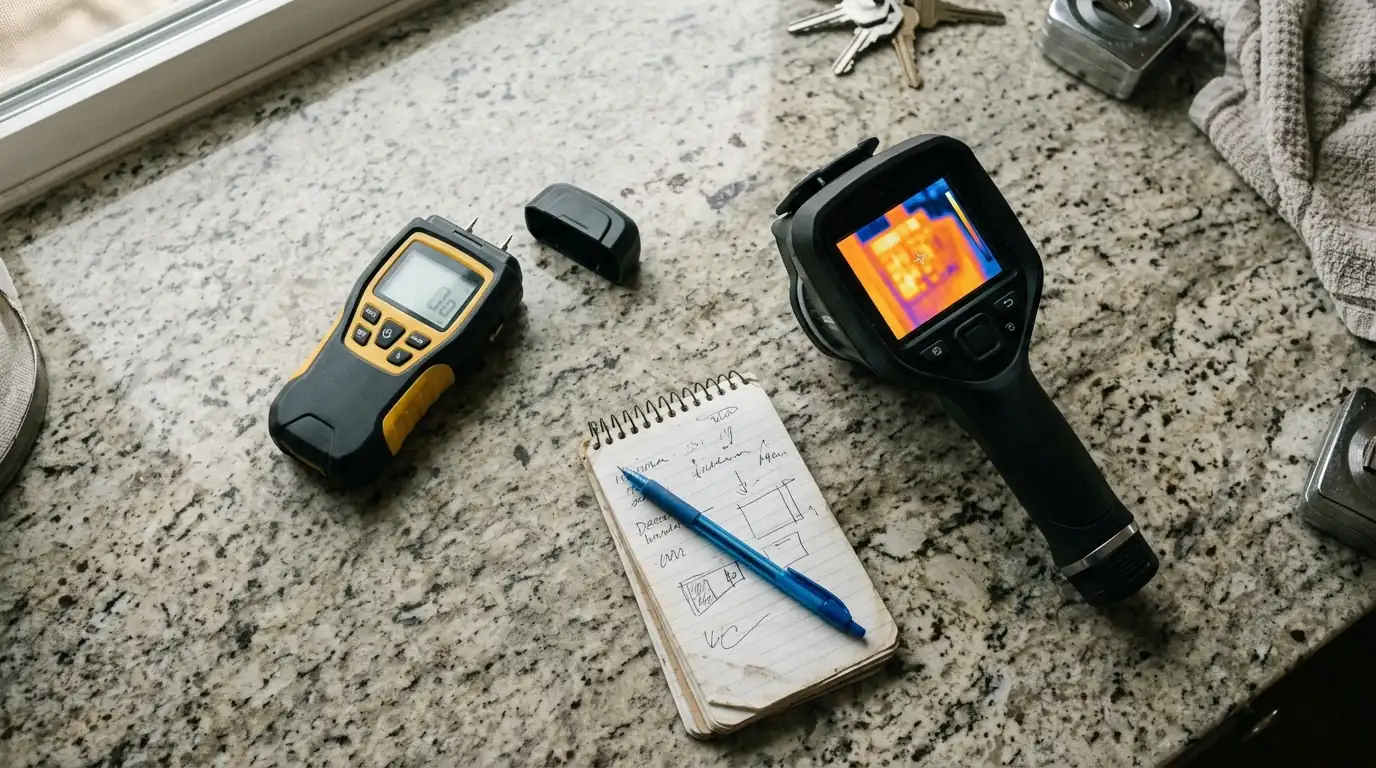
Dry is a reading, not a feeling. Drywall can feel dry to the hand while its bottom edge still holds enough water to grow mold. The goal is to bring wet materials back to the same moisture reading as similar, unaffected material elsewhere in the house, which restorers call the dry standard.
That is why a proper drying job logs readings at marked spots on every visit, and why the equipment stays until those readings match. If someone tells you a wall is dry, ask to see the numbers. Moisture mapping finds the edges of the wet area so nothing gets closed up wet.
A realistic timeline for a typical leak
Every leak is different, but most follow a similar arc when nobody steps in:
- First hours: water spreads, wicks up drywall and soaks into pad and subfloor. Nothing is visible yet, and this is the cheapest time to act.
- Day one to day two: the commonly cited window when growth can begin on damp organic materials. Extraction and drying here usually prevent it.
- Day three onward: a musty smell may appear, especially in closed cabinets and under carpet. Clean water left this long is generally treated as Category 2.
- First weeks: visible spots on drywall paper, baseboards and the back of carpet become possible, and materials may need removal instead of drying.
- Long term: slow leaks behind walls can grow quietly for months and often turn up during a remodel or after an odor complaint.
When mold testing helps, and when it does not
If you can see mold, testing usually adds cost without changing the plan. The growth gets removed under containment and the moisture problem gets fixed either way. Testing earns its place when you smell mold but cannot find it, when you need to know whether a hidden area is affected before opening walls, after removal to confirm the area is clean, or when a sale or rental calls for documentation.
A useful rule: ask anyone recommending a test what decision the results will change. If the answer is none, skip it. Our mold inspection and testing page explains how sampling works and what it can and cannot tell you.
Reader questions
Yes, if it stayed wet long enough. A single soaking that is dried quickly usually causes no growth. The same soaking left for several days, especially behind baseboards or in a closed wall, can. Drywall paper is a ready food source, which is why the bottom edge of wet drywall gets metered and sometimes cut out.
Not reliably. Bleach can lighten surface staining on hard, nonporous surfaces, but it does not dry the material, and on drywall or wood the water in it soaks in while the chlorine stays on top. Drying the material and physically removing growth is what matters. Never mix bleach with ammonia-based cleaners.
It depends on the material, the amount of water and the drying setup. Lightly wet drywall with good airflow and dehumidification can dry in a few days; plaster, insulated cavities and wood framing take longer. Readings decide when the wall is done, so expect daily checks until they match the dry standard.
Not always. Wet carpet pad, damp wood and standing water have their own musty odor before any mold grows. A smell that lingers after everything should have dried, or that returns when the heat or humidity rises, is a stronger sign of growth somewhere you cannot see.
A fan helps when the water was small, the wet material is exposed and you also lower humidity with a dehumidifier or heat. A fan alone in a closed room just moves damp air around. If water got inside a wall, under flooring or into a cabinet base, the fan cannot reach it.