Small fire, big smell
Kitchen fire cleanup in Spokane: grease, smoke and the cabinets
Most kitchen fires stay on the stove, but the residue travels through the whole house. We clean the film you can see and the odor you can't.
- Answered 24/7
- Grease and protein film
- Cabinet cleaning
- Range hood and ducting
Quick answer
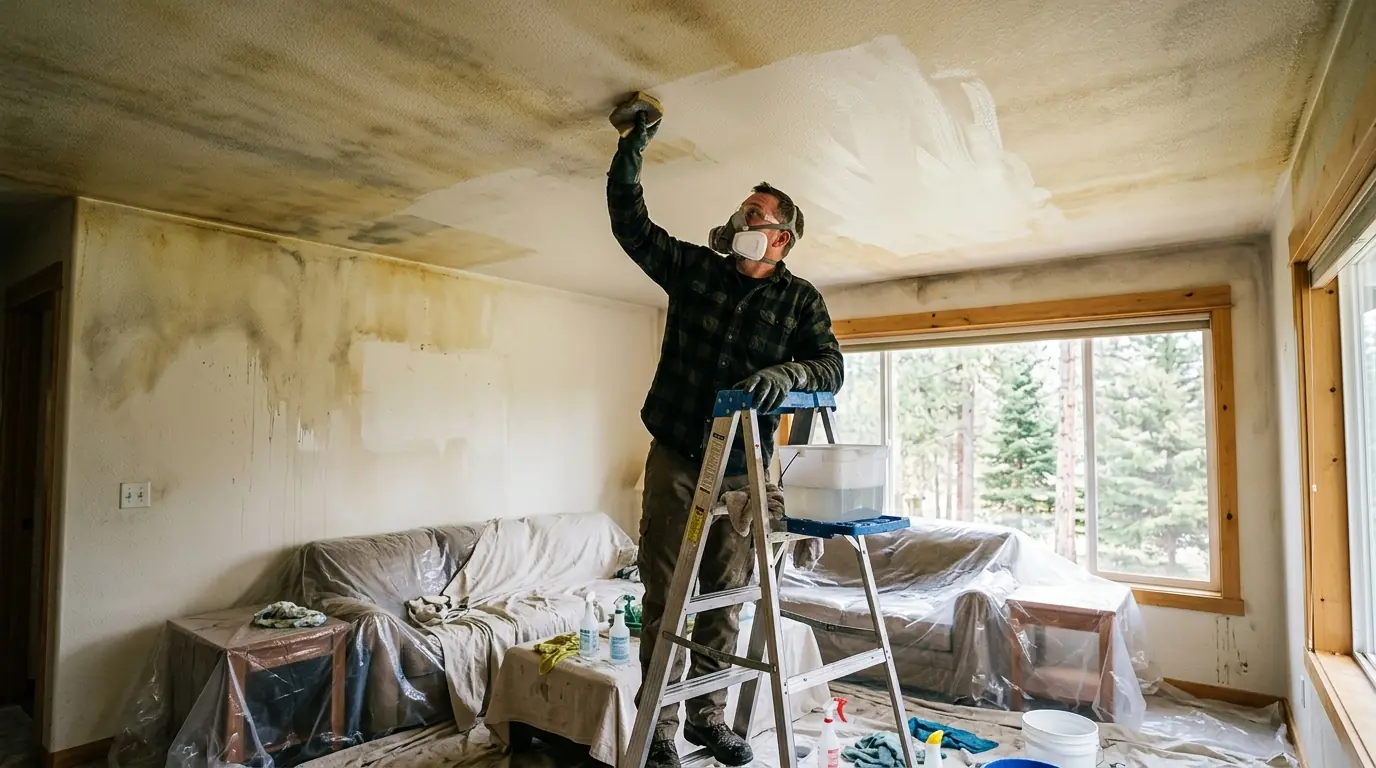
Kitchen fire cleanup in Spokane usually means removing grease soot and protein film, not rebuilding. A stovetop fire or burnt pot coats cabinets, ceilings and the range hood with sticky residue and sends odor into every room. We degrease from the ceiling down, clean inside cabinets, check the hood duct and deodorize. Charred cabinets get replaced.
Updated October 2026
Why a stovetop fire leaves residue far from the stove
A grease fire or a forgotten pot produces a lot of smoke for its size. That smoke rises, spreads across the ceiling and follows air currents down hallways and into bedrooms. When it cools, it drops a film of grease and protein on every surface it touches, including the inside of closed cabinets.
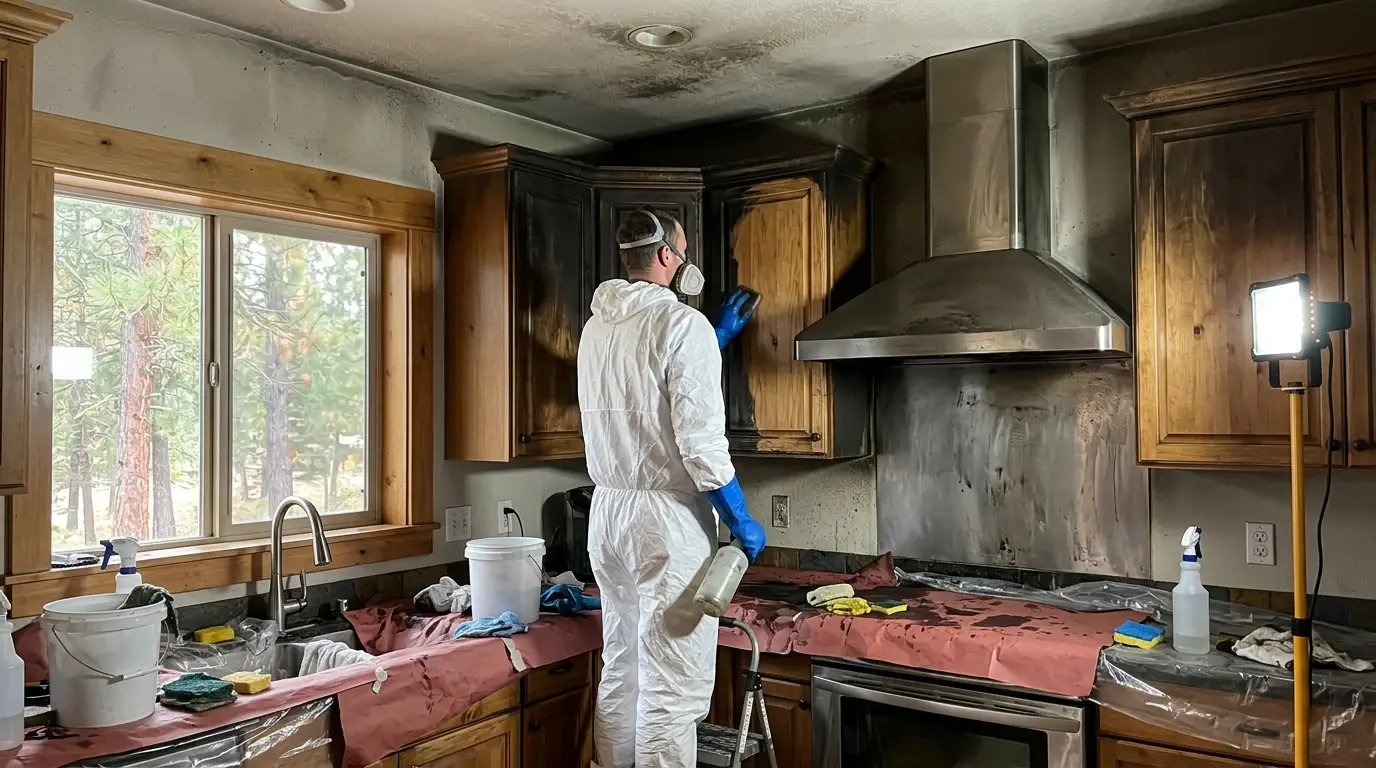
The kitchen itself usually needs degreasing rather than demolition: ceiling, upper cabinets inside and out, backsplash, light fixtures, the hood and its filter. Rooms farther away tend to need lighter cleaning and odor work, though bedrooms with closed doors often fare better than open hallways. The exception is anything that actually burned. Melted laminate, charred cabinet faces and scorched countertops get replaced, and that's when repair work comes in.
Grease fires on the stovetop
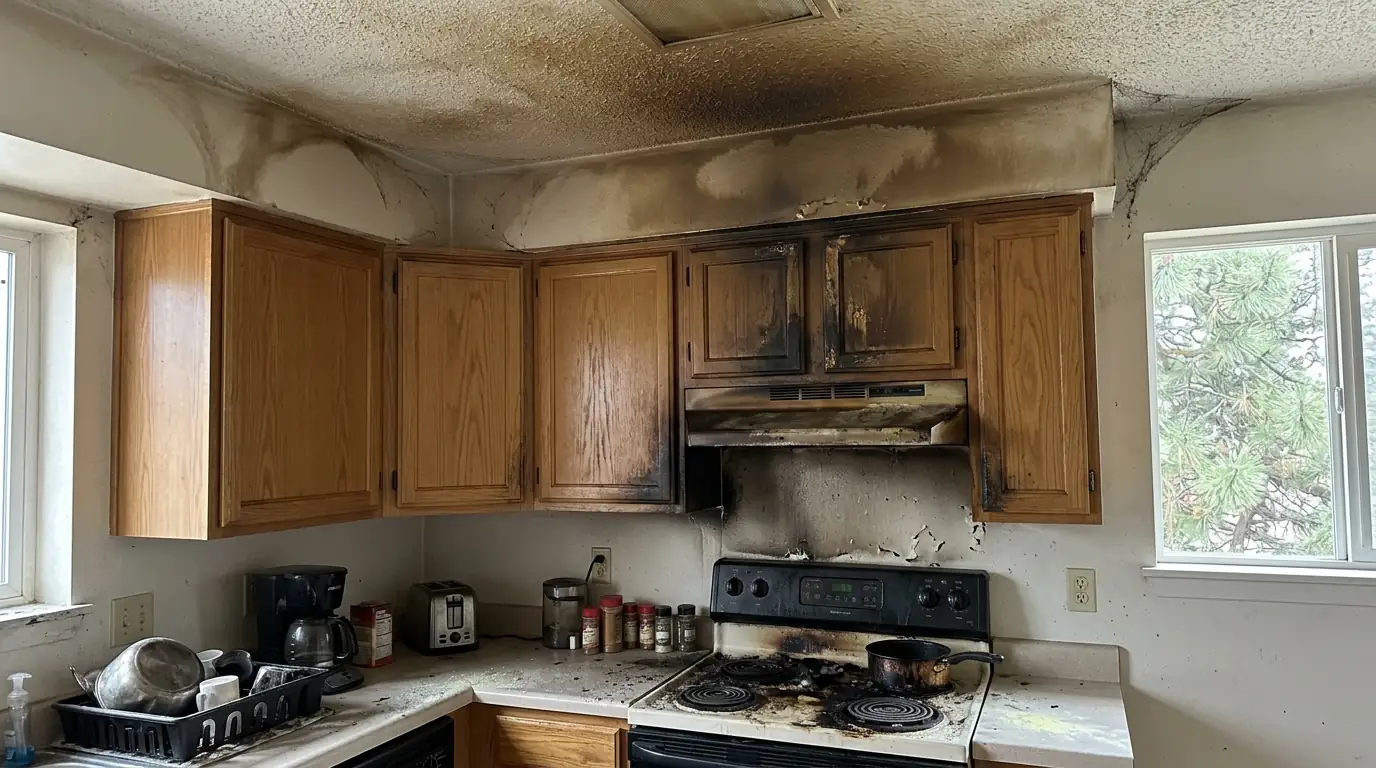
Grease fires throw heavy, oily soot. The residue is brown and tacky, and it bonds to painted cabinet doors and the ceiling directly above the range. If someone threw water on the pan, the burst of flame often scorched the hood and upper cabinets and spattered grease across the wall. We degrease in small sections with an alkaline cleaner, rinse thoroughly so no film remains to attract dust, and test cabinet finishes first, since some factory finishes soften under strong degreasers. The hood filter is usually replaced, and the hood duct gets checked for grease buildup that could feed a second fire.
Burnt food and protein residue
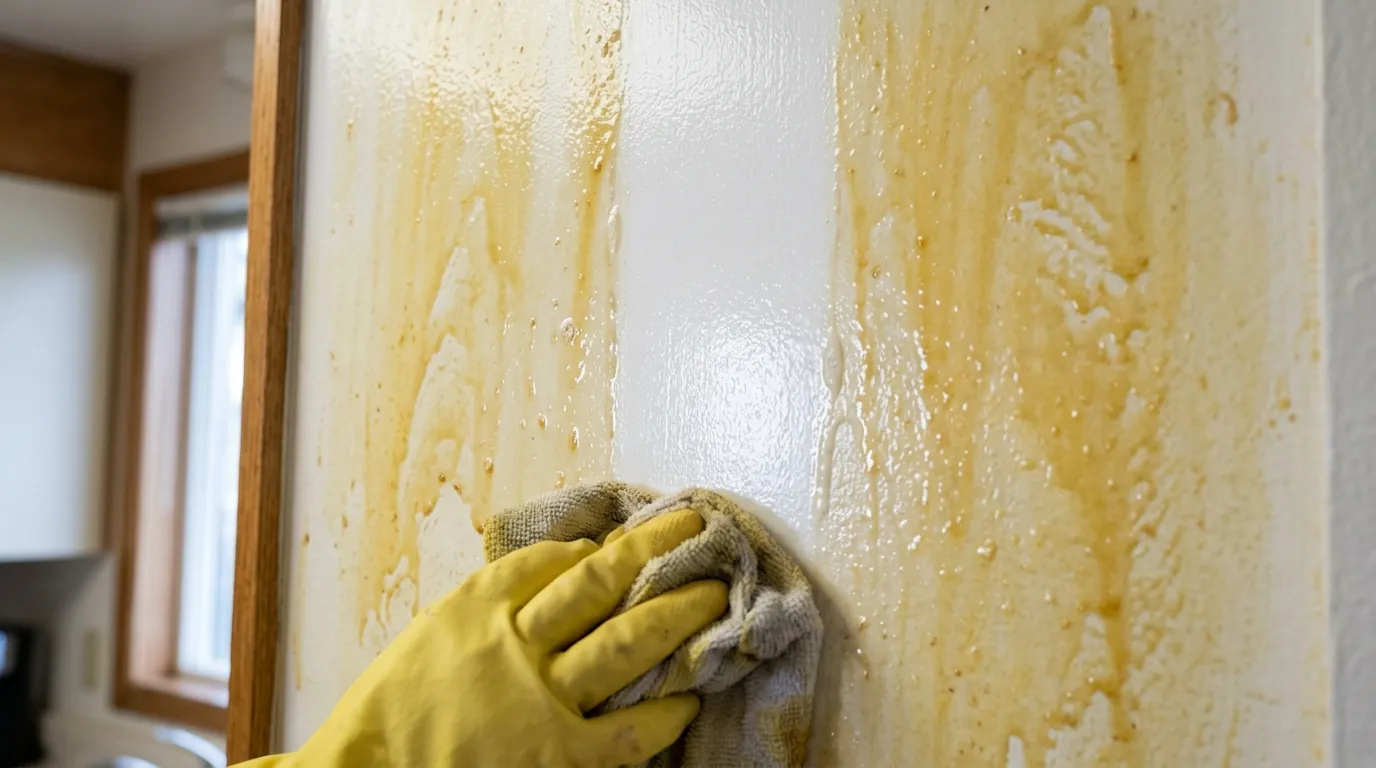
A pot of beans or a roast left in the oven might never flame up, yet it can make the whole house reek. Burnt protein produces a thin yellowish film that's hard to see on light walls and easy to underestimate. It clings to painted drywall, fabric and the inside of cabinets, and household cleaners mostly move it around. We clean with enzyme and specialty detergents made for protein, wash or launder soft goods, and run deodorizing equipment afterward. Painted surfaces that keep holding odor after cleaning get an odor-sealing primer before repainting.
Cabinets and appliances after a kitchen fire
Cabinets decide most of the scope. Solid wood and painted wood usually clean up, even inside, though the interiors take as long as the faces. Thermofoil and laminate that blistered or peeled near the heat can't be fixed and get replaced. Dishes and pantry items in closed cabinets usually clean fine; open food near the fire gets thrown out. Appliances near the stove need the same scrutiny: the microwave above the range often pulls smoke through its vent and holds odor inside. We give you a clear clean-or-replace list item by item.
Looking at this mess right now?
Pick up the phone. A real person answers 24/7 and talks you through the next ten minutes.
How we clean a kitchen after a fire
- 01
Make it safe
We confirm the burner, oven and power are safe and ventilate the house.
- 02
Sort burned from dirty
Charred or blistered materials get marked for removal; everything else gets a cleaning plan.
- 03
Degrease top down
Ceiling, upper cabinets, walls and backsplash get cleaned in that order with a rinse pass.
- 04
Empty and clean cabinets
Contents come out, interiors get cleaned and items are sorted keep or discard.
- 05
Deodorize the house
Soft goods are laundered and odor treatment covers the rooms smoke reached.
Local conditions
Kitchen fire cleanup in Spokane's mix of older and newer homes
Spokane kitchens range from century-old houses with painted wood cabinets and plaster ceilings to newer homes with thermofoil doors and drywall. That mix changes the job. Painted wood and plaster usually take degreasing well, while thermofoil near a burner often blisters and has to be replaced. Range hoods that recirculate instead of venting outside also leave more residue in the room than ducted ones. We check what you have before choosing cleaners.
Cost
What shapes the cost of a kitchen fire cleanup
Kitchen fire cleanup is usually priced by area and residue type rather than as a flat job. Grease and protein residue take longer than dry soot. The biggest swing factors are how many rooms the smoke reached, whether cabinet interiors need cleaning, whether any cabinets or counters burned and need replacing, and how many soft goods need laundering. A light protein smell confined to the kitchen and living room sits far below a grease fire that scorched the uppers and coated the whole first floor.
Kitchen fire cleanup tasks you can tackle yourself
A small, contained fire is often partly a homeowner job.
| Task | Doing it yourself | When we do it |
|---|---|---|
| Wiping the stovetop and backsplash | Usually fine with a degreasing dish soap solution after things cool. | When residue covers the ceiling and uppers too. |
| Throwing out exposed food | Do it. Open food near the fire should go. | We handle it during a full cabinet clean-out. |
| Washing dishes from cabinets | Most clean up in the dishwasher. | When the cabinet interiors themselves need cleaning. |
| Replacing the hood filter | A simple swap for most hoods. | When the hood duct holds grease or smoke odor. |
| Getting rid of burnt protein smell | Ventilation helps; sprays and candles don't remove it. | When odor lingers in other rooms after several days. |
What a kitchen fire cleanup usually covers
We tailor it to how far the smoke went, but most jobs include these.
- Degreasing of ceilings, walls and backsplash with a rinse pass so no film remains.
- Cleaning of cabinet faces, interiors, shelves and hardware.
- Range hood cleaning, filter replacement and a check of the hood duct.
- Cleaning of nearby appliances, inside and out, including the over-range microwave.
- Clean-or-replace list for damaged cabinets, counters and appliances.
- Laundering of curtains, towels and table linens.
- Deodorizing of the kitchen and every room the smoke reached.
Kitchen Fire Cleanup questions
Usually, if they didn't burn. Painted and stained wood clean well inside and out. Thermofoil or laminate that blistered or peeled from the heat can't be repaired and gets replaced, sometimes only the doors nearest the stove.
Burnt food residue spreads well beyond the stove. It settles on ceilings, walls, curtains and inside cabinets in other rooms. Until those surfaces are cleaned and soft goods are laundered, the smell keeps coming back, especially on warm days.
Sealed cans and jars usually are after the outsides are cleaned. Open packages, spices, produce and anything near the heat or covered in residue should be thrown out. When in doubt, discard it.
On the residue, a degreasing solution works better than plain water, which just smears it. Never put water on a burning grease fire; cover the pan with a lid and turn off the heat.
We check it on every job. A duct coated in grease can hold odor and is a fire risk. Accessible ducts get cleaned; long or concealed runs may need an HVAC contractor.
Related restoration work
Smoke & Soot Cleanup
Fire & Smoke
See this serviceFire Damage Restoration
Fire & Smoke
See this serviceOdor Removal & Deodorization
Sewage, Biohazard & Odor
See this serviceReconstruction After Water & Fire Damage
Rebuild, Contents & Commercial
See this serviceSee all 37 restoration services
Related advice: The first 48 hours after a house fire and Cleaning up after wildfire smoke and ash
Answering 24/7
Smoke from the stove filled the house?
Call any hour. We'll tell you what can be cleaned and what has to go.
1876 N Teanaway Dr, Post Falls, ID 83854