When the water is somewhere you can't see
Hidden leak detection and moisture mapping in Spokane homes
We find where the water went and what is still wet, then mark it on a dated moisture map you can hand to a plumber or an adjuster.
- Answered 24/7
- Thermal imaging
- Pin and pinless meters
- Written moisture map
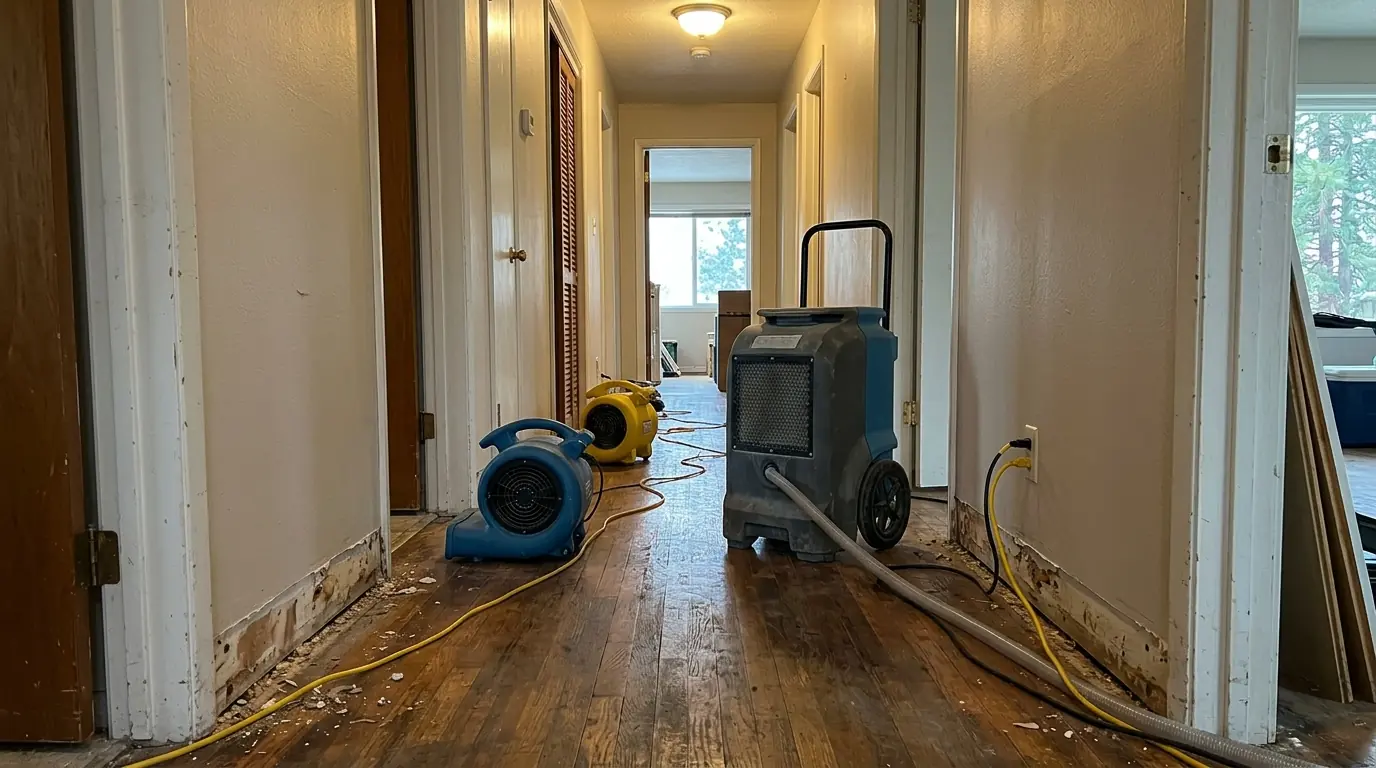
Quick answer
Hidden leak detection in Spokane starts with a thermal camera and moisture meters, because wet drywall and wood read cooler and more conductive than dry material. We map the wet area room by room, log the readings and show where the water traveled. Repairing a pressurized pipe inside a slab may still need a plumber.
Updated October 2026
What moisture mapping tells you that a stain can't
A stain marks where water finally showed up, not where it started. Water runs along joists, wicks sideways through drywall and pools on the low side of a subfloor, so a dining room ceiling spot can belong to a supply line two rooms away. Opening walls to look is slow and often in the wrong place.
So we read the building before we open it. A thermal camera finds cool patches, then meters confirm which are actually wet and how wet. Each reading goes on a room sketch with date, material and number, and we keep working outward until we hit dry material on every side. That boundary decides what comes out, what can dry in place with structural drying, and where the plumber should look first.
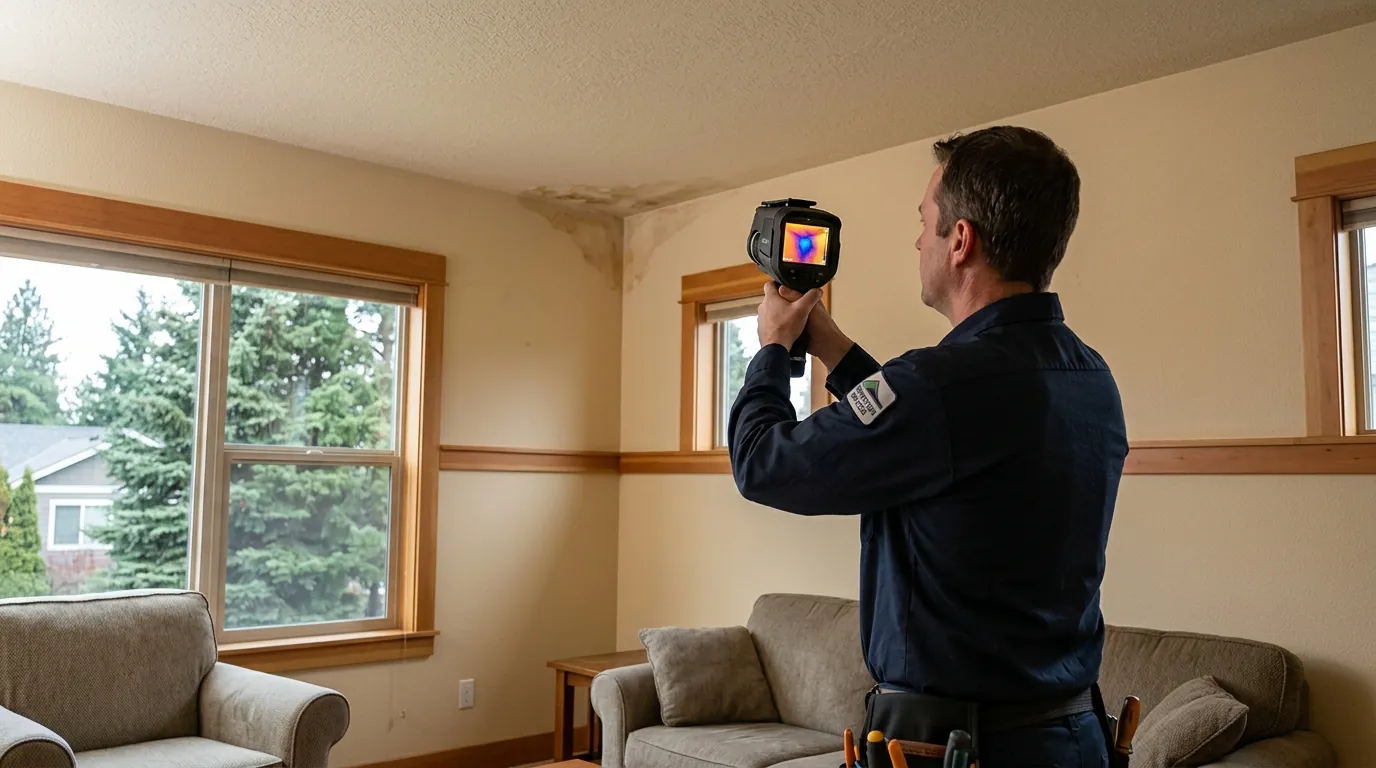
Thermal imaging to spot cool, wet areas
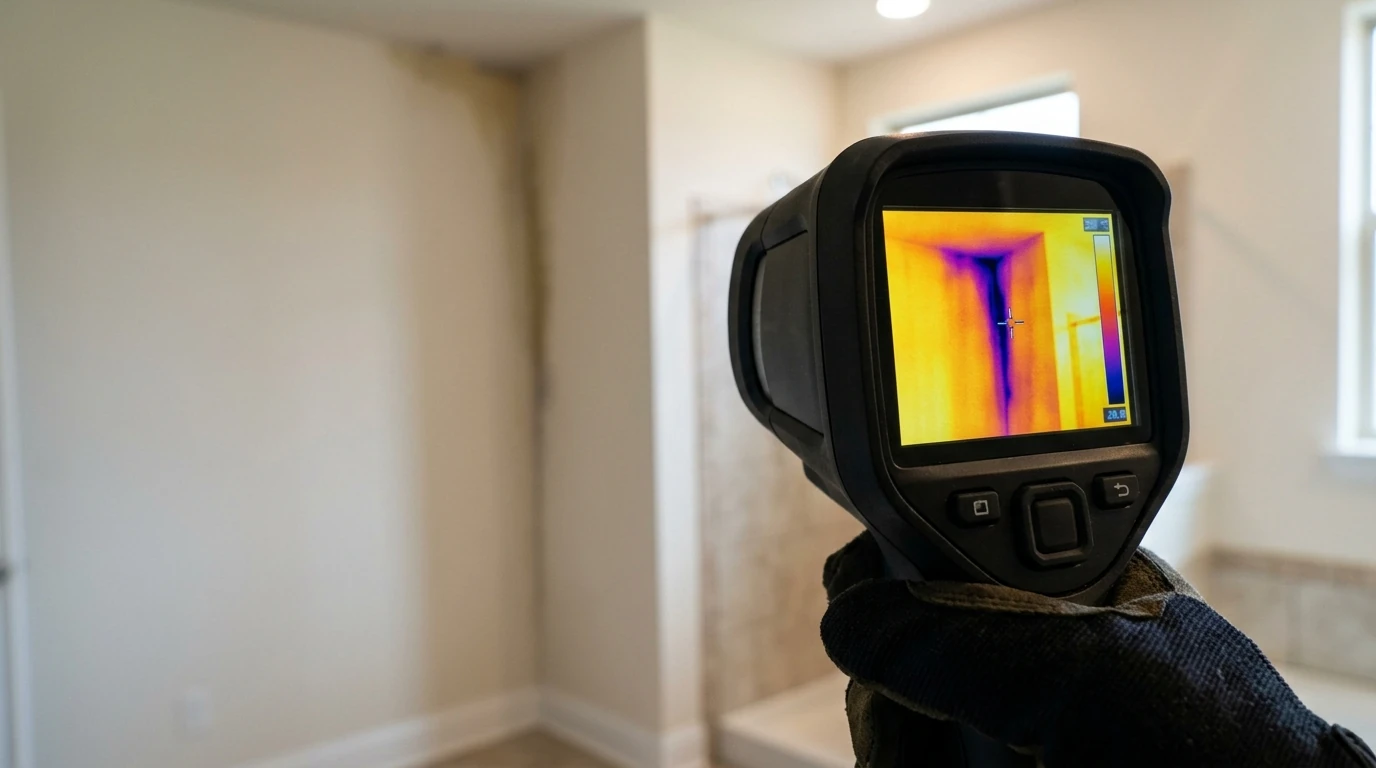
A thermal camera doesn't see water. It sees surface temperature, and wet materials usually run a few degrees cooler because evaporation pulls heat out of them. That makes it quick for sweeping a whole ceiling and catching the shape of a leak, like a fan below a toilet flange or a stripe along a plumbing wall. The catch: cold spots also come from missing insulation, a drafty outlet or an exterior wall on a January morning. Every cool patch on the screen is a question, and we only call an area wet after a meter agrees.
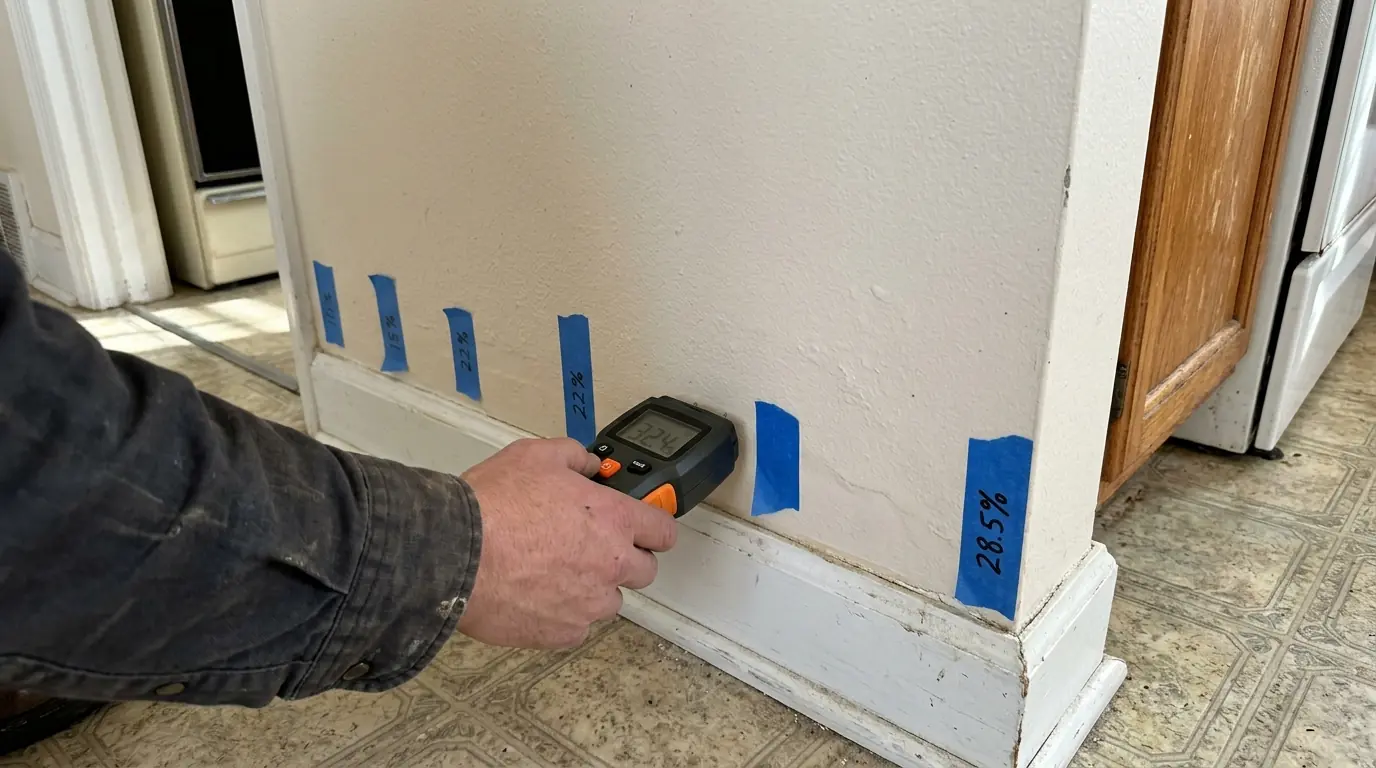
Moisture meter mapping, room by room
Meters supply the numbers. A pinless meter reads through the surface without marking it, which is how we sweep drywall, cabinets and hardwood. Pin meters push two small probes into the material and give a truer reading in framing and trim. A number means little alone, so we take a dry reference in the same material in an unaffected room and compare. Readings, locations and times go on the floor sketch, and we return to the same points as things dry. Adjusters ask for exactly that log.
A second look after a plumbing or roof repair
A fixed leak and a dry building aren't the same thing. After a plumber swaps a valve or a roofer reseals flashing, water already in the cavity, insulation or subfloor stays put. We come back, rescan the old wet zone and recheck the mapped points. If they match the dry reference, you can close walls and finish floors. If one corner still reads high, it's either trapped moisture that needs equipment or a second leak the first repair missed. Both are cheaper to find before new paint goes on.
Water, smoke or mold in front of you right now?
Call us any hour. We will walk you through what to shut off and what to move while the crew heads your way.
How we trace a hidden leak from the stain outward
- 01
Hear the history
When did the stain or smell appear, what sits above or behind it, and was anything repaired recently?
- 02
Scan with thermal imaging
We sweep ceilings, walls and floors for cool patterns that point toward a source.
- 03
Confirm with meters
Pin and pinless readings, compared to a dry reference, show what is truly wet.
- 04
Draw the map
Readings and dates go on a floor sketch with the wet boundary marked on every side.
- 05
Recommend next steps
We say what can dry in place, what must come out and which trade fixes the source.
Local conditions
Moisture readings in Rockwood's older South Hill homes
The Rockwood Historic District on the South Hill holds roughly 350 homes, and about 285 went up before 1950. Many keep plaster on wood lath, which is dense, slow to stain and reads differently from drywall. Houses on the steep part of the hill can also take groundwater against the uphill basement wall. In these homes we take extra dry reference readings in plaster before calling anything wet, and we check the uphill side of the basement even when the complaint is upstairs.
Cost
What drives the cost of finding a hidden leak
Leak detection is mostly time and access. A single stain below a bathroom is a short visit; a musty smell in a large house can mean scanning every floor, the attic and the crawl space. Cost rises when we have to pull a toe kick, open an access panel or cut a small inspection hole. If mapping finds wet material, drying or removal is a separate scope, and the map becomes the basis for that estimate.
Thermal imaging or moisture meters: which finds the leak
We use both on nearly every job because each covers the other's blind spot.
| Thermal imaging | Moisture meter mapping | |
|---|---|---|
| Measures | Surface temperature differences | Moisture content of the material |
| Speed | A whole room in minutes | One point at a time |
| False alarms | Drafts, missing insulation, reflections | Metal behind drywall, salts, wrong material setting |
| Marks left | None | None for pinless; two pinholes for pin probes |
| Good for | Finding where to look | Proving what is wet and tracking drying |
Moisture Mapping & Hidden Leak Detection questions
It shows where water surfaces through the flooring and how far it spread, which narrows the search. Pinpointing a pressurized break inside the slab usually takes a plumber with acoustic or pressure testing gear, and we hand them the map.
Thermal scans and pinless meters leave nothing. Pin meters leave two tiny holes, usually in trim where filler hides them. We only cut an inspection hole to confirm a reading inside a cavity, and we ask first.
Cool patches also come from missing insulation, leaky outlets and exterior walls in cold weather. That's why every cool area gets a meter check before we call it wet. A dry cold spot still tells you something about your insulation.
Usually. The repair stops new water, but what soaked into drywall, insulation and framing stays. Mapping shows whether those materials are back to normal or still need equipment before you close walls or lay flooring.
Often it's the most useful document you have. A dated sketch with readings and photos shows the adjuster how far water traveled and why material was removed. We can also walk the house with the adjuster.
Related restoration work
Structural Drying & Dehumidification
Water Damage
See this serviceCeiling Water Damage Repair
Water Damage
See this serviceMold Inspection & Testing
Mold
See this serviceBathroom Leak Water Damage
Water Damage
See this serviceSee all 37 restoration services
Related advice: Burst pipe in a Spokane winter: the first hour and What water damage restoration costs in Spokane
Answering 24/7
Stain, smell or soft floor and no idea where it's coming from?
Call any hour. We'll find the wet edge and tell you plainly what has to happen next.
1876 N Teanaway Dr, Post Falls, ID 83854