Standing water removal in Spokane, WA
Water extraction and removal in Spokane homes
Air does not dry a flooded floor; extraction does. Getting the water out mechanically first cuts days off the drying that follows.
- Answered 24/7
- Truck-mounted extraction
- Carpet, hard floors and basements
Quick answer
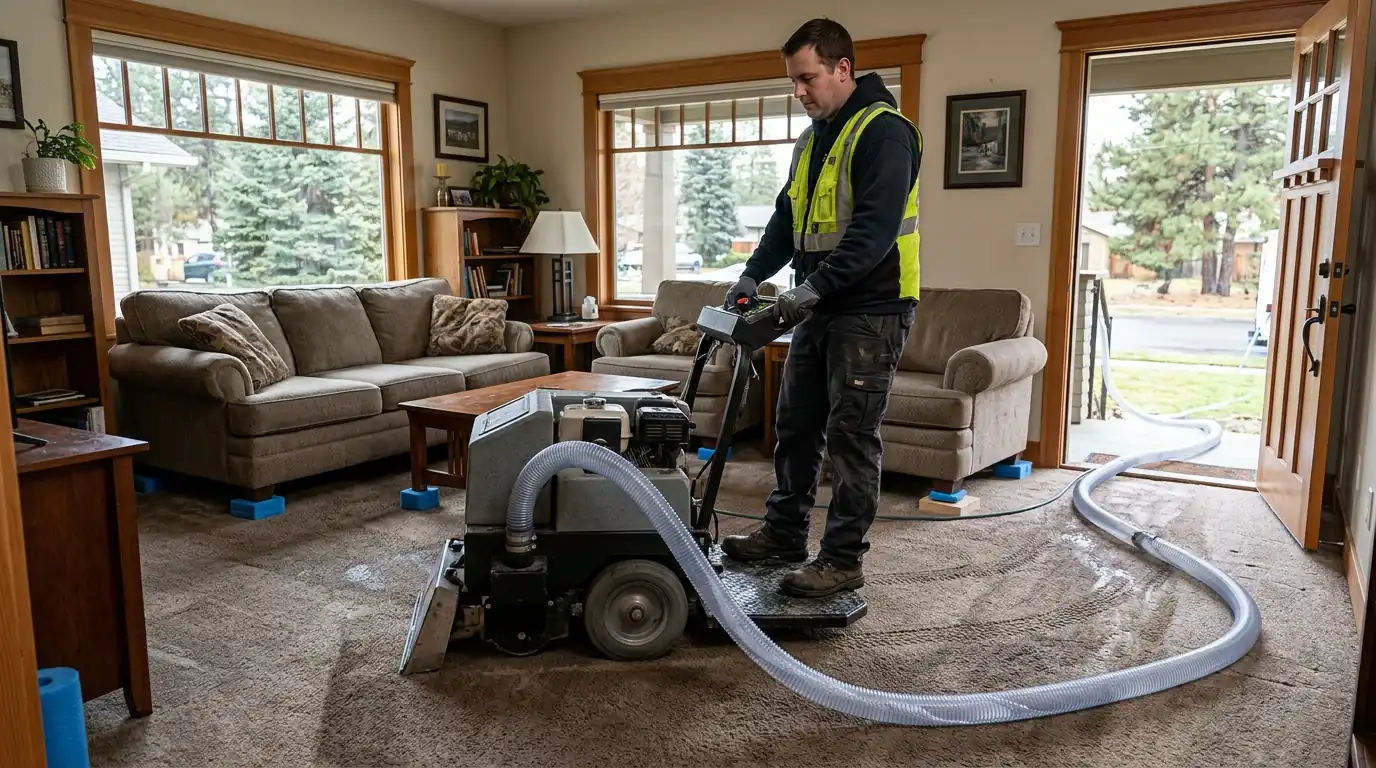
Water extraction in Spokane homes means pulling standing water out mechanically before drying starts, because extraction removes in an hour what dehumidifiers would need days to pull from the air. On carpet, a weighted stand-on tool squeezes water from the pad. Hard floors get squeegees and wet vacs, and deep basement water may need a submersible pump first.
Updated October 2026
Why extraction comes before any fan or dehumidifier
Every gallon left on the floor has to be evaporated into the air and then pulled out by a dehumidifier. That is slow, and it keeps humidity high in the whole house. Extraction skips the step. A truck-mounted unit pulls water through a carpet wand, a hard-floor tool or a weighted extractor a technician stands on to press water out of the pad.
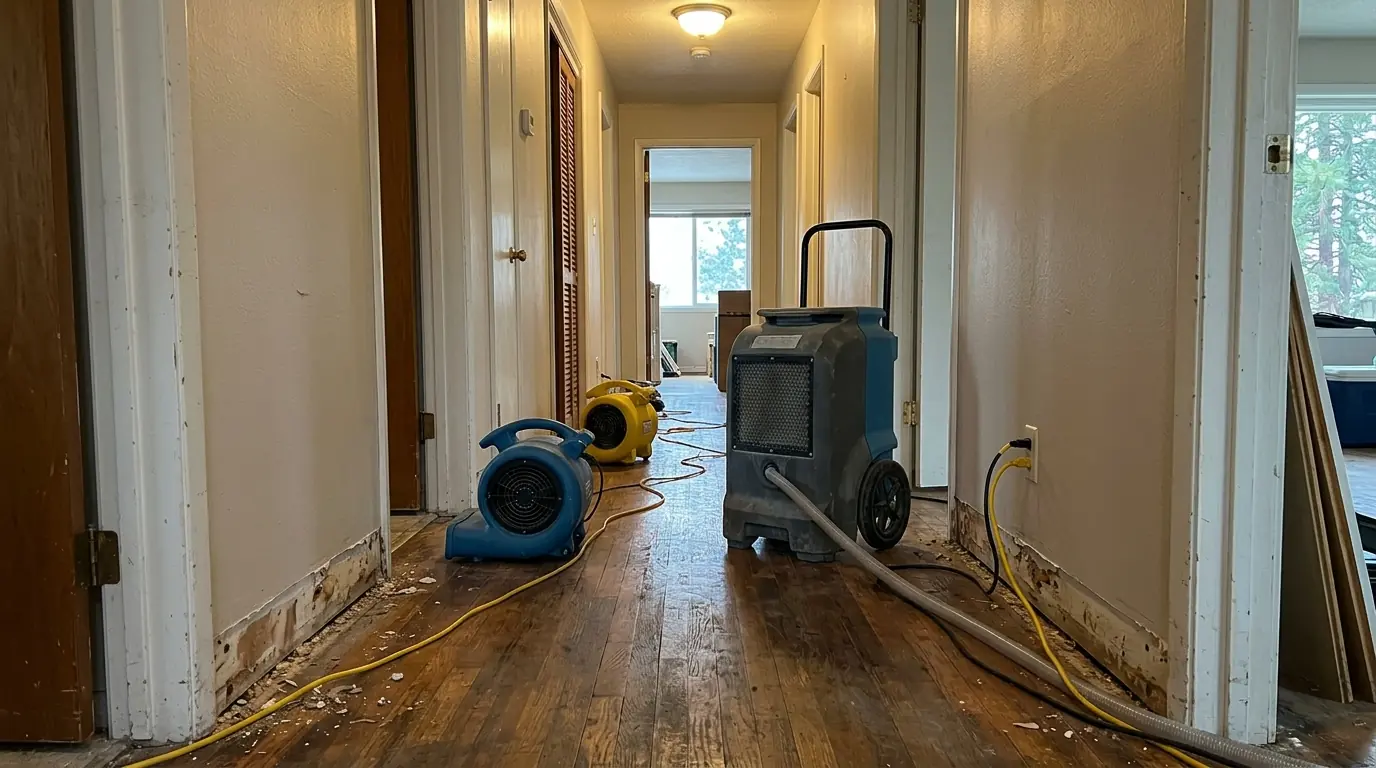
We pick the tool by surface and depth. More than an inch or two in a basement calls for a submersible pump first. Thin water on vinyl, tile or sealed concrete goes faster with squeegees and a wet vac. Once the floor stops giving up water, structural drying takes over for what soaked into the building, starting from the post-extraction readings we log room by room.
Standing water on tile, vinyl and concrete
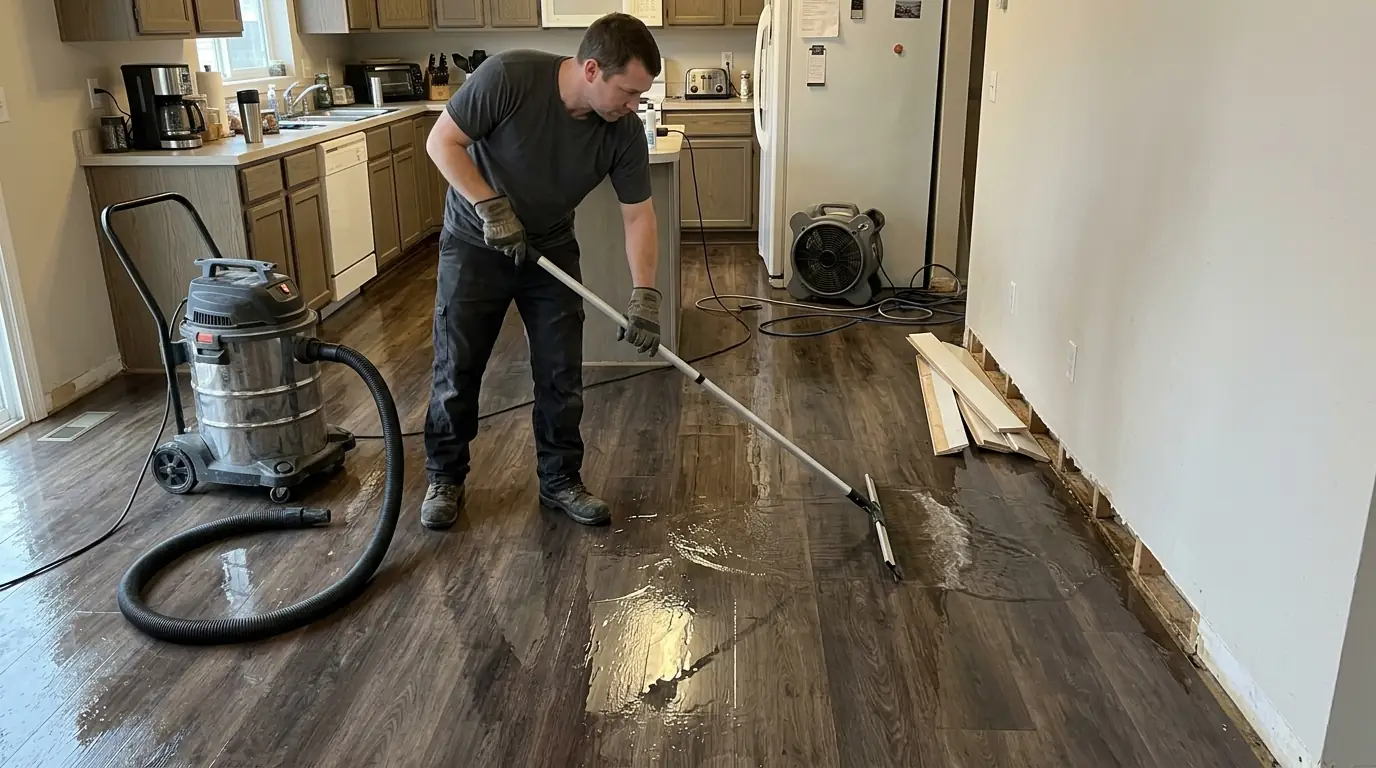
Hard floors look easier, but the water you see is not the whole problem. It runs to the edges, slips under baseboards and finds every seam in vinyl plank or laminate. We squeegee toward a low corner, vacuum it up, then lift baseboard where readings say water got underneath. Laminate and plank with a fiberboard core swell within hours and rarely lie flat again, so we test a board early and tell you whether drying it is worth trying. Tile and sealed concrete usually dry well once the surface water is gone.
Extracting water from carpet and pad
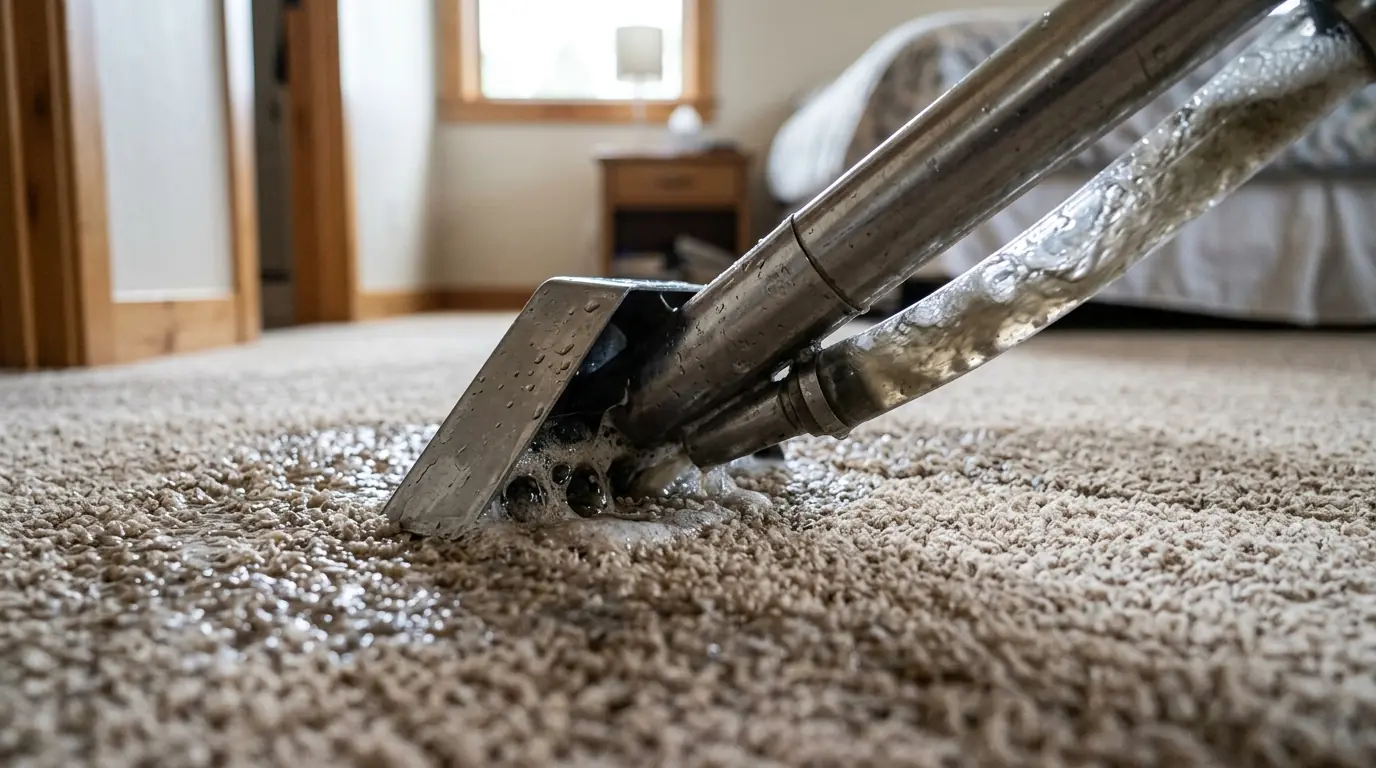
Carpet holds water in two layers. Face fibers give it up easily to a wand, but the pad acts like a sponge pinned against the subfloor. A stand-on weighted extractor presses the pad hard enough to push water up through the carpet into the hose, and we make slow, overlapping passes until it stops releasing water. If the water was clean and pulled quickly, carpet and pad can often stay. If it sat for days or was gray or black water, the pad comes out, and we explain why before cutting anything.
Pumping and extracting a finished basement
Basements collect the water that came in plus whatever ran down the stairs. With more than an inch or two standing, a submersible pump runs to a drain or outside before the wands come out. Finished basements add layers: carpet over a slab, framed walls against a foundation, paneling glued to furring strips. After extraction we probe the base of every finished wall, because the foundation side of a framed wall is often the last place to dry and the first place mold shows up.
Looking at this mess right now?
Pick up the phone. A real person answers 24/7 and talks you through the next ten minutes.
How an extraction visit runs
- 01
Check the water
We identify the source and category so the crew knows what can stay.
- 02
Move contents
Furniture goes up on blocks or out, and anything that bleeds dye is lifted off the floor.
- 03
Pump if deep
Water deeper than the wands can handle goes out with a submersible pump.
- 04
Extract by surface
Wands for carpet, squeegees for hard floors and weighted tools for pad, pass after pass.
- 05
Measure for drying
Readings after extraction set where air movers and dehumidifiers go.
Local conditions
Extraction in Lincoln Heights basements, old and mid-century
Lincoln Heights shows why one extraction setup does not fit every house. The neighborhood mixes early 1900s Craftsman homes with mid-century houses, mostly owner-occupied, so many basements were finished over the decades by different hands. An older Craftsman basement may have painted concrete and a floor drain that helps. A 1950s house nearby may have carpet glued to the slab and paneling over block. We size pumps and wands for both, and check old floor drains are clear before counting on them.
Timeline
How long water extraction takes
Extraction usually finishes on the first visit, though a large finished lower level with deep water can stretch into a long day. We keep making passes until the pad stops releasing water, because every gallon left behind becomes dehumidifier time. Drying afterward usually runs several days.
Cost
What extraction and cleanup cost nationally
LawnStarter's 2026 figures put clean-water restoration at roughly $3.30 to $4.10 per square foot nationally. Treat that as a planning range, not a price. Extraction is one line in a larger job that also covers drying, monitoring and any removal. Depth, whether water reached the pad, how many rooms it crossed and how long it sat all move the number.
What our water extraction visit includes
Extraction is more than running a hose.
- Photos of the water level and every wet room before work begins.
- A category check so you know what can be kept.
- Submersible pumping for deep standing water.
- Wand and weighted extraction on carpet and pad.
- Edge and under-baseboard work on hard floors.
- Post-extraction moisture readings that set up the drying plan.
Water Extraction & Removal questions
A shop vac handles a small puddle on a hard floor. It cannot press water out of carpet pad, and pad left wet is where odor and mold start. For more than a small area, a weighted extractor removes far more.
Often, if the water was clean and pulled out quickly. Carpet that soaked in gray or black water, or sat wet for several days, usually is not worth saving, and the pad almost never is.
Fans dry by evaporating water into the air, which dehumidifiers then have to remove. Pulling liquid water out first is far faster and keeps humidity from climbing through the rest of the house.
A working floor drain only takes what reaches it. Water trapped under carpet, behind walls or in low spots still needs pumping and extraction. We also confirm the drain is clear so it does not back up during cleanup.
We lift it onto blocks or move it to a dry room so legs stop wicking water and finishes do not stain the carpet. Upholstered pieces that soaked up water get a separate look before we decide on cleaning.
Related restoration work
Emergency Water Damage Restoration
Water Damage
See this serviceStructural Drying & Dehumidification
Water Damage
See this serviceCarpet & Pad Water Damage
Water Damage
See this serviceBasement Flooding Cleanup
Water Damage
See this serviceSee all 37 restoration services
Related advice: Burst pipe in a Spokane winter: the first hour and What water damage restoration costs in Spokane
Answering 24/7
Standing water you need gone?
Call any hour and we will bring pumps and extractors sized to what you describe.
1876 N Teanaway Dr, Post Falls, ID 83854