What's growing above the ceiling
Attic mold removal for Spokane homes: sheathing, vents and ice dams
Attic mold is almost always a ventilation or air-leak problem. We clean the sheathing and point you to the warm, moist air that's feeding it.
- Answered 24/7
- Roof sheathing
- Bath fan venting
- Ice dam aftermath
Quick answer
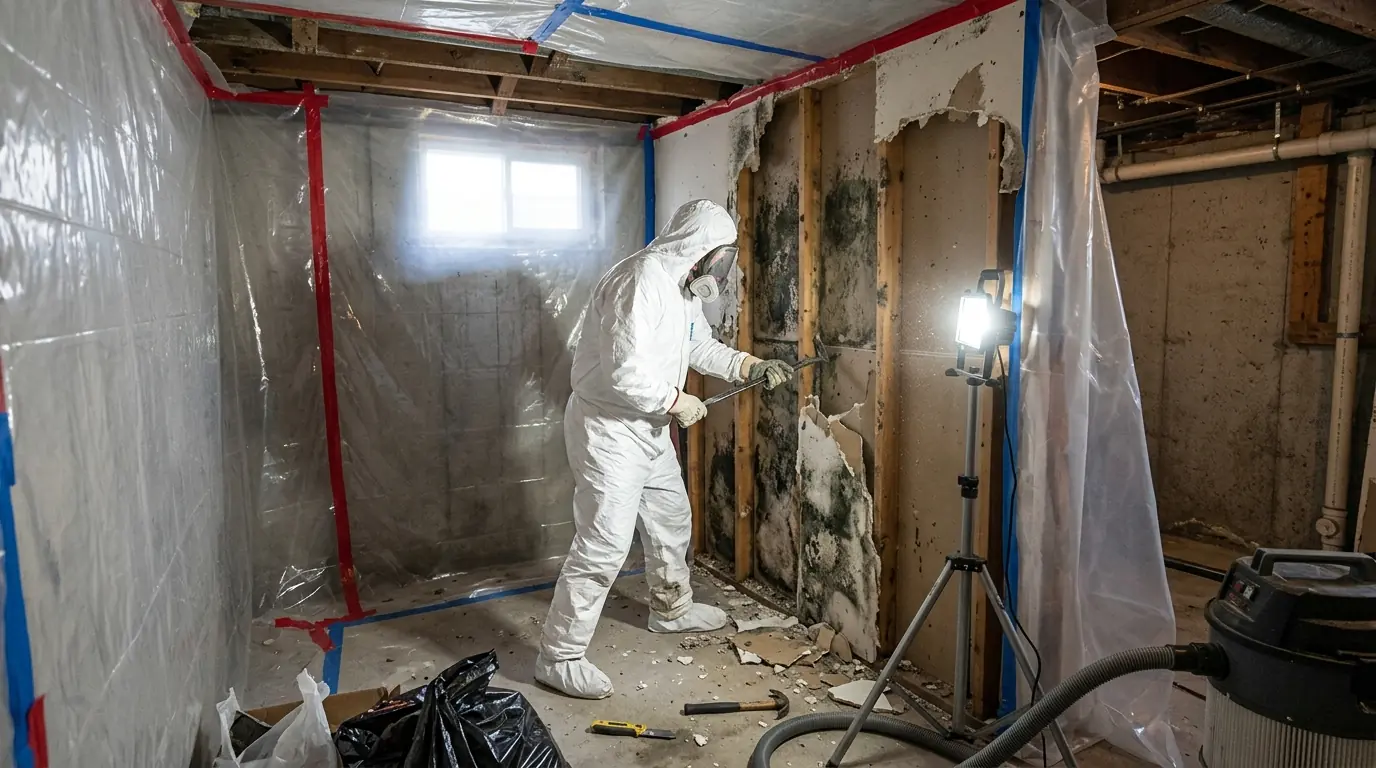
Attic mold removal in Spokane usually means cleaning black or gray growth off the underside of roof sheathing, then fixing the cause: warm, humid house air leaking into a cold attic and condensing on the wood. Common sources are bath fans venting into the attic, gaps around can lights and blocked soffit vents. Cleaning without fixing those just resets the clock.
Updated October 2026
Why attic mold usually starts with air, not a roof leak
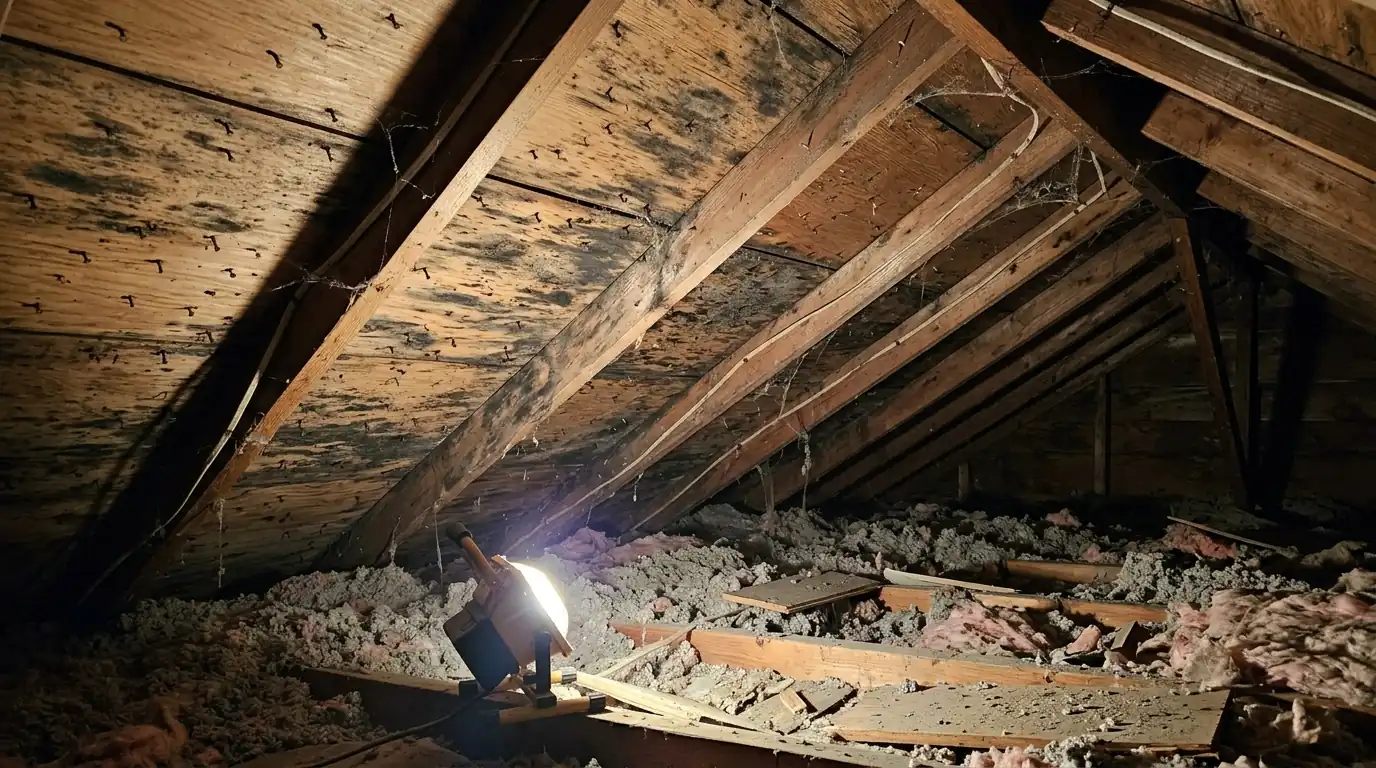
Most attic mold shows up as dark staining spread across the north side of the roof sheathing, heaviest near the top. That pattern points to condensation. Warm, moist air rises out of the living space through gaps around light fixtures, the attic hatch, plumbing stacks and bath fans. When it hits sheathing chilled by a Spokane winter night, the moisture condenses or freezes as frost, then melts and soaks in when the sun warms the roof.
Repeat that every cold night and the wood stays damp long enough for mold. Roof leaks cause attic mold too, but they leave a localized stain below a specific spot. Removal is cleaning the sheathing and rafters. The lasting fix is sealing the air leaks, venting fans outside and keeping soffit vents clear.
Condensation mold versus roof leak mold in the attic
The pattern tells you which problem you have.
| Condensation | Roof leak or ice dam | |
|---|---|---|
| Where it shows | Spread across sheathing, often the north slope and upper roof | Localized below a leak or along the eaves |
| When it's worst | Through the cold months | After storms, snowmelt or ice dams |
| Typical cause | House air leaking into the attic, fans venting inside | Damaged roofing, flashing or ice backing up |
| Lasting fix | Air sealing, fan ducting, clear soffit vents | Roof repair and less heat loss at the eaves |
| Who fixes the cause | Restoration plus insulation or HVAC work | A roofer |
Cost
What attic mold removal typically costs
This Old House's 2026 cost guide lists attic mold remediation at roughly $1,000 to $4,000 nationally. That's a planning range, not our price. Where your job falls depends on attic size and access, how much of the sheathing is affected, whether insulation must be removed and replaced, and whether any sheathing needs replacing by a roofer. Fixing the cause, such as rerouting a bath fan duct or sealing attic air leaks, can be a modest add-on and is the part that keeps the cleaning from being wasted.
Mold on roof sheathing
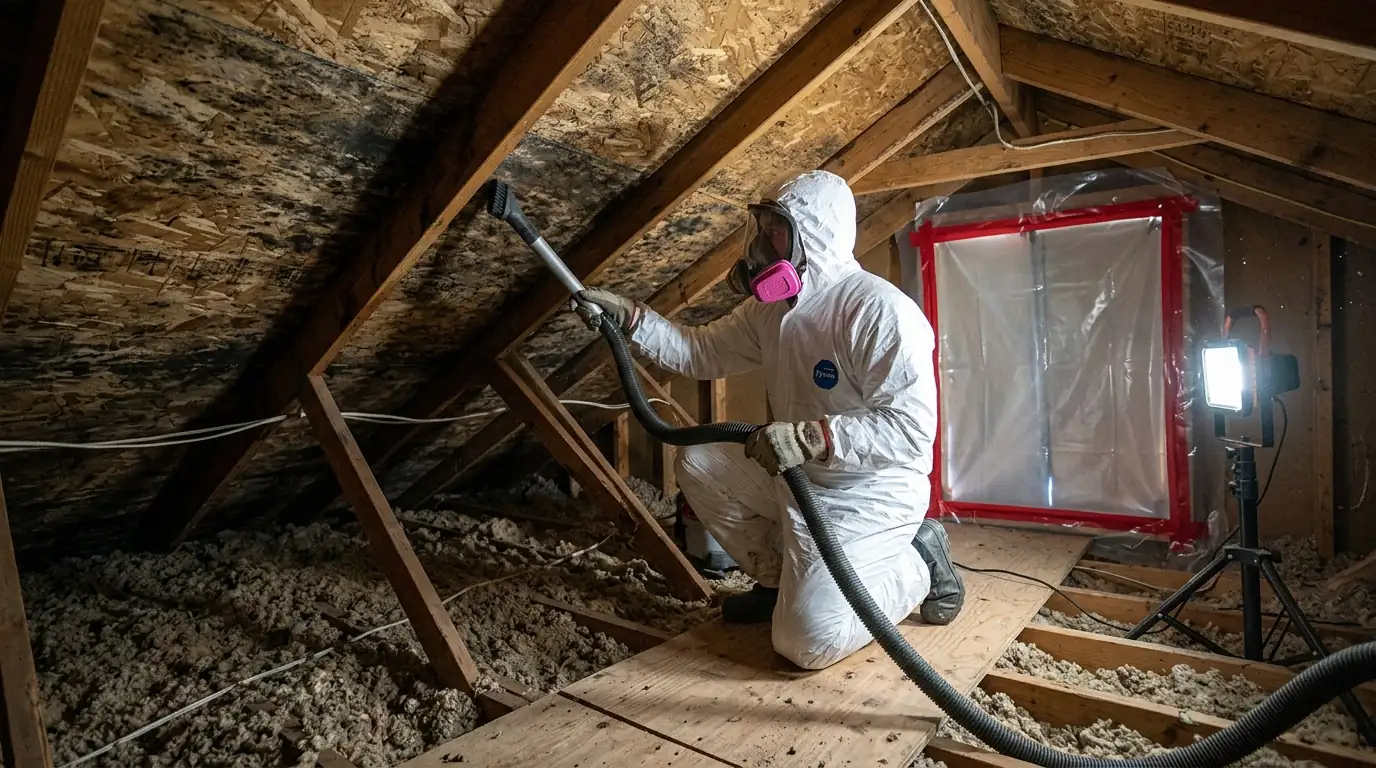
Sheathing mold usually looks worse than it is. The growth is mostly surface staining on plywood or OSB, and the wood is often still structurally sound. We check soundness with a probe and moisture meter first: soft, delaminated or rotting sheathing needs replacement by a roofer. Sound wood gets HEPA vacuumed, then cleaned by wire brushing, sanding or a cleaning method suited to the attic. Some stain may remain after the growth is gone, and an encapsulating coating can seal it. The insulation below is checked too, since it may hold debris or moisture.
Bath fans venting into the attic
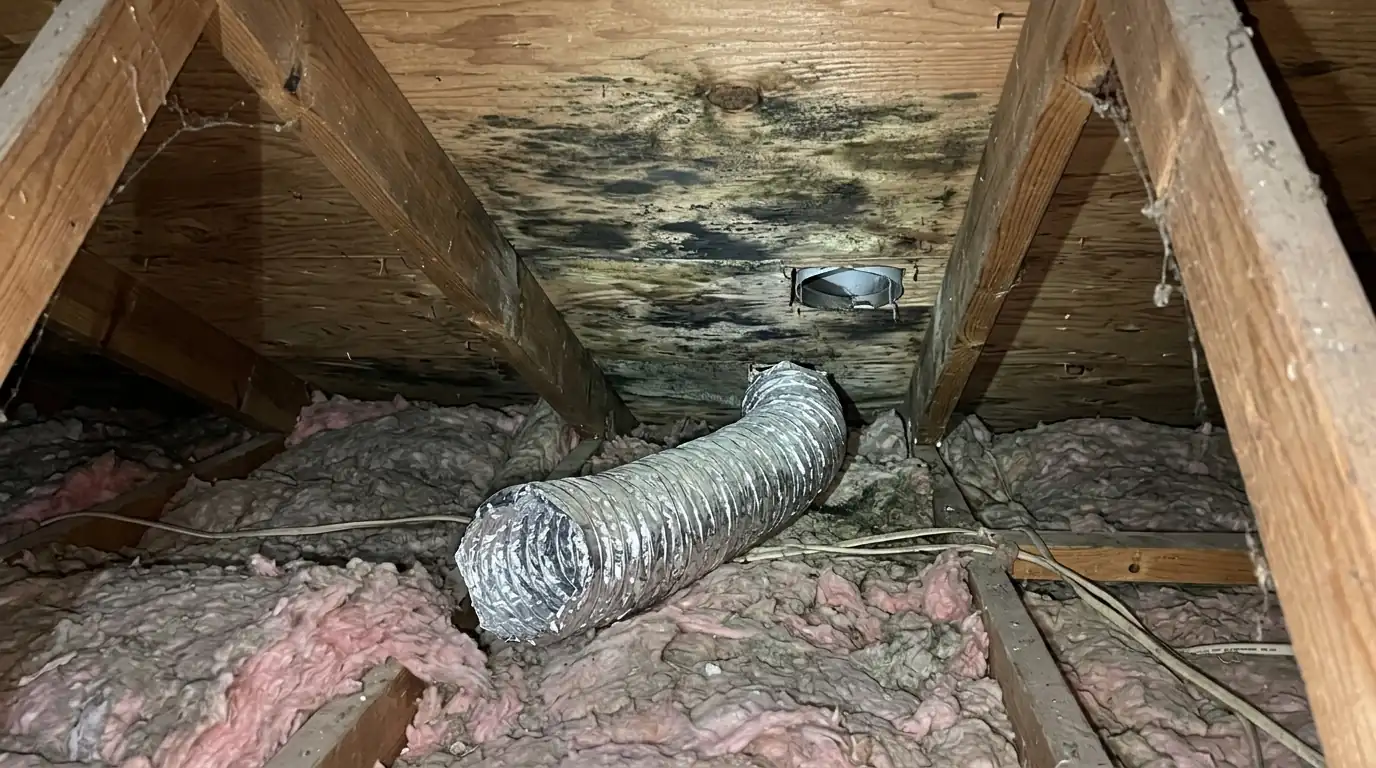
A bath fan that dumps into the attic, or whose duct has fallen off its roof cap, pours warm shower air straight onto the sheathing. You'll often find a patch of mold or frost right above the fan, and sometimes soaked insulation. The fix is simple but essential: run insulated duct from the fan to a proper roof or wall cap, sealed at both ends and sloped so condensation can't pool. We clean the growth around it, replace soaked insulation, and confirm the duct actually exhausts outdoors. Kitchen and dryer vents get the same check.
Mold after ice dams
Ice dams start in the attic: warm air leaking up from the house thaws the snow on the upper roof, and that water freezes again over the cold eaves. Water then backs up under shingles and drips into the attic along the outside edge, wetting sheathing, insulation and the top of exterior walls. Mold from ice dams sits along the eaves rather than spread across the whole roof. We dry the wet materials, remove soaked insulation, clean the growth and check the top plates of walls below. The long-term fix is the same as for condensation: less heat leaking into the attic.
The longer it sits, the more comes out.
Call any hour and we will help you limit the damage before the trucks even leave.
How we remove attic mold and stop the cause
- 01
Inspect the attic
We map where growth sits and check sheathing for soundness and moisture.
- 02
Find the moisture source
Fan ducts, air leaks, blocked vents or roof leaks get identified.
- 03
Contain and protect
The hatch gets sealed and the living space below is protected.
- 04
Clean the wood
HEPA vacuuming then brushing, sanding or other cleaning removes growth.
- 05
Fix and re-insulate
Fan ducts get routed outside, damaged insulation is replaced and leaks are noted for sealing.
Local conditions
Spokane winters and attic condensation
Spokane gets real winters: weeks of nights below freezing and snow that sits on roofs. That combination is exactly what drives attic condensation and ice dams. Warm, humid air leaking from the house meets sheathing that stays cold for months, and snow cover keeps roofs from drying. Attic mold is common across Spokane in older homes with little air sealing and in newer ones where a bath fan duct came loose. We look at both the attic and the ceiling below to find the leaks.
Signs of mold in the attic
Most attic mold goes unseen for years; these are the usual tip-offs.
Dark staining on the sheathing
Gray or black spotting across the plywood, often worst on the north slope.
Frost on nails in winter
Nail tips poking through the sheathing that frost or rust point to condensation.
Musty smell from the hatch
An earthy odor when you open the attic access.
Damp or matted insulation
Insulation that's compressed, stained or wet near the eaves or under a fan.
Ceiling stains near outside walls
Stains at the ceiling edge after a snowy stretch can point to ice dam water.
Attic Mold Removal questions
Usually not. Most attic mold is surface growth on sound wood, which gets cleaned. Sheathing that's soft, delaminated or rotting needs replacement, and that's work for a roofer. We check soundness before recommending either.
No. Cleaning removes the mold the ice dams caused. Ice dams themselves come from heat escaping into the attic and need air sealing, insulation and ventilation fixes. We'll point out what we see.
Rarely an emergency, but don't put it off for years. Ongoing condensation can rot sheathing and soak insulation. Cleaning in spring or summer, after fixing the cause, is common and practical.
Encapsulating coatings go on after the growth is removed, to seal any remaining stain. Painting over active mold doesn't stop it, hides what's going on and makes the next inspection harder to read.
Almost always because the moisture source wasn't fixed. A bath fan still venting into the attic, unsealed can lights or blocked soffit vents will keep feeding mold no matter how well the wood was cleaned.
Related restoration work
Roof Leak & Ice Dam Water Damage
Storm & Emergency
See this serviceMold Remediation
Mold
See this serviceMold Inspection & Testing
Mold
See this serviceAntimicrobial & Mold Prevention Treatment
Mold
See this serviceSee all 37 restoration services
Related advice: How fast mold grows after a leak and Spring snowmelt and basement seepage
Answering 24/7
Stains on the roof sheathing or a musty attic hatch?
Call any hour. We'll show you what's growing and what's feeding it.
1876 N Teanaway Dr, Post Falls, ID 83854