Burst pipes and frozen lines in Spokane, WA
Burst and frozen pipe water damage cleanup in Spokane
A frozen pipe often leaks twice: once when it splits, and again when it thaws and the full flow returns.
- Answered 24/7
- Exterior walls and crawl spaces
- Hose bibs and sprinkler lines
Quick answer
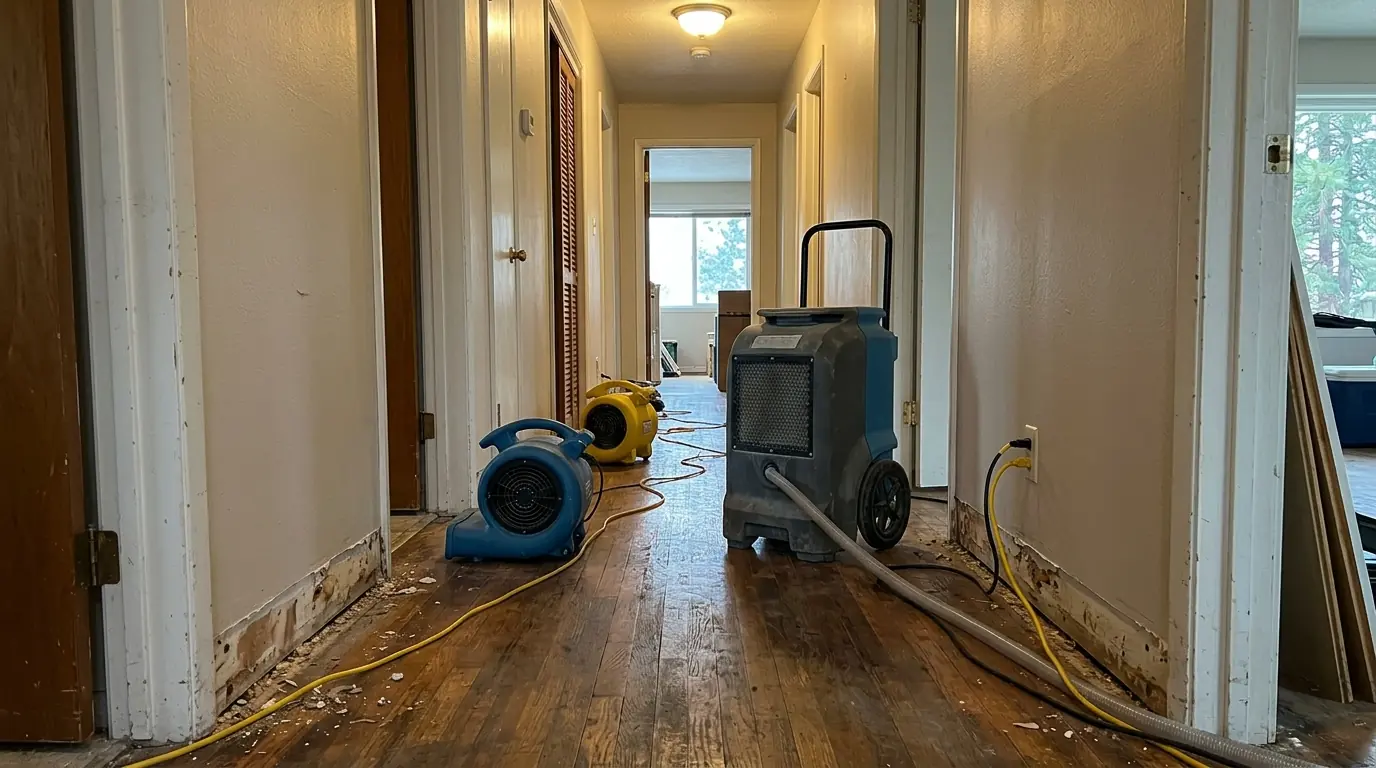
Burst and frozen pipe cleanup in Spokane usually starts after the thaw, because ice holds a split pipe closed until it warms and the full supply pours out. Shut the main valve first. A split supply line is clean Category 1 water, so drywall and carpet often dry in place when extraction starts the same day.
Updated October 2026
Why frozen pipes burst and where the water goes
Water expands as it freezes, and the pressure builds between the ice plug and a closed faucet until the pipe splits. Nothing happens while the line stays frozen, then the ice lets go and a full-pressure stream fills the cavity. That is why so many Spokane burst pipe calls come on the first warm afternoon after a cold snap.
The good news is the water is clean. A supply line break is Category 1, so drywall, insulation and carpet have a fair chance of drying in place if extraction starts quickly. The plumber fixes the pipe; we handle everything the water touched with a drying setup adjusted for a cold house.
Signs a pipe has frozen or already split
Catching a frozen line before it thaws saves most of the cleanup.
A faucet that barely trickles in a cold snap
Little or no flow from a fixture on an outside wall usually means an ice plug in the line.
Frost on an exposed pipe
Visible frost in a crawl space, garage or basement corner means the line is at or below freezing.
A hissing sound inside a wall
Running water with every faucet closed points to a split already letting go.
A damp baseboard on an outside wall
Water pooling on the bottom plate shows at the trim first.
Pipes in exterior walls
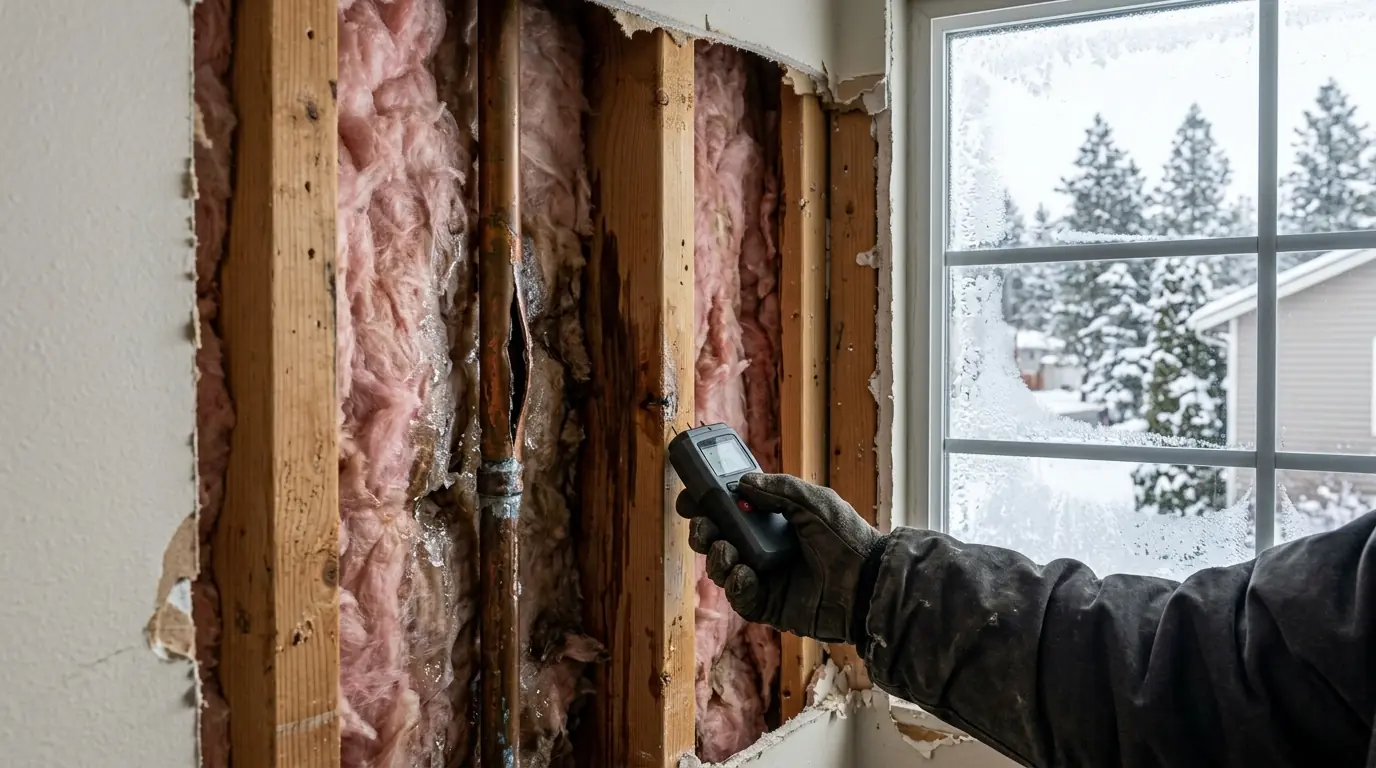
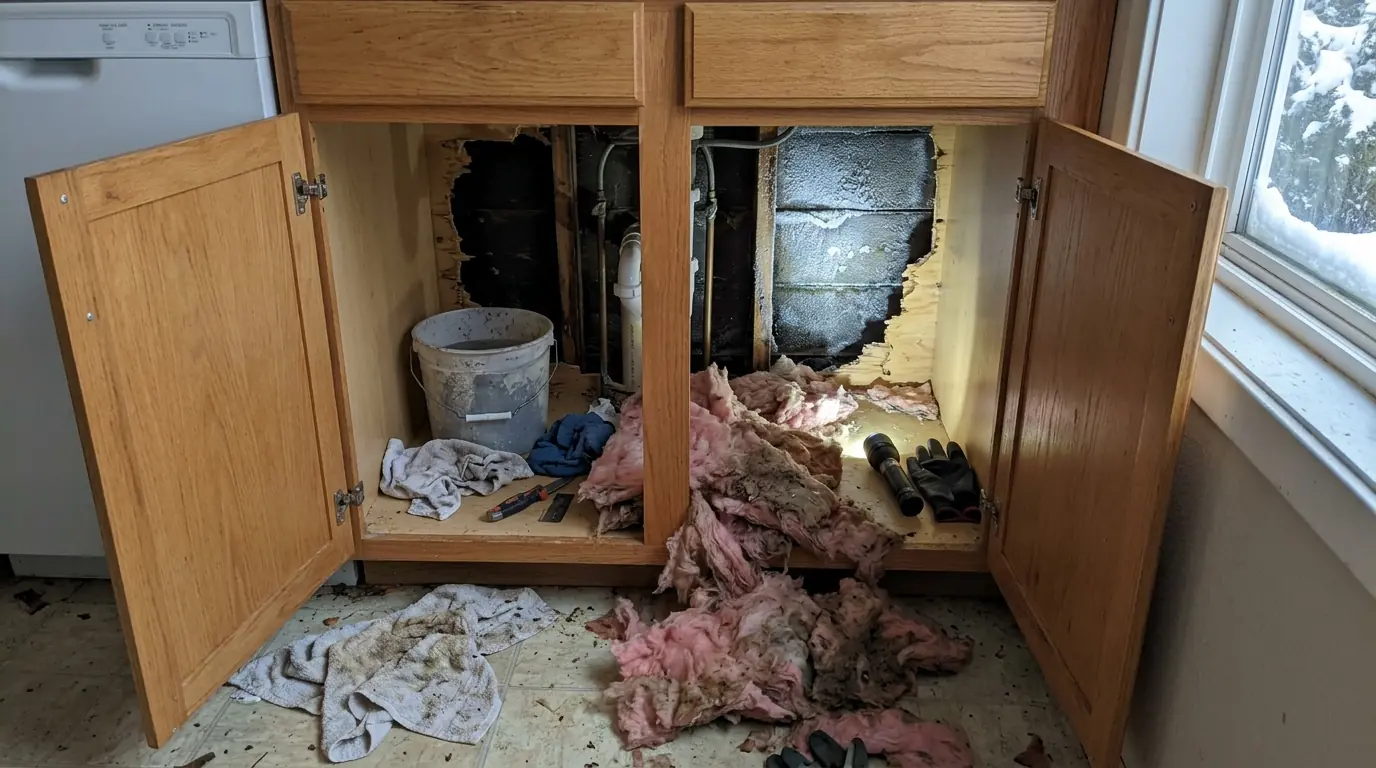
Supply lines running through an outside wall are the classic winter break, especially under a kitchen sink on a north wall or in a bathroom over an unheated space. The water runs down inside the cavity, soaks the insulation and pools on the bottom plate, so the room can look fine except for a damp baseboard. The plumber's access opening doubles as our look at how far the water ran. Wet fiberglass in an exterior wall rarely dries well in place, so we often replace that section.
Garage and crawl space lines
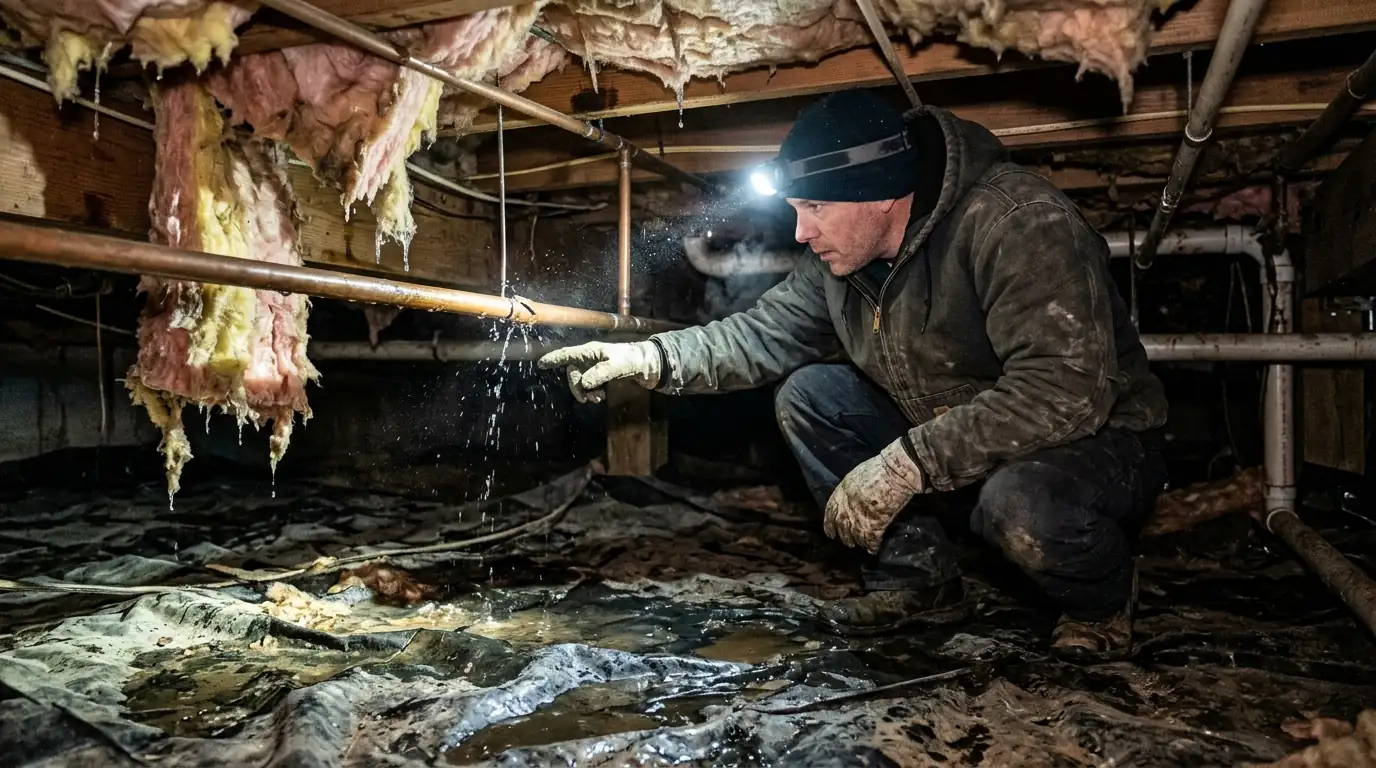
Lines in an attached garage or a vented crawl space sit near outdoor temperature. A garage break usually soaks the shared wall with the house and runs under the door into the living space. A crawl space break can run for days unnoticed, since nobody goes down there in January. The first sign is often a high water bill or a damp smell through floor registers. Once the line is repaired, we pump out the crawl space, pull soaked insulation and dry the joists.
Hose bibs and sprinkler lines
An outdoor faucet left with a hose attached traps water in the pipe, and frost-free hose bibs only work when the hose is off so the line can drain. When one splits, the break sits inside the wall or the basement rim joist, so the first sign is often water on the basement floor below the faucet. Sprinkler lines that were not blown out freeze too, and one that branches inside the basement can flood it. Turning the outdoor line off at its interior shutoff before winter prevents most of these.
Looking at this mess right now?
Pick up the phone. A real person answers 24/7 and talks you through the next ten minutes.
What happens after you call about a burst pipe
- 01
Shut the water
We walk you to the main valve on the phone if it is not already off.
- 02
Trace the water
Meters and a thermal camera show which walls, ceilings and floors the break reached.
- 03
Extract and open where needed
Standing water comes up, and we open walls only where the cavity cannot dry otherwise.
- 04
Warm, closed drying
Heat stays on while air movers and dehumidifiers run, with readings logged daily.
- 05
Hand off for repair
Once readings hit goal, drywall and flooring can be put back.
Local conditions
138 freezing nights a year in Spokane
Spokane averages about 138 days a year when the low drops below freezing, and most of the roughly 49 inches of annual snow arrives in December and January. That long freeze season is why winter pipe breaks are routine here rather than rare. Cold snaps followed by a quick warm-up are the risky pattern, since that is when ice plugs let go. Homes left empty over the holidays with the thermostat turned down are the calls we take most after a thaw.
Cost
Cost ranges after a burst pipe
HomeServe's April 2026 cost guide lists drywall repair at about $2 to $6 per square foot nationally, and most burst pipe jobs include some drywall work once the drying is done. That is a planning figure, not our price. The total depends on how long the line ran before anyone shut it off, how many floors the water dropped through, and whether insulation and flooring could dry or had to be replaced. The plumbing repair itself is separate.
Frozen pipe tasks you can handle and the ones to leave
Some first steps are safe for anyone; others make things worse.
| Task | Doing it yourself | When we do it |
|---|---|---|
| Shutting off the main valve | Do it right away and leave it off until the plumber is done. | We show you where it is on the phone if needed. |
| Thawing a frozen pipe | A hair dryer or space heater at a safe distance works; never an open flame. | If the pipe is inside a wall or already split, leave it to the plumber. |
| Mopping up a small puddle | Fine for water that stayed on a hard floor. | When water reached carpet, walls or the floor below. |
| Cutting into walls to look | Hold off, since cutting blind can hit wiring. | We open only where readings point. |
Burst & Frozen Pipe Water Damage questions
Shut off the main valve first, then call both. The plumber repairs the line and we handle extraction and drying. Drying can start before the repair as long as the water is off at the main.
Often, because supply line water is clean. If we get it extracted and drying the same day and the insulation behind it is not soaked, drywall can usually stay. Drywall that sagged or stayed wet for days comes out.
Ice inside the pipe plugged the split while it was frozen. Once the line warmed, the ice melted and full supply pressure pushed water through the crack. That is why thaws bring so many burst pipe calls.
It can if materials stay wet for more than a couple of days, because clean water turns into a mold problem with time. A supply line break dried the same day rarely leads to growth; one found after a holiday weekend often does.
Keep the heat on when you travel, open sink cabinets on outside walls during cold snaps, disconnect hoses in fall and shut outdoor lines at their interior valve. Ask the plumber about insulating or rerouting lines in outside walls.
Related restoration work
Emergency Water Damage Restoration
Water Damage
See this serviceStructural Drying & Dehumidification
Water Damage
See this serviceCrawl Space Water Damage
Water Damage
See this serviceStorm Damage Restoration
Storm & Emergency
See this serviceSee all 37 restoration services
Related advice: Burst pipe in a Spokane winter: the first hour and What water damage restoration costs in Spokane
Answering 24/7
A pipe let go in the cold?
Shut the main valve and call any hour. We will get the water up and the drying started.
1876 N Teanaway Dr, Post Falls, ID 83854