Emergency Water Damage Restoration
Burst lines, failed water heaters and overflowing tubs need the water out and drying started before it wicks up walls and into framing.
See this serviceSpokane County, Washington
One county, very different houses. We handle water, fire, smoke and mold damage in all of them, and the phone is answered around the clock.
Quick answer
We clean up and dry out water, fire, smoke, mold and sewage damage in homes and businesses throughout Spokane County, Washington. Crews come from our office in Post Falls, Idaho, over I-90, so travel time depends on where in the county you are and the roads that night. Call any hour; we answer and tell you what to do first.
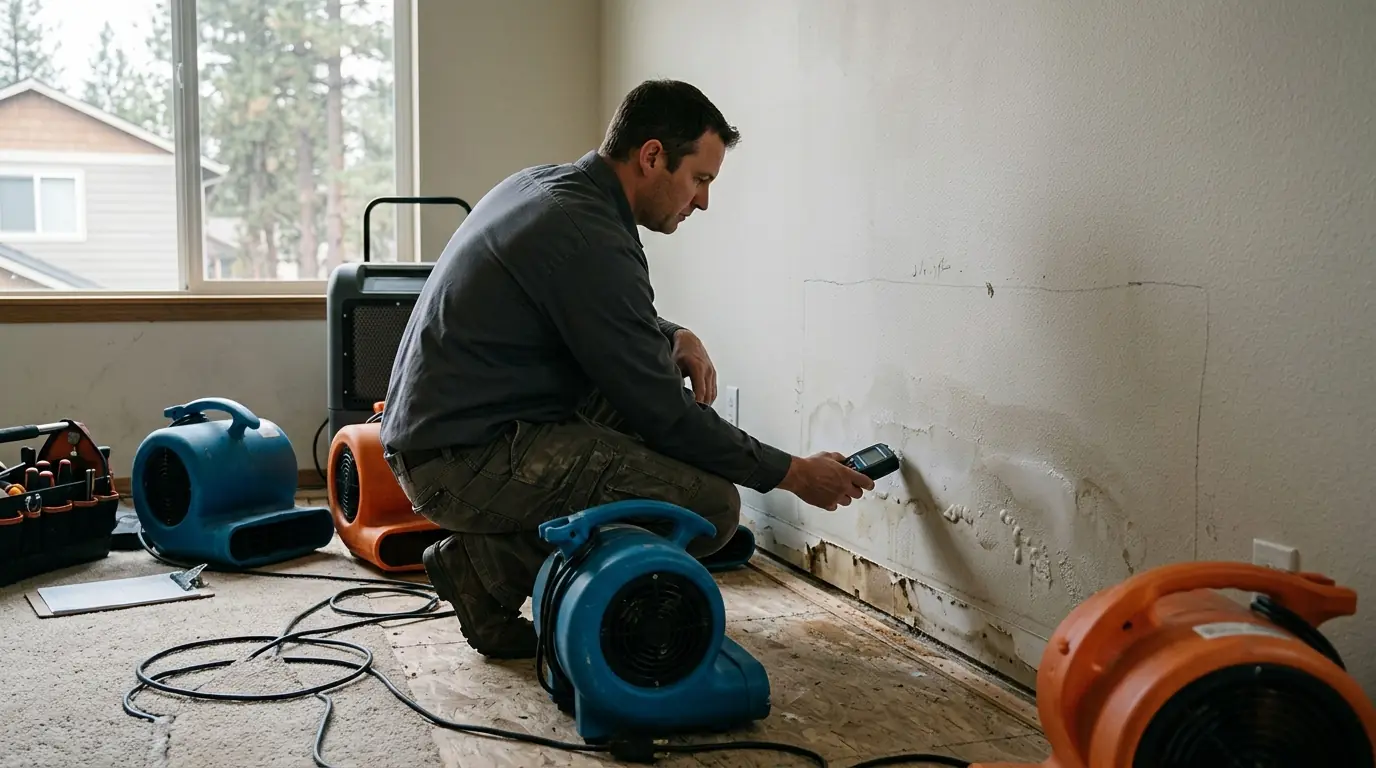
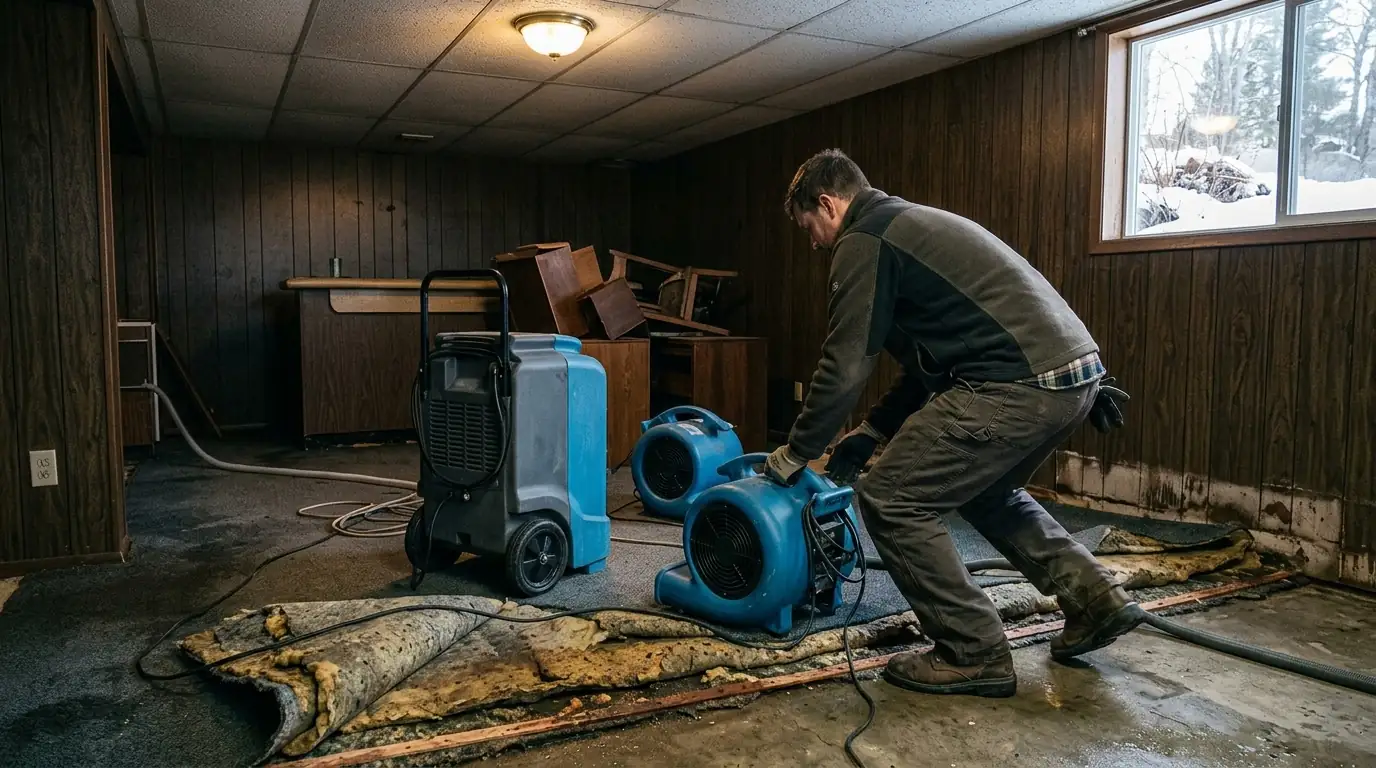
A frozen supply line in a farmhouse and a dishwasher leak in a 1990s subdivision are both Spokane County calls, and they need different handling. Older houses hide water behind plaster and inside dense walls, so we open less and measure more. Newer homes tend to have finished basements, where wet carpet pad and the bottom of the drywall decide the job.
Rural properties add their own set: crawl spaces with dirt floors, manufactured homes with belly wrap that holds water, wells and long service lines that freeze. On every call we start with moisture readings and photos, set drying equipment, and keep a daily log so you and your adjuster can see the numbers go down. Our emergency water damage restoration page shows how the first visit goes.
Local conditions
Spokane County had 539,333 residents at the 2020 census, and its median home was built in 1978. That middle date hides a wide spread: about one housing unit in six (16.7 percent) went up in 1939 or earlier. So on a single day we can be drying lath and plaster in the morning and pulling laminate off a slab in the afternoon. Smoke is the other county-wide issue. In 2023 the Gray and Oregon Road fires burned more than 22,000 acres and destroyed 366 homes around Medical Lake and Elk, and smoke and ash settled into houses far outside the burn lines.
These come up in every corner of the county, in town and out of it.
Burst lines, failed water heaters and overflowing tubs need the water out and drying started before it wicks up walls and into framing.
See this serviceFine ash gets into attics, vents and soft goods during fire season even when the flames stay miles away from the house.
See this serviceMany county homes sit over crawl spaces, where a slow leak can soak insulation and the vapor barrier for weeks before anyone notices.
See this serviceSupply lines under manufactured homes freeze and split, and the water pools in the belly wrap where it cannot drain or dry.
See this serviceAfter smoke or a soot event, the duct system keeps blowing odor and particles around the house until it is cleaned.
See this serviceGetting to you
You call, a person answers, at 3 a.m. or at noon. We ask what is wet or burned, whether water is still running and whether the power is safe, then tell you what to shut off and what to move. Our crew loads out of Post Falls, heads west on I-90 and takes whatever roads make sense to your address; we give you a realistic arrival estimate on the phone instead of a promise. While you wait, photograph everything before anything gets moved.
A real person picks up 24/7 and walks you through the first steps while a crew is lined up.
Yes. We take calls from farms, acreage and small-town homes across the county as well as inside Spokane. Rural jobs can involve wells, long supply lines, outbuildings and crawl spaces, so tell us on the call what kind of foundation and water system the house has.
Yes. Wildfire smoke and ash travel well beyond a burn area. We clean ash from attics and vents, wash soot off surfaces, treat soft goods and run air filtration and odor treatment. Changing your furnace filter is a good first step while you wait.
That depends on your policy and the cause, and only your insurer can decide coverage. What we do is photograph the damage, map moisture and keep daily drying logs, so the adjuster has documentation. We can also walk the job with your adjuster if you want.
Not harder, different. Houses from the 1970s often have finished basements with carpet, pad and drywall that hold water low. Older homes have plaster and denser walls that dry slower but tolerate water better. We read moisture in each material and set equipment for that house.
Answering 24/7
Call any hour. We answer, walk you through the first steps and get a crew moving from Post Falls.
1876 N Teanaway Dr, Post Falls, ID 83854
Our office
1876 N Teanaway Dr, Post Falls, ID 83854