River, runoff and rain-on-snow flooding around Spokane, WA
Flood damage restoration for homes in the Spokane area
Outside flood water is Category 3, and that changes what can be kept. We remove what it soaked, clean what is left and dry the structure.
- Answered 24/7
- Category 3 flood water
- Removal, sanitizing and drying
Quick answer
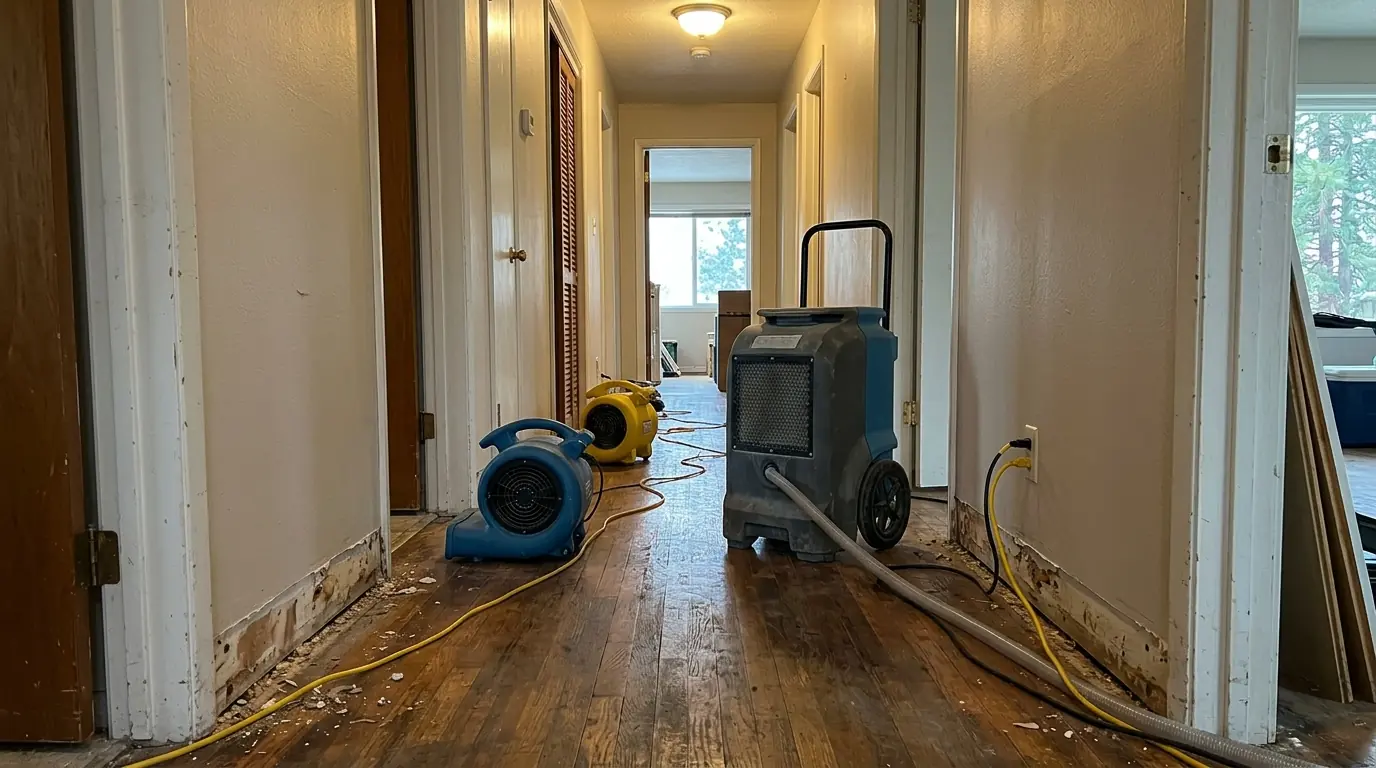
Flood damage restoration around Spokane treats any water that came in from outside as Category 3, because river and runoff water carries sewage, soil and chemicals. Porous materials it touched, like carpet, pad, insulation and the lower drywall, come out. Hard surfaces are cleaned and sanitized, then the structure is dried and checked with meters before rebuilding.
Updated October 2026
Why outside flood water is handled as black water
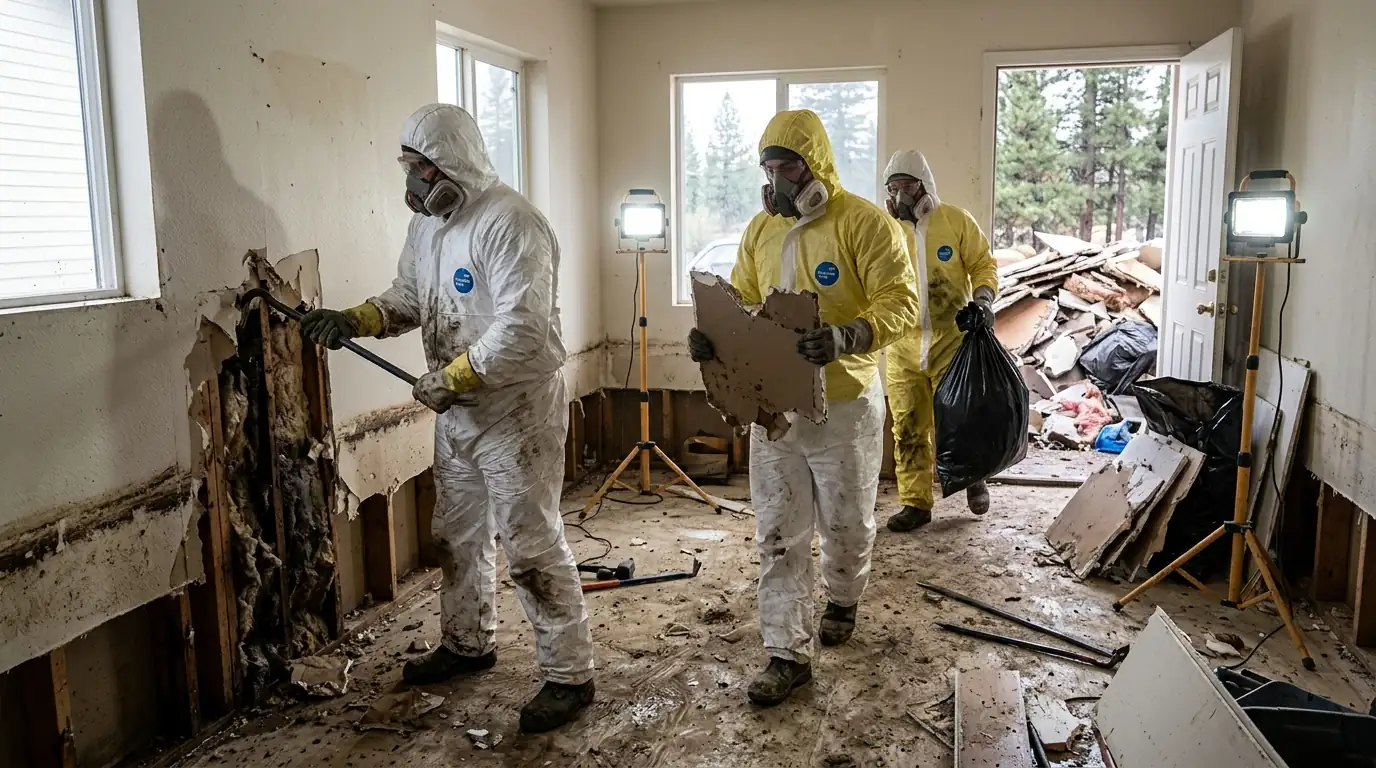
Flood water that comes in over the ground has passed through yards, streets, septic fields and storage sheds before it reaches your floor. Even when it looks clear, it carries bacteria and contaminants, so restoration standards treat it as Category 3. That means carpet and pad are discarded, drywall and insulation are cut above the water line, and the crew works in protective gear. If you can do it safely, photograph the water line before anything is removed, since it shows your adjuster how high the water reached.
What remains is cleaned, sanitized and dried. Studs, joists and subfloor are scrubbed and treated before drying begins, since drying contaminated wood just locks the problem in. Contents get sorted with you, and our contents cleaning team handles items worth saving.
Signs flood water reached more than the floor
After the water drops, these point to hidden damage.
A water line on the walls
Drywall usually wicks well above the mark you can see.
Mud in the outlets or vents
Silt inside outlet boxes and ducts means water reached wiring and the HVAC system.
Doors that suddenly stick
Swelling in jambs and subfloor follows saturation.
A sour or sewage smell
Contamination in porous materials is still there.
Insulation sagging in the walls
Wet batts slump and hold water against the framing.
River and creek overflow
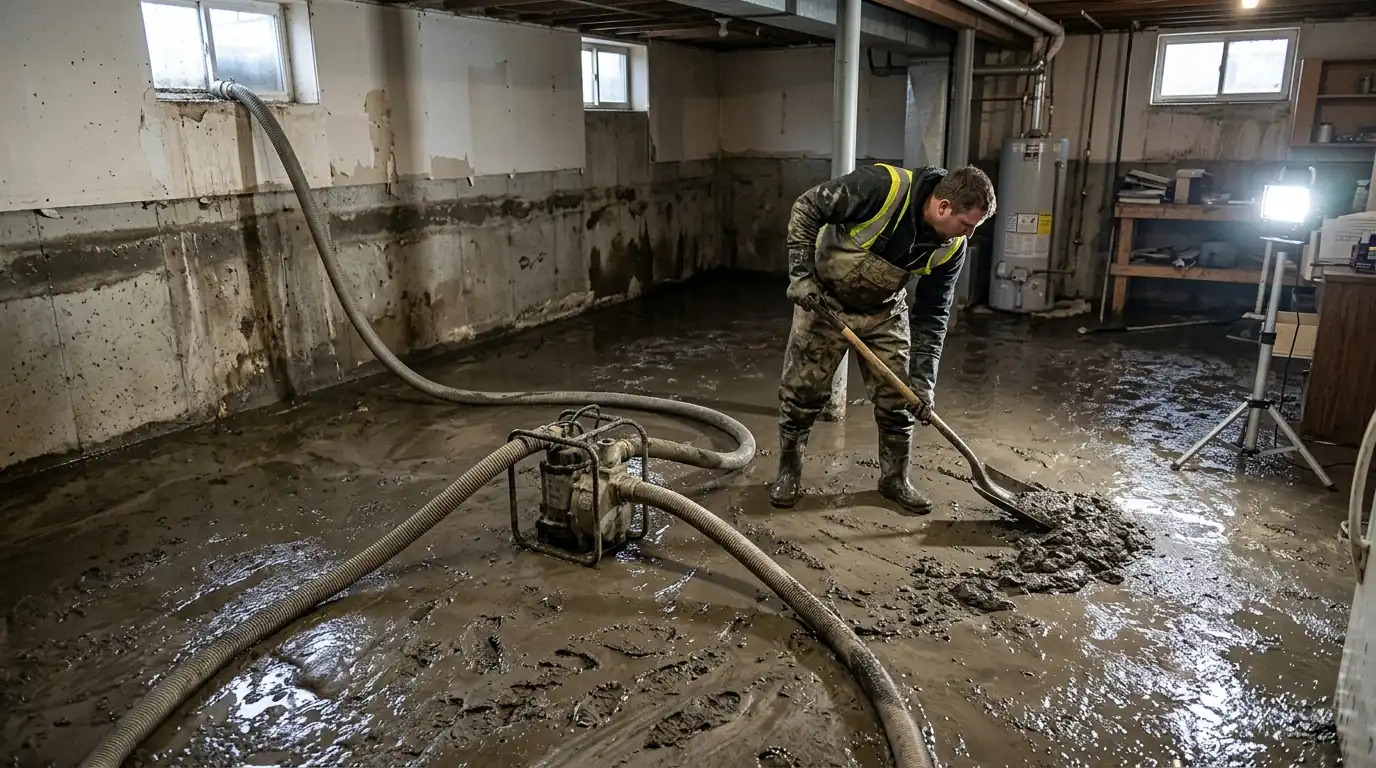
When a river or creek leaves its banks, the water rises slowly, sits for hours or days and leaves silt behind when it drops. That standing time matters: walls wick water well above the visible line, and a layer of mud coats every surface. We shovel and pump out the silt, cut drywall a couple of feet above the highest wet reading, pull insulation and flooring, then pressure-clean and sanitize the framing. Mechanical systems like furnaces and water heaters that were submerged usually need a technician's look before anyone runs them.
Overland runoff from heavy rain or a fast melt
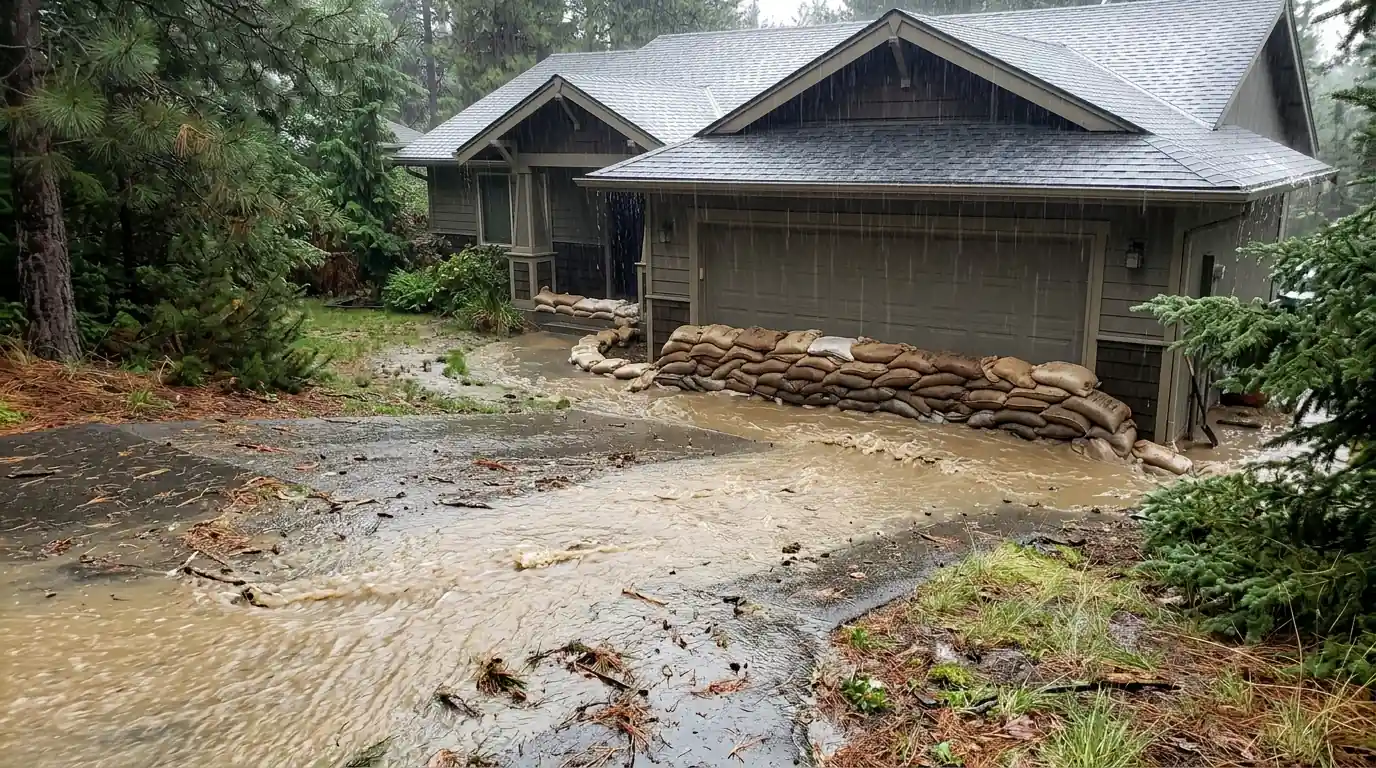
Overland flooding comes from water running across the surface toward the house: off a hillside, down a driveway, or from a neighborhood street that cannot drain fast enough. It usually enters through garage doors, basement windows and walkout doors. The depth may be modest, but the water is still contaminated, so porous materials it soaked are removed. Afterward we look at the path it took, since grading, a curb at a garage door or a drain at the base of a driveway often stops a repeat.
Rain on snow
Rain falling on deep snowpack is the Inland Northwest's particular flood setup. The snow soaks up the rain, then releases both at once, overwhelming drains, ditches and frozen ground that cannot absorb anything. Water pools against foundations and finds its way in at the lowest point. Because it crossed yards and streets on the way in, we treat it as flood water rather than clean seepage. The cleanup also runs into cold-weather drying, so we keep the house heated while dehumidifiers work against the slab and framing.
Water, smoke or mold in front of you right now?
Call us any hour. We will walk you through what to shut off and what to move while the crew heads your way.
Flood cleanup from first call to dry framing
- 01
Safety check
We confirm power is off to flooded areas and look for structural or gas concerns before entering.
- 02
Document
Photos of the water line, damage and contents go to you and your adjuster.
- 03
Remove
Silt, carpet, pad, insulation and drywall above the wet line come out.
- 04
Clean and sanitize
Framing, slab and hard surfaces are scrubbed and treated.
- 05
Dry and verify
Dehumidifiers and air movers run until every reading hits goal.
Local conditions
High water from Coeur d'Alene Lake to Audubon/Downriver
The Spokane River carries the outflow of Coeur d'Alene Lake through Post Falls Dam, and Avista warns that river and lake levels can change drastically with weather. Downstream, Audubon/Downriver built up along a bend of the river, with Downriver Golf Course open on that bend since 1926, and many of its homes date to the early 1900s or the postwar boom. Older basements near moving water are where we see flood cleanup most, from Post Falls to the neighborhoods that were part of Northwest until 2015.
Timeline
How long flood damage restoration takes
The removal and cleaning phase on a flooded floor often takes a couple of days on its own, before drying starts. Drying then usually runs several days, longer for concrete, plaster or framing that sat in water. Rebuilding comes after everything reads dry, and its timeline depends on how much was removed and on material availability.
Cost
National cost ranges for flood water cleanup
LawnStarter's 2026 cost data puts black water cleanup at about $7 to $7.50 per square foot nationally, roughly double the rate for clean water, because of the removal, protective gear and sanitizing involved. Treat it as a budgeting guide, not our price. Depth, how long the water stood, silt removal and the amount of finished space all drive the final number, and rebuilding is separate.
Flood Damage Restoration questions
Hard, nonporous items like metal, glass and sealed solid wood often clean up well. Carpet, pad, mattresses, upholstered furniture and paper goods that soaked in flood water usually cannot be safely cleaned. We sort contents with you and document everything discarded.
Wait until the power to flooded areas is off and the water has dropped. Wear boots and gloves, avoid touching flood water, and do not run a furnace or water heater that was submerged until a technician checks it.
Flood water is contaminated, so more material is removed instead of dried, the crew wears protective gear and every surface is sanitized. A clean pipe leak often lets drywall and carpet stay.
Standard homeowners policies often exclude overland flooding, which usually falls under separate flood insurance. Check your policy and call your agent early. We document the water line, readings and removed materials either way, and your insurer decides coverage.
Take photos of the water line and damage before moving anything, keep the power off to wet areas and call us. Do not start pulling drywall or carpet without boots, gloves and a mask, since flood water is contaminated.
Related restoration work
Sewage Backup Cleanup
Sewage, Biohazard & Odor
See this serviceStorm Damage Restoration
Storm & Emergency
See this serviceContents Pack-Out & Cleaning
Rebuild, Contents & Commercial
See this serviceBasement Flooding Cleanup
Water Damage
See this serviceSee all 37 restoration services
Related advice: Burst pipe in a Spokane winter: the first hour and What water damage restoration costs in Spokane
Answering 24/7
Flood water came inside?
Call any hour. We will check safety, document the damage and start the removal.
1876 N Teanaway Dr, Post Falls, ID 83854