Keeping mold from starting
Antimicrobial and mold prevention treatment for Spokane homes
Antimicrobial treatment helps after a water loss, but dry materials and controlled humidity are what actually keep mold away.
- Answered 24/7
- After water losses
- Crawl space treatment
- Humidity control
Quick answer
Mold prevention treatment in Spokane works as part of drying, not as a stand-alone spray. Antimicrobial products help on cleaned framing after a water loss, but they don't stop mold on materials that stay wet. The lasting fix is drying everything to normal moisture levels and keeping indoor humidity under control.
Updated October 2026
What antimicrobial treatment can and can't do
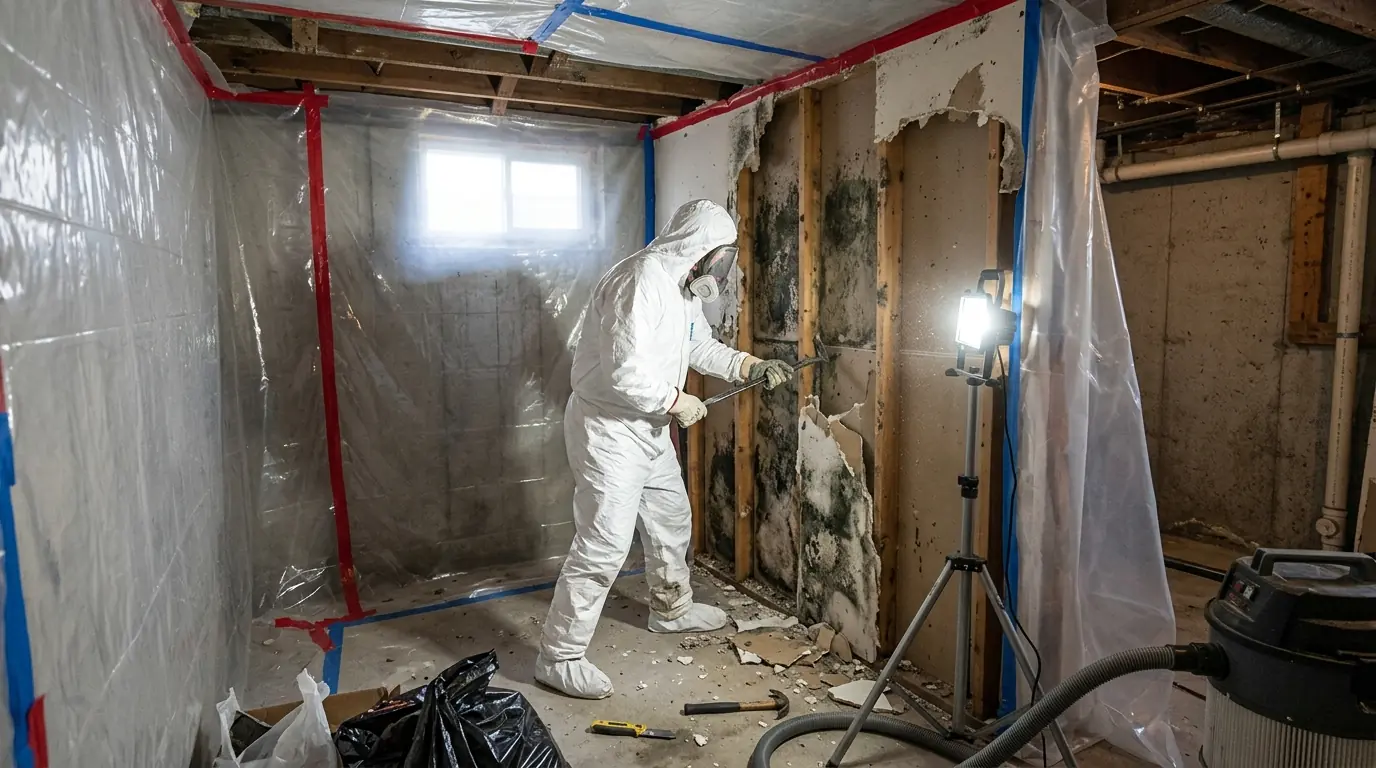
Antimicrobial products are applied to cleaned surfaces to slow microbial growth while materials finish drying, or to coat framing before walls close up. They're a useful layer in the right place, especially on framing that will be hidden behind new drywall. What they don't do is overcome moisture. A coated stud that stays wet will grow mold anyway, just a little later.
So prevention is mostly about water. After a leak, that means extracting fast, drying to verified readings and only then closing up. In crawl spaces and basements, it means managing ground moisture and humidity. In attics, it means stopping warm air from leaking up. Treatment fits in where it helps, and we'll tell you when it doesn't.
What mold prevention treatment includes
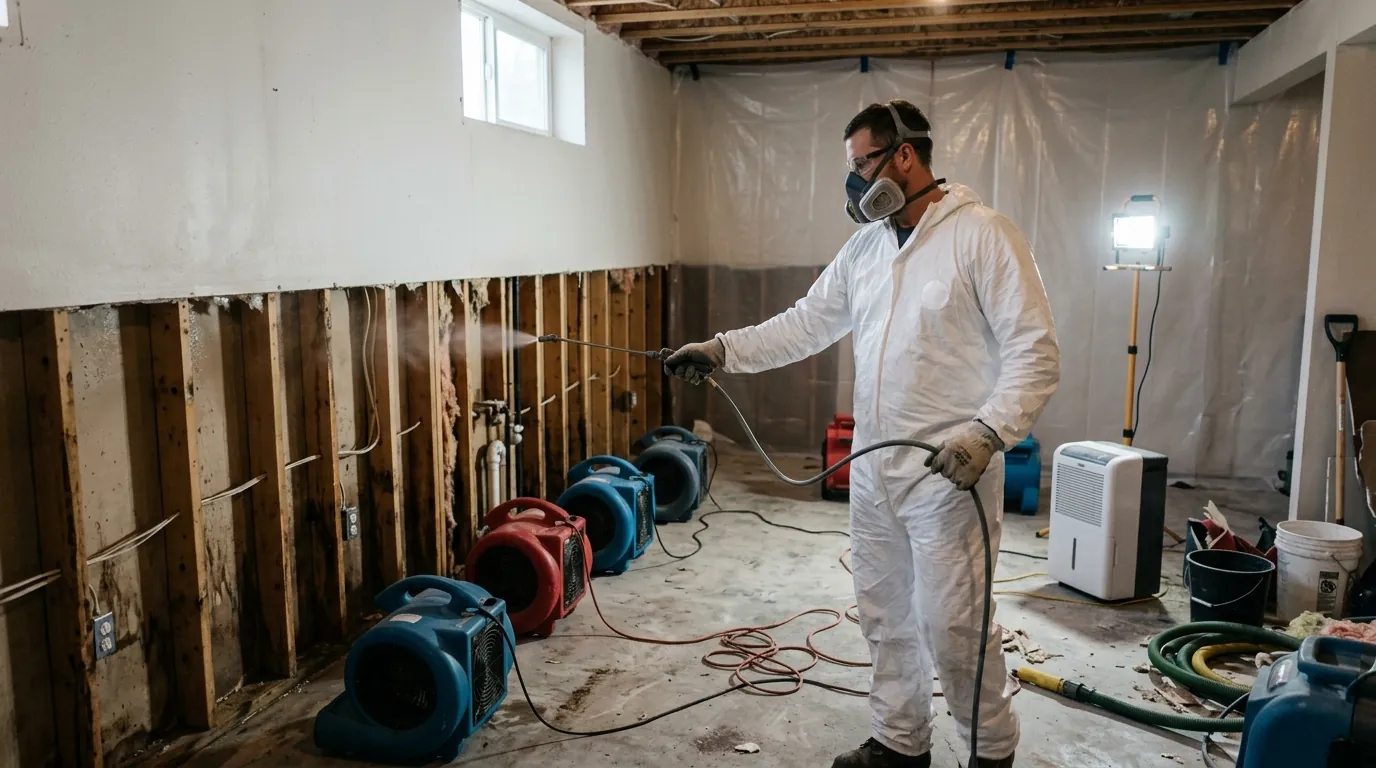
Depending on the situation, a prevention scope covers these items.
- Moisture readings to find what's still wet.
- Cleaning of exposed framing and subfloor before treatment.
- Application of an EPA-registered antimicrobial according to its label.
- Drying equipment and logged readings until materials are dry.
- Vapor barrier installation or repair in crawl spaces.
- Dehumidifier recommendations sized to the space.
Treatment after a water loss
After a pipe burst or appliance leak, materials that got wet are the first place mold can start. Once water is extracted and wet drywall or pad is removed, we clean exposed framing and subfloor and apply an EPA-registered antimicrobial according to its label. Then the real work happens: dehumidifiers and air movers run until meters show the wood back to normal. We log those readings. Treatment slows growth while drying finishes; drying is what prevents it. When walls close up on dry framing, mold has nothing to work with.
Crawl space treatment
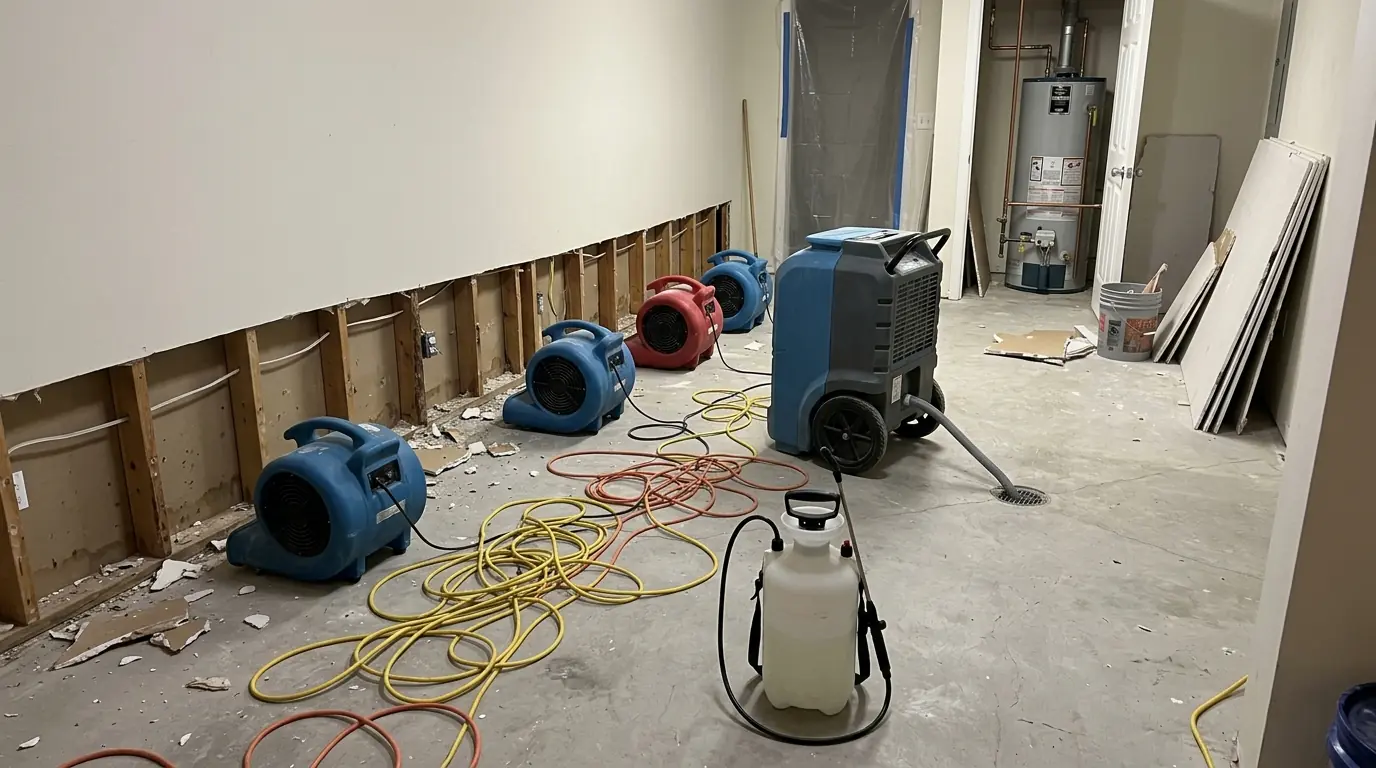
In crawl spaces, prevention starts on the ground. A vapor barrier over the soil cuts most of the moisture rising into the space. On framing that's been cleaned or that shows early growth, an antimicrobial or encapsulating coating can add protection. Damp crawl spaces may also need closed vents and a dehumidifier, so the air stays dry year round. We check plumbing for slow leaks and look at grading and downspouts outside, since a crawl space that floods every spring will defeat any coating.
Humidity control
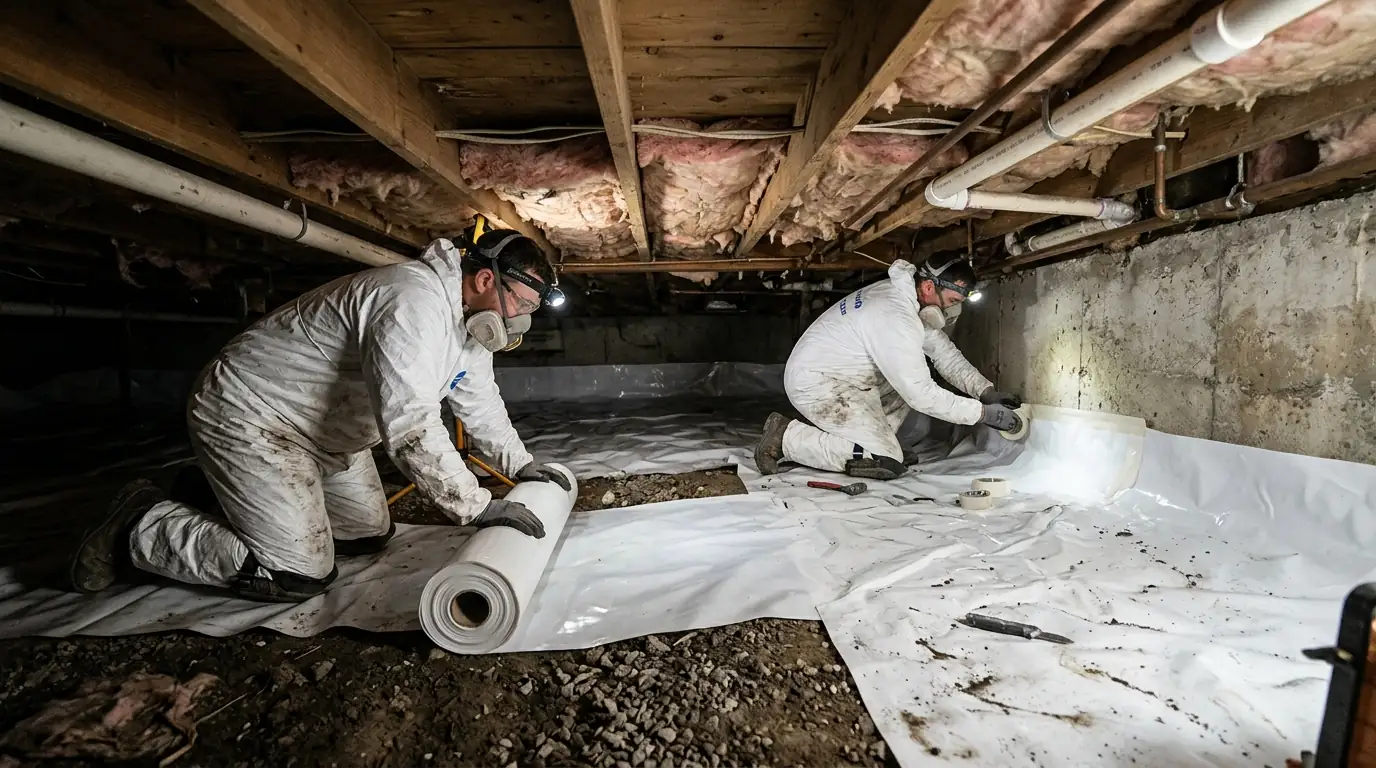
Mold needs damp materials, and materials stay damp where humidity stays high. Indoors, keeping relative humidity under about 50 to 60 percent makes a big difference. That means running bath fans during and after showers, venting the dryer and kitchen hood outside, and using a dehumidifier in basements that stay clammy. In winter, condensation on cold windows and exterior walls is a clue humidity is too high for the house. A simple hygrometer tells you where you stand, and we'll recommend equipment sized to the space.
Not sure how bad it is?
Describe it on the phone. We will tell you honestly whether it needs a crew tonight or can wait for morning.
How we set up mold prevention after a water loss
- 01
Remove the water
Extraction and removal of wet porous materials come first.
- 02
Clean exposed surfaces
Framing and subfloor get cleaned before any product goes on.
- 03
Apply antimicrobial
An EPA-registered product goes on per label instructions.
- 04
Dry and verify
Equipment runs until readings match dry references.
- 05
Set up humidity control
We recommend fans, dehumidifiers or a vapor barrier where needed.
Local conditions
Newer homes in Southgate and moisture control
Southgate grew through annexations after 2000, as recently as 2016, and most homes there are ranchers or two-story houses. Newer construction is tighter than older homes, which saves energy but also traps moisture from showers, cooking and drying laundry. In Southgate homes with finished basements, poorly vented bath fans and high indoor humidity show up more than roof leaks. Prevention there is usually about ventilation and dehumidification, with treatment reserved for areas that have already gotten wet.
Cost
What affects the cost of mold prevention treatment
Treatment after a water loss is usually part of the drying scope rather than a separate job. Stand-alone crawl space treatment depends on the square footage, access and whether a vapor barrier or encapsulation is included. Humidity control can range from a portable dehumidifier to a ducted unit in a crawl space. We'll explain what each option does so you can decide what's worth it.
Mold prevention steps you can take yourself
Most prevention is everyday habits; some needs equipment.
| Task | Doing it yourself | When we do it |
|---|---|---|
| Running bath fans | Run during showers and 20 minutes after. | When the fan vents into the attic instead of outside. |
| Using a dehumidifier | Set it around 50 percent in basements. | When humidity stays high or a crawl space needs a ducted unit. |
| Spraying a store-bought product | Fine on small clean surfaces; it won't fix wet materials. | After a water loss with wet framing. |
| Checking for leaks | Look under sinks and around the water heater monthly. | When you find a leak that soaked walls or floors. |
| Watching window condensation | Wipe it and lower humidity. | When sills stay wet or start to stain. |
Antimicrobial & Mold Prevention Treatment questions
No product does that. Antimicrobials slow growth on cleaned surfaces while drying finishes. Mold stays away when materials stay dry and humidity stays reasonable, so the drying and ventilation matter more than the product.
Not always. A small clean-water spill dried within a day or two may not need it. Larger losses, or materials that stayed wet longer, usually benefit from treatment applied during drying.
Keeping relative humidity under about 50 to 60 percent helps most homes. An inexpensive hygrometer tells you where you are, and condensation on winter windows is a sign the number is too high.
Usually not on its own. Without a ground cover, soil moisture keeps the wood damp and coatings lose effect. The vapor barrier is the main step, and treatment adds protection on top.
We use EPA-registered products applied according to the label, and we ventilate during and after. If anyone in the home has concerns, we can talk through the product sheet before we start.
Related restoration work
Structural Drying & Dehumidification
Water Damage
See this serviceCrawl Space Mold Removal
Mold
See this serviceMold Remediation
Mold
See this serviceMoisture Mapping & Hidden Leak Detection
Water Damage
See this serviceSee all 37 restoration services
Related advice: How fast mold grows after a leak and Spring snowmelt and basement seepage
Answering 24/7
Just dried a leak and want to keep mold from following?
Call any hour. We'll check what's still wet and set things up to stay dry.
1876 N Teanaway Dr, Post Falls, ID 83854