Flooded and seeping basements in Spokane, WA
Basement flooding cleanup for Spokane homes
Basement water rarely has one cause. Finding where it came in decides what gets dried, what gets pulled and what keeps it from coming back.
- Answered 24/7
- Pumping and extraction
- Finished basements
Quick answer
Basement flooding cleanup in Spokane starts by identifying whether water came through the foundation, a window well or a failed sump pump, because that sets the water category and the fix. Seepage through walls is usually clean, while backups and surface runoff can be contaminated. Pumping and extraction come first, then finished walls are opened at the base.
Updated October 2026
What a flooded basement needs before it can be dried
Basements flood differently. Water comes in from the outside through cracks, the cove joint where wall meets slab, a window well or a sump pit, and it has nowhere to drain. Concrete holds moisture for a long time, and anything framed against a foundation wall dries slowly because one side faces cold, damp masonry.
We start by finding the entry point and the category. Clean seepage through a wall is a different job from runoff that came through a window well carrying soil and lawn chemicals. If the water came up through a floor drain, it is likely sewage, and our sewage backup page covers that work. Then we pump, extract and open finished walls at the base.
Signs basement water is getting in
Small signs often show up a season before the floor floods.
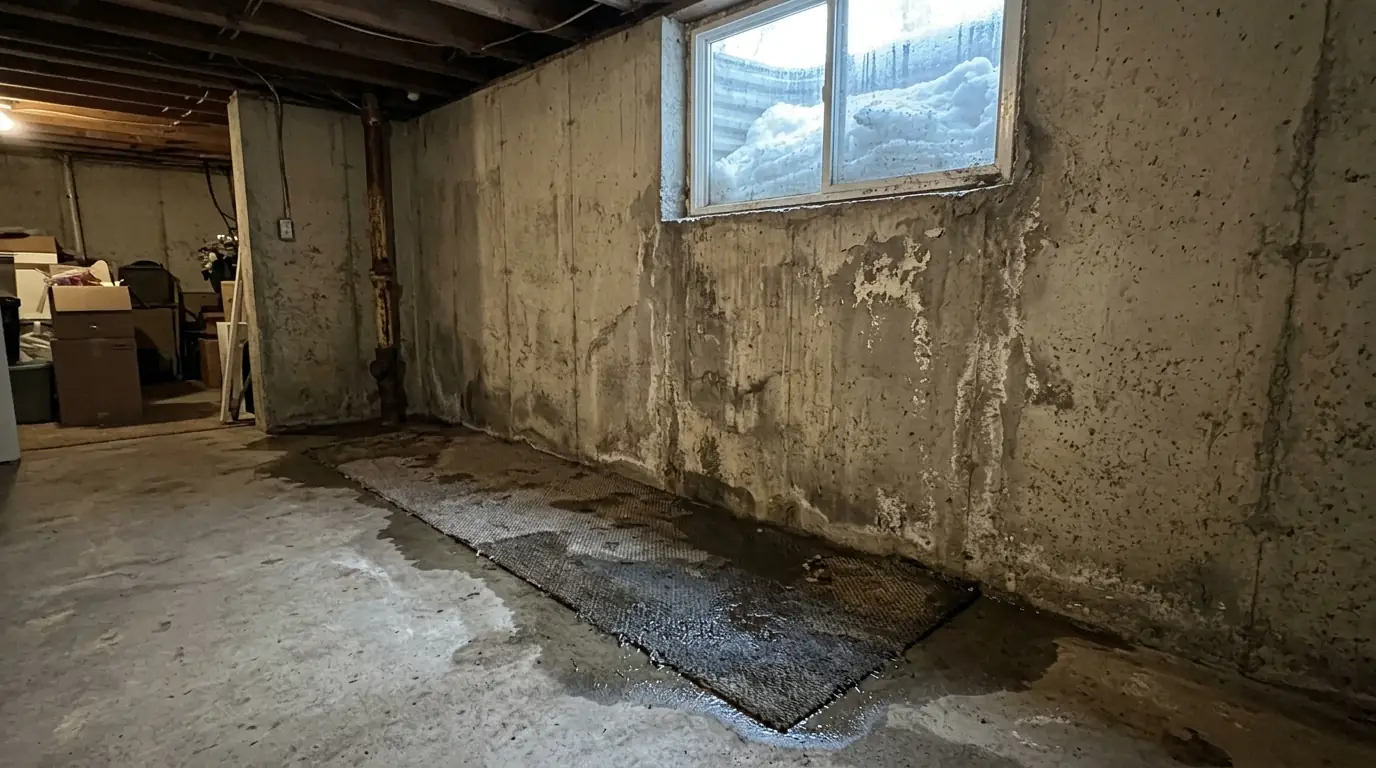
White crust on the foundation wall
Efflorescence is mineral left behind as water passes through the concrete.
A musty smell after a thaw
Damp carpet pad or framing against a wet wall smells before it looks wet.
Damp carpet along one wall
A wet strip along the perimeter points to seepage at the cove joint.
A sump pump running constantly or not at all
Both mean trouble: high groundwater or a pump that has quit.
Snowmelt seepage through foundation walls
When snow piled against the house melts faster than the frozen ground can absorb it, water saturates the soil next to the foundation and pushes through cracks and the cove joint. It tends to show up as a wet strip along one wall, often where a downspout empties close to the house or the yard slopes toward it. Seepage water is usually clean, so carpet can sometimes be saved. Outside, regrading the soil and extending that downspout usually fix it.
Window well flooding
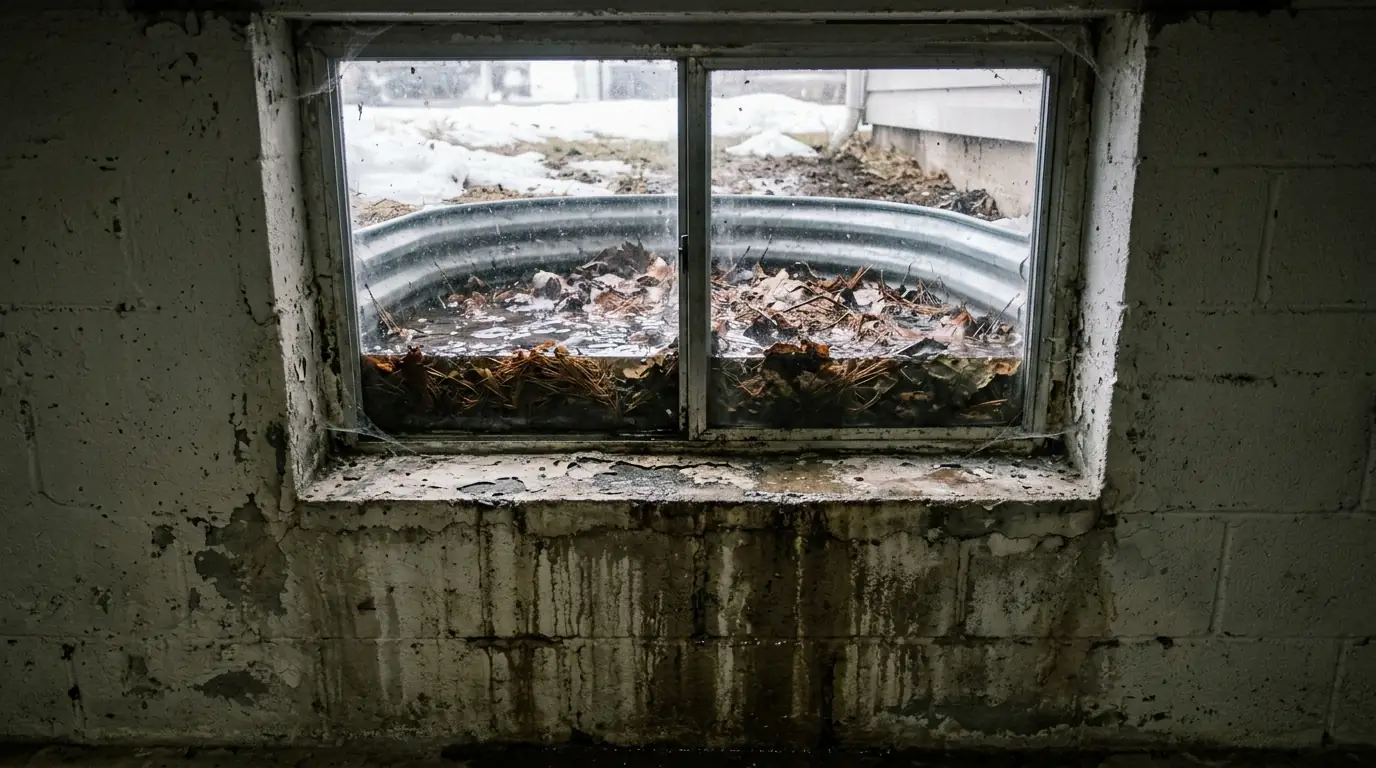
A window well without a cover or a working drain fills like a bucket in a heavy rain or a fast melt, and once the water reaches the window it pours over the sill or forces its way past the frame. The water drags soil, leaves and whatever was in the well with it, so we treat it as Category 2 at least. Drywall below the window usually needs a flood cut. Outside, a well cover, a clear drain at the bottom and gravel in place of packed dirt keep it from refilling.
Sump pump failure
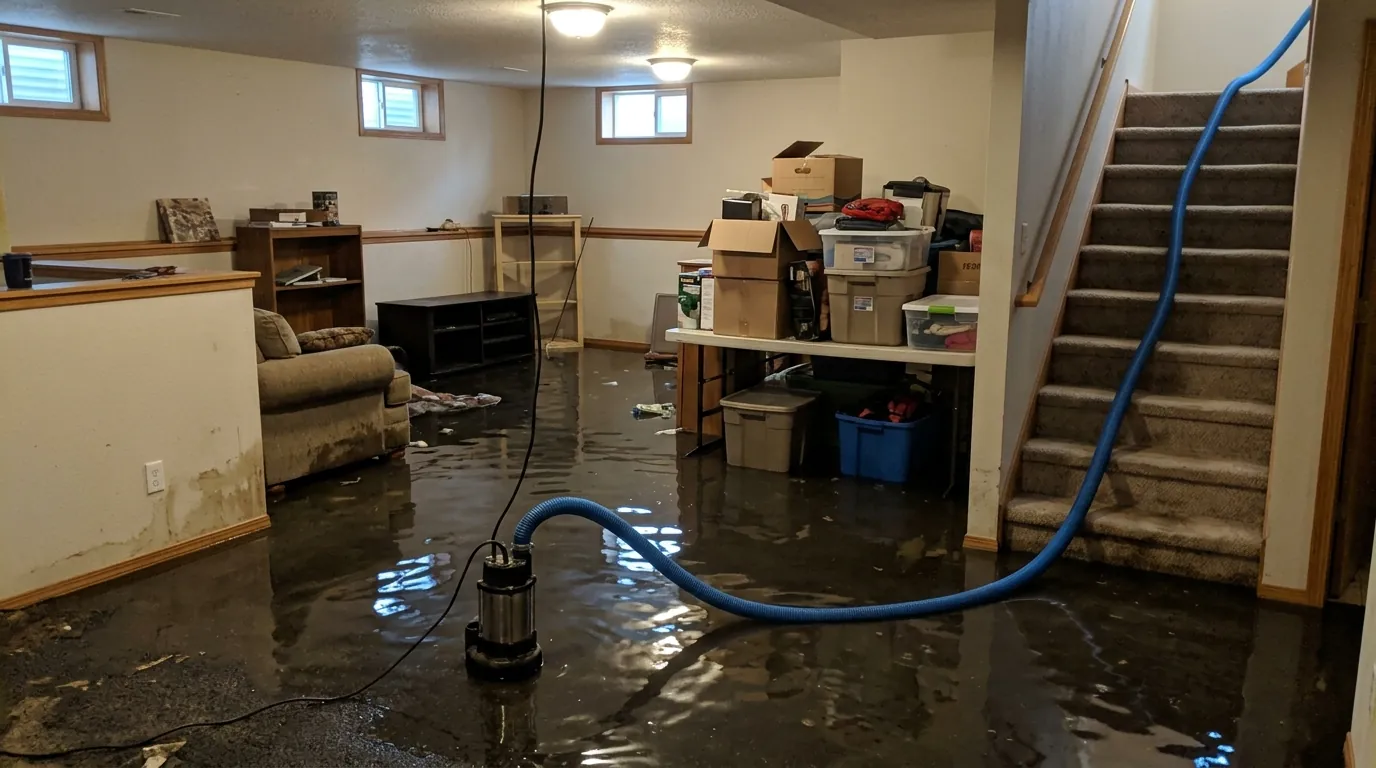
Sump pumps fail at the worst moment: in a storm, in a power outage, or when a float switch sticks. When they stop, groundwater rises in the pit and spills across the slab. The water is usually clean groundwater, but if it sits for days or mixes with anything on the floor it drops a category. We pump the basement, help you confirm the pump is running or replaced before we dry, and suggest a battery backup or high-water alarm.
Is it still wet, still smoking or still spreading?
Call now. The first few minutes on the phone are about stopping the damage, and a crew gets moving while we talk.
Our basement flood cleanup steps
- 01
Find the entry point
We check walls, window wells, the sump pit and the floor drain to learn where the water came in.
- 02
Pump and extract
Submersible pumps take the deep water, then extractors work the carpet and edges.
- 03
Sort contents
Boxes, furniture and stored items are moved, with anything soaked and porous set aside for your decision.
- 04
Open finished walls
Baseboard comes off and wet drywall or paneling is cut where readings say the cavity is wet.
- 05
Dry and treat
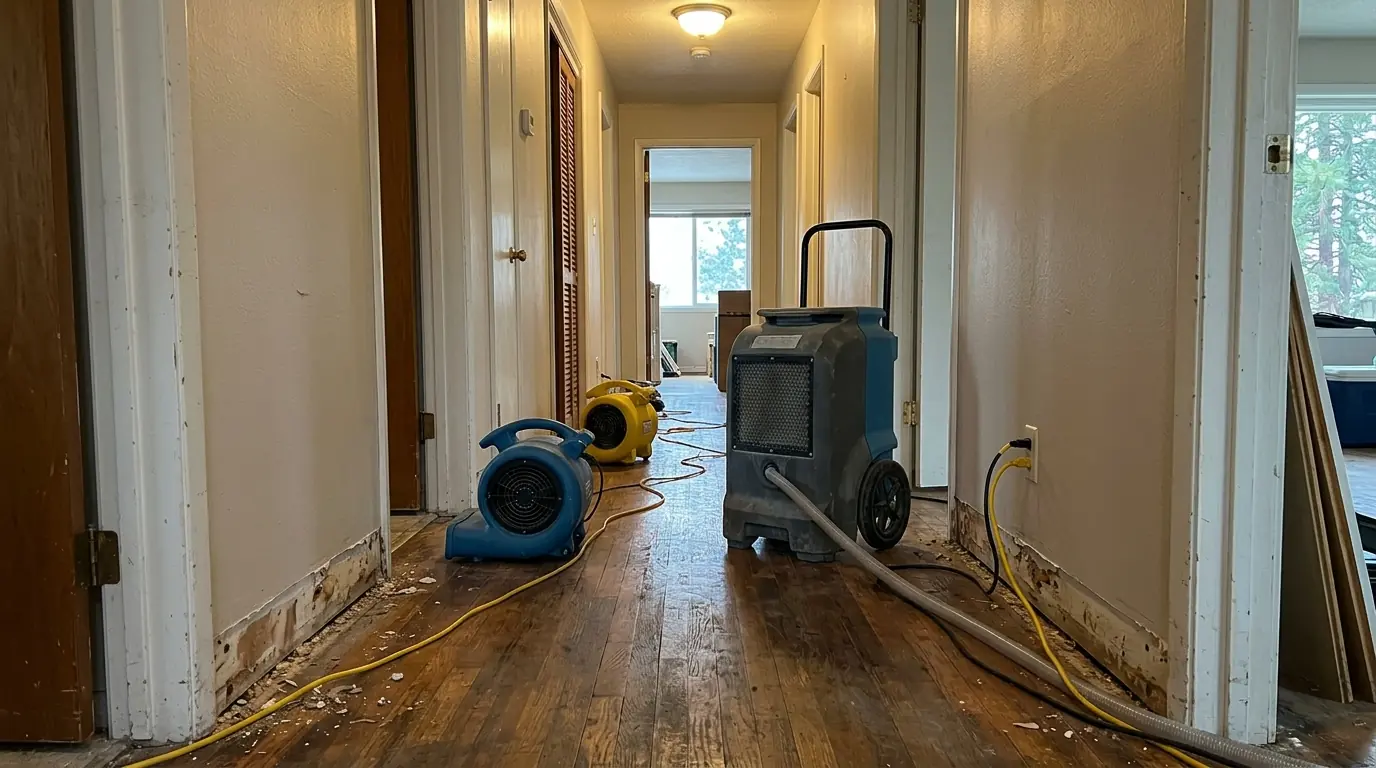
Dehumidifiers and air movers run against the slab and walls, and exposed framing gets an antimicrobial.
Local conditions
When Spokane's December and January snow comes back as water
Spokane gets most of its roughly 49 inches of annual snow in December and January, and that snow does not leave quietly. Plowed and shoveled piles along driveways and foundations melt during the first warm stretches while the ground below is still frozen, so the meltwater runs sideways toward the house. With about 138 nights a year below freezing, a basement can see several thaw cycles in one season. That is why late winter and early spring bring most of our basement seepage calls.
Cost
Basement water cleanup cost factors
LawnStarter's 2026 data puts drying or replacing wet carpet at about $1 to $11 per square foot nationally and drywall at about $1 to $3 per square foot, two items almost every finished basement job includes. Use them for planning; they are not what we charge. Basement totals swing on whether the space is finished, how deep the water got, the water category, and whether paneling, built-ins or a bar have to come out.
Basement flood tasks: yours and ours
Some of this you can safely start before we arrive.
| Task | Doing it yourself | When we do it |
|---|---|---|
| Moving boxes and electronics upstairs | Worth doing if the water is shallow and the power is safe. | Heavy furniture and anything in deep water. |
| Running a wet vac | Fine for an inch on bare concrete. | Carpeted or finished basements need pumping and weighted extraction. |
| Checking the sump pump | Make sure it is plugged in and the float moves freely. | We pump the space if it has quit. |
| Pulling carpet | Hold off until we check the category. | We decide with you what stays. |
What our basement flooding cleanup includes
A finished basement takes more than pumping, so here is the full scope.
- Pumping of standing water to a drain or outside.
- Extraction of carpet and pad, with removal if the category requires it.
- Flood cuts or baseboard removal where wall cavities read wet.
- Antimicrobial on exposed framing and the slab.
- A note on the likely entry point so the outside fix can be planned.
- Dehumidification sized for a cold, below-grade space.
Basement Flooding Cleanup questions
Much simpler. Bare concrete and open framing dry quickly once the water is pumped out. Finished basements hide water behind drywall, paneling and carpet, so they need more opening up and longer drying.
Sometimes, when the water was clean seepage and we pulled it quickly. Window well runoff and anything that came through a floor drain usually means carpet and pad come out. We test and explain before cutting.
Fix the entry point: extend downspouts, regrade soil to slope away, cover window wells, keep a working sump pump with a backup, and clear snow away from the foundation before a thaw.
Yes. Holding a basement near or below about 50 percent relative humidity helps the slab and framing stay dry between thaws and discourages mold. A household unit with a hose to the floor drain handles upkeep once our equipment leaves.
Exposed framing and the slab get an antimicrobial as part of drying. If mold was already growing behind finished walls from past seepage, that area needs proper remediation, which we will show you when we open the wall.
Related restoration work
Water Extraction & Removal
Water Damage
See this serviceSewage Backup Cleanup
Sewage, Biohazard & Odor
See this serviceBasement Mold Removal
Mold
See this serviceCarpet & Pad Water Damage
Water Damage
See this serviceSee all 37 restoration services
Related advice: Burst pipe in a Spokane winter: the first hour and What water damage restoration costs in Spokane
Answering 24/7
Water in the basement?
Call any hour. We will figure out where it came in and get it pumped out.
1876 N Teanaway Dr, Post Falls, ID 83854