Closing the building up tonight
Emergency board-up and roof tarping for Spokane homes and businesses
An opening in the house invites rain, snow and people. We cover it on the first visit and photograph it beforehand for the claim.
- Answered 24/7
- Plywood board-up
- Roof tarps
- Post-fire security
Quick answer
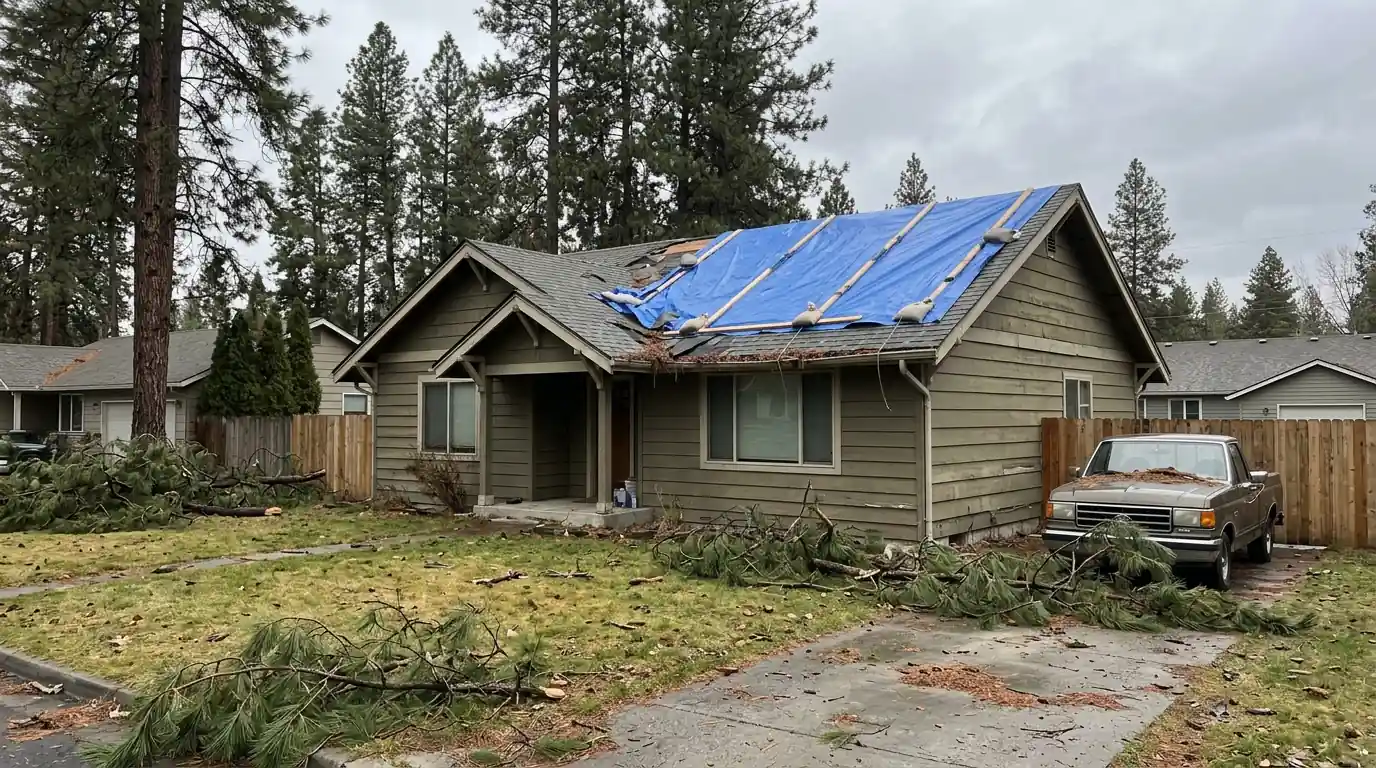
Emergency board-up and roof tarping in Spokane is temporary protection that keeps weather and intruders out until permanent repairs happen. We cover broken windows and doors with plywood screwed to the framing, secure roof openings with heavy tarps fastened through wood battens, and photograph each opening first. Most policies expect reasonable steps to prevent further damage.
Updated October 2026
Why a covered opening keeps a small loss small
An open window or roof hole keeps causing damage after the event is over. Rain and snow soak insulation and drywall, wind drives debris inside, and an empty house with a broken door attracts people who don't belong there.
Temporary protection buys time. Plywood is cut to fit the opening and screwed into the frame so it can't be pried off easily. Roof tarps run over the ridge where possible and are fastened through wood battens, never left loose under a few bricks. We photograph every opening before covering it so the adjuster can see the original damage, then move inside to start water extraction if the weather already got in.
Broken windows and doors
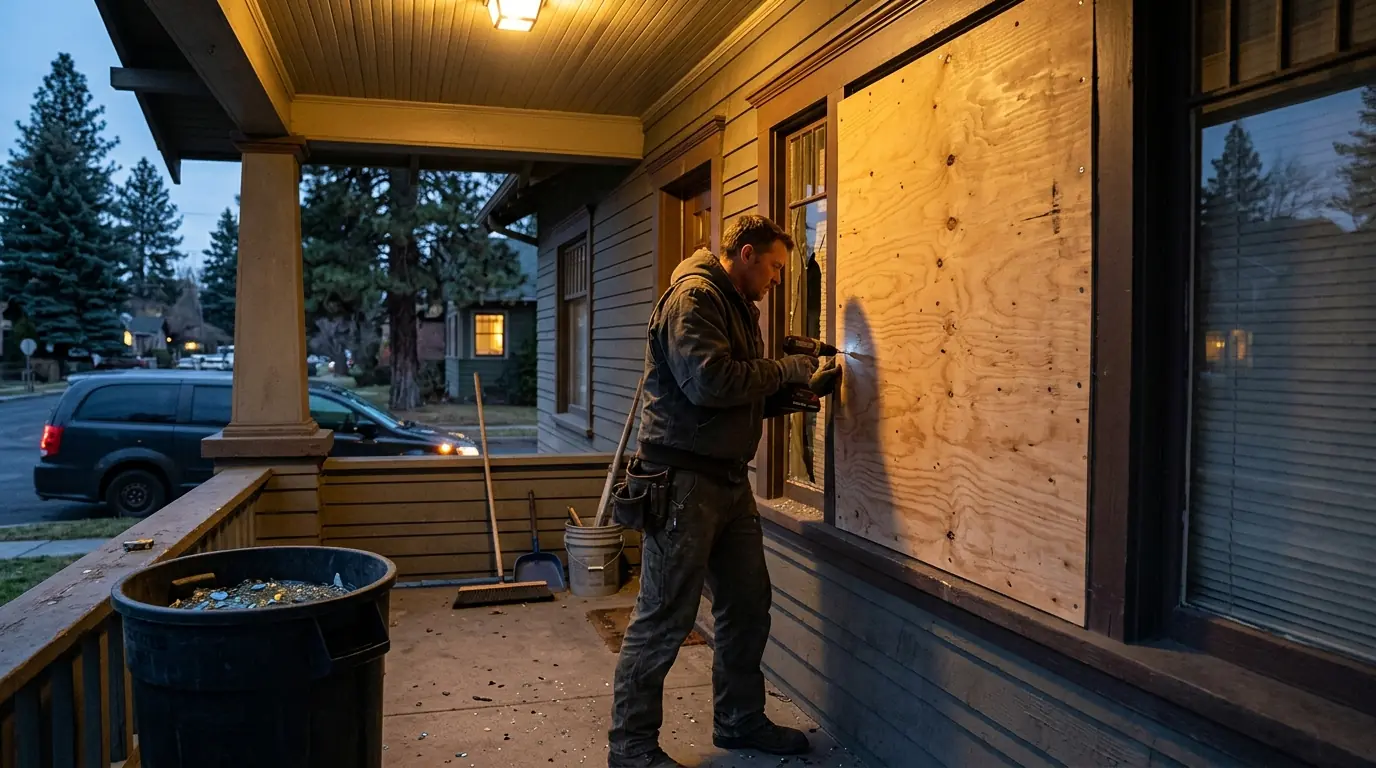
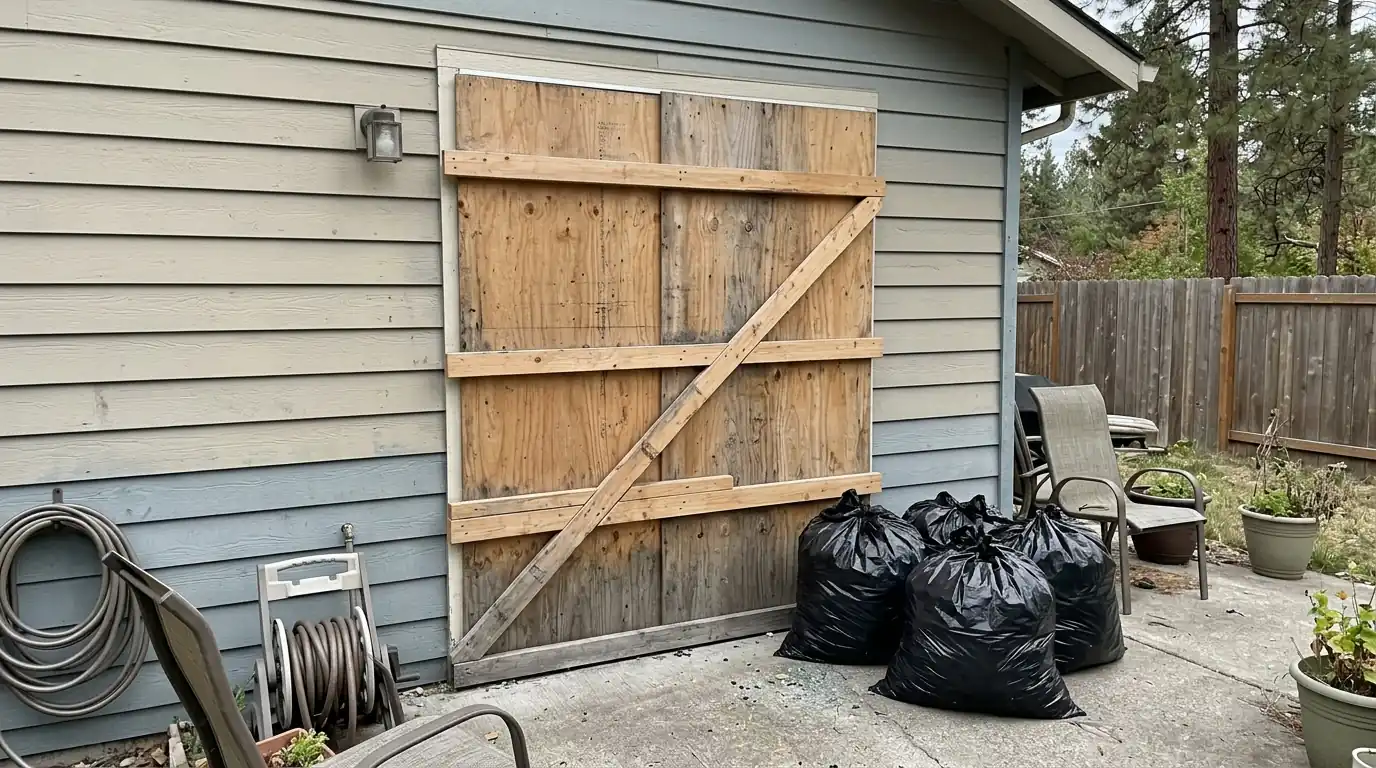
A window broken by a branch, a break-in or a car in the yard gets cleared of loose glass first, inside and out, then covered with plywood cut to the opening. Doors that won't latch get a panel screwed to the frame, with a secured way for you to get in if needed. Sliding doors and large picture windows take more than one sheet plus bracing. We bag the glass, vacuum the floor near the opening and note the window size for the glazier.
Roof tarps
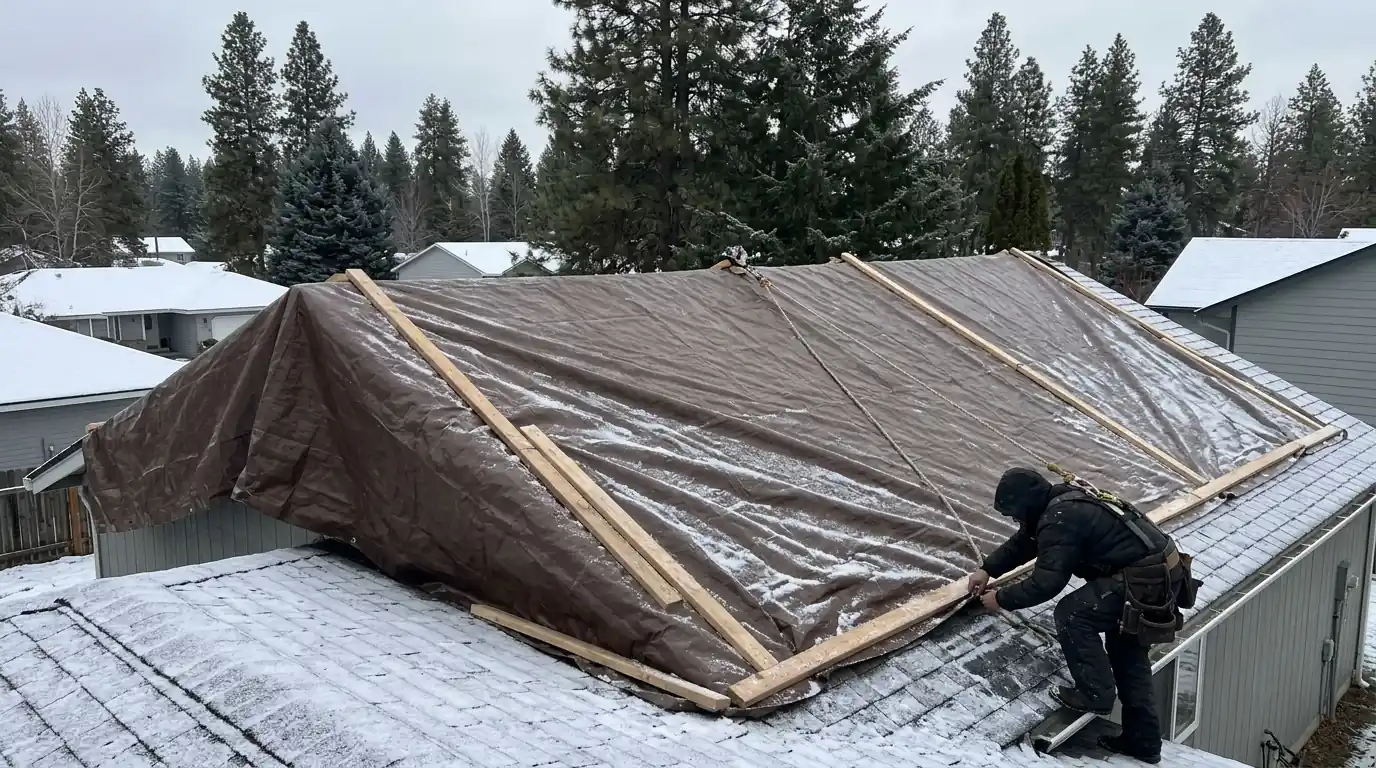
Roof tarps go on after we check that the deck around the opening will hold a person's weight. We run the tarp up and over the ridge when we can, so water sheds instead of running underneath, then fasten it through wood battens along each edge. Tarping on snow or ice takes extra care and sometimes has to wait for safe footing, in which case we protect the inside with plastic and containers until then. A tarp holds for weeks, not seasons, so line up the roofer early.
Board-up after a fire
After a fire, windows are often broken out by heat or by firefighters venting the house, and doors may have been forced. A burned house left open draws people and lets weather in on top of the firefighting water. We board every opening, secure the doors with plywood and a lockable entry point for the owner, and photograph each side of the building. From there we can begin removing water and soot in the order fire damage restoration calls for.
Need someone there tonight?
We answer around the clock. Tell us what happened and we will say what to do before the crew arrives.
How a board-up or roof tarp call runs
- 01
Make it safe
We clear broken glass, check the roof deck and note hazards like hanging limbs.
- 02
Photograph the opening
Each damaged window, door or roof section is documented before covering.
- 03
Cut and fasten plywood
Panels are sized to the opening and screwed into the framing.
- 04
Tarp and batten the roof
Tarps run over the ridge where possible and fasten through wood battens.
- 05
Protect the inside
Plastic, extraction and drying start if water already got in.
Local conditions
Board-up and tarping demand after a Spokane windstorm
When the November 2015 windstorm pushed gusts to 71 mph across Spokane, about 238,000 customers lost power and trees came down across the city, 30 of them in Comstock Park alone. After a storm like that, a lot of houses need tarps at the same moment, and roof openings sit through rain while owners wait their turn. Calling right away, even at night, gets your house on the list early, and we can protect the inside with plastic first if the roof isn't safe to walk until daylight.
Timeline
How long emergency board-up and tarping take
Boarding a single window is a short job once we're on site. A typical roof tarp takes a couple of hours, longer on steep pitches, large openings or after heavy snow. A house that needs every opening covered after a fire can take most of a day. Temporary covers are meant to last weeks, not months, so plan the permanent repair while the tarp is still tight and the plywood is still dry.
Cost
What affects the cost of board-up and tarping
Size and access decide most of it. One ground-floor window is a short job; a steep two-story roof, a large opening or snow and ice on the surface take more crew, materials and time. Plywood and tarp sizes scale with the opening. Board-up and tarping are often treated as emergency mitigation in a claim, and we itemize them separately so the adjuster can see what was done and why it was needed.
Board-up and tarping you can do yourself, and the risks
Some temporary covers are fine for a homeowner; roofs are where people get hurt.
| Task | Doing it yourself | When we do it |
|---|---|---|
| Taping plastic over a small broken pane | Fine for a night if the frame is intact and the opening is small. | Larger openings or anything at ground level that needs security. |
| Screwing plywood over a ground-floor window | Doable with a drill and the right size sheet; wear gloves around glass. | Upper floors, large glass or sliders. |
| Tarping a roof | Risky. Wet or icy shingles and a damaged deck cause falls. | Any roof tarp, especially steep pitches or winter. |
| Securing a forced door | A chain or wedge helps briefly but won't stop someone determined. | When the frame is broken or after a fire. |
| Covering contents inside | Smart: move valuables away and cover furniture with plastic. | We take over with extraction and drying. |
Emergency Board-Up & Roof Tarping questions
A properly battened tarp typically holds for several weeks, sometimes a few months, depending on wind, sun and snow load. It's meant to protect the house until a roofer can repair it, not to replace that repair.
Many policies treat it as reasonable mitigation, but policies differ and your adjuster decides. We photograph each opening before covering it and itemize the work so the adjuster can see what was done.
Yes, once the fire department releases the house. We document each opening, board windows and doors, and leave a secured entry point for you, then send photos when the board-up is done.
Sometimes. If the roof is safe to walk with proper gear, we clear the area and tarp it. If not, we protect the inside with plastic and containers and tarp as soon as footing is safe.
We board the opening and note the size and type for a glazier. Window replacement can be part of the rebuild once drying and cleanup are finished, or you can bring in your preferred window company.
Related restoration work
Storm Damage Restoration
Storm & Emergency
See this serviceFire Damage Restoration
Fire & Smoke
See this serviceRoof Leak & Ice Dam Water Damage
Storm & Emergency
See this serviceCommercial Fire & Smoke Restoration
Rebuild, Contents & Commercial
See this serviceSee all 37 restoration services
Related advice: Ice dams and ceiling leaks: what is happening up there and Documenting a water damage claim the right way
Answering 24/7
Opening in your Spokane home or storefront tonight?
Call any hour. We'll photograph it and cover it before more weather gets in.
1876 N Teanaway Dr, Post Falls, ID 83854