Stained, dripping and sagging ceilings in Spokane, WA
Ceiling water damage repair in Spokane homes
A ceiling stain is the last stop for water that started somewhere above it. The fix starts with that source, not with a coat of paint.
- Answered 24/7
- Drywall and plaster ceilings
- Source tracing
Quick answer
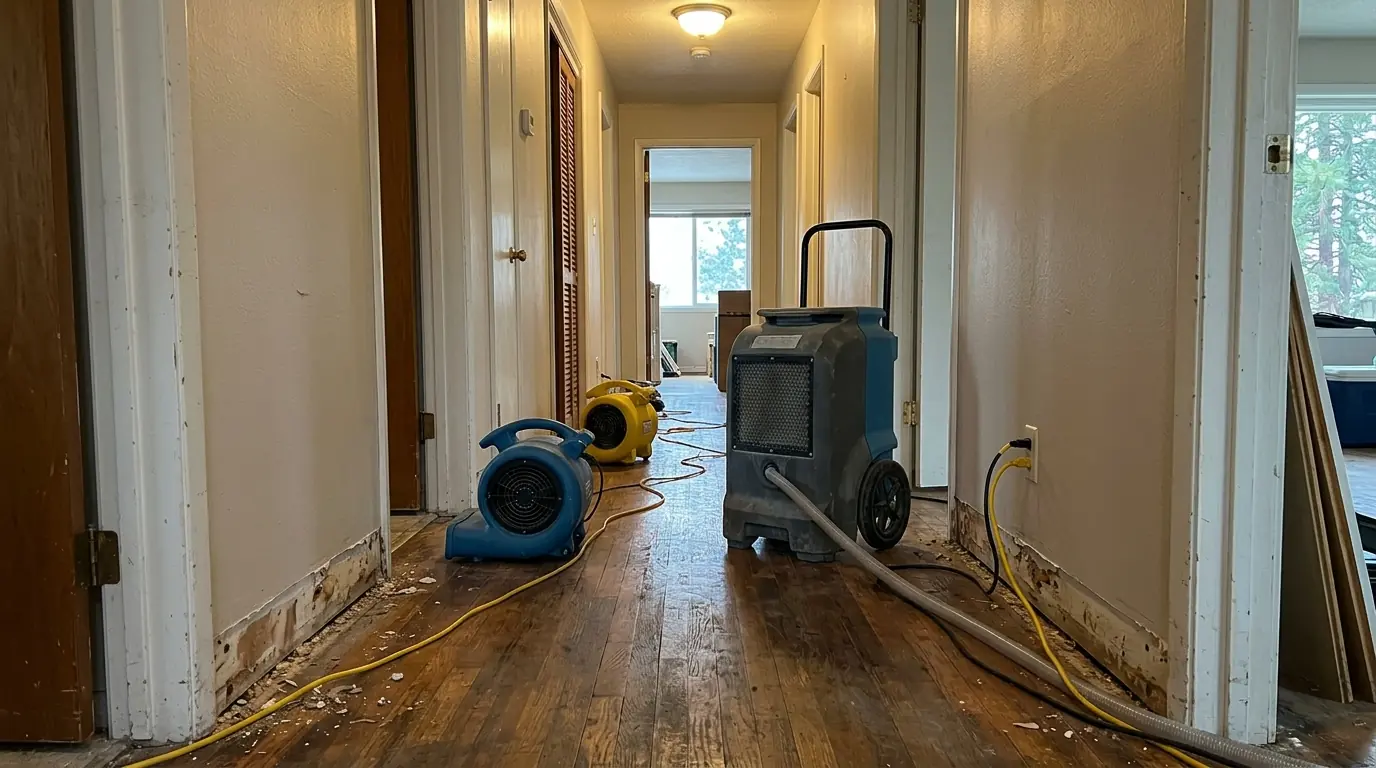
Ceiling water damage repair in Spokane starts above the stain, because painting over it before the source and framing are dry just brings the stain back. Small stains on drywall that dry quickly can be sealed and painted. Sagging drywall, soaked insulation or loose plaster usually means cutting out the wet section, drying the joists and patching.
Updated October 2026
What a water stain on the ceiling is telling you
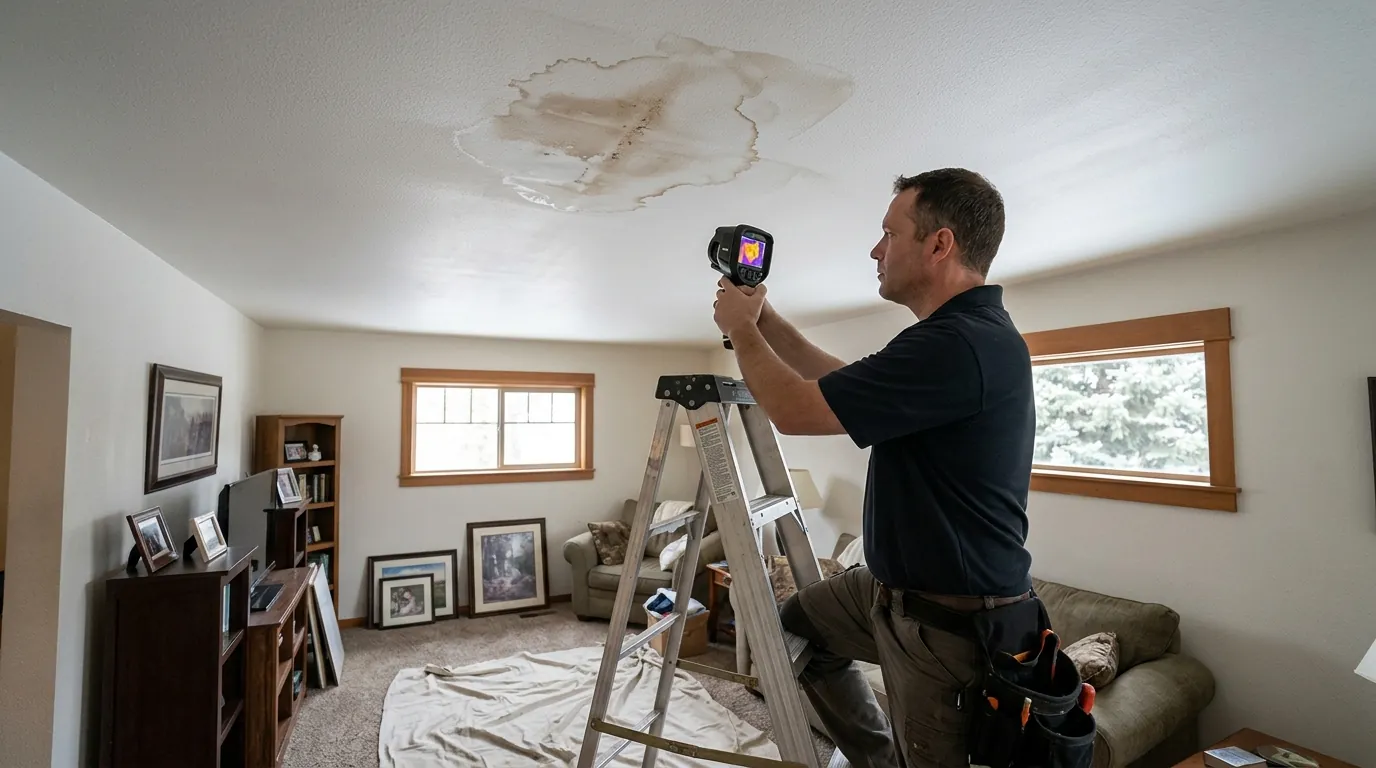
Water travels before it shows. A leak above can run along a joist, a pipe or the top of the drywall for several feet before it soaks through, so the stain is not always under the source. The brown ring is minerals and wood tannins left at the edge of the wet area, and it will bleed through regular paint even after the ceiling dries.
We find the source with a moisture meter and thermal camera, confirm it is stopped, then check how far the water spread through the ceiling and insulation. Whether the ceiling can be dried in place or must be cut open depends on the material, the amount of water and whether it has started to sag. Ice dams are a common winter source, covered on our ice dam page.
Repair the ceiling or replace the section
The condition of the material decides more than the size of the stain.
| Dry and repair | Cut out and replace | |
|---|---|---|
| When it fits | Small stain, clean water, ceiling still firm | Sagging, soaked insulation, Category 2 water |
| What happens | Dry in place, seal with stain-blocking primer, paint | Remove the section, dry joists, hang new drywall |
| Texture matching | Usually not needed | Needed to blend with the rest of the ceiling |
| Plaster ceilings | Possible if plaster is still keyed to the lath | Needed when plaster has let go |
Cost
Ceiling water damage repair cost ranges
HomeServe's April 2026 guide lists drywall repair at about $2 to $6 per square foot and full ceiling replacement at about $50 to $100 per square foot nationally. Those are planning ranges, not our price. The spread is wide because sealing and painting a small stain is a minor job, while replacing a sagged section, drying the joists and matching texture is a larger one. Plaster repair runs differently again.
Leak from an upstairs bathroom
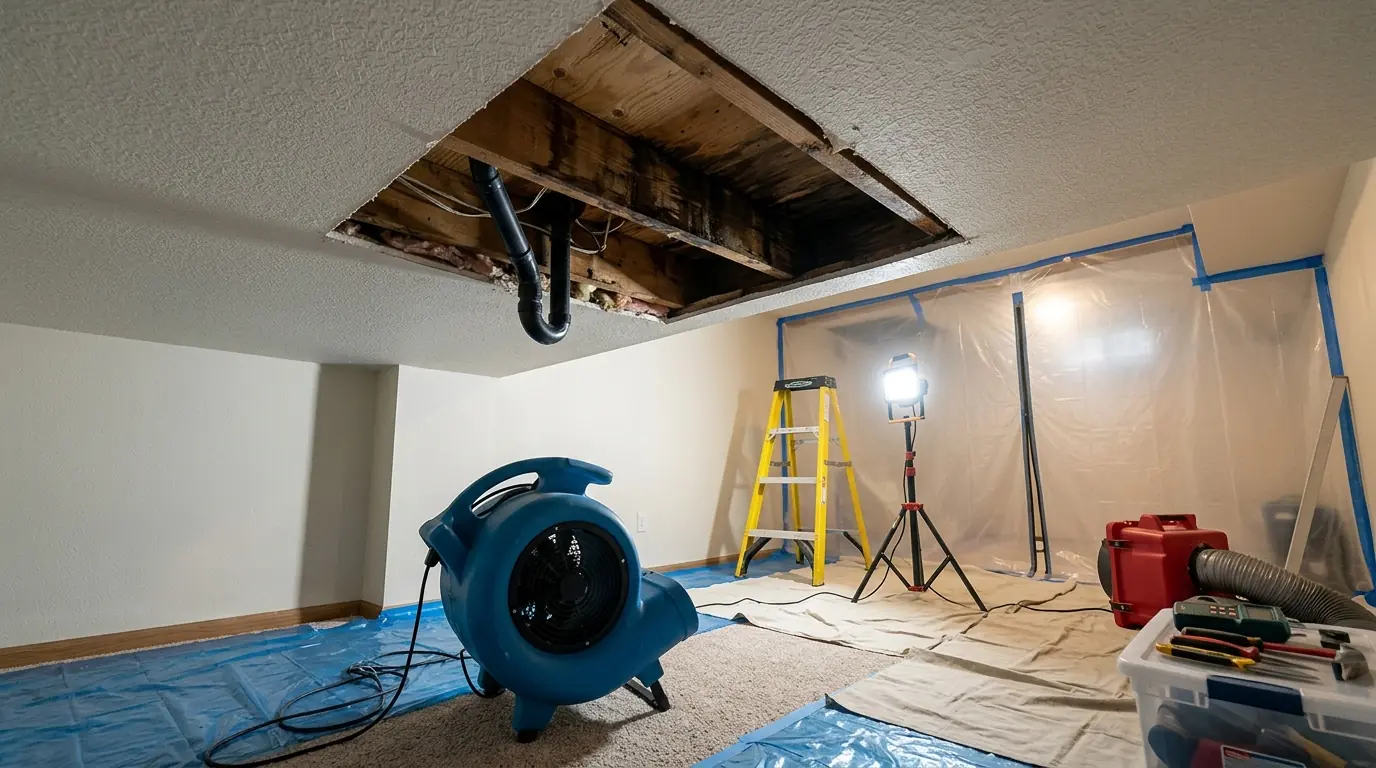
The ceiling below a bathroom is the most common spot for a stain in a two-story house. A failed wax ring under the toilet, a cracked shower pan, a loose tub drain or a supply line under the vanity can each drip for weeks before the ceiling shows it. We look at the bathroom first, running the shower or flushing while someone watches below, then open the ceiling only where readings say it is wet. Toilet seepage counts as Category 2 water, which means wet insulation in that bay comes out rather than drying in place.
Attic condensation drips
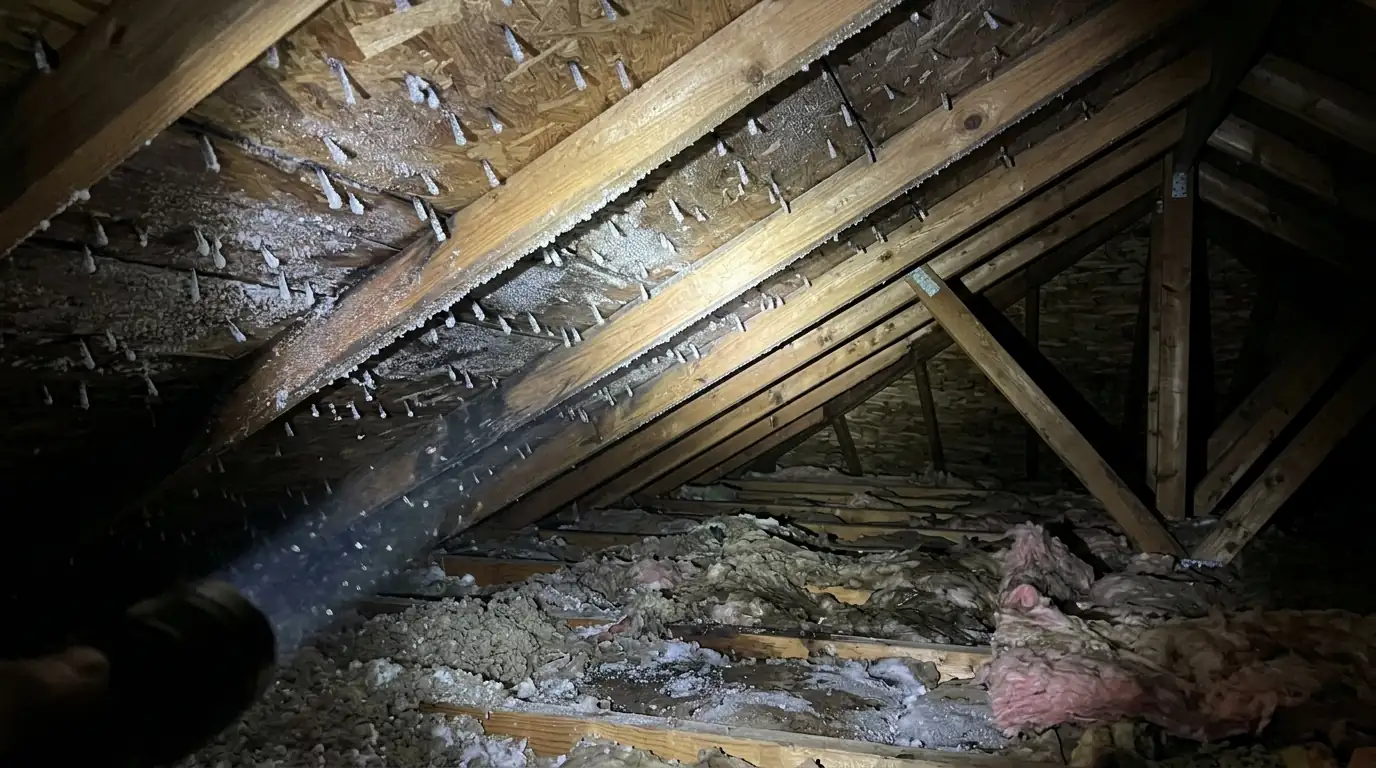
Not every ceiling leak comes from the roof or plumbing. On cold nights, warm moist air from the house rises into the attic through bath fans, recessed lights and gaps around the attic hatch, then condenses as frost on the underside of the roof deck. When the weather warms, that frost melts and drips onto the insulation and ceiling, often in several spots at once. Drying the ceiling is only half the job. Bath fans need to vent outside, and air leaks into the attic need sealing, or it happens again next winter.
Sagging drywall ceilings
A ceiling that bulges downward is holding water, and drywall soaked enough to sag has lost its strength. Keep everyone out from under it. If it is safe, we poke a small hole at the lowest point with a bucket underneath to let the water out in a controlled way, which keeps the ceiling from coming down all at once. Sagged drywall almost never goes back flat, so that section gets cut out, the joists and insulation above are dried, and new drywall is hung and finished to match.
Looking at this mess right now?
Pick up the phone. A real person answers 24/7 and talks you through the next ten minutes.
How we repair a water-damaged ceiling
- 01
Stop the source
We trace the leak above and confirm it is fixed before touching the ceiling.
- 02
Map the wet area
Meters and a thermal camera show how far water spread beyond the stain.
- 03
Drain or open
Sagging pockets are drained safely, and wet sections are cut out if they cannot dry.
- 04
Dry the cavity
Air movers aimed up into the opening dry the joists and any remaining insulation.
- 05
Patch and seal
New drywall goes in, and stains get a stain-blocking primer before paint.
Local conditions
Plaster ceilings in Spokane's prewar homes
Spokane has 26,157 homes built in 1939 or earlier, the largest single age group in the city's housing. Many of those houses still have plaster and lath ceilings, and water affects plaster differently from drywall. Plaster can hold its shape while the keys that grip the lath break loose, so a ceiling that looks fine can be ready to drop. We check old plaster ceilings by pressing gently and listening for a hollow sound before deciding whether to dry, reattach or replace the section.
Signs of water damage in a ceiling
Ceilings usually warn you before they fail.
A yellow or brown ring
The edge of a wet area where minerals and tannins dried.
Peeling or bubbling paint
Water trapped behind the paint film is pushing it away.
A soft or bowed spot
Drywall that gives when pressed has lost strength.
Drips at a light fixture or vent
Water follows the opening, which puts it near wiring.
Cracks spreading in old plaster
New cracks after a leak can mean the plaster has let go of the lath.
Ceiling Water Damage Repair questions
Not until the source is fixed and the ceiling is dry. Even then, regular paint will not cover a water stain; it needs a stain-blocking primer first. Painting over a damp ceiling traps moisture and invites mold.
Yes. A soaked drywall ceiling can come down suddenly, and the water it holds is heavy. Keep people and pets out from under it and turn off any light fixtures in that area.
Water runs along joists, pipes and the top of the drywall before soaking through, so the stain can appear several feet from the source. We trace the path with moisture meters and a thermal camera.
Often, if the plaster is still firmly attached to the lath and dries out. If it has pulled loose, it can sometimes be reattached with plaster washers. Badly damaged plaster is usually replaced with drywall.
It depends on the policy and the cause. Sudden leaks are treated differently from slow ones. We document the source, the readings and the damage so your adjuster has a clear picture.
Related restoration work
Roof Leak & Ice Dam Water Damage
Storm & Emergency
See this serviceBathroom Leak Water Damage
Water Damage
See this serviceAttic Mold Removal
Mold
See this serviceReconstruction After Water & Fire Damage
Rebuild, Contents & Commercial
See this serviceSee all 37 restoration services
Related advice: Burst pipe in a Spokane winter: the first hour and What water damage restoration costs in Spokane
Answering 24/7
A ceiling stain that keeps growing?
Call any hour. We will find the source above and tell you whether the ceiling can be dried or needs to come down.
1876 N Teanaway Dr, Post Falls, ID 83854