Finding out what you're dealing with
Mold inspection and testing in Spokane, and when you can skip it
Most mold questions are answered by finding the moisture. Lab sampling helps in specific cases, and we tell you when it won't.
- Answered 24/7
- Moisture inspection
- Air and surface sampling
- Post-removal clearance
Quick answer
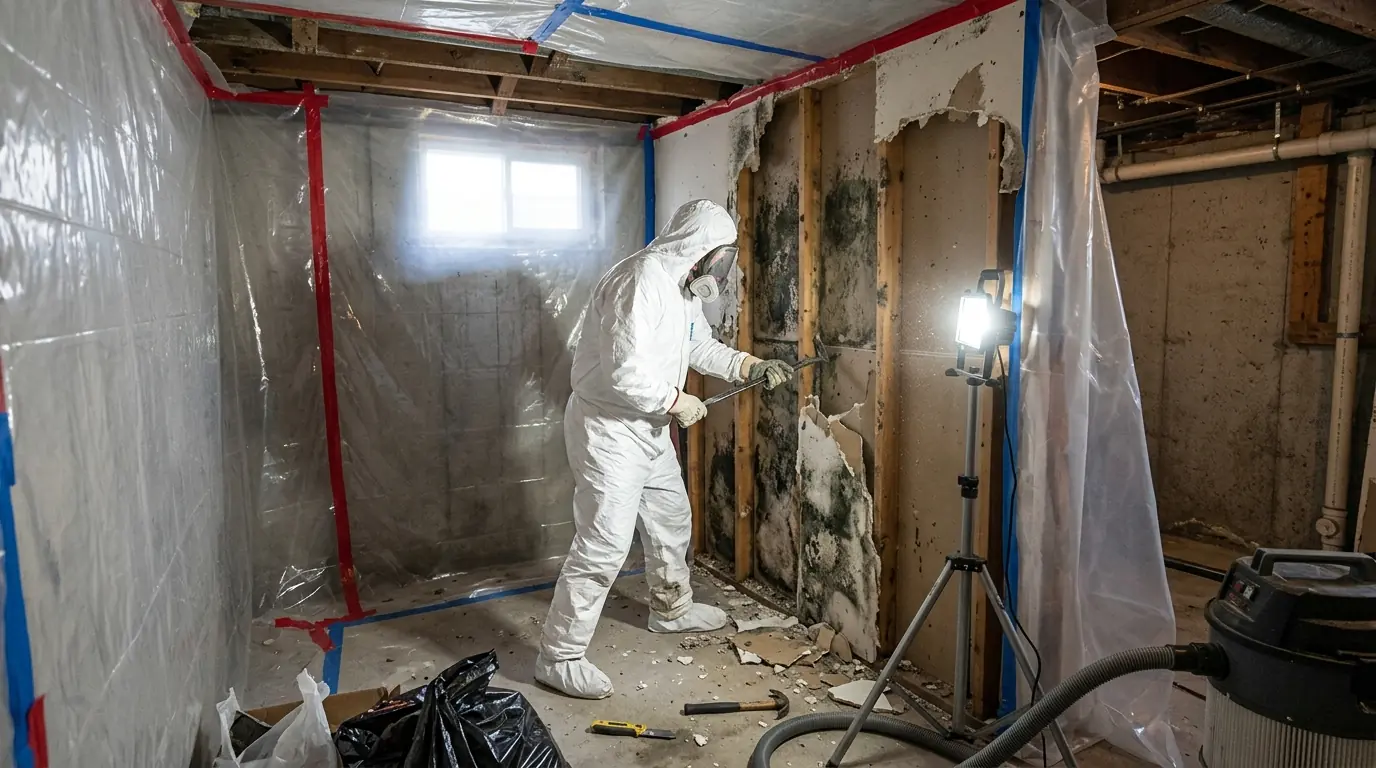
Mold inspection in Spokane starts with a visual check and moisture readings, because mold only grows where materials stay wet. Lab testing is not always needed: if growth is visible, the plan is usually clear without it. Air and surface samples help when you smell mold but can't see it, or to confirm a cleanup worked.
Updated October 2026
Why moisture comes before mold samples
Mold needs water. Find the material that stays damp, and you've found where mold is growing or will grow. So an inspection starts with what we can see and measure: stains, odors, past leaks, and moisture readings across walls, floors and ceilings.
Sampling sends air or surface material to a lab, and the results show which mold types are present and in what amounts. That's useful in a few situations and wasted money in others. Visible growth on a wet basement wall doesn't need a lab report to tell you it should come out through mold remediation. A musty bedroom with no visible source, or a remediated area that needs a final check, is where sampling earns its cost. No federal standard sets a safe mold level, so results get compared to outdoor air and unaffected rooms, not a single number.
What a mold inspection from us includes
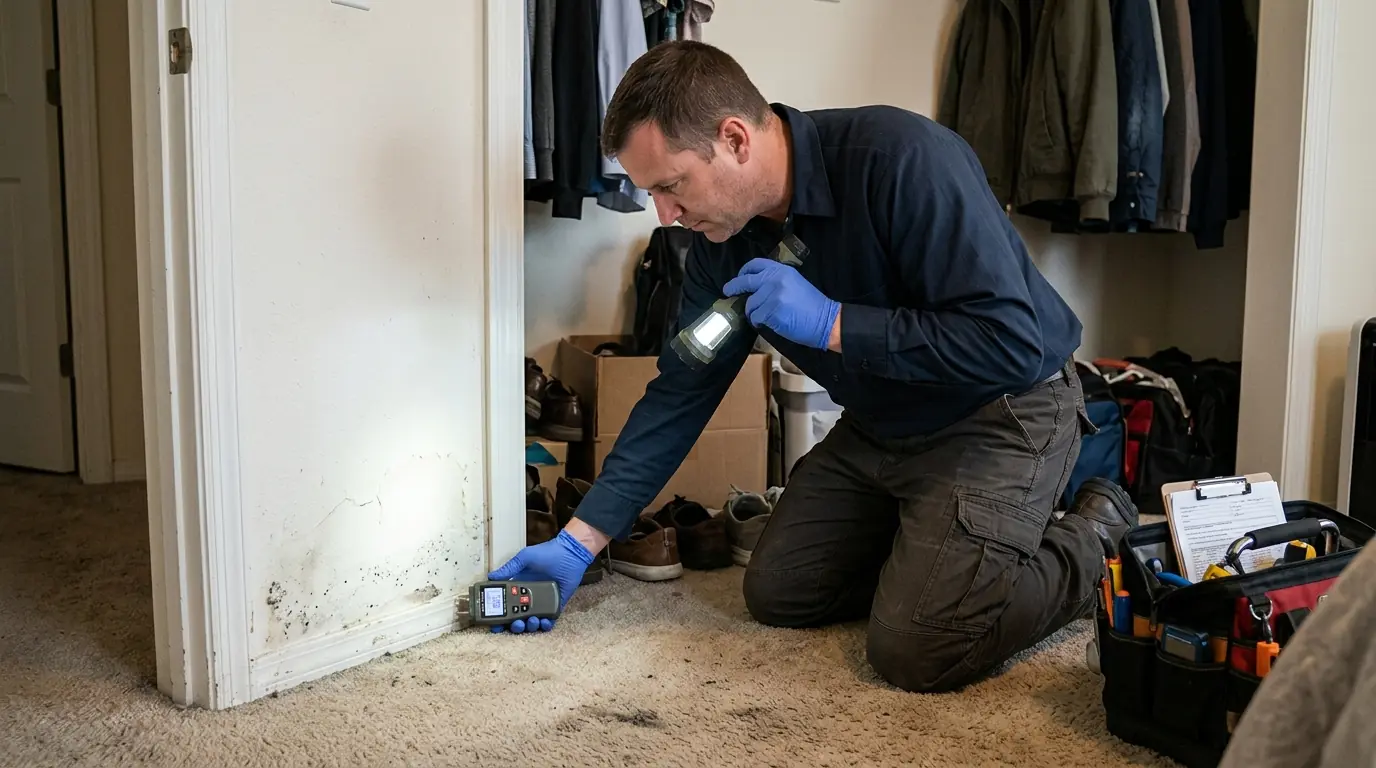
Here's what you get on a standard visit.
- Walkthrough of bathrooms, kitchen, basement or crawl space, attic and exterior walls.
- Moisture meter readings and thermal imaging on suspect areas.
- Photos of any visible growth, staining or water damage.
- A plain recommendation on whether sampling is worth doing.
- Air or surface samples sent to an independent lab, when warranted.
- A written summary of findings, likely moisture sources and next steps.
Visual and moisture inspection
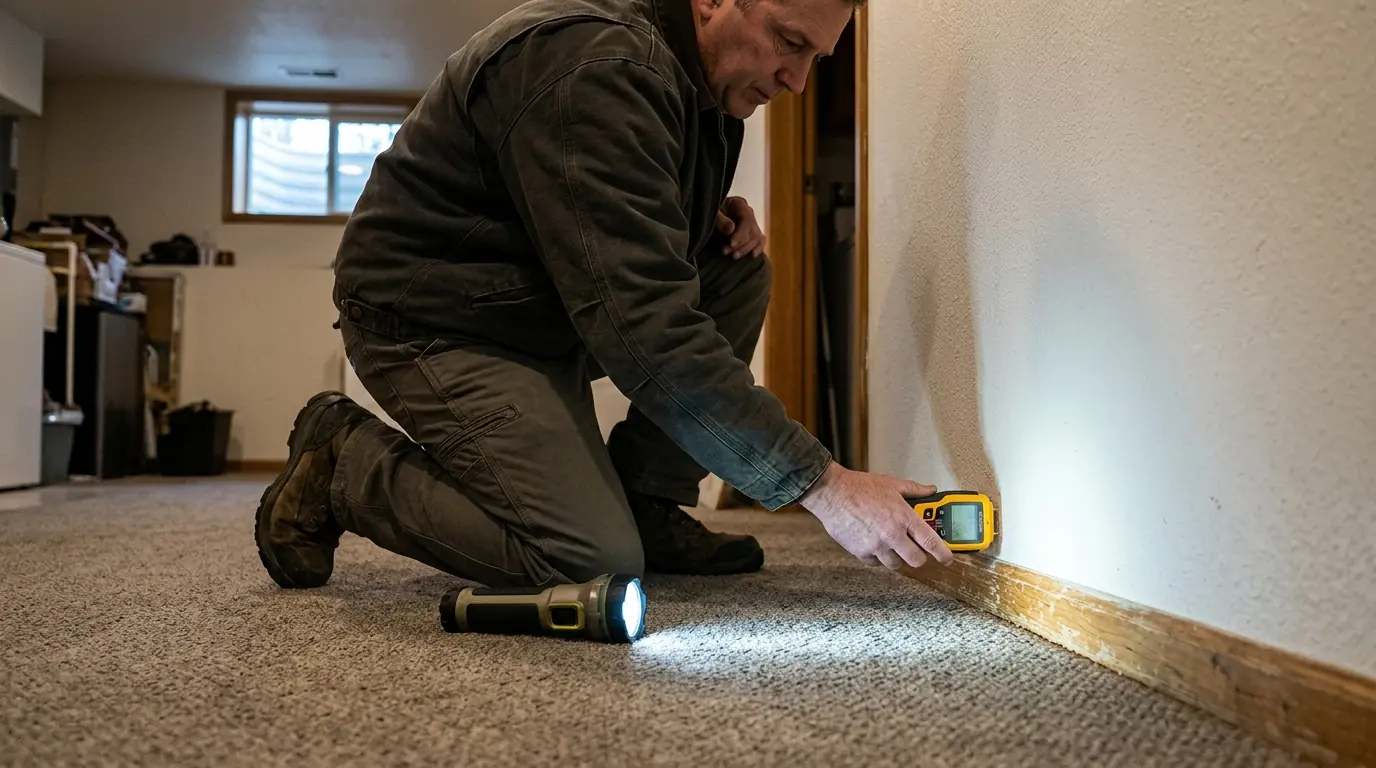
We walk the house the way water moves through it: below bathrooms and the kitchen, around windows and exterior doors, under the water heater, in the attic and the basement or crawl space. A moisture meter and thermal camera show where materials are wetter than they should be. We look behind furniture on exterior walls, inside sink cabinets and at the bottom of finished basement walls. You get a list of where we found moisture or growth, photos, readings, and what we think is causing it. For many homes, this answers the question without any sampling.
Air and surface sampling
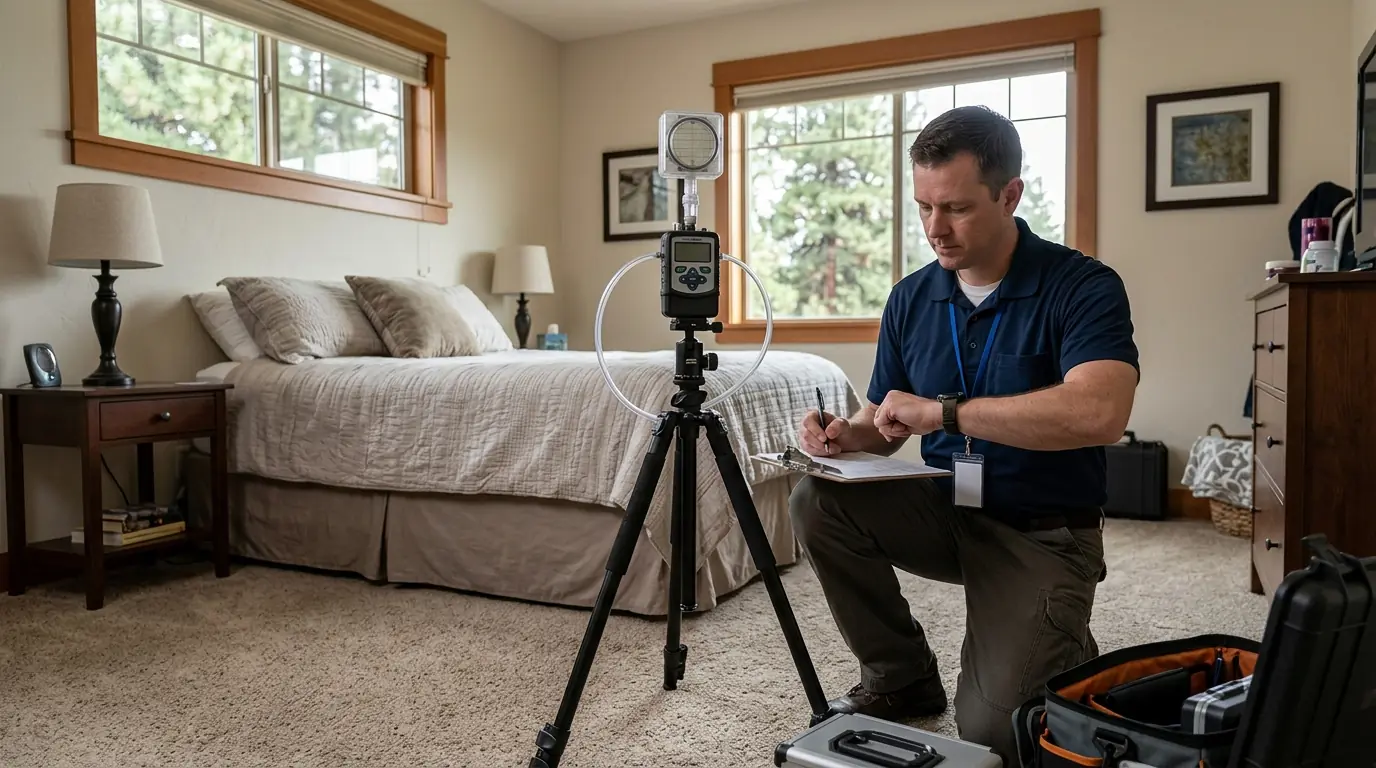
Air sampling pulls a measured volume of air through a cassette that traps spores. We take an outdoor sample as the baseline and indoor samples in the rooms of concern, and the lab counts and identifies spore types. Indoor numbers well above outdoor, or types that are rare outside, suggest a hidden source. Surface sampling uses a swab or tape lift on a specific stain to confirm whether it's mold at all. Both are snapshots: results shift with weather, activity and time of day. We explain what the lab report means in plain terms.
Clearance check after removal
After remediation, a clearance check confirms the work area is clean and dry before walls close up. We look for visible dust or debris in the containment, confirm framing and subfloor readings match dry reference levels, and, when you or your insurer want it, take air samples inside the containment and outdoors for comparison. Many homeowners prefer an independent inspector for clearance so the company that did the work isn't grading itself. We're glad to coordinate with one, keeping containment up until their results come back.
Is it still wet, still smoking or still spreading?
Call now. The first few minutes on the phone are about stopping the damage, and a crew gets moving while we talk.
How a mold inspection visit runs
- 01
Hear what's going on
Smells, stains, past leaks and any health concerns you want a doctor to weigh in on.
- 02
Inspect and measure
We check likely wet spots with meters and a thermal camera.
- 03
Decide on sampling
We tell you whether air or surface samples will change the plan.
- 04
Collect samples if needed
Outdoor baseline plus indoor samples go to an independent lab.
- 05
Explain findings
Photos, readings and lab results in plain language, with recommended next steps.
Local conditions
Hidden moisture in Rockwood and older South Hill homes
The Rockwood Historic District holds about 350 homes on a steep stretch of the South Hill, and roughly 285 were built before 1950. Plaster walls, old drain lines and hillside drainage all make hidden moisture more likely there, and plaster can hide growth on its back side longer than drywall does. In homes like these, a musty smell with no visible mold is a common call, and it's one of the cases where careful moisture mapping, and sometimes air sampling, is worth doing.
Cost
What affects the cost of mold inspection and testing
An inspection without sampling is mostly time on site and the size of the house. Sampling adds lab fees per sample, so the count matters: one outdoor baseline plus a sample in each room of concern. Faster lab turnaround costs more. Clearance testing after remediation is a separate visit. Before we take a single sample, we'll tell you whether the result could actually change what you do next. If it won't, we won't recommend it.
Air sampling versus surface sampling for mold
Each answers a different question.
| Air sampling | Surface sampling | |
|---|---|---|
| Question it answers | Is there a hidden source raising indoor spore levels? | Is this stain mold, and what kind? |
| How it's done | Pump draws air through a spore trap cassette | Swab or tape lift on a specific spot |
| Needs a baseline | Yes, an outdoor sample for comparison | No |
| Limitations | A snapshot that shifts with weather and activity | Only describes the spot sampled |
| When we use it | Musty smell, no visible growth, or clearance | Unclear stain where the answer changes the plan |
Mold Inspection & Testing questions
Usually not. Visible growth on a damp material needs to be removed and the moisture fixed regardless of the species. Testing rarely changes that plan. It's more useful when you smell mold but can't find it, or to confirm a cleanup.
No. An inspection identifies moisture and growth in the house; it doesn't diagnose health problems. If you have symptoms, talk with your doctor, and share our findings with them if that helps.
It's a snapshot. Results vary with weather, time of day and activity in the house. That's why we take an outdoor baseline and compare rooms, and why we interpret results alongside moisture readings instead of on their own.
It can, and many homeowners are fine with that. For clearance, some prefer an independent inspector so the remediation company isn't checking its own work. We're happy to coordinate with one.
No federal standard sets one. Results are judged by comparing indoor samples to outdoor air and looking for spore types that are unusual inside. A trained person has to interpret them in context.
Related restoration work
Mold Remediation
Mold
See this serviceMoisture Mapping & Hidden Leak Detection
Water Damage
See this serviceBasement Mold Removal
Mold
See this serviceAttic Mold Removal
Mold
See this serviceSee all 37 restoration services
Related advice: How fast mold grows after a leak and Spring snowmelt and basement seepage
Answering 24/7
Smell mold but can't find it?
Call any hour. We'll start with the moisture and tell you honestly whether testing is worth it.
1876 N Teanaway Dr, Post Falls, ID 83854