Restoration advice
Why spring snowmelt finds its way into Spokane basements
Quick answer
When a winter's worth of snow melts while the ground underneath is still frozen, the water cannot soak in, so it runs along the surface toward your foundation. It pools in window wells, presses against basement walls and seeps through cracks, the wall-floor joint and old mortar. Grading, downspout extensions and window well covers prevent most of it.
Frozen ground, a deep snowpack and nowhere for water to go
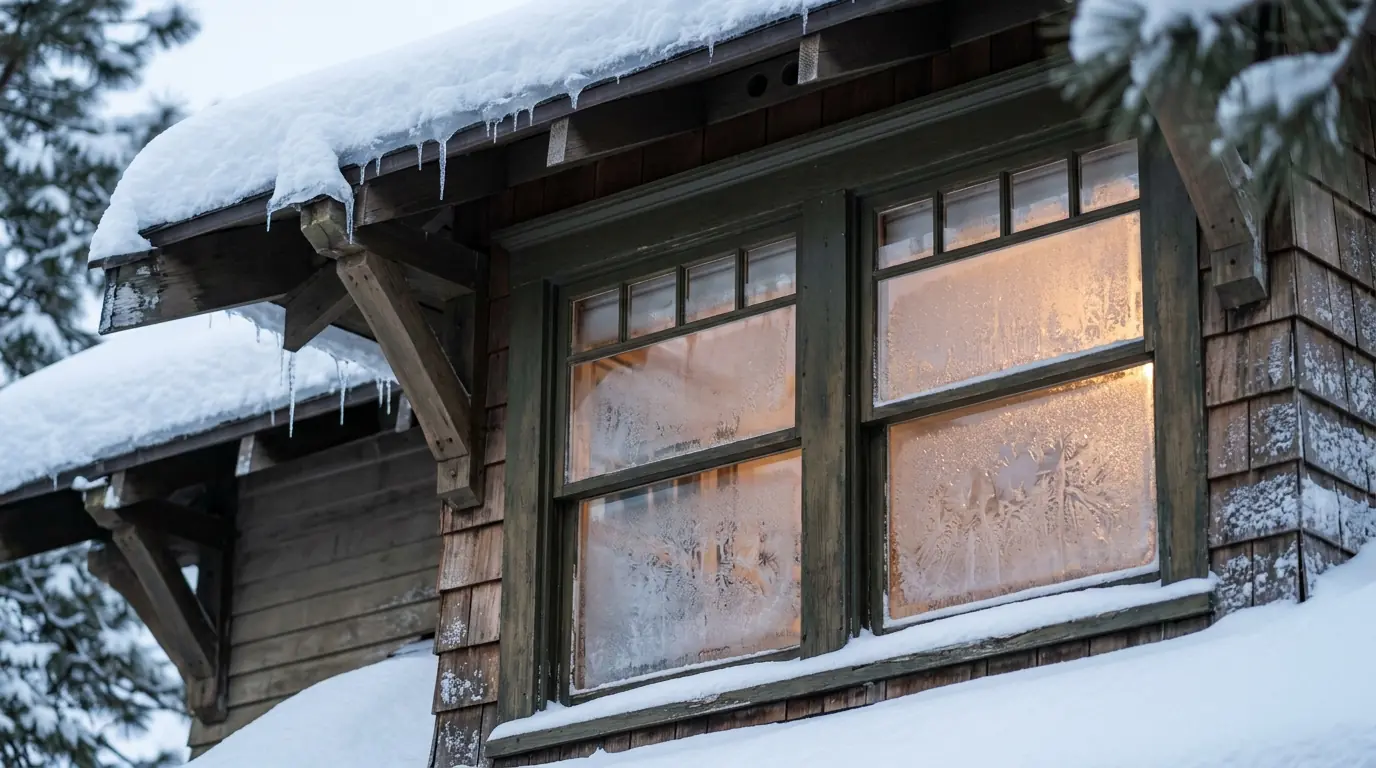
A Spokane winter averages close to 49 inches of snow, heaviest over the holidays and into January, with lows under freezing on about 138 days. By late winter that adds up to a lot of stored water sitting on lawns, roofs and the snowbanks shoveled against the house. When a warm spell or rain arrives, it all starts moving at once.
The ground under that snow is often still frozen. Water that would normally soak into the soil runs across the surface instead, following the grade. If the grade slopes toward the house, or snow piled against the foundation melts in place, the basement walls become the low point.
Where snowmelt gets into a basement
Older Spokane homes are the most exposed. The city has more than 26,000 houses built in 1939 or earlier, many on stone, brick or early concrete foundations that were never waterproofed to modern standards.
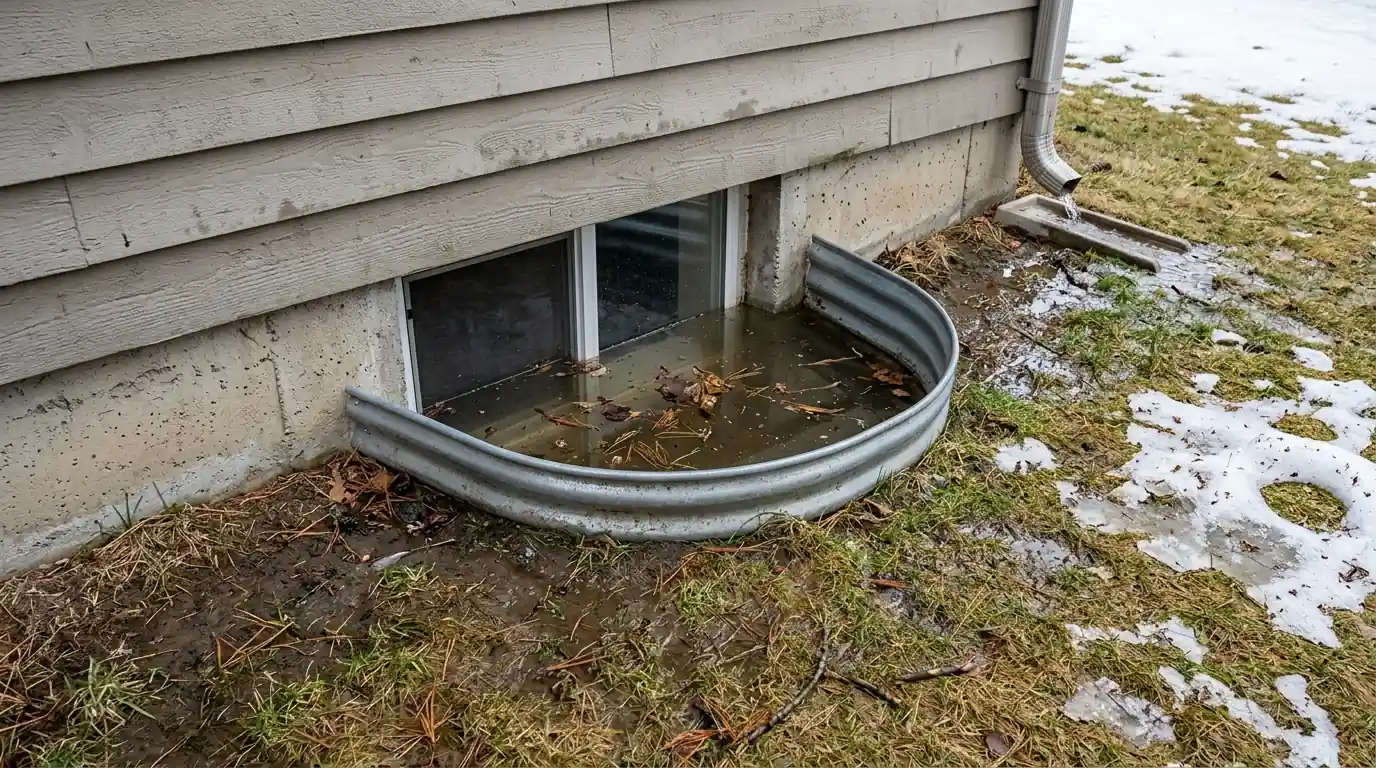
- Window wells that fill like buckets and leak around the window frame
- The cove joint, where the basement wall meets the floor slab
- Cracks in poured walls and gaps in block walls
- Old mortar joints in stone and brick foundations
- Gaps around pipes and wires that pass through the wall
- Exterior basement stairwells with clogged drains
Signs to watch for before a puddle appears
Seepage usually announces itself before it floods. Walk the basement during the first big thaw and look for:
- White, chalky deposits on concrete walls (efflorescence), left behind as water evaporates
- A musty smell that gets stronger during the thaw
- Damp carpet along exterior walls, or rusty carpet tack strip
- Peeling paint or bubbling on basement walls
- Water stains on the bottoms of stored boxes
- Condensation or frost on the inside of window well windows
Need a second opinion before you tear anything out? Call and describe it. We will tell you what we would do.
Call (509) 730-2039Prevention to do in the fall and during the thaw
Most snowmelt seepage is a surface water problem, and most of the fixes are outside.
Interior sealers can slow minor dampness, but they do not hold back water under pressure. If the same wall leaks every spring, a waterproofing contractor can look at drainage and exterior options.
- Grade soil so it slopes away from the foundation, not toward it
- Extend downspouts several feet from the house and keep the outlets clear of ice
- Shovel snow away from the foundation and out of window wells before the thaw
- Install clear window well covers that shed snow and rain
- Test the sump pump before spring and make sure its discharge line is not frozen
- Clean gutters in the fall so meltwater does not spill over onto the foundation
When the water is already in: cleanup steps
Stop the source if you can, by clearing a window well or redirecting a downspout, then get the water out quickly. Water that crossed soil, mulch and landscaping is not treated as clean, and overland flood water is Category 3, so wear boots and gloves. Pull up area rugs, lift stored items off the floor and photograph everything.
Basement flooding cleanup covers extraction, removal of wet pad and drywall where needed, and drying the slab and framing. Concrete holds a lot of water and gives it up slowly, so moisture readings matter more than how the floor looks.
Finished basements and what hides behind them
Finished basements turn a damp corner into a hidden problem. Spokane Valley's median home was built in 1979, and houses from the 1970s and 1980s across the area often have finished lower levels with carpet over the slab, framed walls against the concrete and insulation behind drywall. Seepage runs behind that drywall and under the pad where nobody sees it.
Wet pad nearly always gets replaced, though the carpet itself can sometimes be dried and relaid. Drywall and insulation that wicked water are cut out and the wall cavity dried. If there was a musty smell before this spring, check behind the finished walls for older growth, which makes it a basement mold removal job, not only a drying job.
Reader questions
Often it is not, because many homeowner policies exclude surface water and groundwater seepage, and flood coverage is usually a separate policy. Sudden events like a burst pipe are treated differently. Read your policy and ask your insurer; the adjuster decides. Either way, document the water and the cleanup with photos and receipts.
Because that is when the most water sits against your foundation while the ground underneath is still frozen and cannot absorb it. Melting snow runs along the surface toward the lowest point. Once the ground thaws, water soaks in and spreads out, so leaks often stop until the next big melt.
They help a lot with one specific entry point. A covered window well does not fill with snow and rain, so water cannot pond against the window frame. Covers do nothing for grading problems or wall cracks, and the well still needs a working drain at the bottom.
Efflorescence is mineral salt left behind when water moves through concrete and evaporates. It is not mold, but it does show moisture is getting through the wall. Mold is fuzzy or slimy and grows on organic material like drywall paper, wood and boxes, so check those materials wherever you see efflorescence.
Yes, if your basement gets damp in spring. A dehumidifier lowers humidity so minor seepage and condensation dry faster and stored items stay dry. It cannot keep up with active water coming through a wall. Set it to drain continuously or empty it often, and clean the filter.