Cupped, crowned and wet wood floors in Spokane, WA
Hardwood floor water damage repair in Spokane
Solid hardwood can often be dried and kept. The deciding factor is time: how long the water sat before drying started.
- Answered 24/7
- Hardwood and subfloors
- Floor drying mats
Quick answer
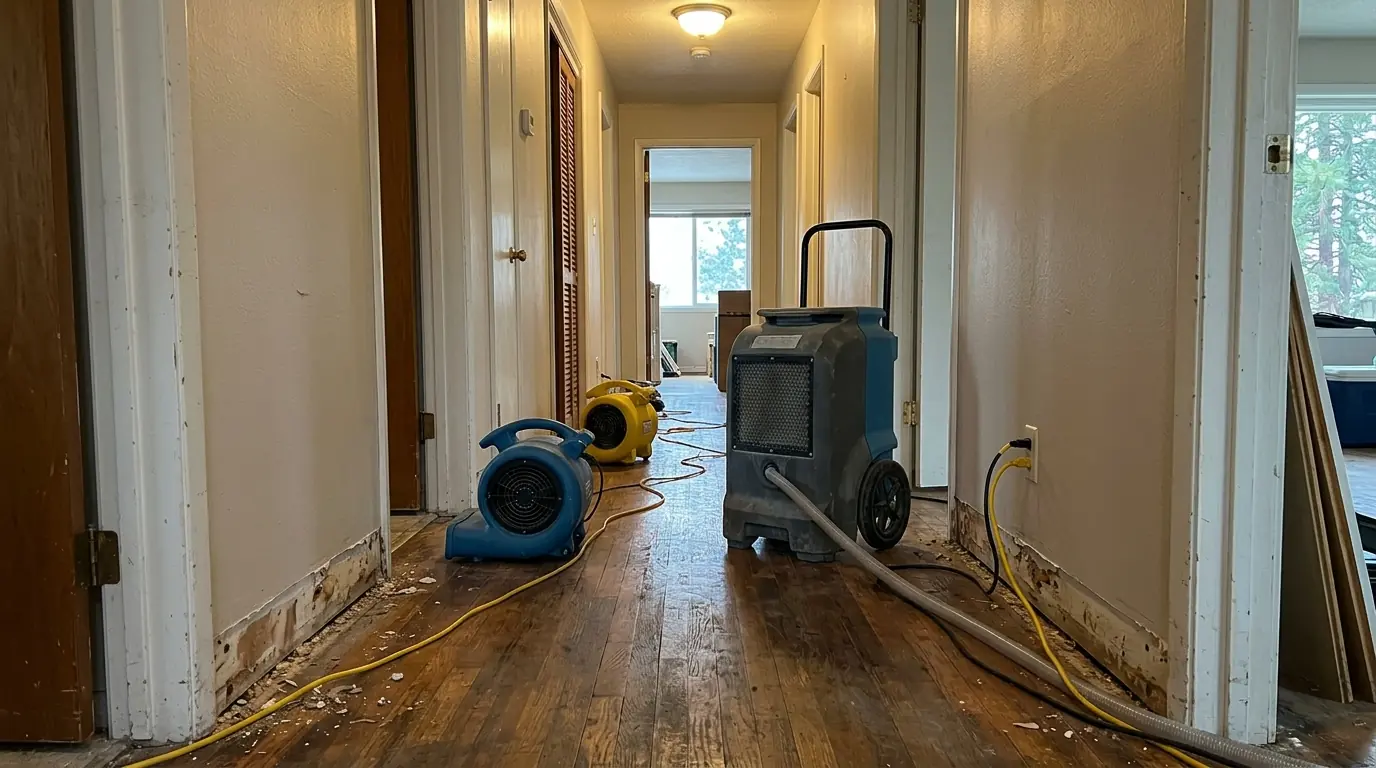
Hardwood floor water damage in Spokane can often be dried and refinished if drying starts within a day or two, because solid oak and maple recover better than engineered planks or laminate. Specialized drying mats pull moisture through the boards with suction. Floors that buckled off the subfloor or stayed wet for days usually need partial replacement.
Updated October 2026
How water changes a hardwood floor
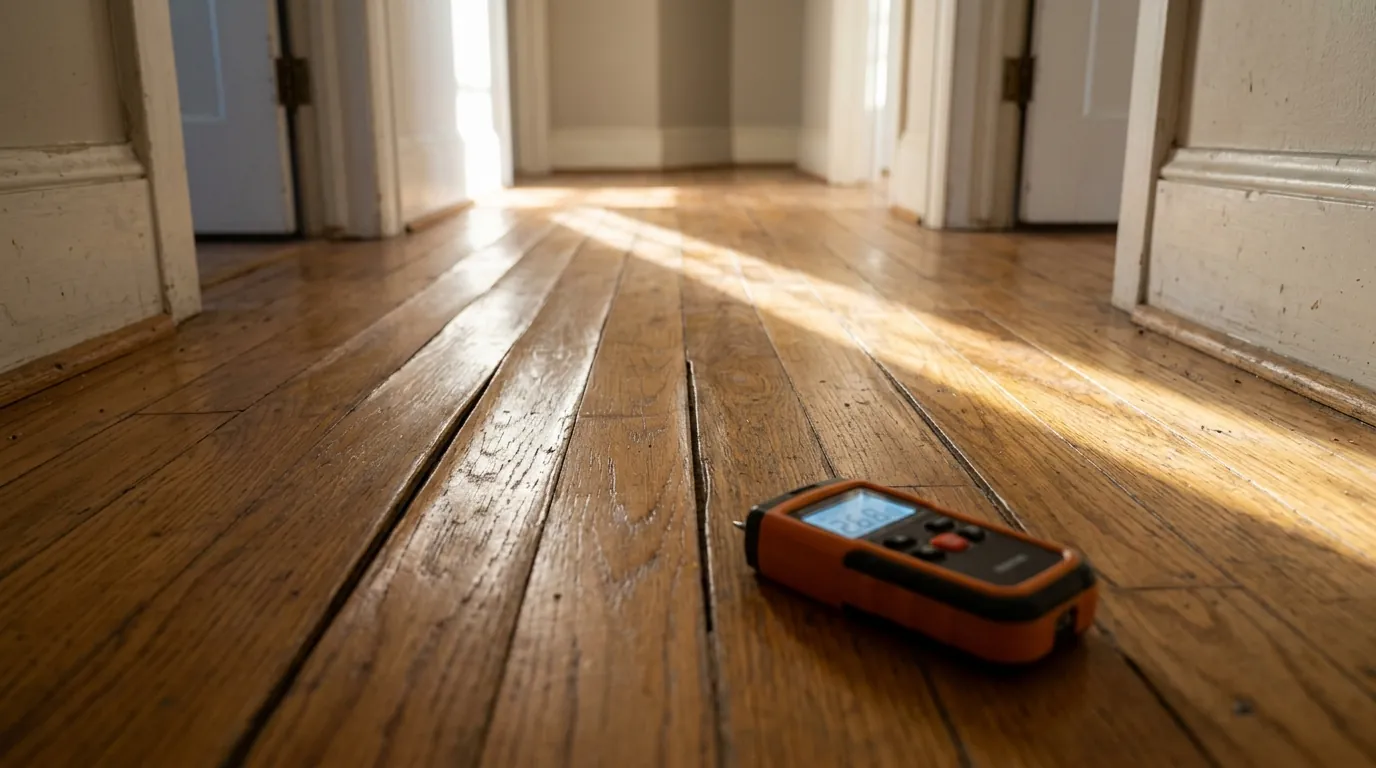
Wood takes on water and swells across its width. When the bottom of a board gets wetter than the top, as it does when water soaks the subfloor, the edges rise and the board cups. If someone sands a cupped floor flat while it is still wet, the board later dries and crowns, with the center higher than the edges. That is why timing and patience both matter.
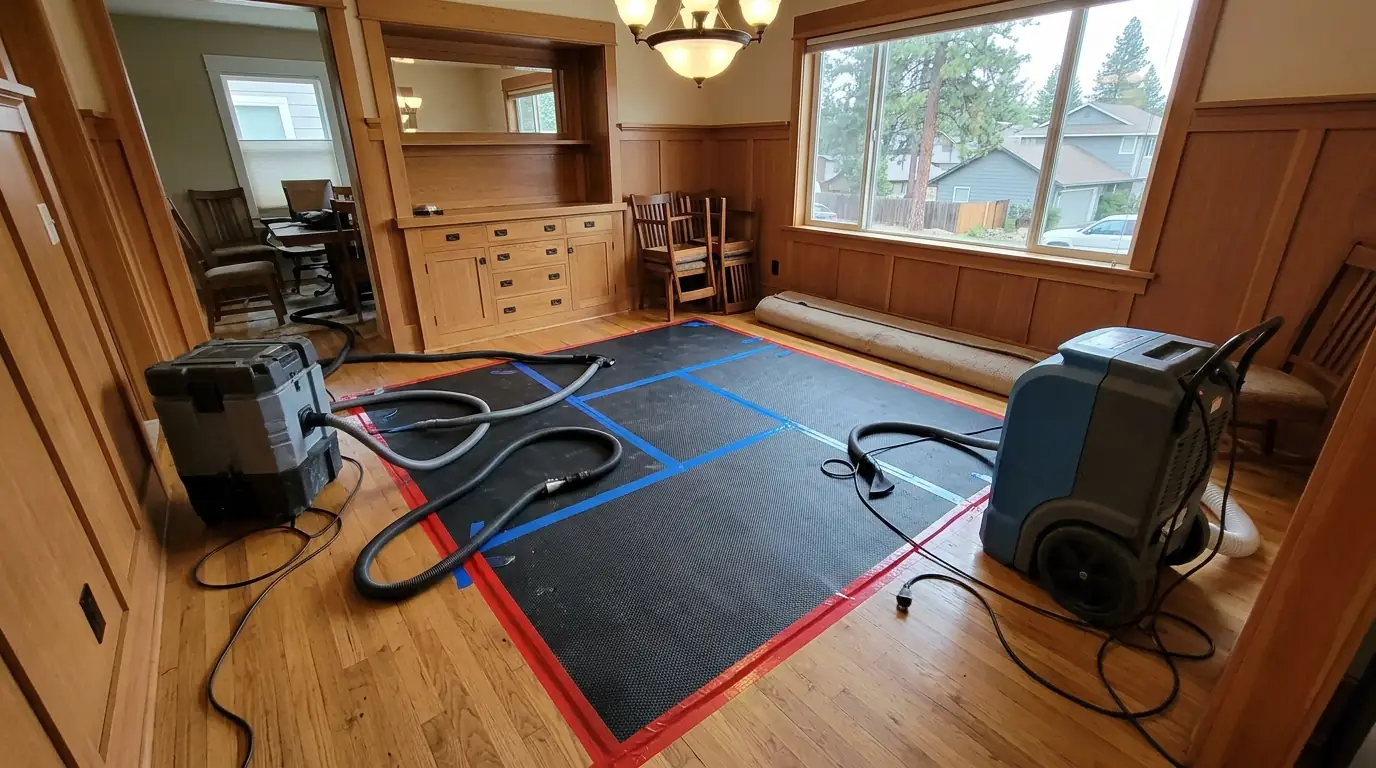
Our goal is to dry the wood slowly and evenly to its normal moisture level, measured against a dry part of the same floor. We use panel mats that pull moisture through the boards, plus air from below where there is a basement or crawl space. Only once the floor reads dry can anyone decide fairly whether it needs sanding, refinishing or replacement.
Dry and refinish or replace the floor
This choice belongs after drying, never before.
| Dry and refinish | Replace boards | |
|---|---|---|
| When it fits | Solid wood, dried quickly, boards flattened | Boards still cupped, split, blackened or loose |
| Matching | Original floor stays | New boards woven in, sometimes stained to match |
| Engineered floors | Possible with a thick wear layer | Usual choice with a thin wear layer |
| Timing | Sanding waits until moisture is back to normal | Removal can start once the subfloor is dry |
Cost
Cost ranges for wet hardwood floors
HomeServe's April 2026 guide lists replacement hardwood at about $9 to $25 per square foot nationally. That is a planning figure, not our price, and it shows why drying and refinishing is worth trying first when the wood allows. The cost of drying depends on how many square feet are wet, whether the subfloor is soaked, and how long the mats need to run.
Cupping and crowning
Cupping, edges higher than the center, is the floor's response to moisture from below. It is often reversible: as the wood dries back to its normal level, many cupped boards flatten out on their own. Crowning, center higher than the edges, usually means the floor was sanded while still cupped or got wet from the top and dried unevenly. We measure each area before anyone touches a sander, because sanding too early locks in a crown that cannot be undone without replacing boards.
Floor drying mats
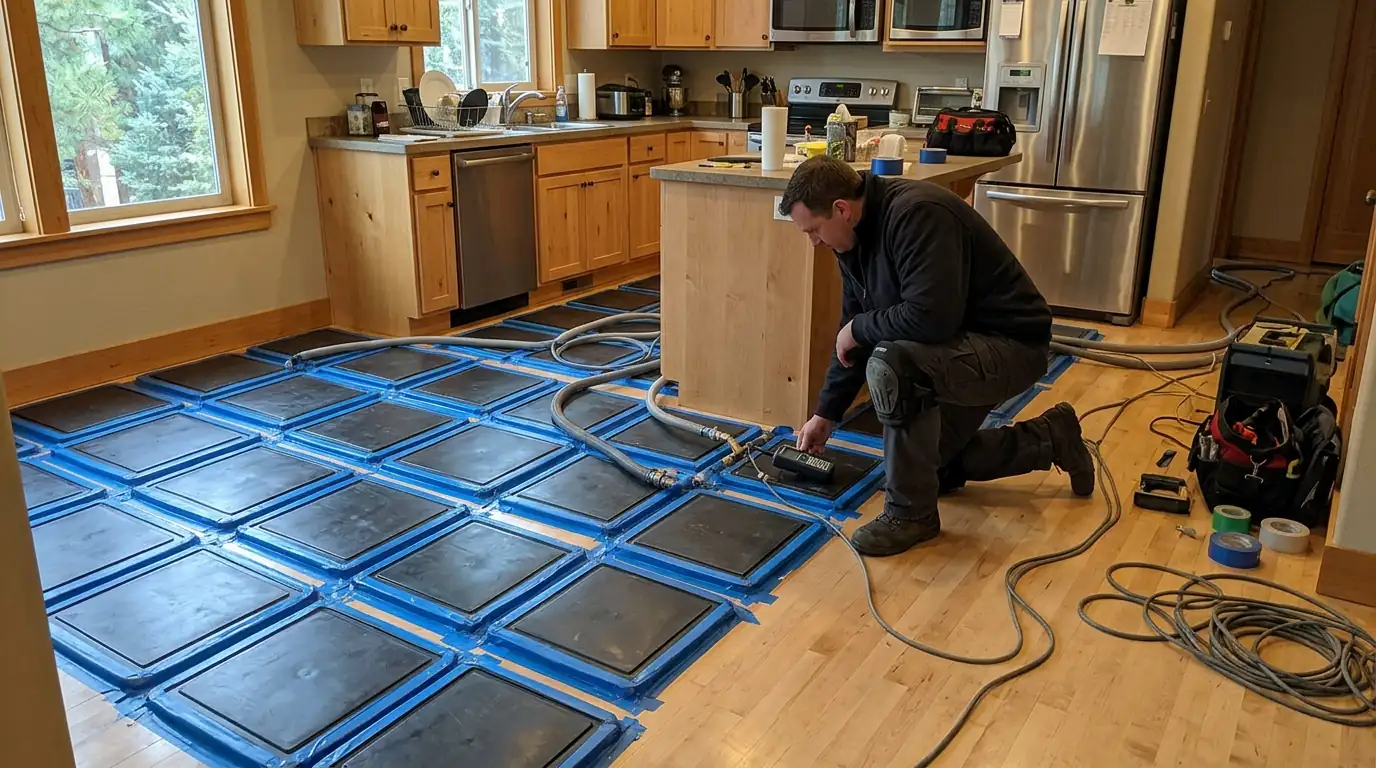
Drying mats are flat panels sealed to the floor with a vacuum pulling through them. The suction draws moisture up out of the boards and the gaps between them, and a dehumidifier handles what comes out. Mats work well on solid hardwood with a durable finish and on engineered floors with a thick wear layer. They do less for laminate or for floors glued directly to concrete. We move the mats across the floor in sections and log each one until the wood matches the reference reading.
Refinish or replace
Once the floor is dry, the choice depends on what is left. Boards that flattened back with minor finish damage usually just need a screen and recoat or a full sand and refinish. Boards that stayed cupped, split, turned black from long contact with water or pulled loose from the nails need replacing, ideally with matching species and width woven into the existing floor. Engineered and laminate floors have a thin wear layer that may not survive a sanding, so they usually go.
Need someone there tonight?
We answer around the clock. Tell us what happened and we will say what to do before the crew arrives.
Our steps for drying a wet wood floor
- 01
Extract the surface
Standing water comes off right away so it does not keep soaking into seams.
- 02
Read the floor
We meter the wet boards and a dry reference area of the same floor.
- 03
Set mats and air
Drying mats go on the wettest sections, with air movers below if there is access.
- 04
Monitor and move
Mats move across the floor as each section dries to goal.
- 05
Assess the finish
Once dry, we show you which boards flattened and which need replacement.
Local conditions
Original hardwood in Spokane's 1960s homes
Spokane's median home was built around 1961, and close to six in ten occupied homes are owner-occupied. Many of those houses have original oak floors, sometimes hidden under carpet, laid over plank or plywood subfloors. That combination is good news: solid oak of that age tolerates drying well and usually has enough wood left for another sanding. It also means owners have a real stake in saving a floor that cannot easily be matched, so we take the time to dry it properly before anyone decides on replacement.
Signs water is damaging a wood floor
Hardwood shows water damage in a few telltale ways.
Edges of boards lifting
Cupping means the boards are wetter underneath than on top.
Dark stains along seams
Water sitting between boards reacts with the wood and finish.
A floor that feels spongy
Soft spots point to a wet or failing subfloor.
Boards pulling up from nails
Severe swelling can lift a floor off its fasteners.
A musty smell near the floor
Moisture trapped under the boards can start mold.
Hardwood Floor Water Damage questions
Mild cupping often flattens as the boards dry back to normal, which is why drying comes before any decision. Cracks, black stains and boards lifted off the nails will not fix themselves.
There is no exact clock, but boards that sit wet for several days are much less likely to recover. Starting extraction and mats within a day or two gives the strongest odds.
No. Sanding a cupped floor while it is wet flattens the edges, then the boards crown as they dry. Wait until readings show the wood is back to normal moisture.
Sometimes. Engineered planks with a thick wear layer can be dried and refinished. Those with a thin veneer often delaminate or cannot be sanded, so damaged planks are usually replaced.
They are designed to seal on finished floors and lift off cleanly. Some older or worn finishes can mark slightly, which we point out before placing them, and a floor headed for refinishing anyway makes that a minor concern.
Related restoration work
Structural Drying & Dehumidification
Water Damage
See this serviceWater Extraction & Removal
Water Damage
See this serviceWater Heater & Appliance Leak Cleanup
Water Damage
See this serviceReconstruction After Water & Fire Damage
Rebuild, Contents & Commercial
See this serviceSee all 37 restoration services
Related advice: Burst pipe in a Spokane winter: the first hour and What water damage restoration costs in Spokane
Answering 24/7
Hardwood floor soaking up water?
Call any hour. The sooner drying starts, the better the chance of keeping your floor.
1876 N Teanaway Dr, Post Falls, ID 83854