When the fire was miles away but the smoke got in
Wildfire smoke and ash cleanup for homes around Spokane
Wildfire smoke reaches homes far from the flames. We clean ash from attics, vents and siding and treat odor that settles into soft materials.
- Answered 24/7
- HEPA ash removal
- Attic and vents
- Exterior washing
Quick answer
Wildfire smoke and ash cleanup in Spokane starts with dry HEPA vacuuming, because wet ash turns into a caustic paste that stains siding and clogs filters. We clean the attic and vents where ash settles, replace furnace filters, wash exterior surfaces and treat smoke odor in carpet, drapes and insulation, even in homes with no flame contact.
Updated October 2026
Why houses that never burned still get smoke damage
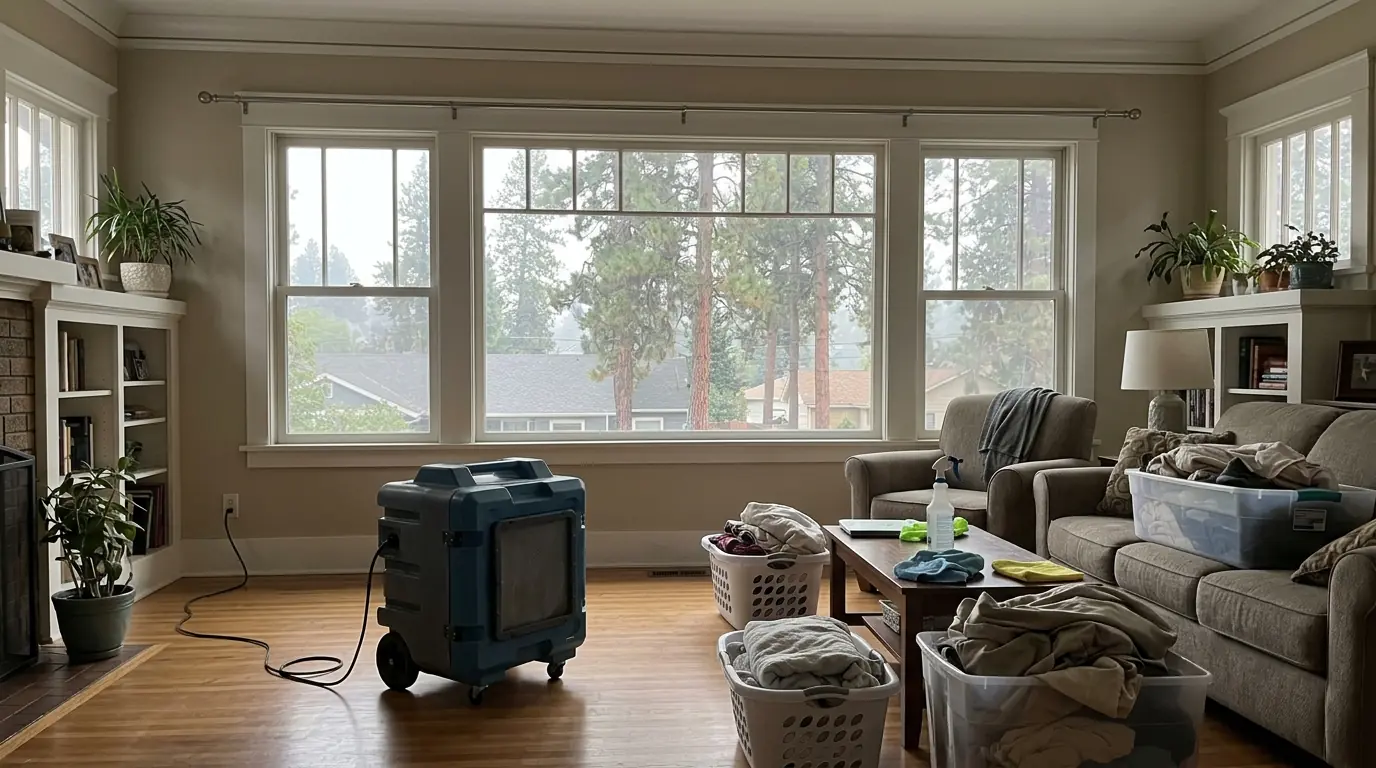
Wildfire smoke carries fine particles, gases and ash for miles. It enters a house the way air does: attic vents, gaps around doors and windows, bath and kitchen fans, the furnace fresh-air intake. Inside, particles settle on flat surfaces and soak into anything soft.
The damage is usually light but spread through the whole house. Carpet, upholstery, drapes and attic insulation hold the smell, and ash collects in return ducts, getting pulled back through the rooms every time the furnace runs. Most of the work is careful dry cleaning, filter changes and odor treatment, done room by room so nothing gets missed. The rule that matters: keep ash dry until it's off the surface, because water turns it alkaline and sticky.
Cost
What changes the cost of wildfire smoke cleanup
Wildfire jobs vary widely because the damage is spread thin. A house needing filters, a wipe-down and carpet cleaning costs far less than one where attic insulation comes out and every textile needs cleaning. The main factors are attic insulation removal, the volume of soft goods, duct cleaning and exterior washing. Many policies cover smoke damage without flame contact; we photograph what we find so you can review it with your insurer.
Ash in attics and vents
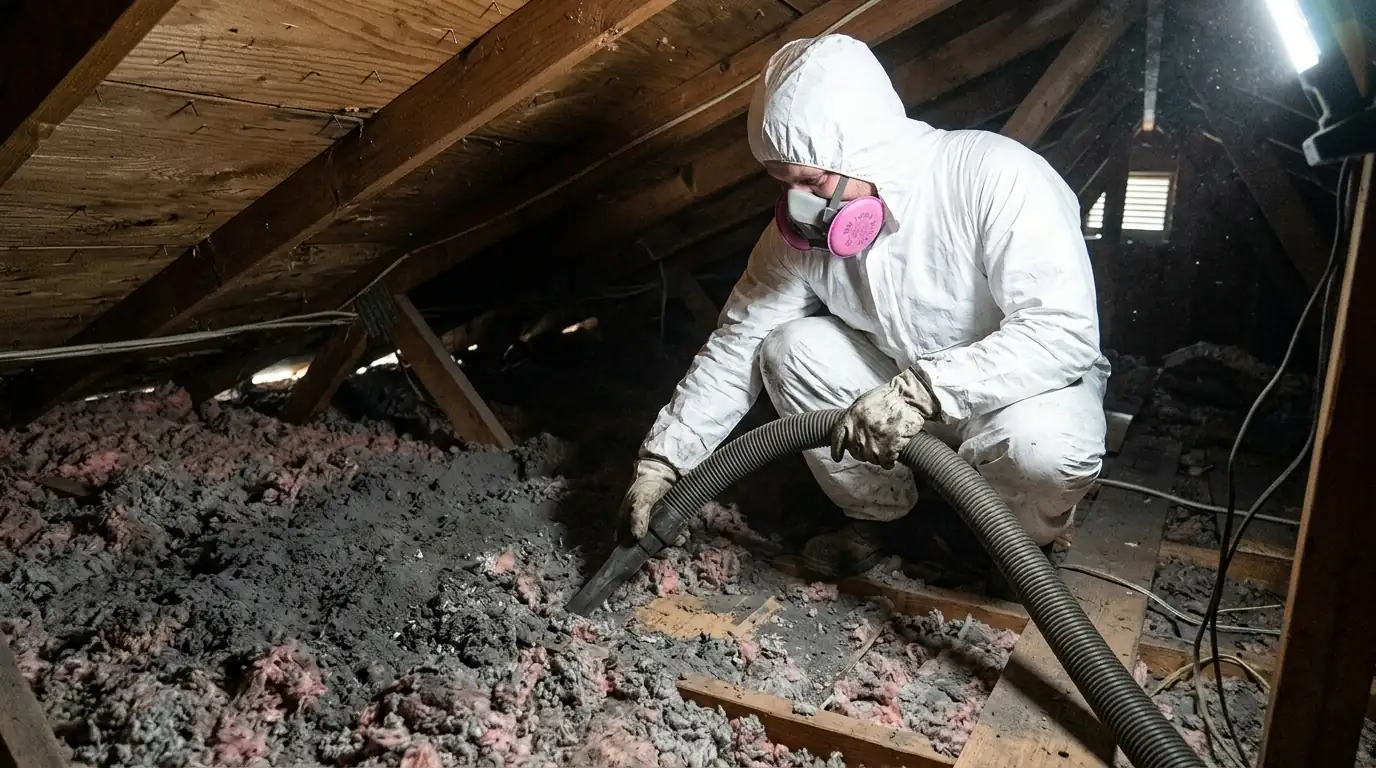
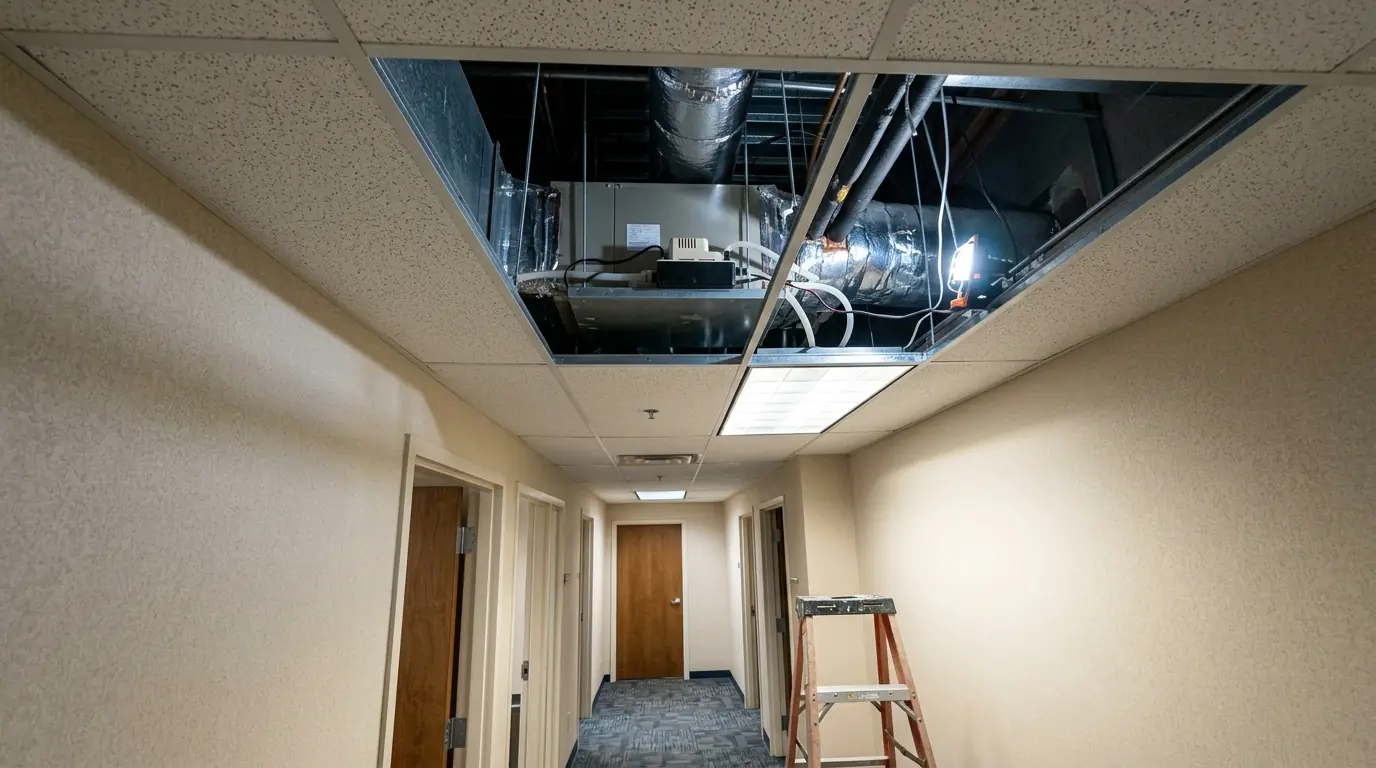
Attics breathe through soffit and ridge vents, so a smoky week can leave a gray film on insulation and framing. Ash also settles in bath fan housings and return grilles. We check the attic first, since ash there keeps sifting down through can lights and the hatch. Light ash on fiberglass batts can often be HEPA vacuumed; heavy ash on blown-in insulation usually means replacing it, since loose fill can't be cleaned. When ash made it past the filter, we recommend duct cleaning.
Smoke odor with no flame contact
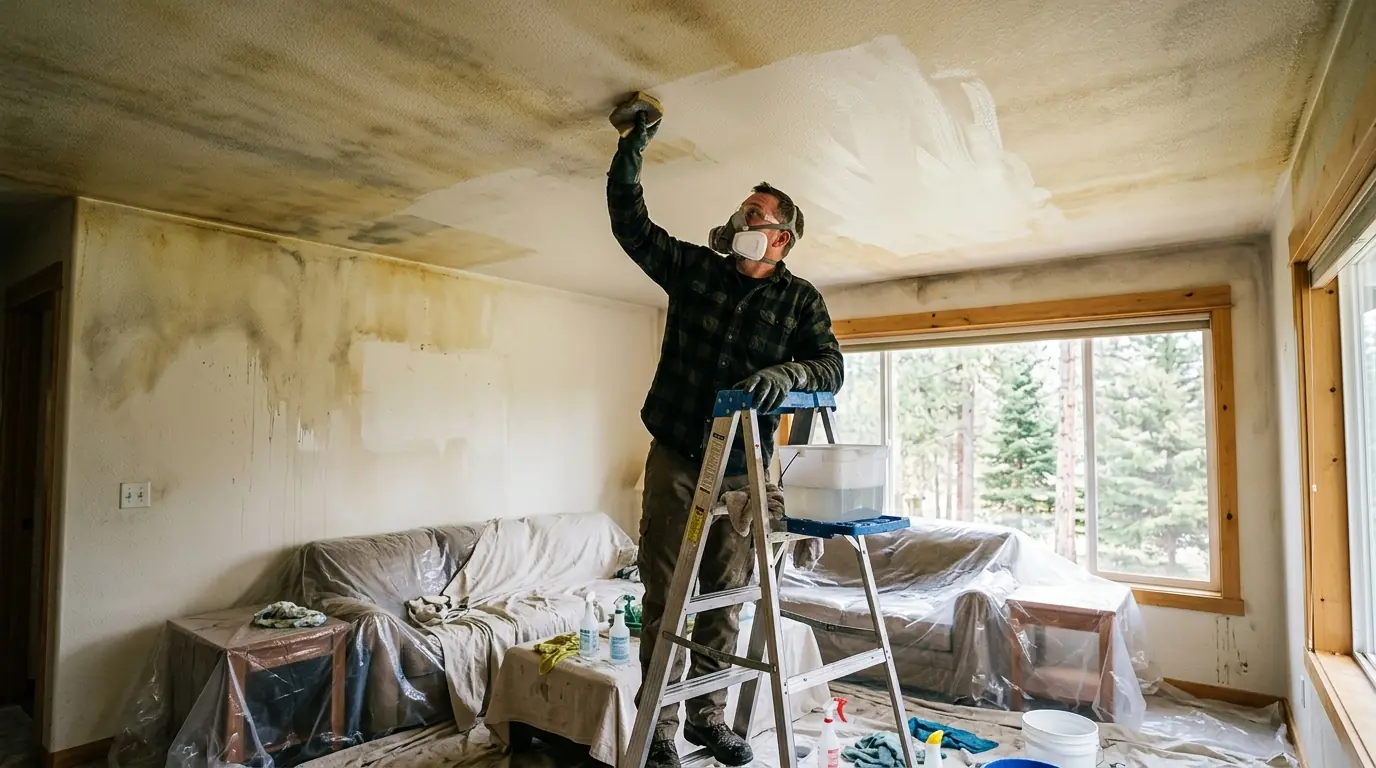
A house can smell like a campfire for weeks without a visible mark. The odor lives in carpet and pad, couches, mattresses, drapes, closet clothing and attic insulation. Airing out helps but rarely finishes it. We start where the smell is strongest, often bedrooms and closets near windows. Textiles get laundered or cleaned off site, carpet gets hot water extraction, and hard surfaces get a cleaner that lifts the fine film. Deodorizing equipment runs last for what remains in the air and framing.
Exterior ash and siding
Outdoor ash looks harmless until it rains. Wet ash forms a gray paste that streaks siding, stains decks and clogs gutters. We blow or brush loose ash off roofs, gutters and decks first, then wash siding with low pressure and a mild detergent, since a pressure washer can drive ash and water behind lap siding. Screens, outdoor furniture and the air conditioner coil get cleaned too; a coated condenser runs hot. We also keep ash runoff out of storm drains where we can.
Need someone there tonight?
We answer around the clock. Tell us what happened and we will say what to do before the crew arrives.
What a wildfire smoke and ash cleanup includes
The scope follows what we find, but these are the usual pieces.
- Attic inspection for ash on insulation, framing and around vents.
- HEPA vacuuming of ash from surfaces, sills, registers and lightly dusted insulation.
- Furnace filter replacement and a look into the return ducts.
- Wipe-down of walls, cabinets and hard surfaces to lift smoke film.
- Hot water extraction of carpet and cleaning of upholstery where practical.
- Laundering or off-site cleaning of drapes, bedding and clothing.
- Low-pressure washing of siding, decks, screens and the AC coil, then a final odor check.
How we clean a home after wildfire smoke
- 01
Walk the house and attic
We find where ash settled and where odor is strongest.
- 02
Change filters, stop the HVAC
A fresh filter keeps the furnace from recirculating ash while we work.
- 03
Dry ash removal
HEPA vacuuming takes ash off insulation, sills and registers before any wet cleaning.
- 04
Clean soft and hard surfaces
Textiles, carpet and hard surfaces each get a method matched to the material.
- 05
Exterior and odor treatment
Siding, decks and the AC coil get washed, then deodorizing finishes inside.
Local conditions
Smoke reach from the 2023 Gray and Oregon Road fires
The two August 2023 fires, Gray near Medical Lake and Oregon Road near Elk, cost Spokane County 366 homes across more than 22,000 burned acres. Thousands of other houses sat under that smoke for days, and many still smelled of it after evacuation orders lifted. If your home was downwind of either fire, or any fire since, the attic insulation and return air ducts are the first places we would check.
Wildfire ash cleanup you can do, and what to leave
Light smoke exposure is often a homeowner job; heavy ash is not.
| Task | Doing it yourself | When we do it |
|---|---|---|
| Furnace filter | Change it now and again in a few weeks. Cheap, and it helps most. | We include it and check whether ash got past it. |
| Vacuuming indoor ash | Only with a HEPA vacuum; a regular shop vac blows fine ash back out. | When ash is on insulation, in ducts or in many rooms. |
| Clothes and bedding | Most washables clean up in one or two cycles. | Wool, silk, drapes and anything still smelly. |
| Deck ash | Brush it off first. Hosing it down makes paste. | Siding, roofs and heavy ash loads. |
| Attic insulation | Not a DIY job; disturbing ash in a tight attic spreads it. | Whenever ash is visible on the insulation. |
Wildfire Smoke & Ash Cleanup questions
Sometimes. Fine smoke particles are often invisible but leave odor in carpet, drapes and insulation. If the house still smells after a week of airing out and fresh filters, residue is still there and cleaning will help more than more ventilation.
A vacuum without a HEPA filter blows the finest ash back into the air. Use a HEPA vacuum or wait for one. Wear gloves and a well-fitted N95 mask while you work.
Keep it off until the filter is replaced, then run it and replace the filter again after a few weeks. If ash got into the ducts, the fan keeps spreading it until the ducts are cleaned.
We inspect it every time. Light ash on fiberglass batts can often be vacuumed. Ash on blown-in insulation, or heavy odor in the attic, usually means removal and replacement.
Not with the right method. We remove loose ash dry, then wash with low pressure and a mild detergent. High pressure can push ash and water behind lap siding and window trim, where it stains and stays damp.
Related restoration work
Smoke & Soot Cleanup
Fire & Smoke
See this serviceDuct Cleaning After Smoke & Water Damage
Rebuild, Contents & Commercial
See this serviceOdor Removal & Deodorization
Sewage, Biohazard & Odor
See this serviceContents Pack-Out & Cleaning
Rebuild, Contents & Commercial
See this serviceSee all 37 restoration services
Related advice: The first 48 hours after a house fire and Cleaning up after wildfire smoke and ash
Answering 24/7
House smells like a campfire after a fire you watched from a distance?
Call any hour. We'll check the attic, vents and soft goods and tell you what actually needs cleaning.
1876 N Teanaway Dr, Post Falls, ID 83854