Restoration advice
After a house fire: what the first 48 hours should look like
Quick answer
Stay out until the fire department says the house is safe to enter, then secure it: board windows, tarp roof openings and lock what you can. Call your insurer, photograph everything before cleanup, and leave soot alone. Firefighting water starts its own damage clock, so drying often has to begin in the first day or two, before any soot cleaning.
Wait for the fire department to clear the house
Re-entry starts with one rule: do not go back in until the fire department tells you it is safe. Fires can rekindle inside walls and attics, floors and ceilings can be weakened, and the air holds combustion gases and fine soot. When you do go in, keep it brief, wear a respirator and sturdy shoes, and carry a flashlight.
Utilities are usually shut off during or after the fire. Leave them off until the utility, an electrician or the fire department says they can be restored. Do not plug anything in or flip breakers on your own.
Securing the house: board-up, tarps and locks
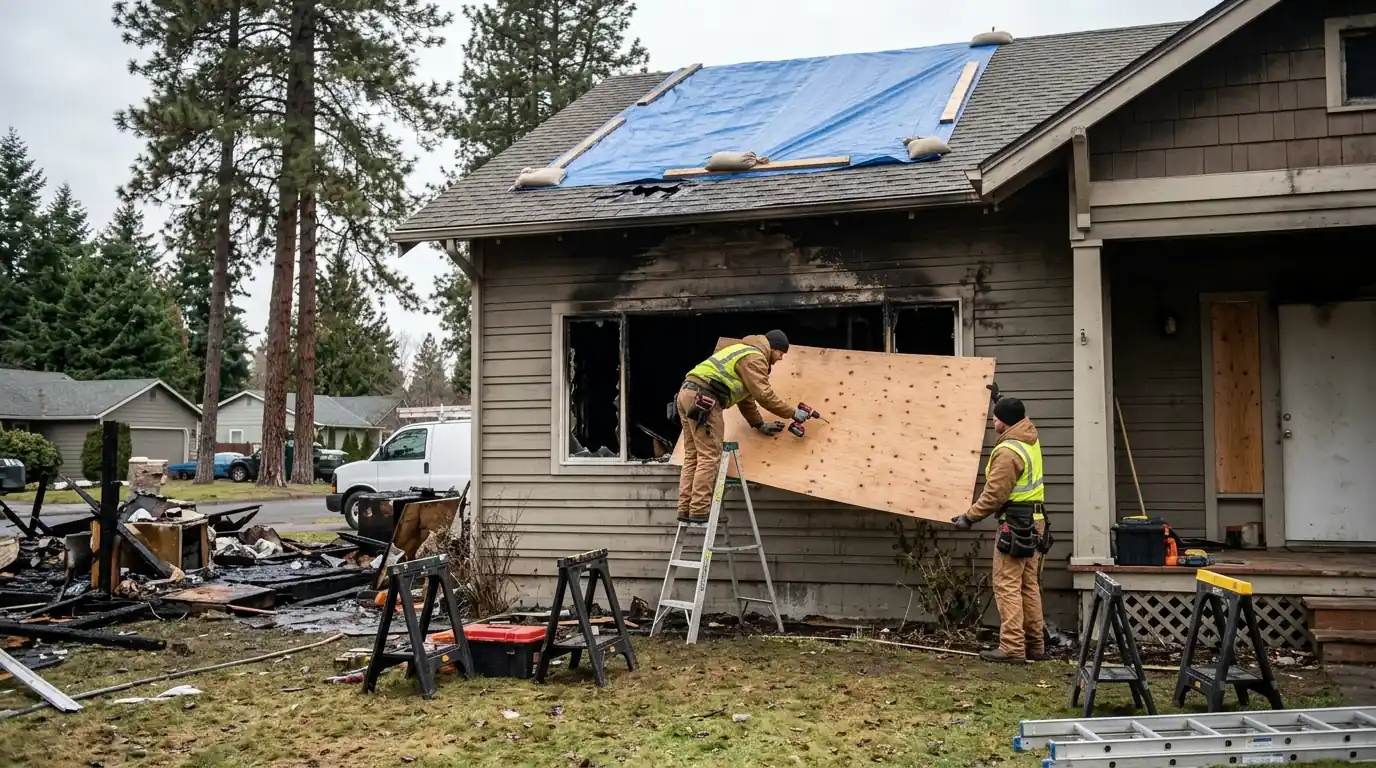
A burned house with broken windows, a vented roof and forced doors is open to weather, animals and theft. Securing it is the first job after clearance, and most homeowner policies expect you to take reasonable steps to protect the property from further damage.
Emergency board-up and roof tarping is often the first thing we do on a fire job, before any cleaning, so the house stops taking damage while decisions get made.
- Plywood over broken windows and doors
- Tarps over roof openings cut during the fire
- Locks or boards on every entry point
- Valuables, documents and prescriptions moved out if it is safe to reach them
The water damage that comes with the fire
Firefighters put a lot of water into a house in a short time. It soaks carpets, runs into basements, saturates insulation and drywall below the fire and keeps moving after the trucks leave. That water starts its own damage clock, separate from the fire, and it carries soot and debris along with it.
In a Spokane winter, with January lows averaging around 21 F, a house without heat can also freeze. Wet pipes, wet framing and standing water all need attention quickly. Fire damage restoration on most jobs starts with extraction and drying, often before any soot cleaning happens.
Need a second opinion before you tear anything out? Call and describe it. We will tell you what we would do.
Call (509) 730-2039Soot: what you can do and what to leave alone
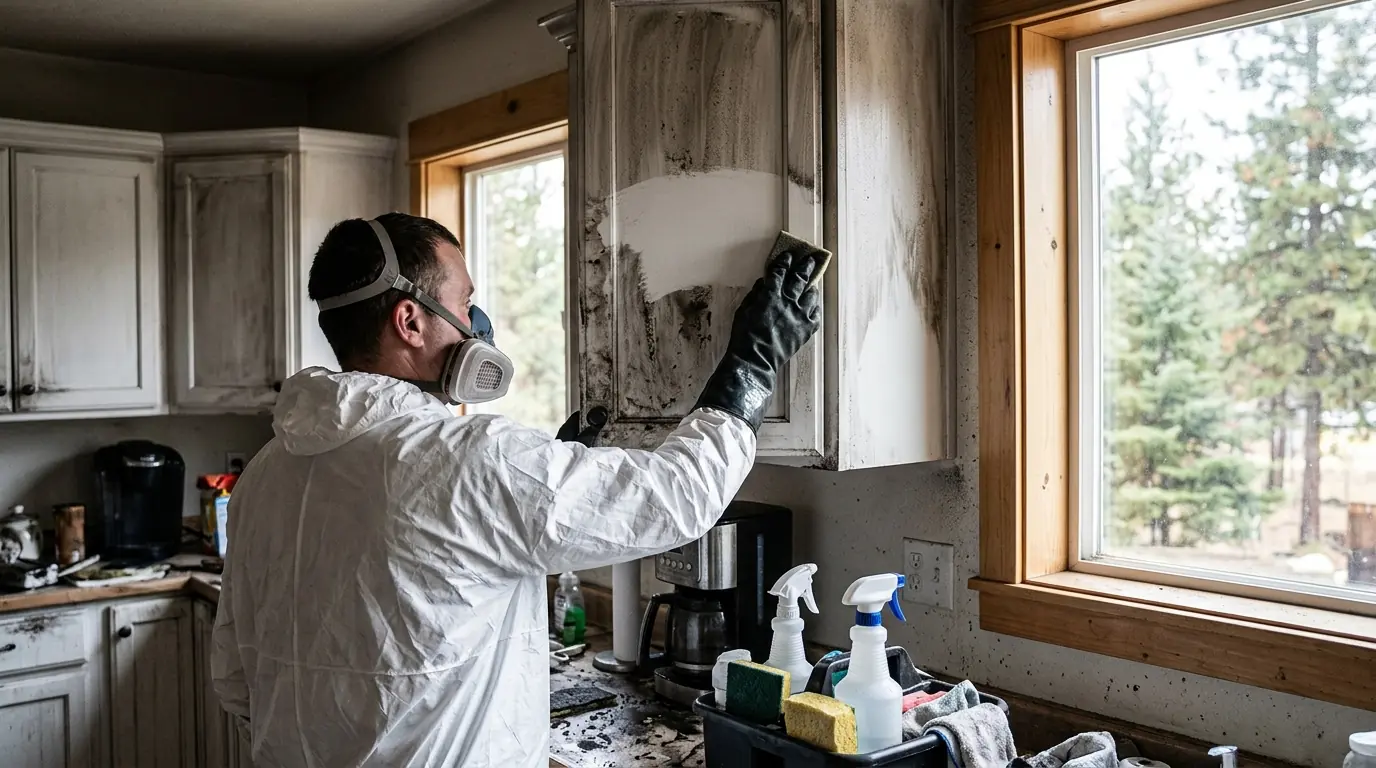
Soot is acidic and often oily, and the wrong cleaning method sets it into surfaces for good. A few things help and a few make it worse:
- Do keep the furnace and central air off so the blower does not spread soot
- Do cover clean upholstery and beds with old sheets
- Do open windows for airflow if it is safe and the weather allows
- Do throw out food, medicine and cosmetics exposed to heat or smoke
- Do not wipe walls, ceilings or upholstery with a wet cloth
- Do not use ordinary household cleaners or a household vacuum on soot
- Do not turn on ceiling fans or electronics that were near the fire
Smoke odor, and why airing out is not enough
Smoke odor lives in the materials, not only in the air. It works into drywall, insulation, wood, fabrics and ductwork, and it comes back on warm days long after the windows were opened. Getting rid of it means removing what cannot be cleaned, cleaning what can, sealing some surfaces before paint, and treating the air and the ducts.
Contents are a separate decision. Hard goods like dishes and many furniture pieces can often be cleaned. Clothing and fabrics may respond to specialized laundering. A pack-out moves items to a clean space for cleaning and inventory so they are not sitting in a smoky house through the rebuild.
Documenting the fire loss for your insurer
Call your insurer as soon as you are safe, and start a file. Photograph every room before cleanup, including smoke webs, ceiling stains and the outside of the house. Keep receipts for hotel stays, meals, clothing and other costs of being out of the house; many policies include additional living expenses, but your policy and adjuster decide.
For scale, LawnStarter's 2026 fire and smoke data puts the national average for fire and smoke damage restoration near $20,470, with a common range of $2,900 to $38,325, and smoke-only cleanup at $200 to $1,135. Those are national planning ranges, not quotes. The size of the fire, the water used and how far smoke traveled drive the real number, which is why a thorough photo record matters.
Day two: a written scope and a plan
By the second day you should have had a walk-through and a written scope of what will be dried, cleaned, removed and stored, plus a first idea of what the rebuild involves. We can walk the house with your adjuster and provide photos, moisture readings and a room-by-room contents inventory. Do not sign anything you have not read, and keep asking questions until the plan makes sense.
Reader questions
Sometimes, if the fire department clears it, power and heat are safe, and smoke stayed mostly in one area. Soot and odor spread further than most people expect, so close off the kitchen, keep the furnace fan off until the filter is changed, and have the rest of the house checked for residue before deciding.
Once cleared to enter, take identification, financial documents, eyeglasses, phones, chargers, keys, sealed prescriptions stored away from the fire, and irreplaceable photos or keepsakes you can reach safely. Leave damaged items in place for the adjuster. Food, cosmetics and medicine exposed to heat or smoke should be thrown out, not packed.
A small, contained fire may take days of cleaning and deodorizing. A larger fire with firefighting water, demolition and a contents pack-out can take weeks before rebuild starts, and the rebuild adds more. The scope, drying time and insurance approvals set the pace, so ask for a written plan with stages you can track.
Not until it has been checked. The blower can pull soot through the ductwork and spread it to every room, and fire or water may have damaged the unit or its wiring. Have the system inspected, replace the filter, and clean the ducts if soot reached them before you run it.
Ventilation. Opening the roof and windows releases heat and smoke so crews can get inside and keep the fire from racing through the attic. It looks like extra damage, but it often saves more of the house. Those openings are exactly what board-up and tarping cover once the fire is out.
Services that go with this guide
Fire Damage Restoration
Fire & Smoke
See this serviceEmergency Board-Up & Roof Tarping
Storm & Emergency
See this serviceSmoke & Soot Cleanup
Fire & Smoke
See this service