After the fire department hands the house back
Fire damage restoration for Spokane homes after the trucks leave
A house fire leaves burned material, smoke residue everywhere and the water used to put it out. We work all three in the right order.
- Answered 24/7
- Board-up and tarping
- Soot and odor
- Firefighting water
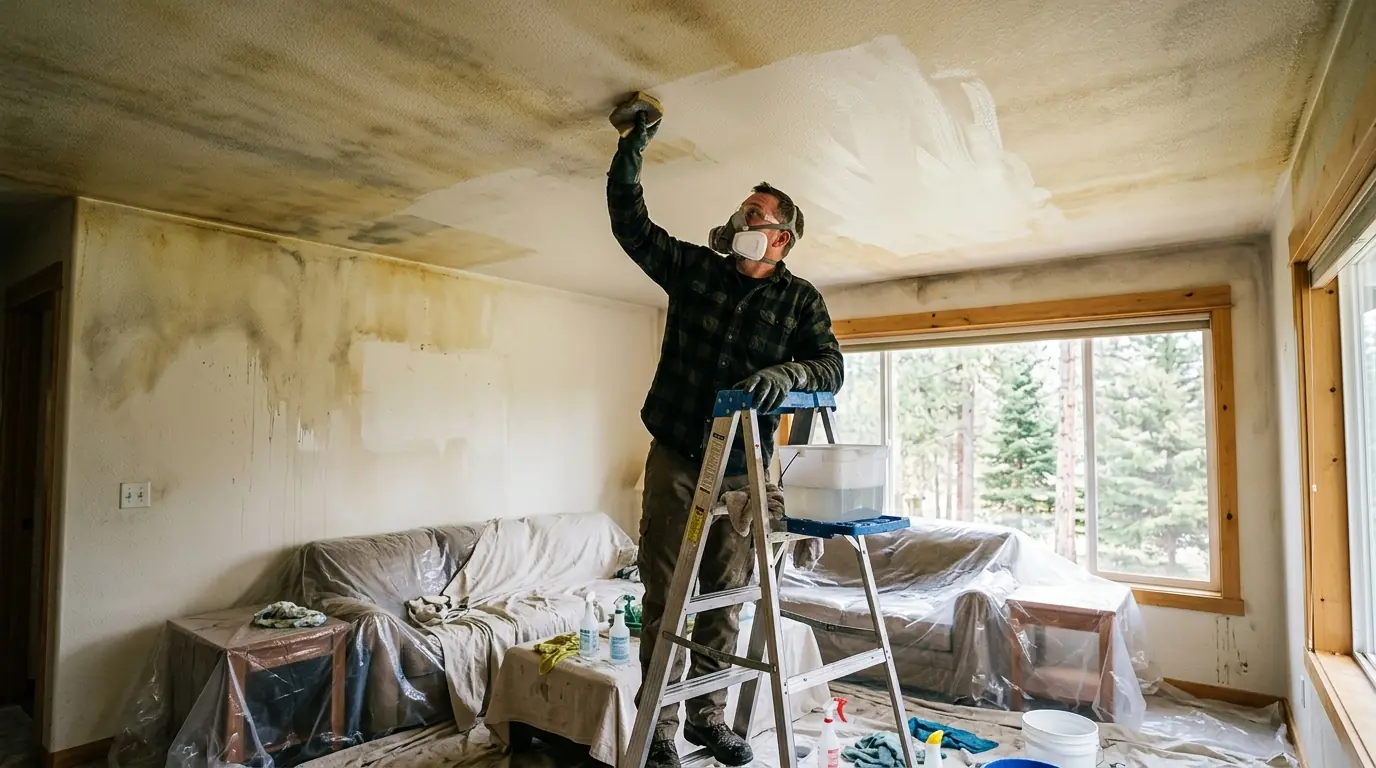
Quick answer
Fire damage restoration in Spokane starts with securing the house and removing firefighting water, because that water starts soaking drywall and subfloors within hours. Then we clean or remove soot-covered materials, treat smoke odor at its source and pack out contents worth saving. Charred framing gets evaluated before any rebuild starts.
Updated October 2026
Three kinds of fire damage, handled in the right order
The burned room is the easy part to understand. The harder damage is what spread from it: smoke pushed through the whole house, soot settled on every flat surface, and hose water that ran into the floors below.
Order matters. Water comes first, because wet drywall and subfloors break down and grow mold if they sit. Soot comes next, because acidic residue etches glass, pits chrome and yellows plastic the longer it stays. Odor work runs through the whole job, and it means removing the residue that holds the smell, not covering it. Before any of that, we board windows, tarp roof openings and walk the house with you to sort charred, smoke-damaged and wet areas into a written scope.
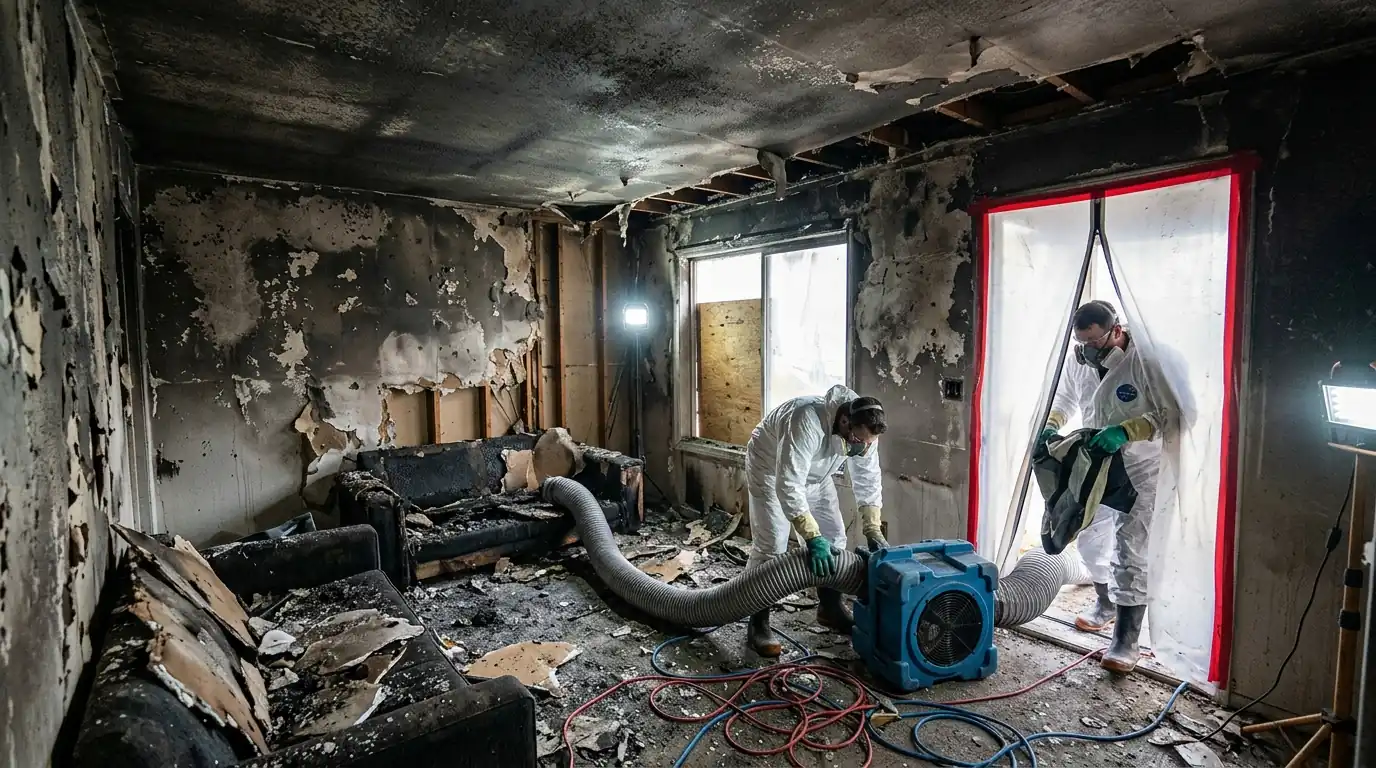
House fires that spread past one room
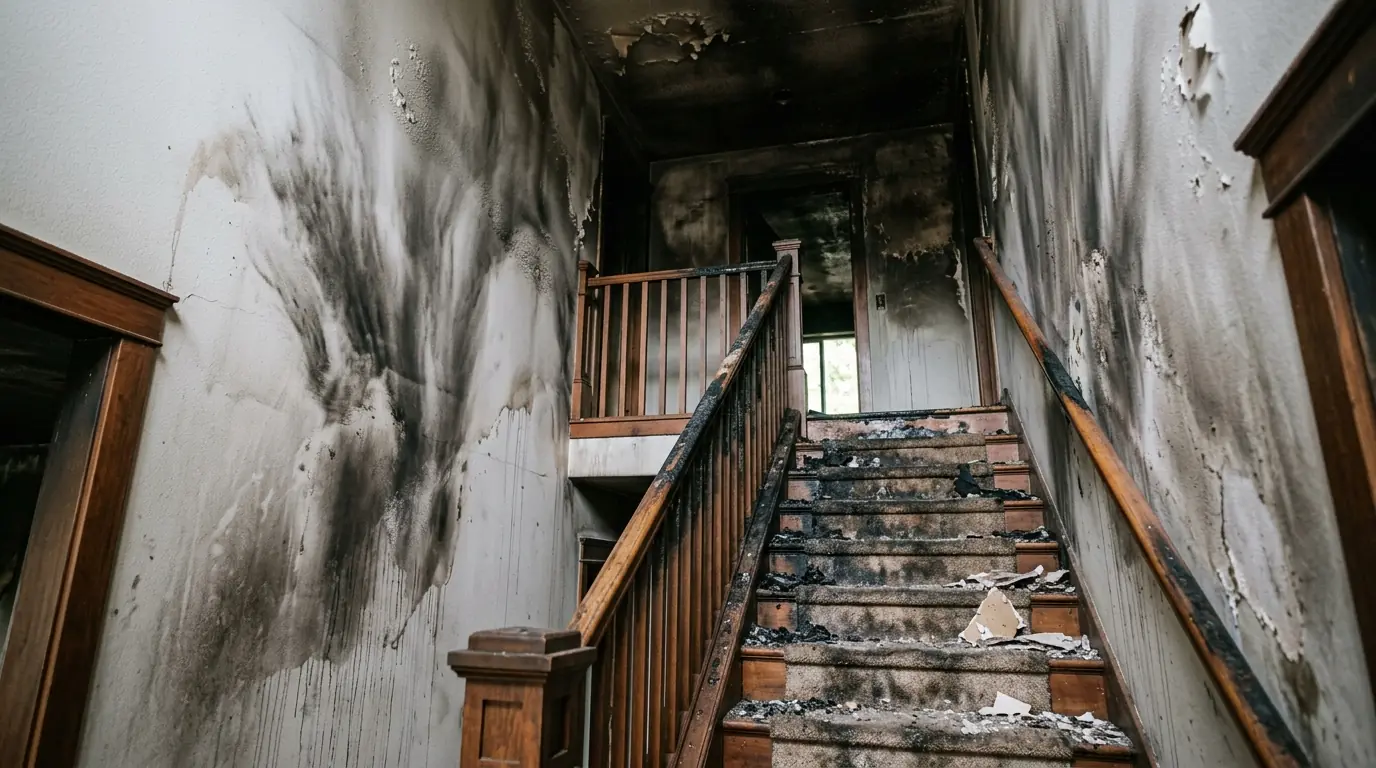
Once fire leaves its starting room, heat and smoke follow the easiest path: up stairwells, into the attic and through return air ducts. That's how a bedroom fire leaves a soot line on a basement ceiling, so we assess every level. Framing with surface char is often sound underneath, but deep char needs a contractor or engineer to decide what stays. Attic insulation that sat in smoke usually goes. Rooms that only saw smoke can typically be cleaned, sealed and painted instead of gutted.
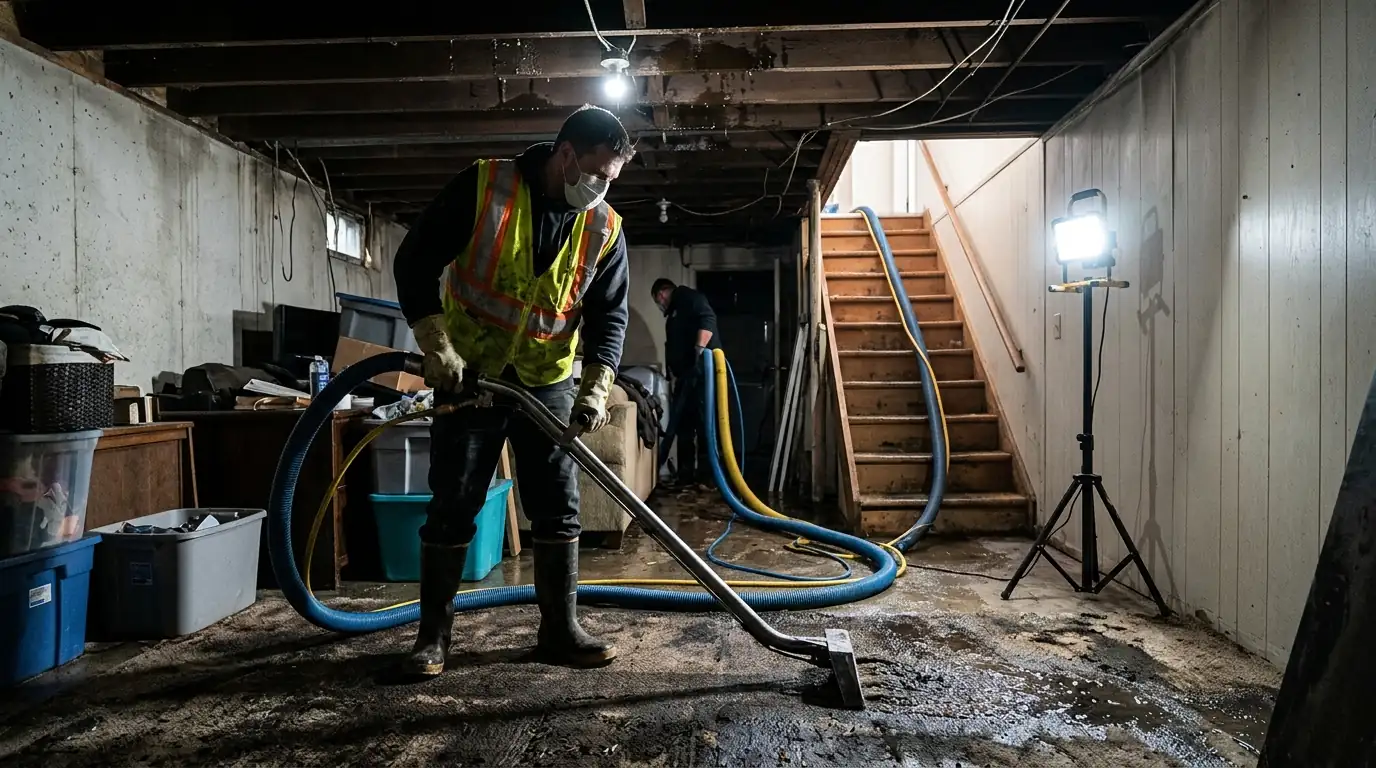
Water from firefighting inside walls and floors
Hose streams soak everything below the fire, and that water doesn't drain on its own. It sits in ceiling insulation, runs into wall cavities and pools on subfloors under carpet. Mixed with ash and soot, it's dirty water and we treat it that way. We extract standing water, pull saturated pad and insulation, and dry what can be saved with dehumidifiers and logged readings. Skipping this step is how a fire loss turns into a mold job a few weeks later.
Garage and shop fires
Garage and shop fires burn hotter and dirtier because of what's stored there: fuel, solvents, tires, plastics and paint. The soot is usually oily and heavy, and it travels into the house through the shared wall and the door to the mudroom. Tools and stored items each need a clean-or-discard decision, and your insurer may treat vehicles separately. We clean the structure, protect the attached living space and keep an itemized list of what was in the garage so nothing is missed on the claim.
Looking at this mess right now?
Pick up the phone. A real person answers 24/7 and talks you through the next ten minutes.
How a fire damage job runs from board-up to rebuild
- 01
Secure the property
Openings get boarded, the roof gets tarped and utilities are made safe.
- 02
Walk and document
Photos, notes and moisture readings sort burned, smoke-damaged and wet areas.
- 03
Remove water
Extraction and drying keep firefighting water from turning into mold.
- 04
Pack out and tear out
Salvageable contents leave for cleaning; charred and odor-soaked materials come out.
- 05
Clean soot and treat odor
Surfaces get cleaned by soot type, then odor treatment handles framing and air.
- 06
Hand off to rebuild
A clean, dry, odor-free structure is ready for drywall, paint and finishes.
Local conditions
What the Gray Fire by Medical Lake taught about smoke reach
When the Gray Fire took roughly 240 homes near Medical Lake in August 2023 and shut I-90 for over two days, the losses inside the burn were only part of it. Burned houses were only part of it. Many homes that never caught fire still took smoke and ash through vents and open windows, and some were wet from defensive firefighting. When we assess a fire-damaged home anywhere around Spokane, we check neighboring buildings and outbuildings too, because smoke rarely stops at the property line.
Timeline
How long fire damage restoration usually takes
Board-up and water removal happen in the first day or two. Drying wet framing typically runs three to five days once equipment is set. Soot and odor work for a one-room fire with smoke through the house often takes one to two weeks. Bigger losses run longer, mostly because of adjuster visits, engineer reviews of charred framing and rebuild permits, and we tell you which step is holding things up.
Cost
Planning numbers for a fire damage restoration claim
For fire and smoke restoration, LawnStarter's 2026 figures show a national average near $20,470, with a common range of $2,900 to $38,325, or roughly $4.25 to $6.50 per square foot. Those are national planning figures, not our quote. A small contained fire sits near the bottom; a fire that reached the attic and soaked two floors lands at the top or beyond.
The big swing factors are how far smoke traveled, how much hose water got into the structure, how much drywall and insulation must come out, and how many contents need cleaning.
What a fire damage restoration scope covers
Every fire differs, but most of our scopes include these items.
- Board-up of broken windows and doors, and tarping over burned roof openings.
- Photo documentation and a room-by-room assessment you can share with your adjuster.
- Extraction of firefighting water and structural drying with logged readings.
- Removal of charred drywall, insulation and flooring that can't be cleaned.
- Soot cleaning matched to residue type on walls, ceilings, cabinets and fixtures.
- Odor treatment, plus sealing of smoke-stained framing before paint.
- Contents pack-out and an inventory of what was kept and discarded.
Fire Damage Restoration questions
It depends on how far smoke spread and whether utilities are safe. After a small kitchen fire you may be able to use unaffected rooms. When smoke reached the whole house or the furnace ran during the fire, most families stay elsewhere until cleaning is done.
Hold off. Wiping soot with a wet rag usually smears it deeper into paint and grout. Do remove valuables, medicine and documents, and change the furnace filter. Leave walls, ceilings and upholstery for the right methods.
Yes, and it's one of the most important parts. We extract firefighting water, remove saturated materials and dry the structure with logged readings, the same as a burst pipe job.
Odor returns when residue is still somewhere: in wall cavities, ducts, insulation, or on surfaces painted without sealing. A proper job cleans or removes residue first, then seals stained framing. Warm, humid days reveal anything left behind.
We can. We document with photos and moisture logs from the first visit and can walk the house with your adjuster. What the policy pays is between you and your insurer.
Related restoration work
Smoke & Soot Cleanup
Fire & Smoke
See this serviceEmergency Board-Up & Roof Tarping
Storm & Emergency
See this serviceContents Pack-Out & Cleaning
Rebuild, Contents & Commercial
See this serviceOdor Removal & Deodorization
Sewage, Biohazard & Odor
See this serviceSee all 37 restoration services
Related advice: The first 48 hours after a house fire and Cleaning up after wildfire smoke and ash
Answering 24/7
Fire's out and you're standing in a wet, smoky house?
Call us any hour. We'll secure the place first and walk you through what happens next.
1876 N Teanaway Dr, Post Falls, ID 83854