Records your adjuster can use
Insurance claim documentation for Spokane water and fire losses
We document what happened with photos, moisture logs and a line-item scope. Your policy and your adjuster decide what's covered.
- Answered 24/7
- Photo documentation
- Moisture logs
- Adjuster walkthroughs
Quick answer
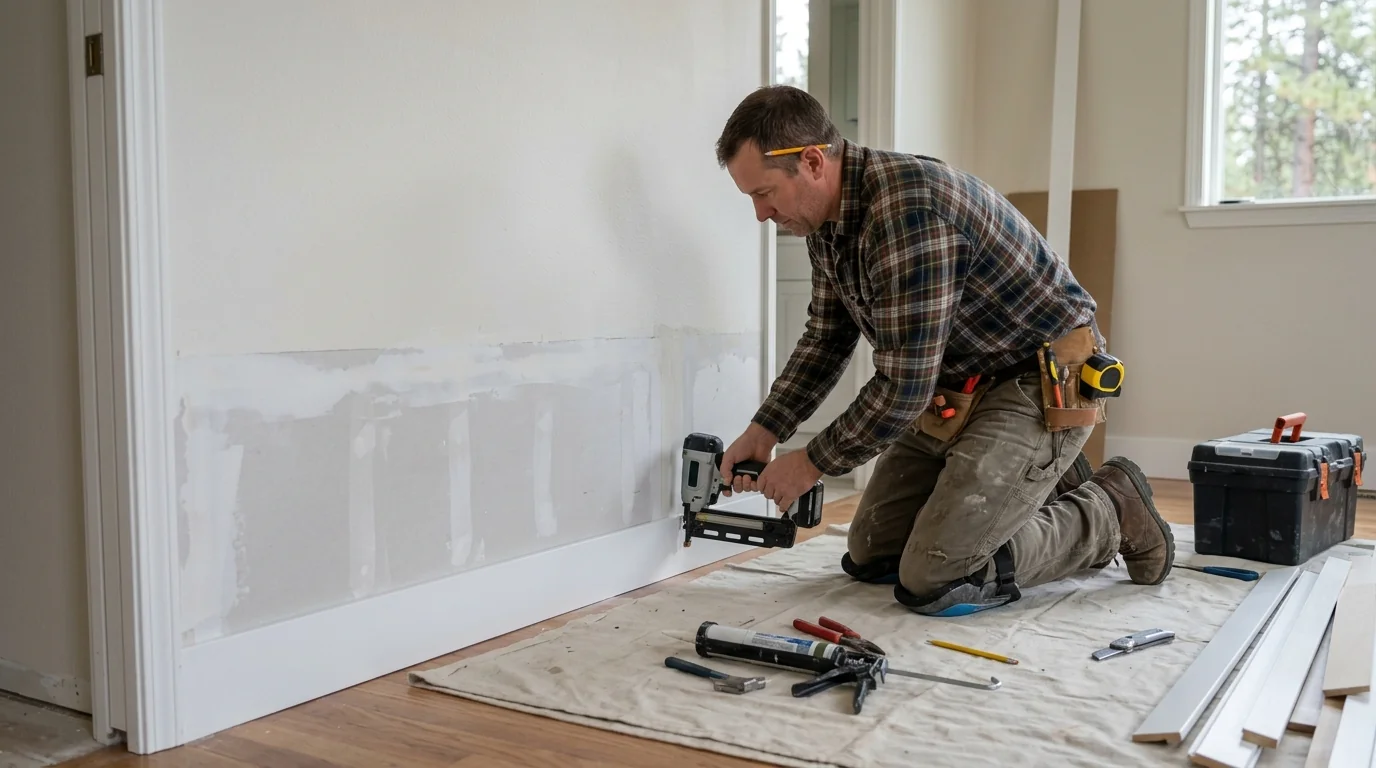
Insurance claim documentation in Spokane means building a record of the damage before and during cleanup: dated photos, moisture readings logged daily and a line-item scope of what was removed and why. We prepare it so your adjuster can review the loss clearly. We don't decide coverage; policies differ and the adjuster makes that call.
Updated October 2026
What good documentation does for a water or fire claim
Adjusters often see the house after it has changed. Water has been extracted, drywall cut out, soot wiped. Without a record of what came before, questions about why something was removed are hard to answer, and you're left trying to remember details from a stressful week.
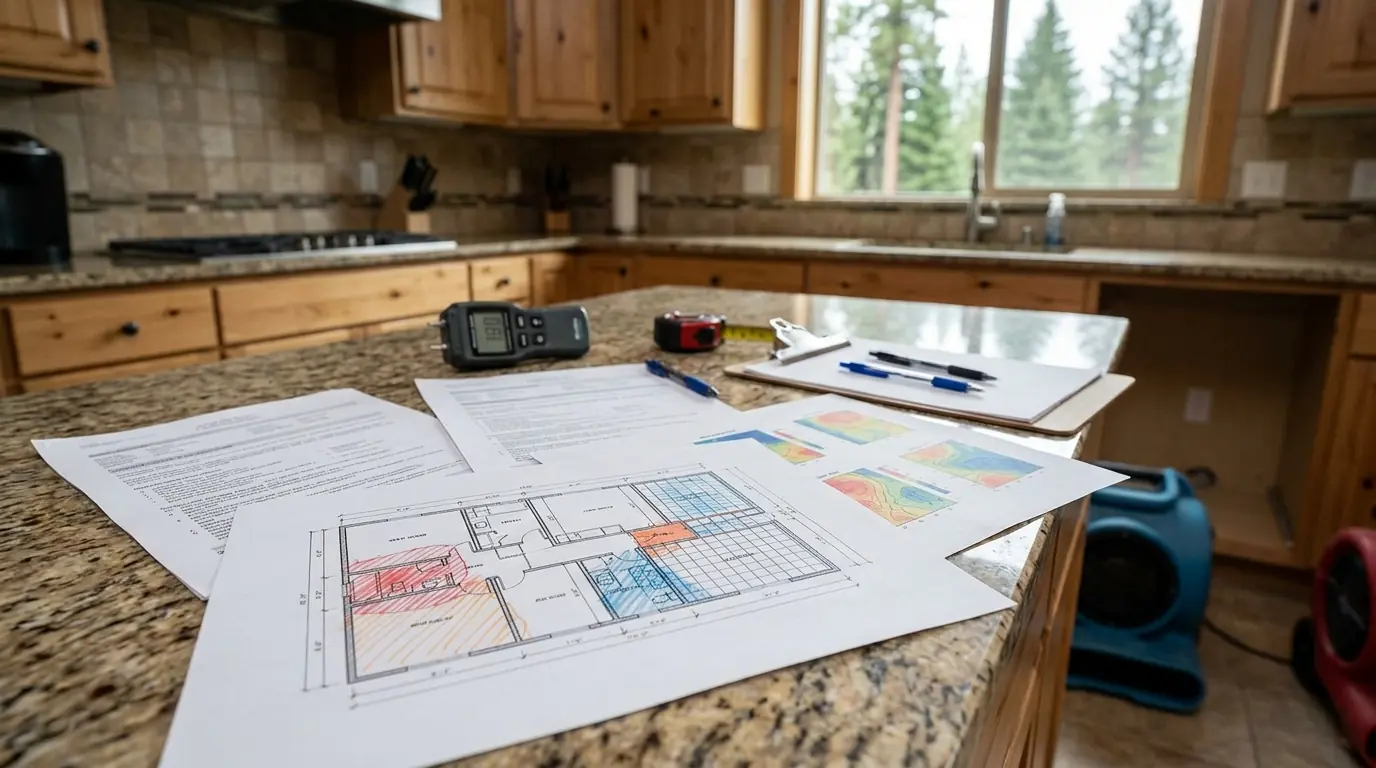
We document as we go. Photos are taken before anything is touched, then during and after each step, all dated and labeled by room. Moisture readings are mapped on a floor sketch and logged daily until the structure is dry. The scope lists each item by room with quantities, like square feet of drywall or linear feet of baseboard, in a format adjusters are used to reading. For the homeowner's side of it, see our guide on documenting a water damage claim.
Cost
What shapes the cost of claim documentation
Documentation time grows with the size of the loss: more rooms, more reading points and more line items. Re-inspections with the adjuster, disputed areas and a detailed contents inventory add visits. When we're also doing the restoration, photos and readings are part of how the drying is run and verified, so ask how documentation fits into the overall scope. Who pays for what is set by your policy and decided by the adjuster.
Photos and moisture logs
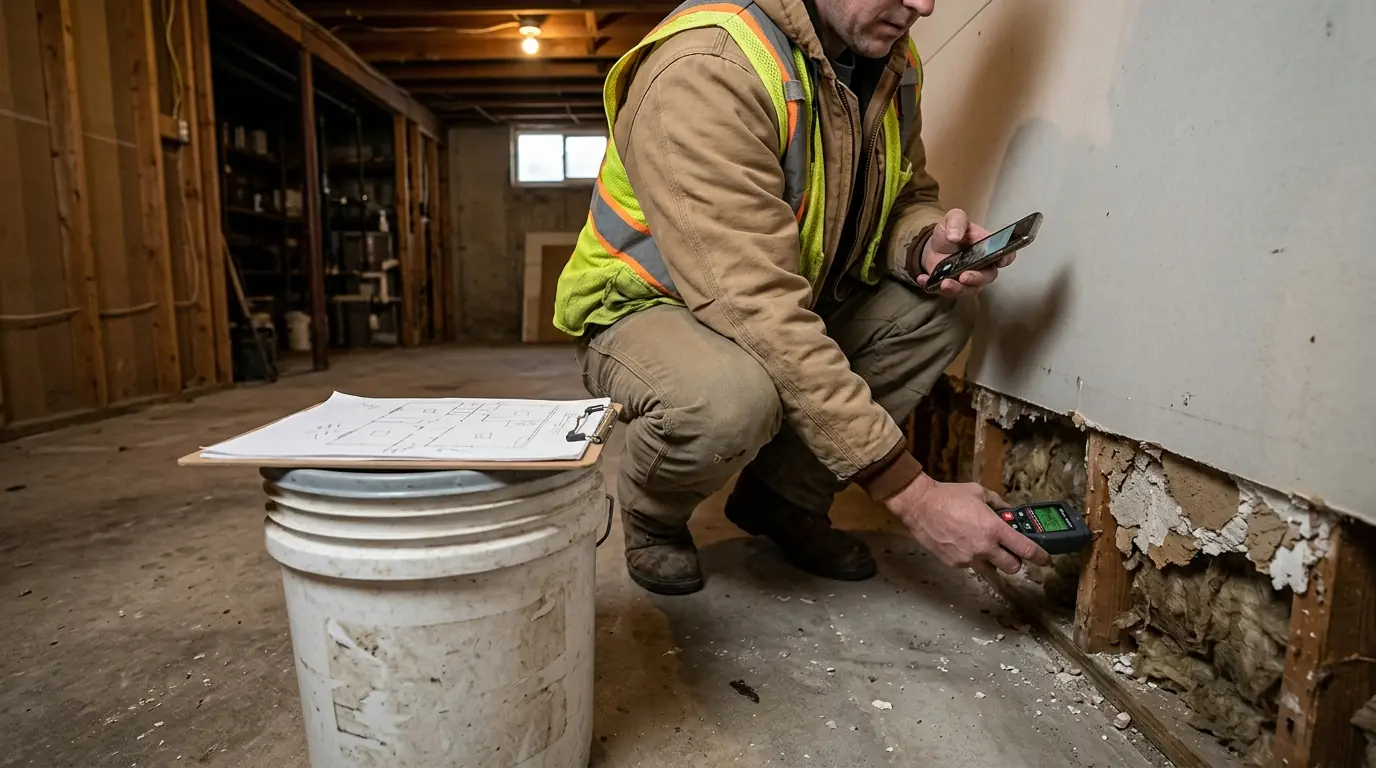
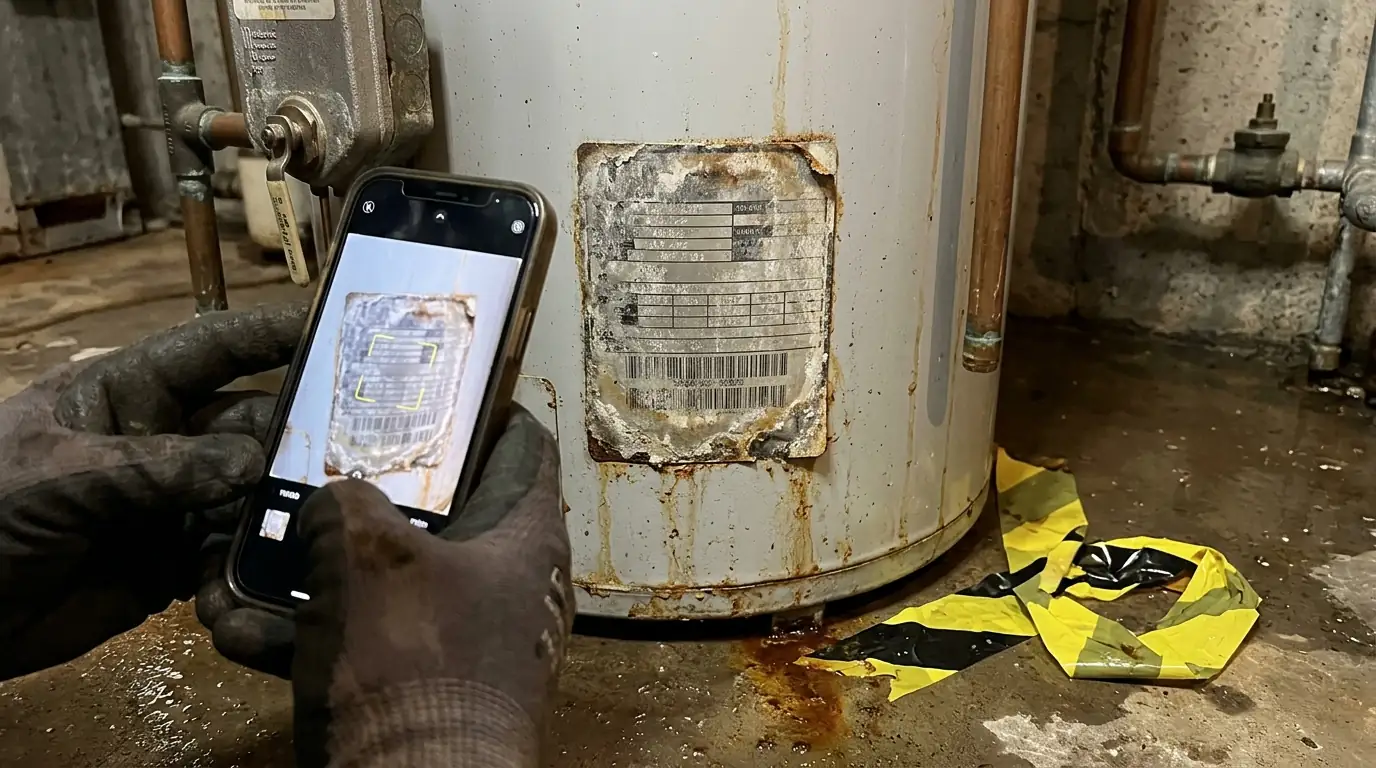
Every room gets wide shots before work starts, then close-ups of damage, meter readings on the display, model and serial plates on damaged appliances, and the source of the loss if it's visible. Moisture readings are taken at marked points and recorded with date, time and material, then repeated daily so the log shows the drying curve. That curve is what explains to the adjuster why equipment ran for the number of days it did. Copies go to you as the job moves, not only at the end.
A line-item scope
A scope breaks the job into countable pieces: square feet of drywall removed, linear feet of baseboard, equipment days, carpet and pad by area, cleaning by room. Line items with quantities are easier for an adjuster to review than a lump sum, and they make it obvious when something was missed. We note the reason for each removal, such as readings above the dry standard or Category 3 contamination, and update the scope if hidden damage turns up later, such as wet framing behind cabinets that couldn't be seen on day one.
Walking the job with your adjuster
Adjusters often prefer to see the loss with someone who can explain it. With your OK, we walk the house with them, show the moisture map and the wet materials still in place, and answer technical questions about drying or removal. We don't negotiate your coverage or speak for you. If the adjuster wants another reading or a photo of something specific, we take it on the spot so the review keeps moving. Afterward, you get a short note of what was shown and asked.
Water, smoke or mold in front of you right now?
Call us any hour. We will walk you through what to shut off and what to move while the crew heads your way.
What claim documentation includes on a water or fire job
These records are kept from the first visit to the last reading.
- Dated, room-labeled photos before, during and after work.
- A moisture map with readings, materials and a dry reference.
- Daily drying logs with equipment counts.
- A line-item scope with quantities and reasons for removal.
- Photos of appliance labels and the source of the loss when visible.
- A list of contents that can't be restored, with photos.
- An adjuster walkthrough with your permission.
How we build a claim record from the first visit
- 01
Photograph before touching
Wide and close-up photos of every affected room and the source.
- 02
Map the moisture
Readings at marked points on a floor sketch, with a dry reference.
- 03
Log every day
Repeat readings and equipment counts until materials are dry.
- 04
Write the scope
Line items with quantities and the reason for each removal.
- 05
Share and walk
You get copies, and we walk the job with the adjuster if you'd like.
Local conditions
Claims across Spokane County's mix of older and newer homes
Spokane County had 539,333 people at the 2020 census, and the median home in the county was built around 1978. That means many claims involve houses with decades of remodels layered on top of each other: a 1970s basement finished later, or new flooring laid over old. Good documentation records what was actually there, layer by layer, because the adjuster prices what existed before the loss. We photograph cross-sections of cut materials so each layer is visible.
Timeline
How long claim documentation takes alongside the work
Initial photos and moisture mapping happen on the first visit, before extraction or removal starts, and usually take an hour or two depending on the size of the loss. Daily logs continue through drying, often three to five days for a clean water loss and longer for fire or contaminated water. The written scope typically follows shortly after drying, and the adjuster's timeline from there is set by the insurer.
Insurance Claim Documentation questions
No. You open the claim with your insurer. We provide the photos, moisture logs and scope, and with your permission share them with the adjuster. Policies differ, and the adjuster decides what's covered.
Yes, if it's safe. Photos of the damage and the source before anyone arrives are useful. Then let us document as cleanup begins so the record is complete and labeled by room.
No one can promise that. Documentation gives the adjuster a clear record of what happened and what was done, which helps the review. Coverage depends on your policy and the adjuster's decision.
Readings from affected materials at marked points, plus a dry reference in the same material in an unaffected area. We log them daily so the record shows when each area reached dry.
Yes, with your permission. We show the moisture map, the materials still in place and the reasons for removals, and answer technical questions. We don't negotiate coverage on your behalf.
Related restoration work
Emergency Water Damage Restoration
Water Damage
See this serviceFire Damage Restoration
Fire & Smoke
See this serviceContents Pack-Out & Cleaning
Rebuild, Contents & Commercial
See this serviceReconstruction After Water & Fire Damage
Rebuild, Contents & Commercial
See this serviceSee all 37 restoration services
Related advice: Documenting a water damage claim the right way and Questions to ask a restoration company before work starts
Answering 24/7
Filing a water or fire claim in Spokane?
Call any hour. We'll start the record before anything else changes.
1876 N Teanaway Dr, Post Falls, ID 83854