Restoration advice
How to document a water damage claim so nothing gets missed
Quick answer
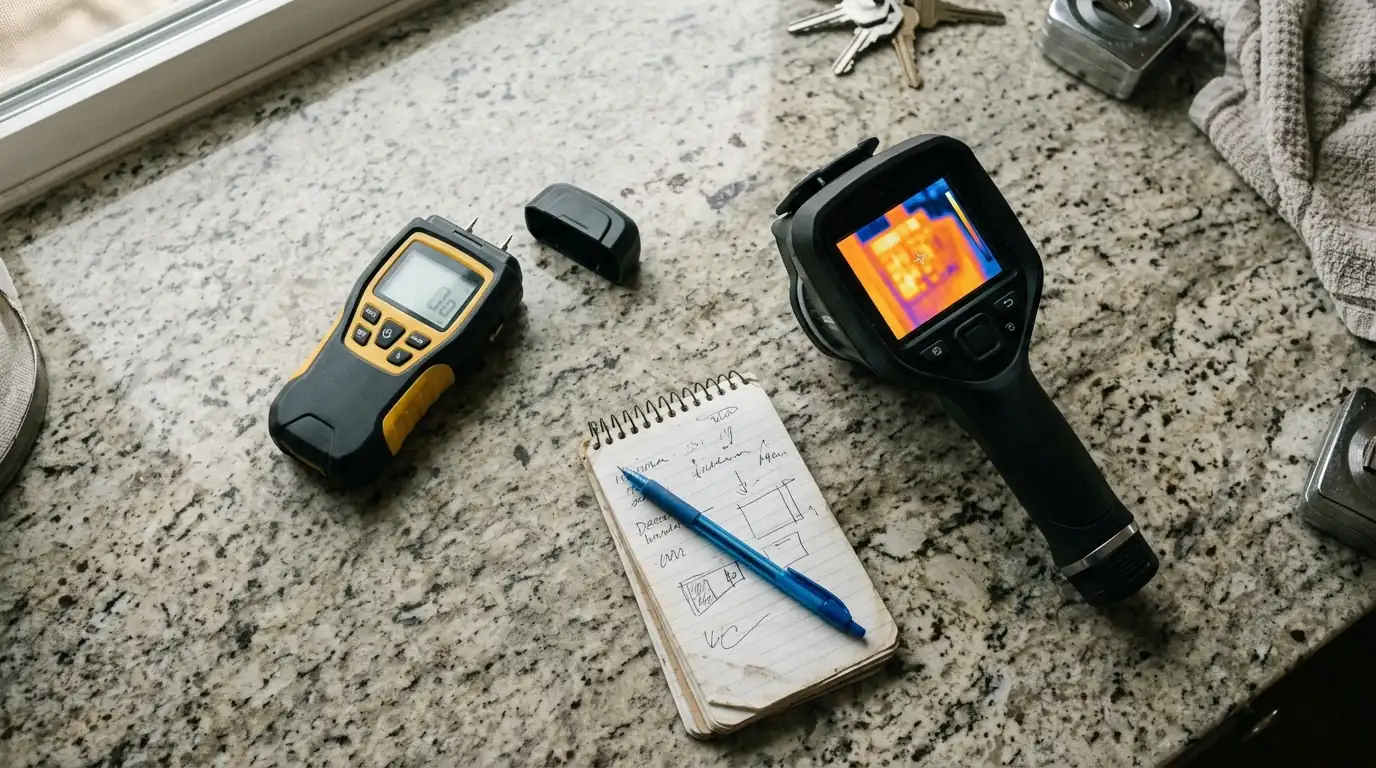
Start before anything is moved: wide photos of each room, close-ups of the water line and the source, and a slow video walk-through. Keep damaged items until the adjuster says they can go, save receipts for emergency costs, and ask for moisture logs from whoever dries the house. Your policy and adjuster decide coverage; good records make that decision easier.
Photos and video: a room-by-room checklist
Document before anything is moved, cleaned or thrown out. Your phone is enough. Turn on location and date stamps if your camera app has them, and take more shots than you think you need.
- A slow video walk-through of every affected room, narrating what you see
- Wide shots from each doorway, then medium shots of each wall
- Close-ups of the source: the split pipe, failed hose, overflowing fixture or roof stain
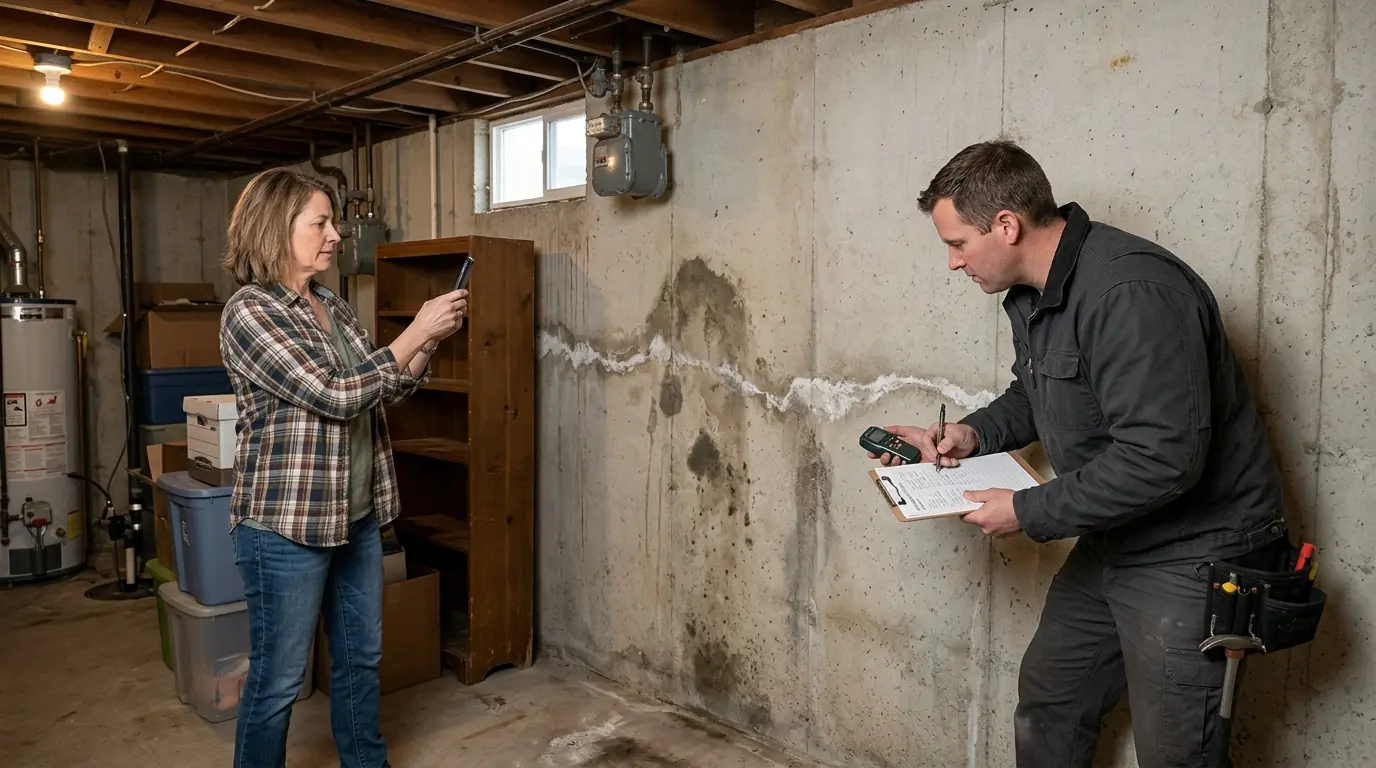
- The water line on walls, cabinets, appliances and furniture
- Damaged flooring, with a lifted corner showing the pad if that is safe to do
- Model and serial plates on appliances, electronics and the water heater
- The outside of the house, gutters and grading if water came in from outside
Keep damaged items until the adjuster has seen them
Throwing things out too early is one of the most common claim problems. If an adjuster cannot see or verify an item, it is harder to include. Items that have to leave the house right away, like sewage-soaked carpet, can be photographed, measured and sampled first; a small cut piece of carpet and pad shows the type and quality.
Build an inventory as you go: the item, its rough age, where it was bought and the damage. Receipts and order histories in your email help establish value. On a large loss, a contents pack-out lists items room by room as they are moved, which builds most of the inventory for you.
Your duty to stop the damage from getting worse
Most homeowner policies require you to take reasonable steps to prevent further damage after a loss. In practice that means shutting off the water, getting the leak repaired, removing standing water and starting drying. Damage that grows because nothing was done, like mold after weeks of wet drywall, may be treated differently from the original loss.
Keep every receipt for that work: the plumber, rented equipment, towels and tarps, and the drying crew. If you have to leave the house, keep hotel and meal receipts too, since some policies cover extra living costs.
Dealing with this right now? Call any hour. We answer, tell you what to do first and send a crew.
Call (509) 730-2039Moisture logs: the record most people forget
Photos show what got wet. Moisture logs prove how wet it was, how far the water traveled and when it was finally dry. A proper drying job takes readings at marked points on the first visit and every visit after, and records which equipment ran in each room and for how many days.
Ask whoever dries your house for copies of those logs and the moisture map. They support the drying charges, show that hidden areas were checked, and answer the question an adjuster is likely to ask later: was this actually dry before it was closed up? Our insurance claim documentation work centers on exactly that record.
A claim file you can keep in one folder
Paper or digital, keep it all in one place, and put requests and agreements in email whenever you can, even if you also discussed them on a call.
- The claim number and your adjuster's name and contact details
- A dated log of every call: who you spoke to and what was said
- Copies of every estimate, scope and change order
- Receipts for emergency repairs and living costs
- Your photos and video, backed up somewhere other than your phone
- Moisture logs and drying reports
What we can do on a claim, and what we cannot
We photograph the damage, measure rooms, log moisture readings, write a line-item scope and can walk the house with your adjuster to show what we found. That gives the adjuster what they need to make a decision.
We do not decide coverage, and we cannot promise that any part of the job will be paid. Policies differ, deductibles differ, and the adjuster makes the call. If something is denied, the same documentation is what you would use to ask questions or request a second look.
Reader questions
No. Document thoroughly, then start mitigation. Policies generally expect you to prevent further damage, and wet materials get worse each day. Photos, video, samples and moisture logs let the adjuster see the original condition even if drying is already underway. Hold off on the rebuild until the adjuster has reviewed the scope.
The source of the water, every affected room from wide to close, the water line on walls and contents, damaged flooring layers, and model plates on appliances. Video walk-throughs help show the spread. Date-stamped images taken before cleanup are the most useful, along with photos of the repaired source afterward.
If it has to go, photograph it in place, measure the room and keep a hand-sized sample of the carpet and the pad. Sewage-soaked carpet should not sit in the house. Tell your adjuster what was removed and why, and keep the disposal receipt with the rest of the file.
Moisture logs record meter readings at the same marked spots each day of drying, along with the equipment used. They show how far the water spread, justify the drying time and confirm the structure reached normal dryness before walls were closed. Without them, drying charges and hidden damage are harder to support.
Policies usually require prompt notice, and the exact wording varies, so read yours and report the loss as soon as you can. Late reporting can complicate a claim, especially if the damage grew in the meantime. Report first, then keep adding photos, receipts and logs to the file as the work moves forward.
Services that go with this guide
Insurance Claim Documentation
Rebuild, Contents & Commercial
See this serviceEmergency Water Damage Restoration
Water Damage
See this serviceContents Pack-Out & Cleaning
Rebuild, Contents & Commercial
See this service