Active leaks and fresh flooding in Spokane, WA
Emergency water damage restoration for Spokane homes
When water is still moving, the first job is to stop it and get it off the floor before it wicks into walls. We answer 24/7.
- Answered 24/7
- Clean, gray and black water
- Extraction and drying
Quick answer
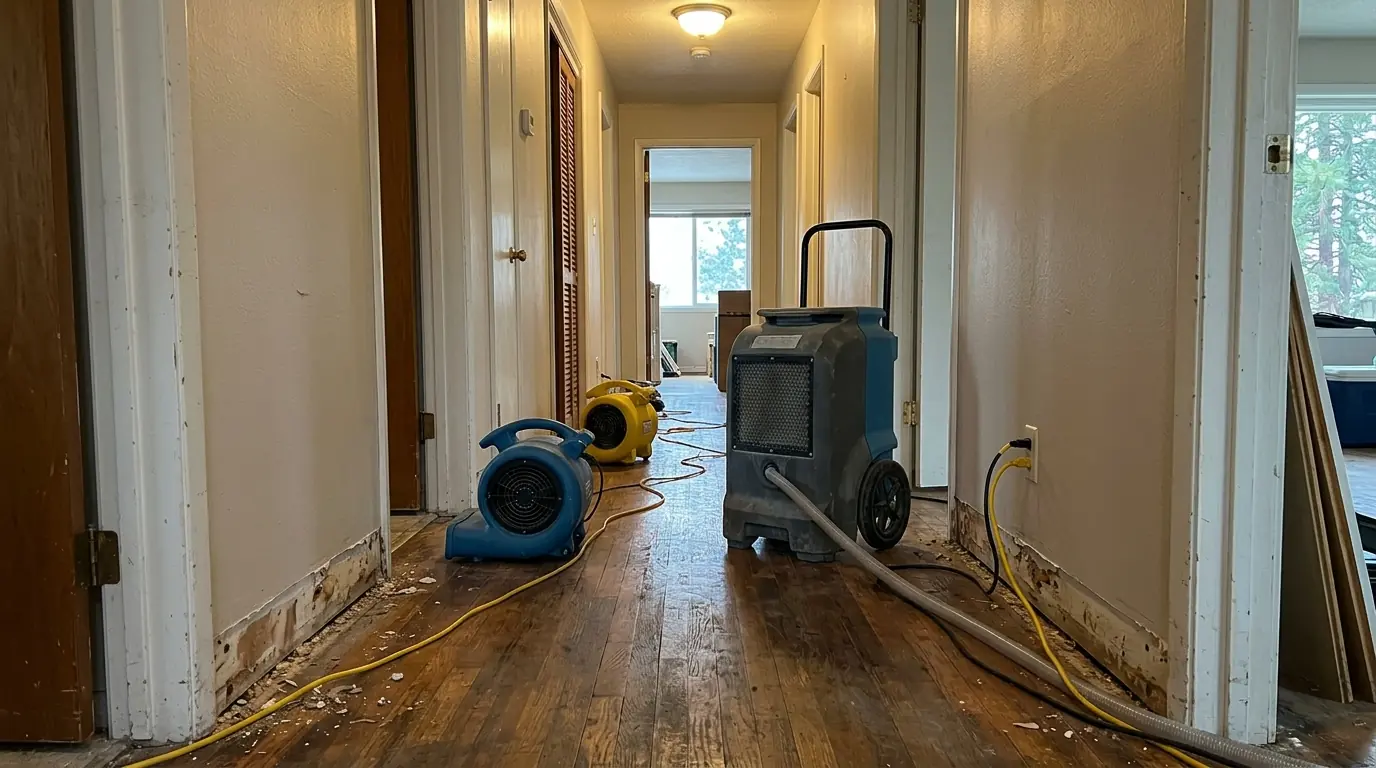
Emergency water damage restoration in Spokane starts with stopping the source and pulling standing water before it wicks up drywall and into framing. After extraction, technicians map moisture with meters, set air movers and dehumidifiers, and check readings daily until materials reach a dry goal. Most homes need several days of drying before repairs start.
Updated October 2026
What an emergency water call covers on the first visit
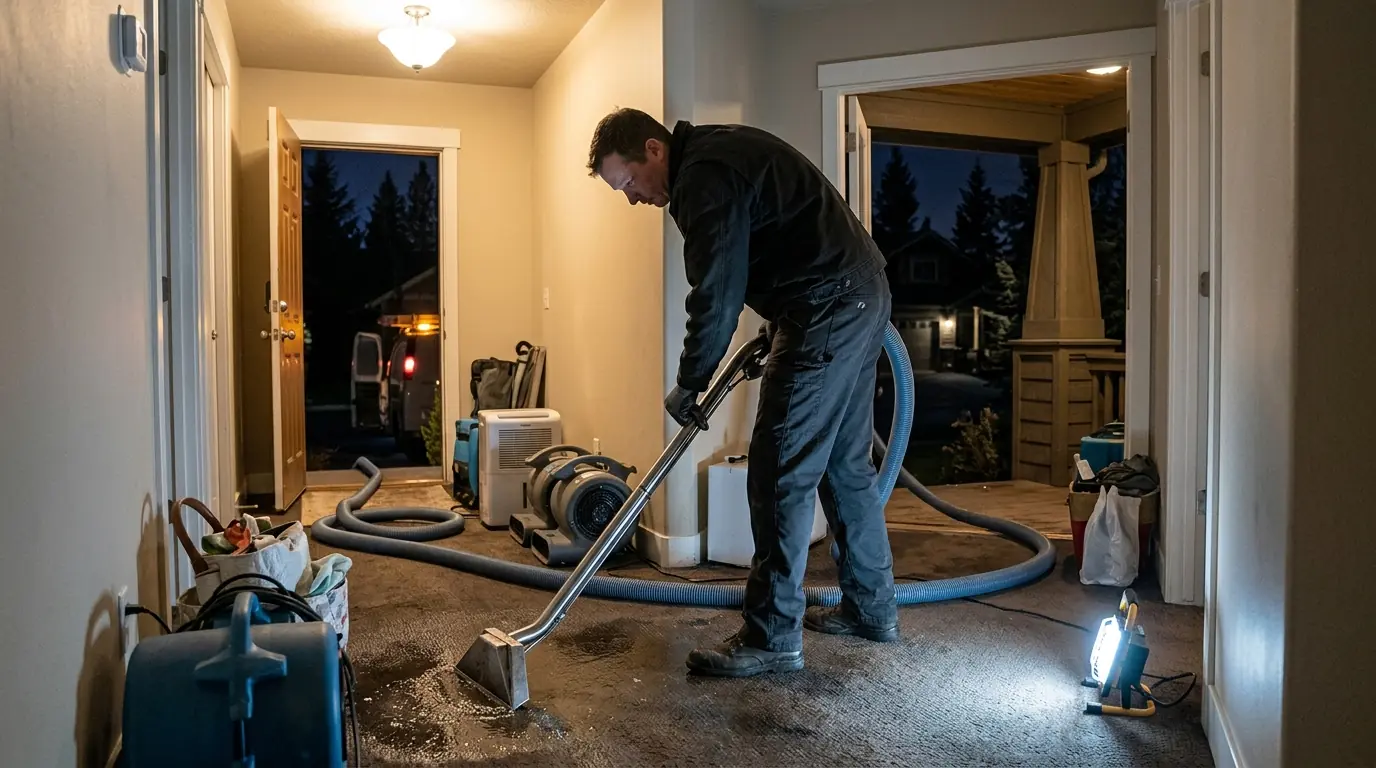
Water damage gets more expensive by the hour because of where the water goes next. Drywall wicks it upward and carpet pad holds it against the subfloor. On an emergency call we stop that spread: shut the source, extract what is standing and get drying equipment running before we leave. A running leak left until morning often turns a dry-out into a tear-out.
We also sort out what kind of water it is. A burst supply line is Category 1 clean water, a dishwasher discharge is Category 2, and sewage or outside flood water is Category 3. The category decides whether pad stays and how much protective gear the crew wears. Winter breaks have extra steps, covered on our burst pipe page.
Signs a leak has become an emergency
Some leaks can wait for a weekday; these cannot.
Water reaching a second room
Once it crosses a threshold or soaks under a wall, it is in the framing.
A ceiling bulging or dripping at a light
Pooled water can bring drywall down, and water at a fixture is near wiring.
Water touching outlets or cords
Stay out of it and leave the circuits to us.
Dirty or smelly water
Gray or black water carries bacteria, and porous materials it soaks rarely stay.
When water is still coming in
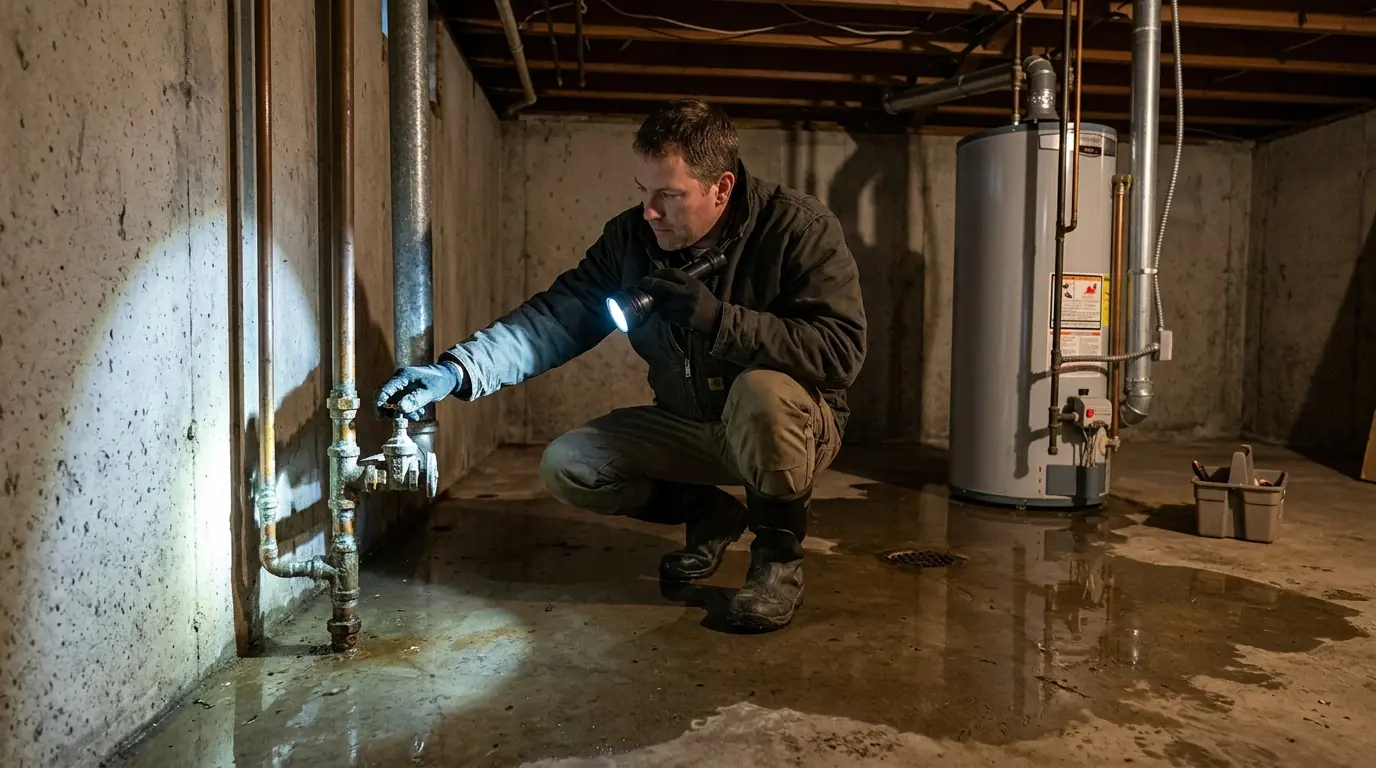
If water is still running, find the main shutoff. In many Spokane homes it sits in the basement or crawl space where the service line enters, often near the water heater. A quarter turn on a ball valve, or several turns on an older gate valve, stops the supply. Roof and ice dam leaks cannot be shut off, so we catch and divert them with buckets, poly sheeting and a tarp if the roof is safe to reach. If water is near outlets or the panel, keep clear and let us cut the affected circuits.
Wet walls and the water inside the cavity
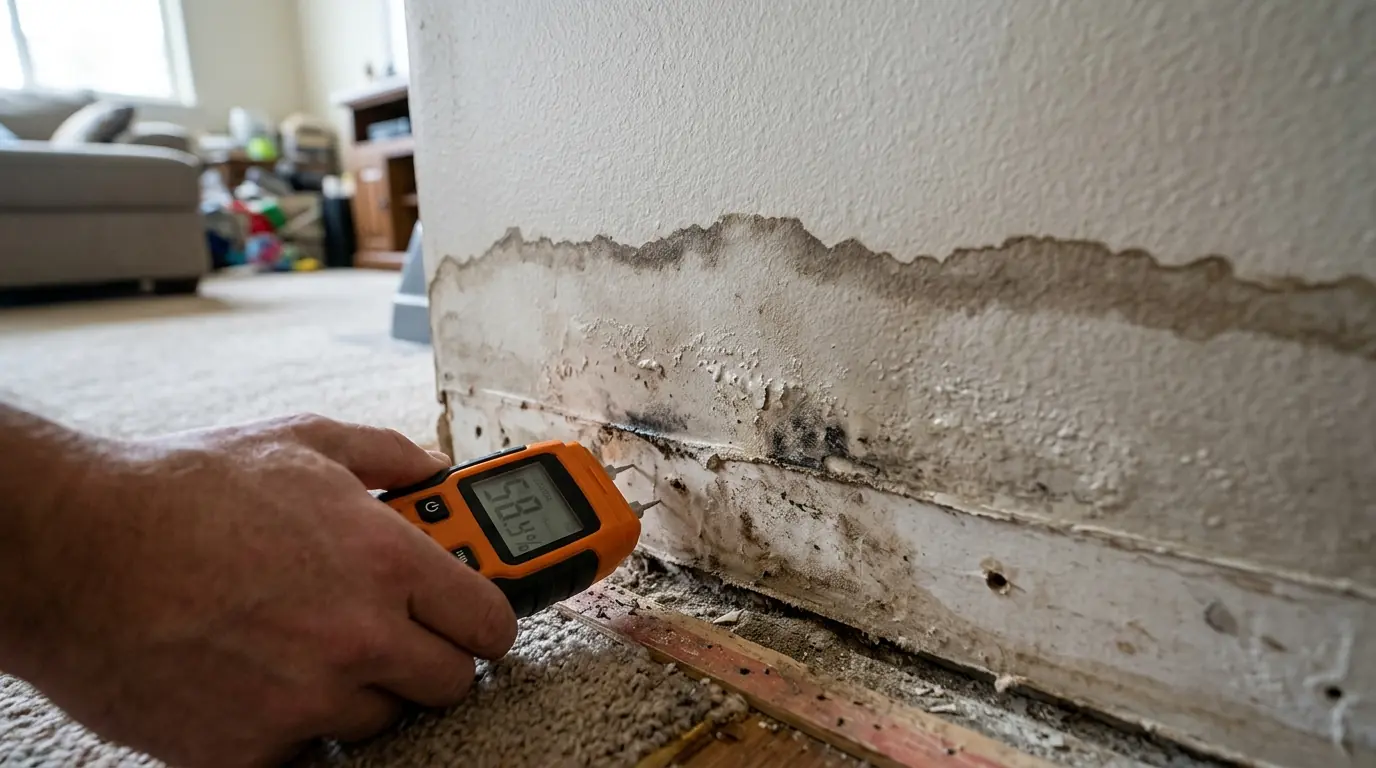
Drywall looks dry on the surface long before the inside of the wall is. Water runs down the face, collects at the bottom plate and soaks the insulation behind it. We find the wet line with a pin meter at the base and a non-invasive meter higher up. If the drywall is only damp and the cavity can take air, we drill small holes behind the baseboard and dry it in place. If insulation is soaked or the water was Category 2 or 3, a flood cut a couple of feet up is the honest call.
After-hours and holiday water damage calls
Pipes do not pick convenient times. A supply line lets go on Christmas Eve, a water heater drops on a Sunday night, a toilet overflows while the family is away. We answer 24/7, holidays included, and the phone questions are the same at 3 a.m. as at noon: where is the water coming from, is it still running, and how many rooms are wet. If a neighbor found the leak while you are out of town, they can let us in while you stay on the phone.
Is it still wet, still smoking or still spreading?
Call now. The first few minutes on the phone are about stopping the damage, and a crew gets moving while we talk.
From the first phone call to a dry house
- 01
Phone triage
We ask where the water is coming from, whether it is still running and how many rooms are wet.
- 02
Stop and secure
We confirm the source is off, make the electrical safe and photograph every wet area.
- 03
Extract
Extractors pull standing water from floors, carpet and pad.
- 04
Map and set drying
Meters and a thermal camera show where water traveled, and equipment goes where readings point.
- 05
Monitor daily
We log readings and pull equipment once materials hit their dry goal.
Local conditions
Water damage across Spokane County's mix of housing ages
Spokane County counted 539,333 people at the 2020 census, and the typical home there dates to around 1978. A house that age often has a water heater in the basement or garage and a lower level finished years after it was built. Those finished spaces are where water hides: behind paneling, under carpet laid over concrete, inside framed walls with no air gap. We open them carefully, because nobody planned for them to get wet.
Timeline
How long emergency drying takes
Extraction usually wraps up on the first visit. Drying takes longer: most rooms need several days before framing and drywall reach their dry goal, and hardwood, plaster or concrete can take more. We pull equipment when readings match a dry reference spot elsewhere in the house, not on a schedule.
Cost
Typical cost ranges for emergency water damage work
LawnStarter's 2026 cost data puts the national average for water damage restoration around $3,250, with most jobs between $1,270 and $5,376. Those are national planning numbers, not a quote. Your figure depends on the square footage that got wet, the water category, how long it sat, and whether drywall, pad or cabinets come out. Speed is the factor you control: same-day extraction usually means less removed and fewer equipment days.
What is included on an emergency water damage visit
These steps happen before we leave the first night.
- Photos and moisture readings of every affected room.
- Water extraction from floors, carpet and pad.
- Removal of materials that cannot be dried, with your approval first.
- Antimicrobial on exposed framing and subfloor.
- Air movers and dehumidifiers placed by moisture readings.
- Daily monitoring with a written drying log.
Emergency Water Damage Restoration questions
As soon as you can safely call. Drywall and pad soak up water immediately, and mold can start on wet material within a couple of days in a warm house. Same-day extraction usually means fewer materials torn out.
If water is near outlets, cords or the panel, do not walk through it to reach the breaker. Leave the area and tell us on the phone. If the panel is dry and safely reachable, switching off affected circuits is reasonable.
Usually yes. The equipment is loud and warm and some rooms may be blocked off, but most families stay. Category 3 water, small children or someone with a breathing condition can change that, and we will say so plainly.
We photograph the damage, log moisture readings every visit and can walk the job with your adjuster so they see what was wet and why materials came out. Coverage decisions stay between you and your insurance company.
If it is safe, lift rugs, electronics, books and cardboard boxes off the wet floor, and slide foil under furniture legs so stain does not transfer. Leave heavy pieces for us.
Related restoration work
Water Extraction & Removal
Water Damage
See this serviceStructural Drying & Dehumidification
Water Damage
See this serviceBurst & Frozen Pipe Water Damage
Water Damage
See this serviceInsurance Claim Documentation
Rebuild, Contents & Commercial
See this serviceSee all 37 restoration services
Related advice: Burst pipe in a Spokane winter: the first hour and What water damage restoration costs in Spokane
Answering 24/7
Water on the floor right now?
Call any hour. We will ask a few quick questions and get extraction equipment on the way.
1876 N Teanaway Dr, Post Falls, ID 83854